REVIEW: Dragonfly Eyes

Sometimes, when I walk into Walgreens or stand in the checkout line at Target, I glance at my image on the tiny surveillance monitor, a fuzzy pixelated version of myself, and give it a little wave. Most of us don’t even think about what happens to our images once we leave the store. But who is sitting on the other side of the screen?

I first heard about Dragonfly Eyes (2017) via Facebook. A quick Google search yields the synopsis: “A plain-faced woman leaves her training at a Buddhist temple to work on a dairy farm.” As if this summary was not interesting all on its own, more investigating led me to discover that this film is composed entirely of various clips of surveillance footage from all across the time and space of modern China to tell the fictional story of two doomed lovers, Qing Ting and Ke Fan.

Director Xu Bing writes, at the beginning of the film, that he has had the idea of creating this type of experimental film since 2013, and the release of tons of footage in 2015 allowed him to turn his dream into a reality. Dragonfly Eyes is not only a new type of artistic film, but a commentary on modern Chinese society. Clips of natural disasters, such as violent car crashes and toppling buildings, are layered with intimate clips of people going about their daily lives, from a woman munching on some toast while lying in bed to a man sitting shirtless in his room, gaze fixed on his computer screen.

The basic plot follows Qing Ting, a simple woman from a monastery, who leaves her safe haven to work at a dairy farm where she meets Ke Fan, a man who insists that she is different from all the other women he has ever met and pursues her with a sweet doggedness. The two of them become a couple, but Qing Ting refuses to give herself fully to him, insisting on paying for her own lifestyle and needs. After getting into trouble while trying to enact revenge on a rich woman who is responsible for getting Qing Ting fired from her job at the laundromat, Ke Fan is thrown into jail for several years. When he is released, he is consumed by the desperate drive to find his one true love, and he eventually succeeds, though she has transformed to become almost unrecognizable: Qing Ting was unable to find work with her plain face, so she underwent radical plastic surgery and became an internet star. The rest of the film follows his mad chase and his eventual spiral into a sort of madness. I will not spoil the ending, but it is definitely not what I was expecting. The creepiness and the horror aspects of the film creep up on you slowly, slow enough that they are almost casually normalized, and once the film ends you realize how deep the plot has dragged you into another frame of mind.

I will admit that at the beginning of the film I was a bit skeptical; being unable to pair a face to the character was frustrating, and made me feel disconnected from the plot. The random insertions of clips of natural disasters and fatalistic events also confused me.

However, as the plot progressed, the characters came into sharper focus. Perhaps this was the intention, to start from an expansive, general point of view, and to eventually narrow in, to zoom in, to focus like a camera lens, much like the nature of a surveillance camera searching for a certain person or object.

If there is one critique I would make, it is that I believe that the film could have been fine– better, even– without the repeated insertions of dramatically horrible events: drownings, burnings, crashes. I think that the more intimate clips of daily life in China were more impactful. In addition, some of the clips felt a bit exploitative, particularly the ones that showed very graphic scenes such as beatings and suicides. Either way, just knowing that these film clips are all real makes the film so much more impactful. I’m awed at the dedication and time it must have taken Xu Bing to sort through the hours and hours of footage.

Despite my skepticism and obliviousness upon the beginning of the film, Dragonfly Eyes has honestly become my favorite film of all time. I have never experienced anything like it, and I thought that the nature of the film, the way it had a creeping, slow-burn effect on the viewer, made it much more visceral and humanlike than anything else I have ever watched. I am convinced that Xu Bing is a sort of genius. If you ever have the chance to watch this film, I highly recommend that you do so.

Image Credit: Youtube

REVIEW: 2001: A Space Odyssey

Fifty years ago, the cinematic masterpiece 2001: A Space Odyssey premiered. With its technological realism, scientifically accurate depiction of spaceflight, and innovative special effects, the 1968 science-fiction work became one of the most important artistic works of the 20th century. 2001: A Space Odyssey embodies the bold and creativity, serving as a spark of inspiration for many engineers, just as much today as fifty years ago. To celebrate the memorable anniversary of the movie, UMS teamed up with Michigan Engineering, Musica Sarca, and the Detroit Symphony Orchestra to bring a live multi-media presentation of this daring movie.

This was my first time watching 2001: A Space Odyssey, so I enjoyed watching this classic movie in the Hill Auditorium. However, just like most of the other people that came, we were there for the live accompaniment of the iconic soundtrack. The movie evokes the sublime on its own, but the live music of the Detroit Symphony Orchestra takes the experience to a whole new level. The sweeping classical music that the movie is characteristically know for filled the auditorium, and it brought the nonverbal experience of the movie to new heights.

From the majestic opening of Richard Strauss’s Also sprach Zarathustra to Johann Strauss II’s intricate The Blue Danube, the Detroit Symphony Orchestra set the mood in the Hill with every dramatic note and every spinning waltz. Maestro Robert Ziegler perfected the timing, ensuring that the soundtrack was brought to life alongside the movie.

Musica Sacra performed the sustained dissonant chords that slowly shifted over time during long space or slow action shots. Under the direction of music director Kent Tritle, the choral accompaniment added to the sense of wonder and suspense that enraptured your attention during the space scenes. With the chorus and the orchestra on the stage throughout the movie, everyone in the Hill Auditorium was able to experience this legendary movie in a breathtaking new light.

REVIEW: The Wanted 18: Contemporary Cinema from the Islamic World

Image result for the wanted 18

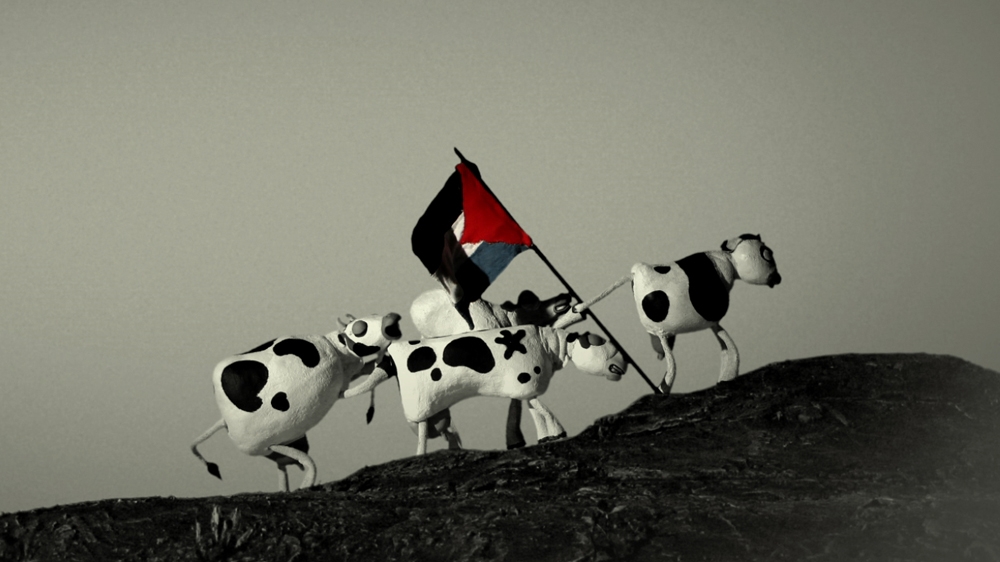
Claymation from the perspective of cows, real interviews of Palestinians and Israelis, a personal narrative interwoven as the spine of the movie, and a compelling true story of a town of Palestinian people who secretly milked eighteen cows as a way to resist Israeli occupation– this movie is artistically ambitious, politically evocative, and utterly heartrending.

The Residential College, with support from the Center for Middle Eastern and North African Studies, is hosting a series of movies on contemporary cinema from the Islamic world, and The Wanted 18 is kicking off the series. The film screenings take place in East Quad’s Benzinger library at 7 p.m. After the film screening, audience members had a short dialogue on the movie lead by the series’ curator and host, Sascha Crasnow. I appreciated the organization of the events, the dialogue that followed it, and the film was easily one of the best documentaries I’ve seen.  

This documentary takes place in Beit Sahour in the 1980s, a small town east of Bethlehem with a majority-Christian Palestinian population. The people of Beit Sahour used the cows as a way to boycott Israeli goods and remain self-sufficient. The eighteen cows went from ordinary livestock to infamous celebrities that were “threats to the national security of the state of Israel”. How? How did these cows, as one interviewee put it, become “political activists” alongside the Palestinians against Israeli occupation?

This movie unfolds that answer in one of the most creative documentary formats. The film brilliantly includes claymation in a comic-book-like style. In fact, it takes the humor so far that the animation is from the perspective of the cows. They’re the hilarious epicenters of the movie, and all the events unfold around them. “Oh, shit,” one cow says to another as they’re given off to the Palestinians; they have distinct characters (Lola is called the “sexy cow”, for example); they don’t side with the Palestinians or the Israelis, but are shown to be strong and powerful allies to their own cause. We as the audience relate to the cows in some very commonplace way– they have western accents, make crudely funny remarks, seem to full of desire and indecision. At first, the cows are reluctant to join the side of the Palestinians and even try escaping from the truck that held them. One cow said in the beginning to the Palestinian attempting to milk her, “Ugh, get lost, tiny terrorist.”

As much as we get of the cows, though, we also get of real interviews from people that lived through the boycott. For the people of Beit Sahour, these cows represented an attempt to join the narrative of resistance and recognition. One man from the documentary says when first acquiring the cows: “I felt as if we had started to realize our dreams of freedom and independence.” The cows became Beit Sahour’s symbols of civil disobedience and autonomy from occupation. They knew they were mere civilians– a doctor sweeping the street, a homemaker hanging up the laundry, butchers, teachers, tailors– but they wanted to feel like their lives were no longer dictated by an external force, like their homes weren’t a prison. “We deserve to have our homes,” another interviewee said, “We deserve to have our land, we deserve to have our freedom, and we deserve to have our cows.”

During the height of Palestinian resistance in 1987, the cows rose to celebrity status outside of Beit Sahour and the state of Israel become deeply paranoid that they may lose control over their occupied lands. In a scramble to regain power and composure, the state of Israel declare the eighteen cows as “wanted criminals”

There are parts of this movie that are controversial and jarring. There is an animated scene where a woman throws off her bedsheets and finds a dead cow beneath them; some of the things the cows say can be considered offensive expletives, like the “tiny terrorist” comment; one person frequently referred to by the interviewees dies at the end of the movie to the heartbreak of the audience; and of course, we know the struggle is not over for the people of Beit Sahour, or Palestinians, and Israelis. During the dialogue, one person critiqued the movie for trivializing the seriousness of the issue by the sense of crude humor the cows possess. The director of the film, however, counters this; he says, “When you laugh, you are challenging your oppressor and challenging the image of being a victim.” There is a great deal of conversation to be had around this film, for it is complex and deals with complex issues.

What I love about this movie is that it takes something so difficult to discuss and creates conversation around it in a manner that is intelligent and artistic. I would recommend this film to anyone who is exploring art from the Islamic world, or who is interested in political art, or loves to watch compelling, deeply moving documentaries. This film is brilliant and raw in its storytelling and creativity, and, in its own way, is a form of resistance.

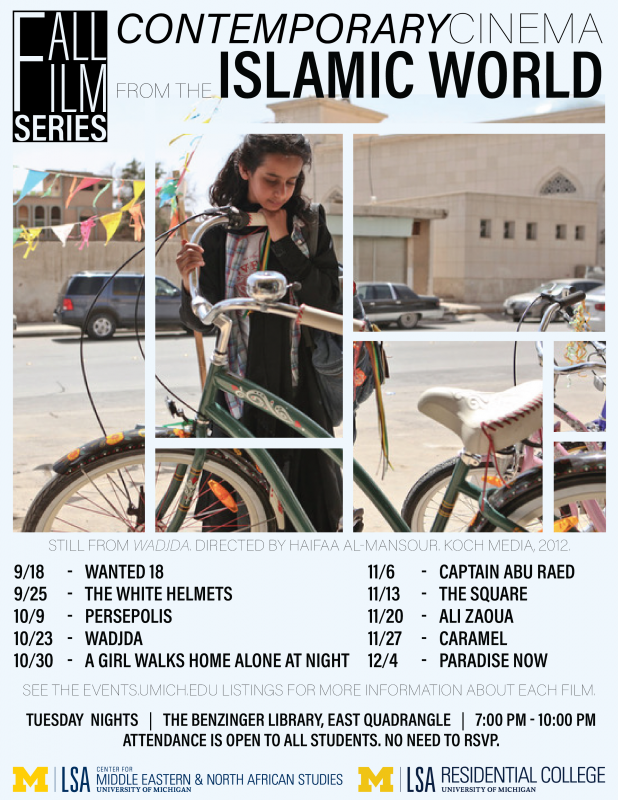
You can find more films in this film series in the poster below:

Additional sources: https://www.aljazeera.com/news/2015/11/qa-middle-east-powerful-army-chasing-18-cows-151111094846819.html

PREVIEW: 2001: A Space Odyssey

For the 50th anniversary of the release of Stanley Kubrick’s classic movie “2001: A Space Odyssey”, the University Music Society along with Michigan Engineering are co-presenting the groundbreaking film in a special viewing. This free event will feature live orchestral and choral accompaniment by the Detroit Symphony Orchestra for a one-of-a-kind experience at Hill Auditorium on Friday, September 21 st 8pm. Registration for the event is currently full, but general admission will open at 7:40pm to people without a ticket on a first come, first serve basis, so it’s not too late to attend this out-of-this-world showing of one of the greatest sci-fi movies of all time.

REVIEW: Searching.

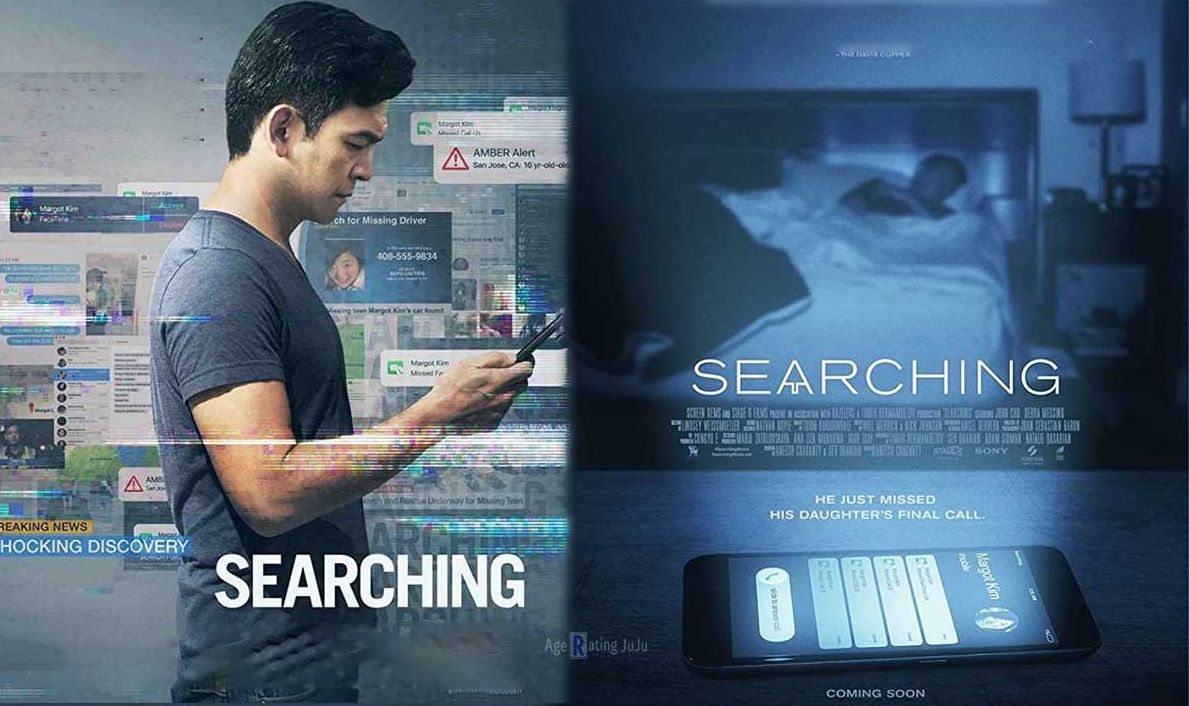
So much of our lives takes place in the realm of screens and the digital abundance, and these days, the web is vast and alive, leading to a kind of fascination with an almost Kantian sublime. Thus, technology has this great potential for horror – as seen in television shows like Black Mirror and in movies like Unfriended, laying out a perfect foundation for a thriller set in this medium.But what separates Searching from other films using the same laptop cinema format is the intrinsic understanding of the internet and technology. The director of the film, Aneesh Chaganty – who has worked at Google and was born to computer engineering parents – has a clear sense of the behaviours of online individuals and the way the web works, and the presence of technology is elevated beyond a singular screen.

The film is detailed and realistic; each application, like Reddit, like Tumblr or Instagram is used in a way that is subtle in its familiarity, perfect in the part it plays in leaving clues and unfolding this story. Details like the timeline montage in the beginning add to the pull and immersion into the online world, and the indications of what is to come, scattered throughout places like Pam’s text document, a school homepage, or a video call, invite us for a second, third, and fourth viewing.

The use of media is carefully considered. Everything is elegant in that any use of the screens feels natural, doesn’t feel clunky, or have the need to be explained away. So the technology is comfortable in the script of the movie, only enhancing the central plot points and themes. It is not the whole movie; it does not constitute the entirety of the plot. Instead, it helps frame a well-paced thriller and the continuing theme of family.

The plot itself is well thought out with all ends neatly tied. With a brutal precision, the film reveals revelations that change the course of the story, a single, exact moment that often uproots the entirety of the direction John Cho’s character, David Kim, had been gunning towards. These twists are framed with things as simple as just a shot of an interior of a car or a mouse hover over an image. It’s this rhythm and pacing of the film that builds the tremendous momentum towards the ending.

We feel for these characters from the very beginning; pictures and clips that David looks at from time to time remind us of the depth of the characters and their motivations, and what makes them act the way they do. As David discovers more about his daughter through her digital footprints, the words she had no place to express but on camera – so do we. The relationships established between the characters through the medium and the universality of these sentiments make it easy to care.

While like the way Crazy Rich Asians is lauded for showcasing an east Asian cast in vivid colour, Searching is much subtler in the way it introduces us to our Asian leads, and perhaps is even more important in the place it has in an industry that struggles with diversity. filmmakers often had to find a “reason” for including diverse characters, relegating them to certain roles and archetypes, and Searching does away with any such requirement or “explanation” as to why the family is Korean. It simply is, giving us common experiences we can share and relate to. Ground-breaking yet understated, the film poses itself to be the classic prototype for many more movies to come.

PREVIEW: The Wanted 18: Contemporary Cinema from the Islamic World

If you’re interested in the intersection between art and politics, this film screening is just right for you. With tasteful and clever genius, the creators of “Wanted 18” tell the true story of a group of Palestinian civilians that subtly resist Israeli forces who label Palestinian farms “a threat to the national security of the state of Israel.” The Palestinian farmers privately buy 18 cows and produce their own milk; in little time, the cows become local celebrities and a symbol of resistance. This film combines stop motion animation and in-person interview for an intriguing artistic documentary film about the power of grassroots activism. “Wanted 18” premiered in 2014 at the Toronto International Film Festival. You can watch the screening on Tuesday, September 18th at 7 p.m. in East Quadrangle’s Benzinger Library. Entrance is free and the viewing is open to all students!

This screening is also part of a series of movies on contemporary Islamic films: