REVIEW: The Square

At first glance, Ruben Östlund’s The Square appears solely to be a satirical look at an art world off the rails. Yet the film is interested in a broader social critique; we ourselves are not exempt from contributing to the insane ongoings of the fictional X-Royal Museum in Sweden.

Winner of the Palme d’Or at the 2017 Cannes Film Festival, The Square has no shortage of overblown on-screen ridiculousness, from painting chimpanzees to palace raves, but we recognize realities of the contemporary art world and its penchant for elitism within it.


Direct parallels can be seen between events at the X-Royal and those in real-world art spaces. Security personnel watch museum visitors give galleries barely a second of their attention, and a millennial duo from an outside marketing agency infuriate with their self-assurance. Museum events drip in inscrutable art-world language, and a custodian casually vacuums up an installation made up of gravel mounds.

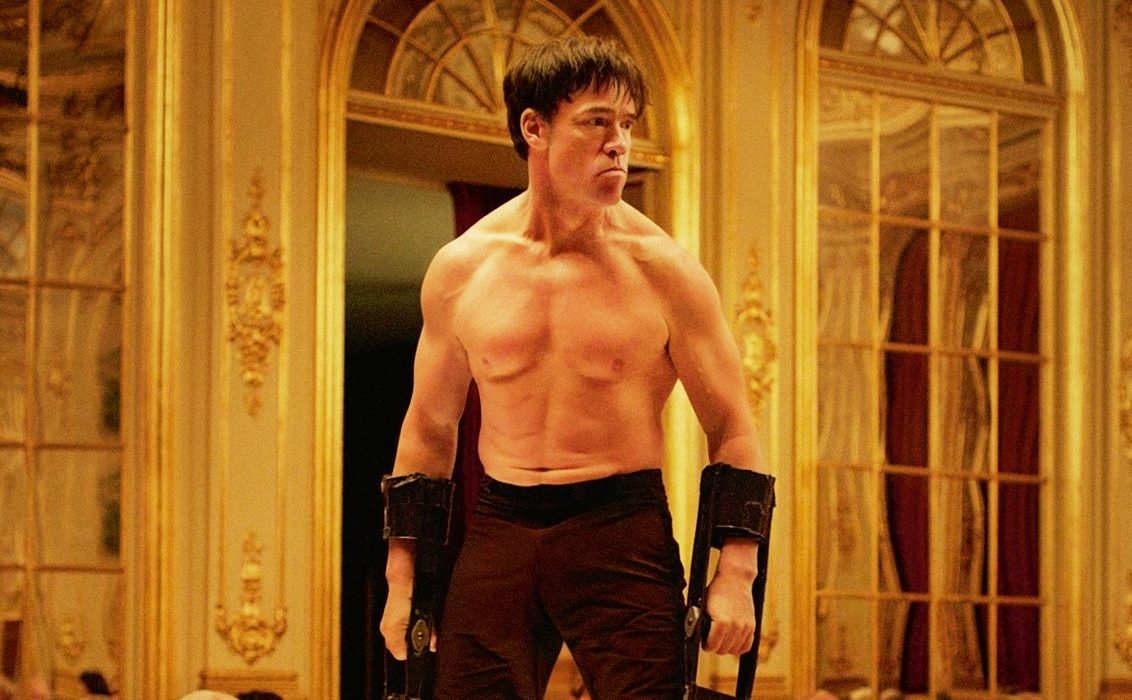
Through his provocative live performance, “The Jungle,” the artist Oleg—brilliantly played in all his discomforting glory by a bare-chested, crawling Terry Notary—runs through a grand dinner gala attacking event attendees. The limits of violence that we are trained to transform and accept in the name of art are tested here.


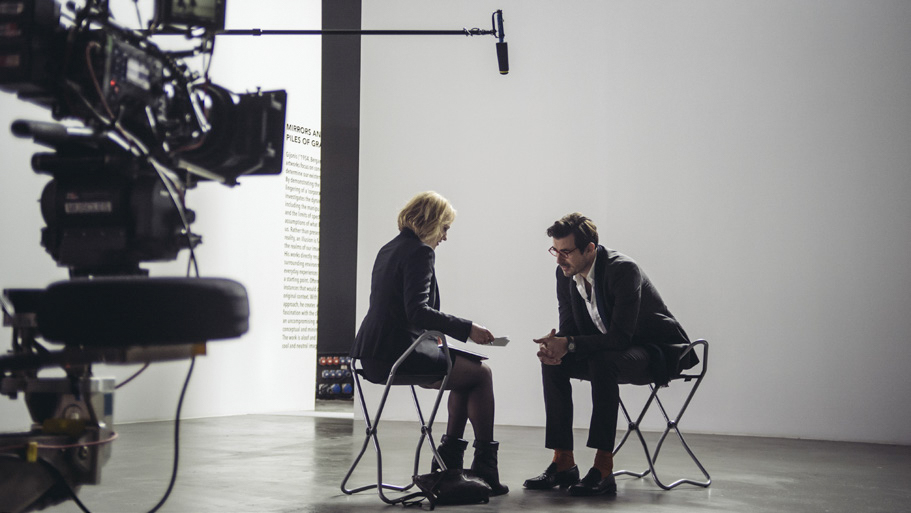
In Claes Bang’s performance as the suave X-Royal curator Christian Nielsen, we see the larger questions that Östlund raises about the art world and its detachment from reality. The film regularly spotlights this character’s interactions with disenfranchised members of Swedish society, specifically beggars and panhandlers. As the film shifts between the cash-flush private museum and the outside world, the curator struggles to balance these unwelcome interruptions to his work and family lives.


Though The Square might let on as a film centered solely on bashing indulgent art-world practices, its commentary extends far beyond to implicate members of any audience.

REVIEW: Novitiate

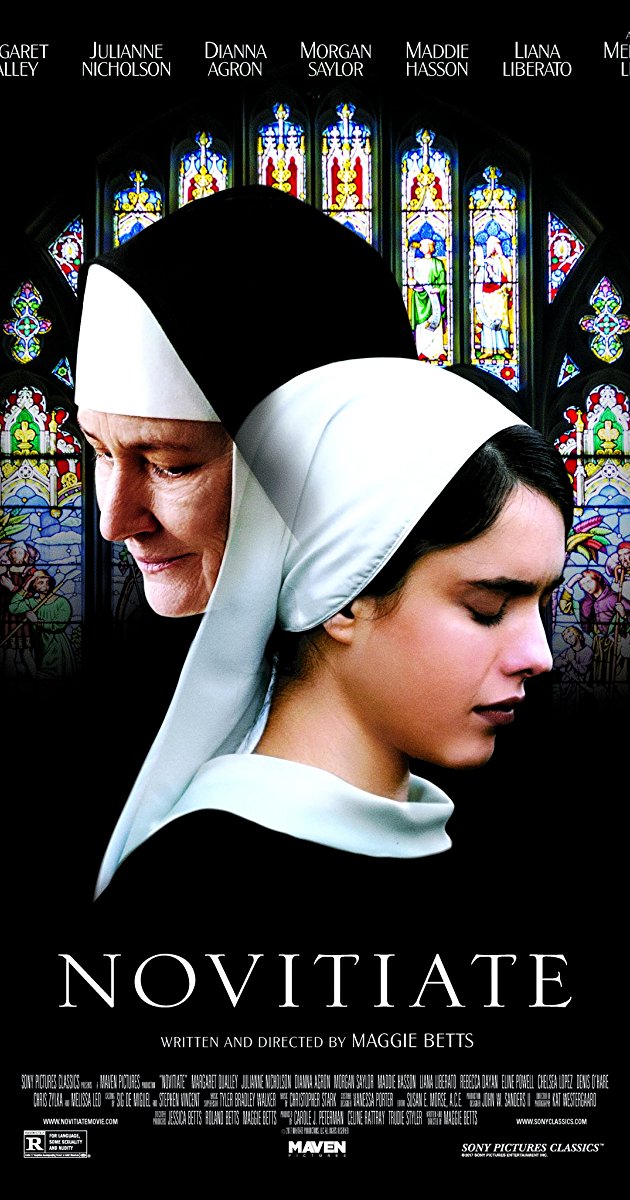
I have only seen two movies about nunhood in my entire life, both of them in the Michigan Theater. One was “The Little Hours” (starring Aubrey Plaza) and the other was Margaret Betts’s “Novitiate.” The two of them couldn’t be more different. A quick You Tube search will reveal why.

“Novitiate” is about nunhood– specifically, nunhood in 1960’s America, at the time of Vatican II, or the period of reform within the Catholic Church. Mother Superior, (played by Melissa Leo), is a menacing presence who looms over the women within the covenant, and her oscillations from benign and benevolent to frenzied and vindictive are played out very well. The girls are both extremely pious and devout and yet retain a girlish romanticism, explored in several scenes. The film maintains that the nun is a woman who is the bride of God, who dedicates her whole life and being to that sacrificial love. And this idea is seized upon by the girls and the other nuns within the covenant with a dedication that is tinged with borderline desperation, especially by Mother Superior. The Church is her entire life and identity, as it is for the other nuns, especially Kathleen; without God, what is there?

As a non-Catholic with no real background knowledge on what it means to be a nun, I was kind of concerned about how Catholicism and its practices would be portrayed in this film. Would nunhood be sensationalized and demonized? Would the “sexy nun” trope make an appearance? The trailer suggested a bit of a horror-based,  trope with explicit acts of sin and punishment, but the actual film is more as a slow buildup of psychological pressure and tension. Although the film opens with Kathleen’s life, it pans out to encompass the worries and troubles concerning almost all of the sisters within the cohort; namely, the main concern for many Sisters is the fear that their sacrifices are being made in vain. The penances that were slightly exaggerated in the movie trailer are less dramatic; the more impactful punishments are the psychological ones.

While I enjoyed the film’s cast and plot, I do think that some characters were underdeveloped and others were suggested to be of importance, only to be cast away later. Many characters dipped in and out of the film in quick succession, which made it a little difficult to focus on the main ones. However, I thought that Kathleen was a very interesting character; some might argue that she is a “Mary Sue” character, too pious to be true; yet her steadfast commitment to her faith only makes her eventual demise all the more compelling and explicit.

Unfortunately, “Novitiate” is no longer playing at the Michigan Theater. However, if you ever get the chance to watch it, I would highly recommend.

(Picture credits: IMBD)

PREVIEW: Star Wars: The Last Jedi

I can still remember when Star Wars: The Force Awakens came out. I hadn’t seen a Star Wars movie since The Empire Strikes Back had come out when I was in elementary school, which I remembered being a huge deal, but one I was still a little too young to appreciate. I saw The Force Awakens twice in theaters and spent hours talking to my friends about what we thought of Rey, Poe, and Finn, and that crazy climax with Kylo Ren and Han Solo, and what Han, Luke, and Leia had been doing all these years.

Even that feels like forever ago, which is why I (along with, undoubtedly, so many other people) am so excited to see The Last Jedi in theaters. The second installment in a trilogy usually ends up being my favorite, personally — Catching Fire might be a good example — because it’s not as emotional and melodramatic as the closing chapter often is, but you’re still familiar enough with the characters by that point to know who to root for. The Last Jedi is definitely going to show us more of Luke, which is something to look forward to, as well as likely to expand on the relationships we’ve already gotten to see between Rey, Poe, Finn, Leia, and Kylo Ren.

Beyond that, it’s hard to say what this new movie will bring, but there is one thing we know for certain: The Star Wars franchise has a history of success, so it’s reasonable to expect good things.

REVIEW: The Disaster Artist

The Disaster Artist is more than just a good movie about a bad movie, it is a story about trying to fulfill your dreams in anyway you can. The movie chronicles the making of The Room, dubbed by many as the best terrible movie; and in many ways that holds up. There have been plenty of bad movies over the years but none have stayed in the theaters for 14 years and have such a large cult following like The Room.

This movie is based on the book of the same name, by Greg Sestero. The movie focuses on him (Dave Franco) and his friend, Tommy Wiseau (James Franco), the director of The Room, and the journey that they went through to make The Room. Along the way the movie explores their friendship and the mystery that is Tommy Wiseau.

The performances by all the actors involved in this movie were spectacular. The Franco brothers, especially James, played their roles very convincingly and very accurate. On top of this the smaller parts with Seth Rogan, Josh Hutcherson, and Zac Efron make up some of the most hilarious parts of the movie – which is already very funny throughout. However, what stood out to me wasn’t just the comedic aspect, but the story of Tommy and his friendship with Greg. It tells a story about trying to make it in a cut throat industry and them adapting and doing it their own way. We see Tommy’s sympathetic side come out of his mysteriously unique personality, and it dives into what it is like to follow your dreams even when it happens in a way that you may not have thought. In the end, The Disaster Artist, is a story of uncommon friendship and passion.

You will walk away with not only questions about who Tommy Wiseau is, but also how this unbelievable story can be true. Although, it is important to note that Tommy himself says that it is 99.9% accurate, and the .1% that is wrong was the lighting (but that might just be due to the sunglasses he always wears).

I think that this movie was excellent, and can definitely be seen even if you haven’t watched The Room, as I hadn’t. It is currently showing State Theater and tickets can be purchase for $8 with a student ID.

REVIEW: Human Flow

In his latest documentary Human Flow, internationally renowned Chinese artist Ai Weiwei compiles footage from over 23 countries to underscore the scale of the global refugee crisis. Often, the artist—drone camera in tow—tackles his charged subject matter from a distance. Rather than attaching the film to a select few individuals, Weiwei instead opts for sweeping panoramas of unstable migration currents.


Image Source: Human Flow


As the film skips from country to country, the scaled-out narrative blurs experiences for empathy-generating effect. African migrants reach Italian shores without any acknowledgement of their countries of origin. Their newly arrived bodies produce visual spectacle. These plainly labelled Africans huddle together, wrapped in glinting gold thermal blankets. The only possible response to these deracinated images of hardship is the immediate gut reaction to nonspecific distress.

An elderly Rohingya woman in a Bangladeshi refugee camp glares silently at a camera that refuses to cut away. She is not probed any further. Small moments such as these—unwelcome intrusions into the everyday—are fleeting reminders of the director’s interest in refugee flow over refugee. Weiwei forsakes focus on the individual in service of showcasing a tremendous collective suffering.


Image Source: IndieWire


One potential benefit of Human Flow‘s narrative expanse is commonalities drawn between worldwide migrations. Viewers are jetted from place to place to follow a story across continents, and no nation is left unchallenged. The film makes the urgent suggestion that we are all responsible for the wellbeing of the planet’s peoples.

An Afghan woman at the Greek-Macedonian border states, “No one leaves their country lightly.” Though often minimizing the individual experience of migration, Human Flow ultimately conveys the weight of these journeys and the moral imperative of addressing the refugee crisis today.


Image Source: The Hollywood Reporter

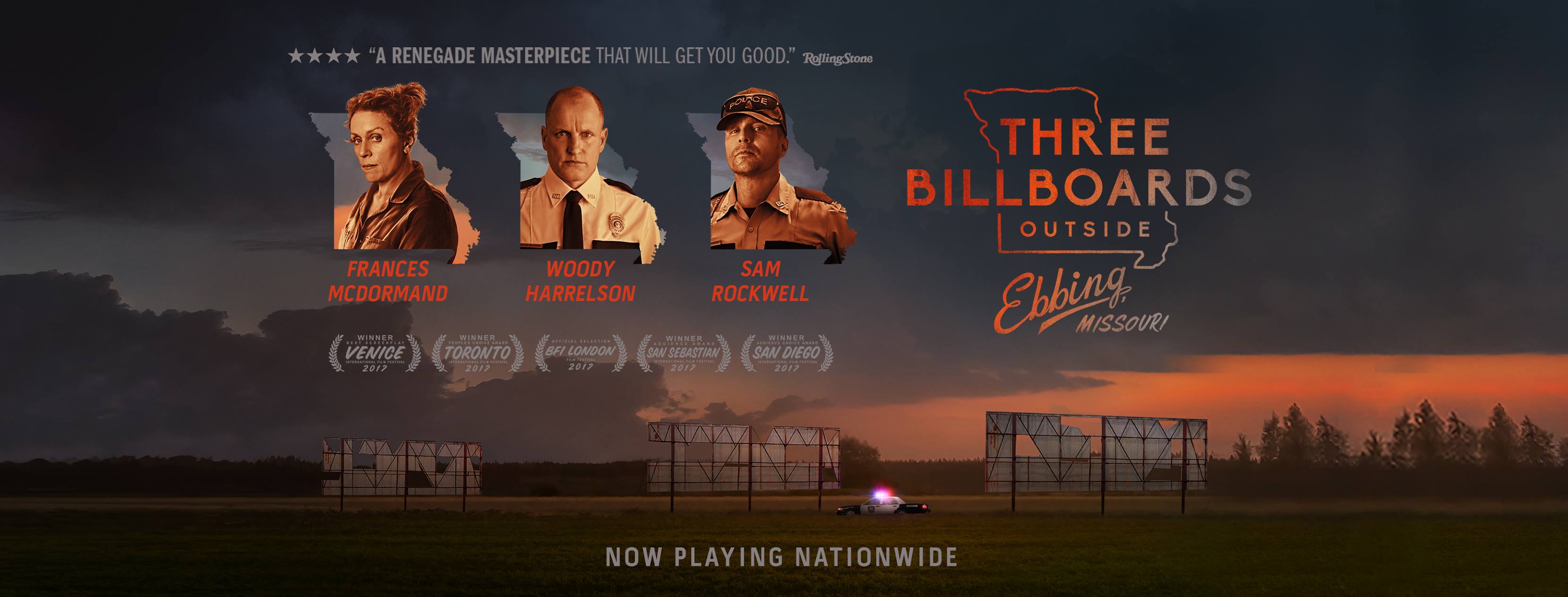
REVIEW: Three Billboards Outside Ebbing, Missouri

If there is one word that can describe Three Billboards Outside Ebbing, Missouri, it’s anger. Everyone in this movie is angry. The mother whose daughter was “raped while dying” is angry. Her son is angry. Her ex-husband is angry. The police officer whose boss is dying of cancer is angry. His mother is angry. The dentist is angry. The priest is angry. The dwarf who asks the grieving mother on a date is angry. The coworker of the mother is angry. The man who helps put up the billboards is angry. The town is angry.

The daughter, in the one scene we have with her, is angry, very angry.

Some of this anger is related to the billboards, most of it is not. Some of this anger is about specific things, specific events, specific people–and some of it is more general, an anger about life and life’s wrongdoings, an anger that has been with these people since they were born, since the time they were wailing babies, that has followed them closely throughout their days and will inhabit their bodies until the day they die. Some of the anger is generational, decades old, some of it is fresh, a wound yet healed. Some of the anger is violent, is violence, and some of it is hate and hatred.

Almost all of the anger, by the end of the film, is understandable, even when it is wrong or contradictory. People are hurt, people suffer, and sometimes the resulting anger is misplaced, but never does it move beyond the realm of the real, never does it become too much to believe. Anger, in this movie, is the grand equalizer. It is what happens when people are hurt. It is not only understood and understandable, it is the very means of understanding.

Three Billboards Outside Ebbing, Missouri is playing at the Michigan Theater. Student tickets are $8.