
REVIEW: Carrie Newcomer

Carrie Newcomer’s music has long been a favorite of mine, but her Sunday evening concert at the Ark only deepened my appreciation of her artistry. At times quiet and contemplative, and at other times toe-tapping, the night’s program took the audience on quite a journey. It included several new songs from her upcoming album, as well as old classics for those familiar with Newcomer’s music, a poem from one of her two books of poetry and essays, and more than one occasion in which the audience was invited to join in song. She was joined by pianist Gary Walters.

Carrie Newcomer is at once wise, humble, humorous, and down-to-earth, all of which was evident as soon as the concert began. Rather than a far-off stage with the audience below, the atmosphere was one of a room filled with friends. Between each song, Newcomer shared musings and anecdotes, some which left the audience laughing, and others which left the audience silent in thought, but it is her music that I think communicates most deeply. It is clear to me that one woman and her acoustic guitar can communicate truth and wisdom more intensely than most of us could ever imagine.

In introducing her song If Not Now, Newcomer discussed hope. Hope, she said, is taking all that is, and all that could be, and working every day to narrow the distance between the two. The song’s refrain reflects often unnoticed work of those with this kind of hope: “If not now, tell me when / If not now, tell me when / We may never see this moment / Or place in time again / If not now, if not now, tell me when.”

Betty’s Diner, another song that Newcomer performed, celebrates the range of humanity that passes through the restaurant Betty’s Diner (“I’m an artist, so I’ve waitressed,” she remarked, to laughter).

On a separate note, if you’ve never been to the Ark, I would highly recommend it! The performance space, or listening room as it is called, is an intimate space that seats 400 people or so. It isn’t every day that one gets to sit in the front row at a concert of one of their favorite artists, but that is what I was lucky enough to experience at Carrie Newcomer’s performance! Most performances are general admission, and there are also tables in front of the stage that audience members can choose to sit at.

Carrie Newcomer manages to celebrate and affirm life, while challenging the audience to live each moment more intentionally, all within the space of musical notes. I don’t think that I could get tired of listening to her music!

 

REVIEW: Xylem’s Crazy Wisdom Open Mic

Poetry has never been something I can simply sit down and write. If ever I attempt to do this, I end up with an oversimplification of the same few themes (love, sadness, anger, death) every time. So, I’m forced to be the submissive partner in the relationship, listening to an idea whenever it decides to show up. In terms of neat scheduling, the pursuit of poem writing is majorly inconvenient.

But beyond my personal gripes lies a reluctant reverence for poets and their poems. There is difficulty in writing something in a tone from another dimension of being that also doesn’t make everyone in the world roll their eyes back into their heads.

In general, when people try to write a poem, they do not succeed. English teachers may yell at me for saying that it’s only possible to either succeed or fail at an art form, that that simple dichotomy could even exist. They may argue that instead of two boxes marked pass and fail there is a whole grey spectrum of middle ground. Personally, I would disagree; it is very clear to me when a poem is striking, while others are dull or trying too hard, or relying on overused subject matter.

At any open mic, there will be a real variety of performances. This is why I find these events so much more promising than a single artist presenting their work: no matter how many pieces there are that fall short, at least one will stick with you.

This is the thought I had when I walked into the cozy room in the second floor of Crazy Wisdom Bookstore and Tea Room. There were cookies and hand-clapper noisemakers (maybe snapping has gone out of style?), and the house was packed.

At least 15 or 20 people read or sang, coming from both comedic and tragic angles. Even I, possessed by something not of this world (probably), stood to read a poem I’d written for a class.

Most of the readings were good; in the writing world at least, most people who have confidence in their work have it for good reason. Of course, there are so many more good writers out there who lack confidence entirely. I’m certain that there were some of those talents among us who didn’t read.

My favorites from the evening are the ones I can remember now, a day later. One of the first was a poem about a serendipitous encounter with amazing lettuce at a Wendy’s, another a published piece by a reluctant reader, an extended metaphor of a jar of honey, a spot-on cover of “Oh Comely” by Neutral Milk Hotel. The audience was responsive, quick to laugh and clap when the writing called for it. A few of the writers came up twice, displaying the different facets of their writing styles. The room was warm with the glow of poetry and evidence that Crazy Wisdom pays their heat bill on time. In more ways than one, I felt the place a shelter from the cold.

Xylem Magazine hosts open mics often, as well as other events like writing workshops. Check out their website xylemmag.wordpress.com for more information!


PREVIEW: Zell Visiting Writers Series: Sigrid Nunez & Aracelis Girmay

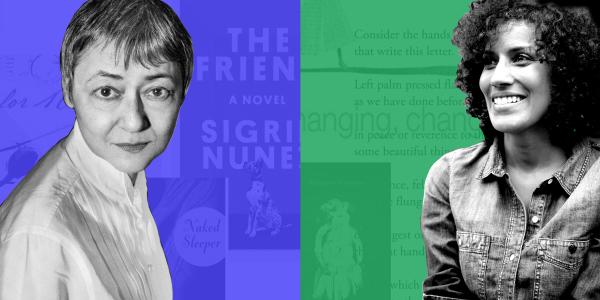
For the second installment of the Helen Zell Visiting Writers Series, we will be joined by Sigrid Nunez and Aracelis Girmay. Nunez is a novelist who has published seven books, the most recent of which is The Friend. She is interested in writing about language, memory, and writing itself in her work. Girmay is a poet whose work, according to the Poetry Foundation, “trace[s] the connections of transformation and loss across cities and bodies.” These poets have powerful messages about the subtleties of human nature. Join Michigan’s literary scene on Thursday, September 27 5:30-6:30 p.m at the UMMA’s Helmut Stern Auditorium.

REVIEW: Fiction At Literati: Akil Kumarasamy


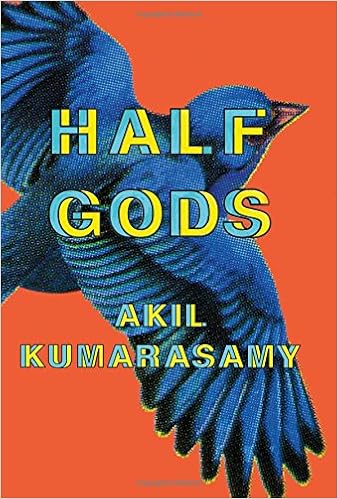
Image result for half gods 

am discovering a litany of South Asian female writers, from the much-loved Jhumpa Lahiri and her Pulitzer-Prize winning collection of short stories, Interpreter of Maladies, and recently, the Fatima Farheen Mirza’s brilliant debut novel, A Place For Us. Being Indian myself, it is refreshing to see the emergence of these writers documenting their stories in gorgeous, intelligent prose. I am thrilled to announce Akil Kumarasamy with her debut collection of ten short stories entitled Half Gods among their ranks.

Kumarasamy’s ten stories tell the loosely interconnected lives of immigrants, people displaced by the civil war in Sri Lanka, a Chinese neighbor, and many others. Myriad viewpoints in character and perspective– bouncing between first, second, and third person– and an interesting cast of characters elucidates Kumarasamy’s deep wisdom in exploring the lives of many different kinds of people. You feel as though she knows more than she ought to know about subtle suffering, disorder, displacement– but there is a viscerality to the characters that makes them all real.

This is how I felt at Literati while Kumarasamy read a short story from her collection. The story she’d read was written in the second person, which gave it a sense of being fragmented; it felt like we knew a whole lot about the main character without ever learning their gender or name. It was a skilled use of the second person, as her character was an actor and the perspective amplified the effect of him in a mask. Kumarasamy’s language hones in on the physical details and nuances of the world around her, and looks at the world with almost godly eyes– as though consequences and actions are rendered as one. Her work is lyric– poetic– rich. Divinely so.

And yet, I felt occasionally that there were aesthetic niceties that strained the story. This is perhaps a matter of personal preference, and I have not read but two stories in the collection. At least during the reading, I felt sometimes disconnected from the character and story. I think this may be because I didn’t have the text of the story in front of me and I had to rely solely on oration– sometimes that can be tricky with stories rich in language and content.

Kumarasamy read one story at the reading. I wish she could have read more. I wanted to compare a second person story to one of her other stories, as I feel like a second person story is a category of its own.

When Akil Kumarasamy releases her next book, I await to read it– I’m interested in the projection of this writer’s career and the literary feats she will accomplish. She’s released a stunning debut, acclaimed by the New York Times, the New Yorker, USA Today, and I’m sure anything she has yet to make will stir the literary community.

PREVIEW: Zell Visiting Writers Series: Esmé Wang & Danielle Lazarin

Esme Wang and Danielle Lazarin

Kicking off the first installment of the Zell Visiting Writer’s Series for fall 2018 is  novelist and essayist Esme Wang and short-story writer Danielle Lazarin. The Zell Visiting Writers Series invites one or two distinguished writers for a reading of their literary work. These authors have critically acclaimed reception for their fiction, and engaging in their work and this event is a great way to be involved in the literary scene on campus and beyond.

Born in the Midwest to Taiwanese parents, Esme Wang is the author of the Border of Paradise, which is her debut novel. It is set in a post-war America and centers around the secrets and the haunting mental illness of family members affecting generations to come. A graduate of the University of Michigan’s MFA program, Danielle Lazarin has recently published her debut collection of short stories which has been called a brilliant look into the inner lives of middle-class women. Both these writers have much to say about womanhood, complex mental lives, and the truth of being human. Attend the reading Thursday September 20th, 2018 from 5:30-6:30 at UMMA’s Helmut Stern auditorium.

REVIEW: Lecture: Race, War, and Refugees with Viet Thanh Nguyen

Viet Thanh Nguyen received critical acclaim for his book The Sympathizer, earning a Pulitzer Prize in 2016 and a string of other awards and recognitions. It was to the utmost excitement of the University to host him with the collaboration of over a dozen student organizations and departments on campus. The reading and lecture was introduced by the well-loved and exuberant Emily Lawsin, Professor of Women’s Studies and American Culture, who declared his novel as a major work of representation for Vietnamese Americans, and the Vietnamese Student Association; both welcomed Nguyen to the stage with raucous applause. There is much to be said about both the reading and lecture, though I will focus on the reading in this review.

Nguyen’s reading was moving in an unexpected, visceral kind of way. Framed by the lecture’s air of social justice and interwoven with his own personal accounts of being a refugee in America after the Vietnam war, the reading was elevated in its state of importance in the packed theatre. The book follows the circumstances of a nameless narrator moving from the final days of Vietnam to his shift to Southern California. The narrator is a double-agent, spying on Southern Vietnamese forces until he is forced to the US.

Nguyen’s writing is witty, funny, takes the often mundane or silly and complexifies it into something rich and important. There was a passage that he read on the stench of Vietnamese fish sauce, which could not have been more eloquent and hilarious: “This pungent liquid condiment of the darkest sepia hue was much denigrated by foreigners for its supposedly horrendous reek, lending new meaning to the phrase ‘there’s something fishy around here,’ for we were the fishy ones.” He tackles Vietnamese identity with the depth of someone who is acutely aware of all facets of his American experience– from the microaggressive comments from white people to the guilt of being a half-refugee, half-American and having to choose one to the strange, wacky clashes in culture and tradition.

One of the students asked a question about how one can make their story readable and engaging, especially if it focuses on issues that its audience won’t know much about. Nguyen explained that the whole point of writing a story is to elucidate experiences that its audience doesn’t know about. He knows that Vietnamese fish sauce may be an experience limited to a few, but it simply has to be included if one is to tell an honest story– how it’s included is the question. And how Nguyen does it is brilliant: with rich language, an exuberant narrator; unafraid to grapple with unsettling topics; sensitive yet risky; bold enough to say, in the end, this: “We used fish sauce the way Transylvanian villagers were cloves of garlic to ward off vampires, in our case to establish a perimeter with those Westerners who could never understand that was truly fishy was the nauseating stench of cheese. What was fermented fish compared to curdled milk?”

More than anything, what moved me about this event is how important it was. It was a space for the APIA community to be represented and heard. Nguyen made a point that stays with me still: he said that he was disappointed that a New York Times review of The Sympathizer described Nguyen as “giving a voice to the voiceless”. His objection: “We already have a voice. Do you know how loud Vietnamese people are? We have a voice, but the problem is, we’re not heard.”

Most critically acclaimed stories on the Vietnam War are often from the American perspective, like The Things They Carried or Matterhorn. They all focus on how the war affected America and wounded its soldiers– it’s the same sentiment of how Americans start wars and then make a movie thirty years later on its damaging consequences on its poor citizens. And I don’t mean to diminish the trauma of the war on Americans– it’s just that when you think about it from a bigger perspective, it’s a bit selfish to see only that. We’d left a country with hundreds of thousands of orphaned children, over a million refugees, and a simmering hatred between North and South Vietnam that still lasts today. At least our stories must reflect both sides. At least our stories, if anything, must do the invisible job of reconstructing our wars so we remember them through a lens of truth, justice, and of honesty that couldn’t be served before those stories were made. The Sympathizer ranks among those stories, and Viet Thanh Nguyen among its brilliant tellers.