REVIEW: BTS PTD ON STAGE – SEOUL: LIVE VIEWING

Pulling up to the theater, with McDonalds tucked under our winter coats, and a barely-secured parking spot (the lot was completely full), we were hyped for the 8:30 PM show. The live simulcast was not actually live, due to time zones. (Though admittedly, I would have readily shown up to the real thing at 4 AM; international fans are used to such release times – something about having to set an alarm for ass-o’clock in the morning makes the whole thing more exciting.) This weekend held BTS’ first concert of 2022, a 3-day show, and Saturday was the only day it would be streamed in theaters all around the world. In the throng of the theater lobby, we kept exchanging glances with other ticket holders, and it was like we could somehow tell who was also there for BTS. Despite all this, our cinema wasn’t a packed one: less than half capacity, a comfortable audience.

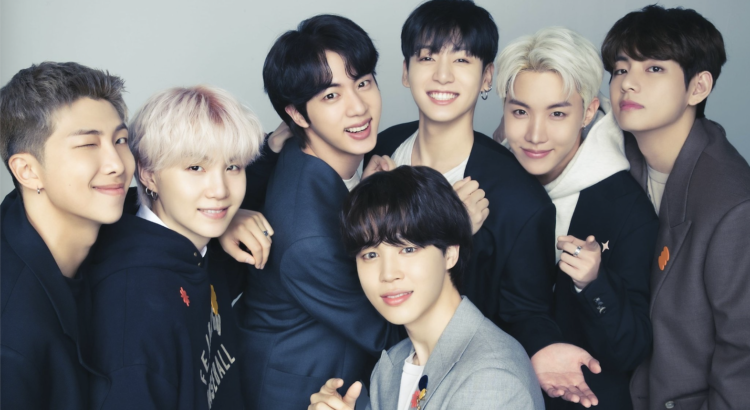
What’s different about this concert, is that the entire show included all seven members – no solo songs or subunits – because the band wanted to see ARMY (the moniker for BTS fans) for as long as they could. This, I really enjoyed; their stage presence and energy is best all together, as a group. Existing as seven also allows them to joke with one another. They especially had fun teasing the audience, by trying to trick or provoke them into shouting and cheering past the no yelling/chanting policy, due to South Korea’s COVID restrictions.

My favorite performances were that of Black Swan, a breath-taking bird-like dance intro, followed by contemporary trap-beat choreography. The all-black ensemble is highlighted by the background dancers’ feathered sleeves, which create flowing transitions and haunting waves. During Telepathy, an upbeat retro song the band wrote to “melt down the feeling of not being able to meet with fans” (Genius), the boys rode moving platforms that circle the stadium’s first floor, allowing them to get closer to the second and third floor audiences.


BTS during Black Swan

It started raining halfway through, but they sang, danced, slipped, and smiled through it all.

The whole performance was as expected: rigorously well-rehearsed, show-stopping, grand-scaled. I was, however, surprised that there were no English subtitles, since during most of their live broadcasts, there’s usually real-time translations uploaded to the bottom of the screen, letter by letter. My Korean isn’t perfect, but I can understand for the most part. For this, I was grateful. Although most non-speakers can sing BTS’s lyrics thanks to romanization and translation guides, during the speeches, I think most people were lost. When the members asked the audience to clap three times in succession, or for other call-and-responses, my row’s were the only ones ringing through the theater.

During their closing speech, the leader of the group, RM said, “Honestly, I think there are lots of people who find these middle concerts (2nd day concerts) a bit of a shame. The 1st concert is the first, so they feel excited; the last concert is the last, so they cry and it’s touching. So there are people who might think that the middle concerts are a little iffy/ambiguous. But what’s very special about today is, because there is no online streaming, only you all who are here and the ones in the movie theaters are the ones seeing us. And above all, the rain, they said it’s not coming tomorrow. Isn’t this a rare stage effect that you all can enjoy only today? And like the cherry blossoms flying/falling, I think it was even more special, because we got to be together.” 

BTS taking a group photo with ARMY

With twenty-two songs, five ments – “the time when those onstage introduce themselves, speak to fans, and give speeches” (Morin) – plus five pre-recorded VCRs (videos they play between sets), the performance amounted to around 3 hours and 15 minutes. Yet, as people started to file out, I couldn’t help feeling like it all went by so quickly. I’m seeing BTS in person at their Las Vegas show in April; how much faster would that fly by? The girls I went to the theater with would also be my concert buddies that weekend. This was our first time hanging out together outside of church, where we met. The fact that our love for this band brought us together and helped me, an introvert, sidestep the dreaded small talk stage of a new friendship, is so cool. I think that’s what I love most about BTS: their social impact– both breaking the barriers of the mostly white, American music scene, and helping to unify diverse communities of people through their music.

sources:

https://www.refinery29.com/en-us/k-pop-music-fans-terms-meaning#:~:text=Ment,to%20fans%2C%20and%20give%20speeches.

https://genius.com/Genius-english-translations-bts-telepathy-english-translation-lyrics

https://twitter.com/haruharu_w_bts/status/1502741265602932737?s=20&t=8yKr5zAL2lCf9keF8TQNBw
REVIEW: The Philadelphia Orchestra – Night 1

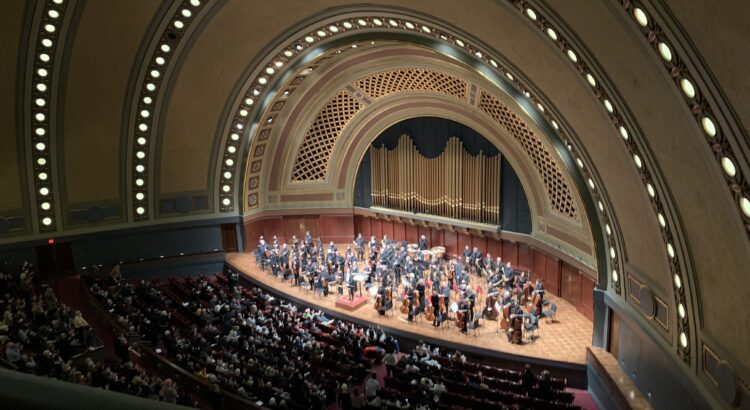
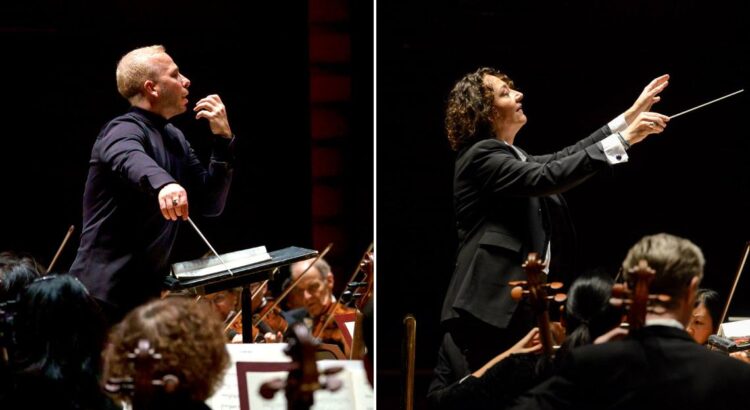
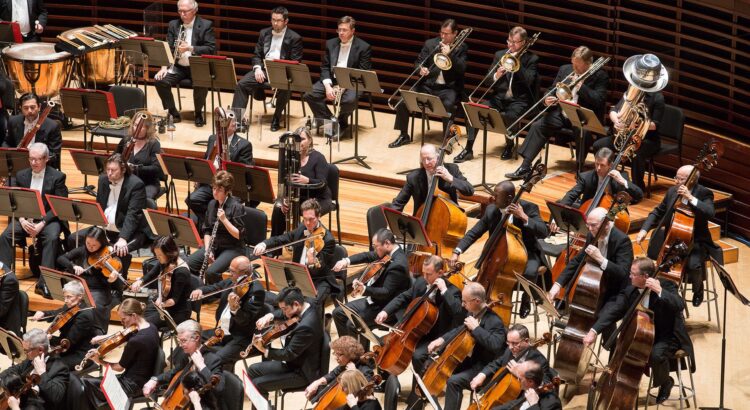
This past Friday evening, the Philadelphia Orchestra, with Music Director and Conductor Yannick Nézet-Séguin, took the stage at Hill Auditorium for a concert that was one of the best that I can remember. The program paired Wynton Marsalis’s brand-new Tuba Concerto (which premiered in December 2021) with Johannes Brahms’s Symphony No. 1 in c minor, Op. 68.

The Tuba Concerto, which was performed by Carol Jantsch, Principal Tubist and University of Michigan graduate (for whom the piece was, in fact, written), was spectacular. Though the tuba is an orchestral instrument that generally maintains a low profile musically, if not physically, this piece featured it in all its glory. Defying categorization, the four-movement piece incorporated a wide range of musical genres and idioms, including jazz and blues. Indeed, it was energetic, maintained a toe-tapping groove at times, and showcased the mind-blowing technical and stylistic range of Ms. Jantsch. In one of the most fascinating parts of the concerto, during the first movement (entitled “Up!”), Ms. Jantsch employed multiphonics, a technique in which she played one note on her tuba while simultaneously singing a different pitch. The effect is almost mystical, and one that causes listeners to sit forward in their seats and wonder where the additional pitches, which almost sound like a sort of humming, are coming from. The concerto also made use of a wide variety of percussion instruments and sounds, including vibraphone, cymbals, bells, handclapping, and others, to create an ever-changing soundscape. Because this piece is so new, no recordings yet exist, but I am anxiously awaiting when I can hear it again!

In the second half of the concert, Johannes Brahms’s Symphony No. 1 in c minor, Op. 68 was equally stunning, for different reasons. The rich sounds of Brahms’s composition were a perfect match for the Philadelphia Orchestra, and they enveloped Hill Auditorium. In particular (although I am biased as an oboe player), I will not soon forget the tender, singing oboe solo at the beginning of the symphony’s second movement (Andante sostenuto), performed by principal oboist Philippe Tondre.

To rapturous applause, the Philadelphia Orchestra concluded the concert with an encore of “Hail to the Victors,” performed on tuba by Ms. Janstch, complete with blazing technical display. For the final chorus, the full orchestra joined in, led by Mr. Yannick Nézet-Séguin wearing a University of Michigan cap.

Program aside, it was an enormous pleasure to be able to hear the Philadelphia Orchestra in Hill Auditorium. Their depth of sound and musical coordination is evident in everything that they play, and Mr. Yannick Nézet-Séguin’s energy and connection with the orchestra as a conductor is clear, even from the upper rows of the auditorium. It was a performance not to be missed!

REVIEW: The Philadelphia Orchestra

Call me biased, but one of the best parts of being a violinist has to be the concertos. They’re iconic, flashy, and for the musician playing, career-defining. The Bruch Violin Concerto No. 1, in particular, has a special place in my heart, so I was delighted to hear that concertmaster David Kim would be performing it alongside the Philadelphia Orchestra at the Hill Auditorium in concert last Saturday evening. A quintessential staple of violin repertoire, the piece truly comes alive with the many different interpretations by its players.

Opening the concert, however, was a more avant-garde piece by contemporary composer Missy Mazzoli. The Sinfonia (for Orbiting Spheres) sneaks in with a distinctly soft, grainy texture provided by violin and harmonica before expanding to bellowing slides in the lower strings. A mixture of serene and ominous, the composition gives off the impression of irregular, interfering sound waves to convey the vastness of space. Due to its unique instrumentation, they had to take some time to switch out quite a few instruments before the following concerto!

If I were to give one word to describe each movement of the Bruch, I would say intense, longing, and triumphant. However, what makes the concerto so compelling is the complexity of emotion that lies within each category. The violin enters the first movement with a subtle, unassuming G, before erupting into crisp double stops and finger gymnastics. The orchestral passages here, a textbook example of tension-building, are somehow just as attractive as the solo. David Kim’s version had an unmistakably sweet quality, which particularly shined when he got to the slower second movement. From the balcony, I had a great view of his precise bow control which allowed for both a timid, “held back” sound and an unhindered singing voice above the orchestra. In contrast, Kim’s third movement was light, clean, and playful despite the heaviness of all the chords. It was a pleasure to be able to hear in person.

Concluding the concert was Schubert’s Symphony No. 9 in C Major. I had never heard it before, but a particular amusing comment written by Doyle Armbrust of the Spektral Quartet in the program guided my listening: “Franz Schubert wanted to be an opera composer with all the desperation of a hollow-eyed film school grad shopping a script from his garden-level studio in Burbank. My take on him is that he would have been a lot like that one friend — you know, the one who appears to have taken up permanent residence on your couch, but is somehow redeemed by his charisma in conversation?”

The symphony interestingly begins with just horns. A lighthearted melody gets passed around the orchestra like a breath of fresh air—this is later bolstered by bass drum and big, operatic tuttis. Nathalie Stutzmann conducts with an infectious swagger, which I enjoyed watching here. My favorite movement was probably the second one, opening with a plucky oboe solo over a quirky, mysterious, tiptoeing base of strings and interrupted with sudden outbursts of emotion.

Overall, the concert program brought forth a lovely combination of familiar and unfamiliar sounds. As expected, the Philadelphia Orchestra did justice to these works!

PREVIEW: The Philadelphia Orchestra – Night 2

At 8 pm on Saturday, March 12, the Philadelphia Orchestra returns to Hill Auditorium for the second night of their two-performance residency!

Saturday evening’s program includes Sinfonia (for Orbiting Spheres) by Missy Mazzoli, Violin Concerto No. 1 in g minor, Op. 26 by Max Bruch, and Symphony No. 9 in C Major, D. 944 by Franz Schubert. The Bruch Violin Concerto will feature David Kim, concertmaster, on violin, and the performance will be conducted by Nathalie Stutzmann, principal guest conductor of the Philadelphia Orchestra.

Tickets for the Philadelphia Orchestra are available at the Michigan League Ticket Office or on the University Musical Society website. Students may purchase discounted tickets for $12 or $20 with valid student ID, or, for a free ticket, make use of the UMS Bert’s Ticket program!

PREVIEW: The Philadelphia Orchestra – Night 1

On Friday, March 11, 2022 at 8:00 PM, the Philadelphia Orchestra will return to Hill Auditorium for the first performance of a two-day residency. Friday’s program, which will be conducted by music director Yannick Nézet-Séguin, features Wynton Marsalis’s Tuba Concerto and Johannes Brahms’s Symphony No. 1 in c minor, Op. 68.

The Tuba Concerto is particularly exciting, because it will feature Carol Jantsch, principal tubist of the Philadelphia Orchestra, the first female tuba player in a major symphony orchestra, and University of Michigan School of Music, Theatre & Dance alumna! Jantsch performed the world premiere of the concerto in Philadelphia in December 2021.

Tickets for the Philadelphia Orchestra are available at the Michigan League Ticket Office or on the University Musical Society website. Students may purchase discounted tickets for $12 or $20 with valid student ID, or, for a free ticket, make use of the UMS Bert’s Ticket program!


REVIEW: Enter the Haggis at the Ark

I love the Ark. I love its hallway lined with black-and-white frames of the performers that have graced its stage in years past. I love that it’s run by volunteers who will always help you find the best seat. I love how the stage isn’t roped off or even that tall – if you’re sitting close enough you can kick back and rest your feet on the edge, feeling the vibrations of the band’s sound.

I also love the Toronto band Enter the Haggis. I found them by accident when I was in the 6th grade. I had been going through a strange Irish/Celtic rock music phase and was jamming along to my The Corrs radio station on Pandora when I first heard their song “To the Quick”. There’s something about the Highland bagpipe that is so gorgeous to me. Each note rings clear, louder than anything else surrounding it, and without any vibrato or chance to cover up what the note is. You can’t lie on the bagpipe! And the combination with fiddle and rock guitar is so interesting.

My favorite Haggis songs are “Musicbox” and “To the Quick” — two tracks off of their oldest album from 2005, and two of the few that have no lyrics. Coming to hear them live was a pretty magical way to experience those songs, but was also a great introduction to their more recent work. I could notice a few changes. I love it when bands experiment with their sound – I don’t think any creator deserves to be put in a box where they can’t change.

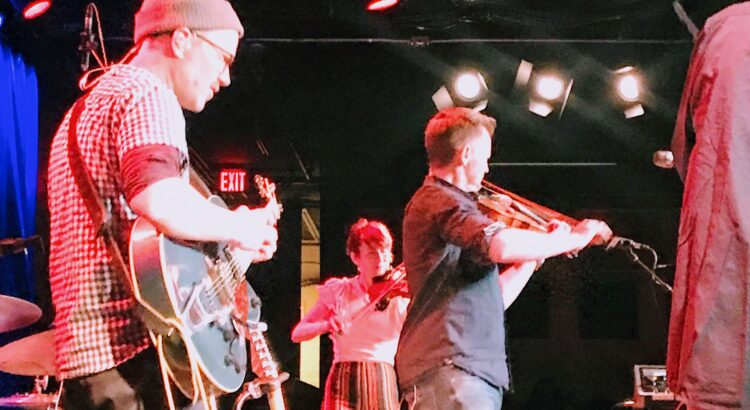
At the show everyone played a little bit of everything, it seemed. There were vocals and keys and guitar and drums and sometimes, spontaneous battles between the fiddle and harmonica! I sat up close to Craig Downie, who seemed to know how to play basically every music-producing thing on this planet. I do not kid when I say that Craig had his own little *table* with a spread of instruments that he would swap between at will. It was marvelous to watch him go from swinging around a giant set of bagpipes to a tiny little harmonica or piccolo to a moon-shaped tambourine. The band joked that they needed to set up a special “Craig Cam” just to follow his movements.

Craig Downie playing the Great Highland Bagpipe


Just before starting the last song on their set, the frontman turned toward my part of the room and said “This song is dedicated to this pair right here. They’re a mother and daughter, this is their 5th concert of ours in a row that they’ve come to – and they were late to our show tonight because they were getting MATCHING Haggis Head tattoos.” At that the pair both rolled up their sleeves to show the audience proof. It was wild. Someone to their right yelled “That there is COMMITMENT” and we rolled into the final song. Everyone in the audience was clearly there to support the band and to share that excitement with each other, and by the end nobody was standing still.

I hope that more artists find ways to play their music in smaller venues again. Big stadiums have their own kind of magic, but they can’t replicate that feeling of intimacy that comes with being so up close and personal.