PREVIEW: Candlelight Concert

As the weather continues to treat us with frigid temperatures and icy gray slush, warm yourself up at the Candlelight Concert this Saturday at 8:00 PM in the Michigan Union Rogel Ballroom!

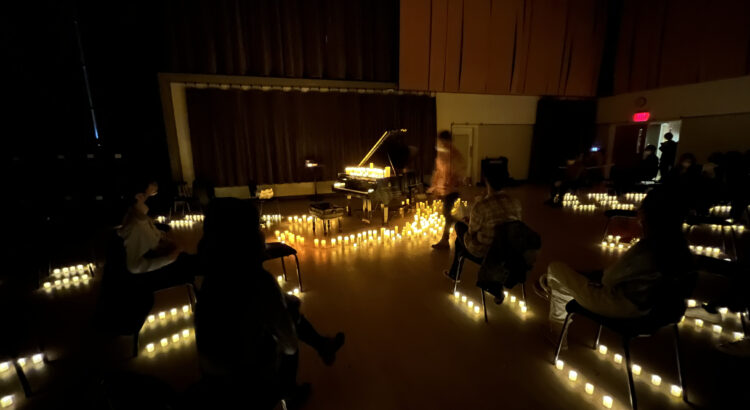
An entirely student-led event, the concert will feature 15 undergraduate pianists performing iconic classical and jazz music. According to organizer Jacob Wang, they have amassed around 750 LED candles that will decorate the piano and aisles to bring guests a cozy visual experience. Additionally, any extra profits from the event will go towards the piano department for scholarships, maintenance, and projects.

With a special focus on making the concert accessible to students and the general public, the program will incorporate a variety of genres and well-known pieces. I always get excited when I see Romantic composers on the list, but I also look forward to hearing Gershwin’s The Man I Love and I’ve Got a Crush on You, as well as Somewhere Over the Rainbow. Plus, tickets are free for UM students! What are you waiting for?

Event info: https://events.umich.edu/event/91755

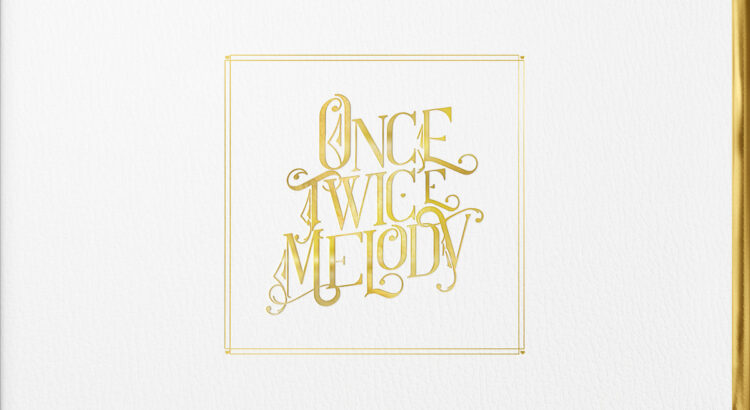
REVIEW: Beach House – Once Twice Melody

The music of the American duo Beach House is a vessel for dramatic and cinematic feelings; anything but simple, the deeply layered synthesizers and breathy vocals of the band create a soundscape so dreamlike and meditative that listening nearly becomes an out-of-body experience. Often labeled as “dream pop”, a genre combining pop melodies with dense effects and experimentation reminiscent of 90s shoegaze, Beach House’s distinct psychedelic sound has achieved incredible commercial success. The enchanting melancholia of “Space Song” earned the track 300 million streams on Spotify. In 2022, they return to the world of music with a highly anticipated eighth studio album, Once Twice Melody.

The album is divided into four chapters–– or discs–– which are released periodically. The second chapter was released on December 8th, and the upcoming two chapters are set to be released by February. Judging by the half of the album that is already available, containing stellar tracks such as the surreal title track “Once Twice Melody”, the album is set to be one of Beach House’s best–– both conceptually and production-wise. The introduction of each track is reminiscent of a film score set in space; layered strings and experimental glimmering sounds evoke an atmosphere rich in color, existentialism, and a deep longing for the past. The vague and breathy lyrics, when decipherable, suggest deep retrospection and romantic tragedy. The lyrics of “Pink Funeral” on Disc 1 mirror the poetic artistry of the sound itself:


“Once was a fairy tale
Then it all went to hell
Swans on a starry lake
Hearts that were made to break
Tears through a white lace veil”


From the relatability of lost love in “Runaway” to the inevitable end of whirlwind fling in “New Romance”, Beach House balances their experimental sound with accessible themes and messages. Their most powerful messages, however, are found less in the lyrics than in the outros and instrumentals; marked by the slow build of reverberating sparkling melodies and fuzzy echoes, the sound of Beach House only seems fitting for observing the uncompromising mysteries of space and embracing the beauty of the unknown. The theme of love paired with the dark magical ambiance creates a stark contrast; while singing about the fallibility of humanity, the music explores a celestial landscape that transcends human matters.

Whether pondering the paradoxes of existence or lingering on a failed love story, Beach House’s ethereal release Once Twice Melody has a track to accompany your introspection. The excitement has just begun–– fans of the first two discs can eagerly await the second half of the album, offering a slower process of enjoying the art form. The first two discs of the EP are currently available on Spotify, Apple Music, and other streaming platforms.

Just one day after the planned release of the last disc, Beach House comes to Detroit to perform at the Royal Oak Theatre. Get tickets while you can to enjoy the music in person on February 19th–– or, if Once Twice Melody speaks to you, consider exploring the rest of Beach House’s discography.

REVIEW: Jazz at Lincoln Center Orchestra with Wynton Marsalis

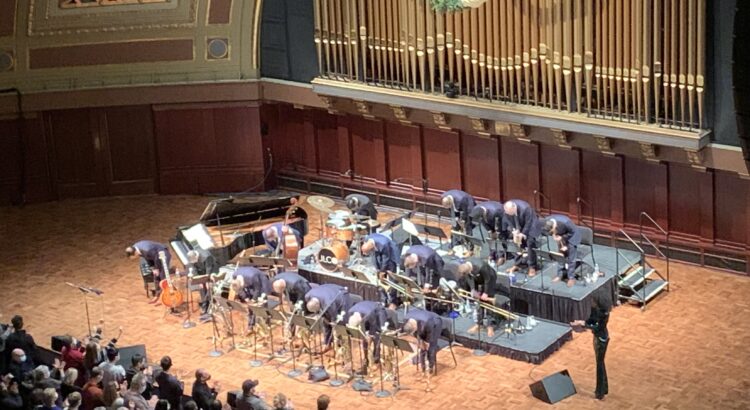
Coming back from Thanksgiving break to a snowy campus was made all the better with a performance by Wynton Marsalis and the Jazz at Lincoln Center Orchestra. The audience’s excitement and energy was palpable as they waited for the talented musicians to begin. Marsalis and the JLCO warmed up with some Christmas classics like “Here Comes Santa Claus” and “Jingle Bells”. The big band interpretation of these holiday classics was fantastic and really got the audience into the holiday spirit. Marsalis made for a charming host, as he shared anecdotes he’s collected over the years as he introduced each song on the set list. With each song, various members of the Jazz at Lincoln Center Orchestra were able to play solos with dazzling skill, only to be met by a very enthusiastic audience.

The band was also accompanied by Alita Moses, jazz vocalist, for a few songs. Her incredible voice played in perfectly as the band played “Mary Had a Baby”, a more spiritual song. Moses was a wonderful addition to the night, and her stunning voice remained a highlight of the entire performance. The night ended with thunderous applause as the band played “Go Tell it on the Mountain” with high energy.

One of the reasons why the performance was so memorable was in fact the crowd at Hill Auditorium that night. For many, this was the first time attending an in-person concert since the beginning of COVID, and the festive music was reflected in the tone of the crowd. It was amazing to see a jazz legend perform on my college campus, and I was all the more ready to celebrate the holidays afterwards!

REVIEW: Blue Bop Jazz Orchestra Winter Concert

When a band says they only rehearsed their set for two months, I do not expect the level of quality and pizzazz that I heard at the Blue Bop Jazz Orchestra’s Winter Concert last week.

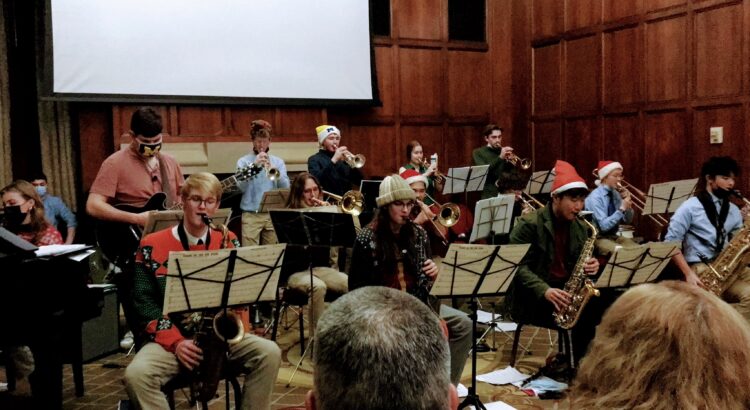
The Blue Bop Jazz Orchestra is a student-run swing band at UM! As they warmed up in the Hussey Room at the Michigan League before the concert, I marveled at how they got the whole band to fit in such a tiny space, music stands and elbow room and all. The rhythm section was tucked away behind the piano so sadly from my seat I couldn’t see them very well. The advantage was that their sound truly filled the whole room.

They alternated between classic jazz pieces and holiday songs, lending each one a great interpretation of swing and mood. Complicated, syncopated rhythms are one of the trickiest parts of playing jazz music. The student leader/conductor of the band was also playing guitar, so the players only got a quiet count off at the beginning and then had to find their own way without a conductor for the rest of the piece. They did a fantastic job of it and had such a strong sense of rhythm with each other.

Improvisation is another defining element of jazz. I could never do improv but it’s one of my favorite things about jazz. It involves players spontaneously coming up with melodies over the chord progressions and accompaniment lines played by the rhythm section. It’s basically music composition on the spot!

The improv soloists were all so impressive. When a player was about to solo in the middle of a piece, they would stand up from their chair and rock the room for anywhere from a few seconds to a minute while the other sections backed them up, then sit back down to wild applause from the audience.

Overall I’m so glad I discovered this group and I cannot wait for their next concert. Their last piece of the evening was my favorite. I included a short clip of the beginning of it down below…let me know if you recognize the tune in the comments 🙂

REVIEW: Jader & Hilary Hahn with the Detroit Symphony Orchestra

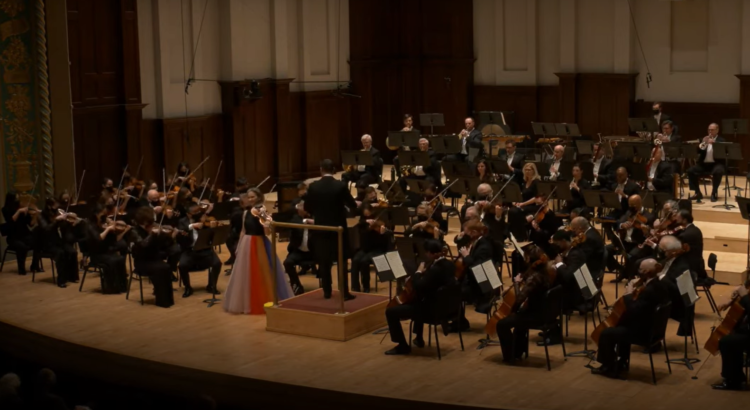
Home to the fourth oldest orchestra in the United States, Orchestra Hall is truly a magnificent venue. December turned out to be the perfect time to visit, as the holiday-themed pine garlands and twinkling string lights in the lobbies paired beautifully with the red carpets and warm lighting to evoke the Christmas spirit. As a testament to Hilary Hahn’s influence and outreach work, I noticed that the audience had a notably larger proportion of younger attendees than what one would typically find at a symphony concert—including me and my four friends, of course. I found it funny when one friendly usher asked which one of us was “the violin player of the group,” and we all raised our hands. 

The DSO opened the concert with Bedrich Smetana’s Overture to The Bartered Bride, a bright, vivacious piece full of moving notes and striking dynamic changes. Still groggy from the trip from Ann Arbor, I found the piece was a great opener to sit back, build excitement, and appreciate the crisp acoustics of the hall.

Next, Hilary Hahn took to the stage to perform the Dvorak Violin Concerto in A minor. Distinctly contrasting with the previous piece, the concerto featured a dramatic introduction that showcased Hahn’s virtuosity—namely some pitch-perfect runs climbing up the fingerboard and ending with her insanely powerful fourth finger vibrato. I was amazed by how clearly her sound projected over the orchestra to our seats in the balcony. The second movement took on a more somber tone, with a dark-yet-sweet melody echoed by the flutes. Meanwhile, the final movement was clean and bright, playing with a delicate, bell-like motif introduced by the soloist at its beginning. Cue the standing ovation. 

Going off the program, Hahn took some time to say a few heartfelt words about the recent tragedy at Oxford High School and dedicated a solo piece she often plays alone when thinking through things. In this new context, the unaccompanied Bach Sonata for Violin Solo No. 2 in A minor, Andante adopted a whole new depth of emotion. In that hushed room packed with hundreds of people, the longing, sustained melodic line sung over an underlying current of pulses, like a heartbeat. 

After intermission, the DSO performed what is probably Smetana’s well-known piece, The Moldau No. 2 from Má vlast. The piece took the audience on a journey along a great river of the same name running through Czechoslovakia, featuring flowing lines to illustrate the intermingling of hot and cold water over the natural landscape. 

To conclude the concert, the orchestra played Symphony No. 3 in C minor composed by Florence Price, the first African-American woman to be recognized as a symphonic composer. Jader Bignamini, the conductor, noted the importance of playing such underrepresented works that deserve to stand amongst iconic orchestral repertoire. An exhilarating mixture of warm melodies, jazzy-ragtime rhythms, and big brassy sections, the piece was truly refreshing to listen to.  

As expected, Hilary Hahn and the DSO delivered an excellent performance. I look forward to future visits to Orchestra Hall while I’m at UMich!

REVIEW: Viola Senior Recital by Kirsten Riggs with Pianist Naki Kripfgans

Before we dive in, a disclaimer: I played the cello in an orchestra in high school and therefore am hopelessly biased toward the superiority of that instrument.

HOWEVER! I am here today to begin to build an appreciation for the thousands of other instruments out there, starting with….the viola.

The viola gets made fun of a lot. Often mistaken for a violin, it’s actually slightly larger with a deeper sound and often plays the “inner voices” in a symphony. They’re crucial for harmonies in music composition but their voices are harder for the ear to pick out when playing in a symphony in between the deeper voices of the cello and bass and the melody voice of the violin. Over six year of playing in an orchestra, I can remember playing exactly one piece where the violas had either a melody or a solo part. They were very under-appreciated by music composers until the 20th century when more viola soloists came to prominence and people realized they should really write better music for this beautiful instrument!

PROGRAM
Suite No. 4 – Johann Sebastian Bach: https://youtu.be/70hcPBdzD1c

Sonata for Piano and Viola in E flat major op. 5 no. 3 – Johann Nepomuk Hummel: https://youtu.be/cFZyCna2vQA

Sonata for Viola and Piano op. 11/4 – Paul Hindemith: https://youtu.be/NxN2vrDeFjk

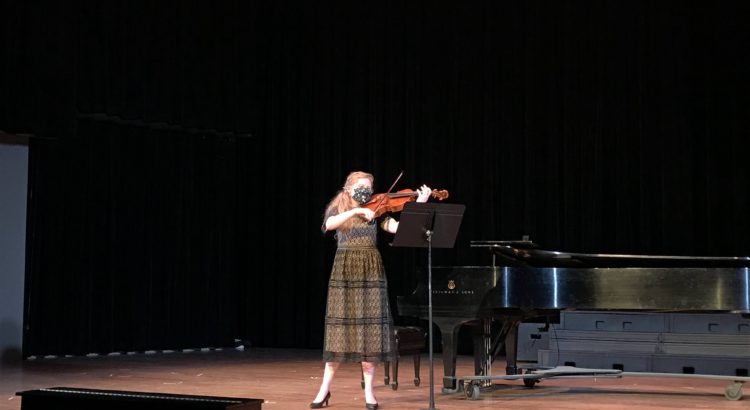
The performance venue was the McIntosh Theatre in the Earl V. Moore music building. The recital hall had a lot of seating and was acoustically resonant. Kirsten Riggs, the violist, had a great stage presence and seemed completely absorbed by the music. A stand with sheet music was set up in front of her but she hardly seemed to need it and often closed her eyes while playing. Something I noticed was that she would sometimes breathe in the pauses between phrases or at the very beginning of a piece before she played the next note. I thought it was interesting because it’s the same thing I was taught to do as a cellist when I played in an ensemble to help with keeping rhythm and synchronizing with the other players.

My favorite was the very last piece by Hindemith. It was so INTERESTING and dark and twisty, with a mood and tone that seemed to gain new dimensions every minute. Give the part from 10:25 to 11:30 in the video linked above to see what I mean. The piano part played by Naki Kripfgans paired gorgeously with the viola, and both musicians coaxed such a variety of moods out of their instruments. I loved their interpretation of the emotions.

I’ll be honest and say I don’t understand some of the stage mannerisms for classical music performances. For example, between each piece the performers would walk off the stage to a side room. Then a different person would walk out, remove the sheet music from the stand, and walk back. Then after a minute the performers would walk back on stage, set up their new sheet music, and resume their positions to start the next piece. It seemed like a lot of unnecessary walking to me! If there’s some important history behind this ritual and I have offended every classical soloist on Earth, please educate me so that I too can be in on the secret.

Tune in next time for when Himaja appreciates even more non-cello instruments! Up next….harp? tuba? kazoo? You decide!