REVIEW: folklore

I’ve always been a Taylor Swift fan. In second grade, “Love Story” was the first song I bought on my blue ipod Nano. In third grade, my dad took me to my first ever concert: the Fearless tour at the Allstate Arena. In sixth grade, my best friend’s dad picked us up from school the day Red came out and took us straight to Target to buy our copies. For me and so many others in my generation, Taylor Swift’s music was a pivotal part of our childhoods;  as we grew up, we watched her cross the bridge from country to mainstream pop, a feat few others before her were able to accomplish, and become one of the most influential artists of the decade. 

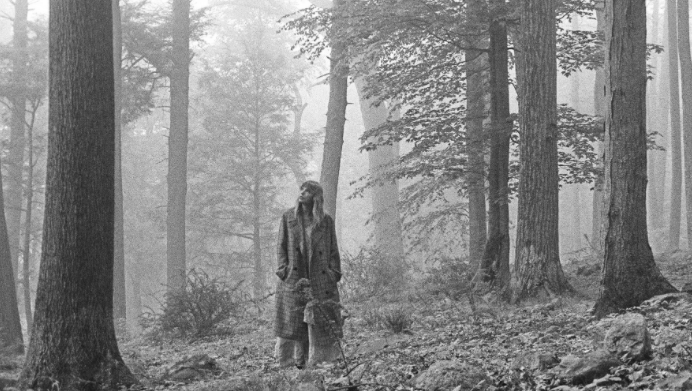
Now, 2020 Swift has surpassed even this. In a surprise drop less than one year after the release of her seventh album,  Lover,  Swift blessed the music world with her eighth record: folkore. Her most mature work to date, and the first in her catalogue to be classified as alternative, folklore represents a Swift album that can appeal to even those who have vehemently avoided her work in the past, citing it as “girly” or “shallow.” Though I don’t agree with those critiques, I find it hard to believe Swift’s critics could continue to apply them to her latest work. folklore presents a beautifully crafted, interwoven series of stories, characters, and emotions set to mystical acoustics, proving that Swift’s music is anything but superficial. 

According to Swift, the record was penned in its entirety during this summer’s quarantine period. Matching this isolation, folklore is much more subdued than Swift’s last three high energy albums.  Slow, sad songs like “Exile” and “Illicit Affairs” create perhaps the most heart-wrenching listen since Red’s  “All Too Well.” Though an alternative record, Swift definitely references her country roots on this album, like during folksy ballad “Betty,” which features heavy acoustic guitar and harmonica. folklore is both a callback to the best work of Swift’s past and something new altogether. 

Other than its  shift in genre, the main feature that sets folklore apart from Swift’s previous work is its strong roots in fiction and storytelling, as opposed to solely detailing Swift’s own life experiences. “I found myself not only writing my own stories, but also writing about or from the perspective of people I’ve never met, people I’ve known, or those I wish I hadn’t,” Swift wrote of the album. Though she has dabbled in work like this before, like writing from a friend’s perspective in “Speak Now”,  or a neighbor’s perspective in “Mary’s Song”,  Swift’s talent for telling stories that aren’t strictly autobiographical has taken on a whole new life in 2020. For example, three songs on folklore, “Cardigan”,  “August”,  and “Betty”, depict the three different perspectives of a fictional love triangle, creating a  complex level of storytelling that surpasses anything similar that Swift has done before. 

Only expanding this idea more, the album is broken into different interconnected “chapters,” which Swift has detailed on her instagram and website, so far titled: “the escapism chapter”;  the sleepless nights chapter” ; “the saltbox house chapter” ; and “the yeah I showed up at your party chapter.” Each chapter has six songs, and these groupings suggest many different lenses through which to view them, hinting at all sorts of double meanings and hidden messages. The storytelling here is truly masterful, and allows the record to stay fresh for countless listens. 

The thing about Swift that really sets her apart from others in her field is her incredible talent for writing and lyrics, and folklore allows this skill to shine more than any of her previous albums. Musically speaking, folklore is a beautiful, relaxed, indie-sounding record, but nothing groundbreaking. Sound-wise, it walks the line between mellow pop and chill indie rock, just barely crossing over into the alternative category. If the lyrics and vocals were weak, this album might not be anything special. But they aren’t. They are Swift, at her raw, relatable, emotional best: beautiful,  honest, and breathtaking. 

Hearing folklore for the first time was the most positive reaction I’ve had to a new Taylor Swift record since Red in 2014, and I think that it might really be her best work to date. Even if you’ve never liked her in the past, this album could be the one to convince you that Swift does have something special to offer, in her songwriting and storytelling.  You can stream folklore on all platforms, and immerse yourself in the type of fairytale its name suggests.
REVIEW: Paul Taylor: Celebrate the Dancemaker

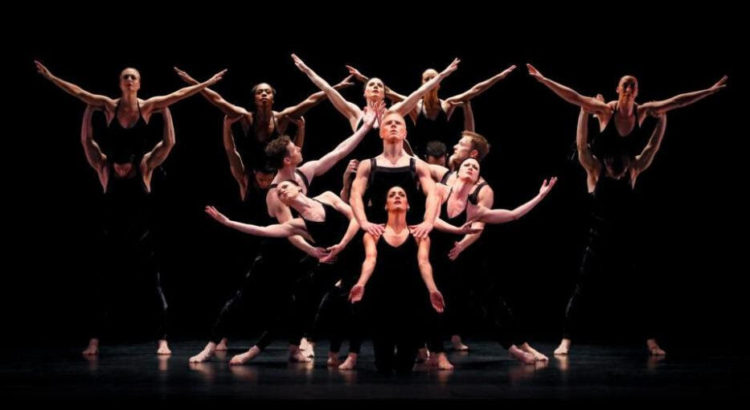
Though it was not a traditional performance, UMS’s online presentation of Paul Taylor: Celebrate the Dancemaker was nonetheless something special. Near-equal parts dialogue and archival footage, it featured University of Michigan dance historian and educator Angela Kane and Paul Taylor Dance Company Artistic Director Michael Novak in conversation about the works of modern dance choreographer Paul Taylor, as well as the history of the dance company he founded. Because it was a presentation specifically for UMS audiences, Paul Taylor: Celebrate the Dancemaker was also able to provide a sense of local community, despite being an asynchronously viewed video.

One of the best parts of the event was the insight that it offered into Paul Taylor’s wide-ranging and ground-breaking career. Taylor’s experiences as a painter and a collegiate swimmer informed his understanding of depth and movement onstage. Expanding the boundaries of modern dance at the time, he was also one of the first artists to employ a year-round, full-time dance company.  After opening with a rapid-fire montage of selections from Paul Taylor’s 147 works, the video featured Novak and Kane discussing some of Taylor’s most monumental works, and then showing excerpts of them.

The first work explored during the presentation was Taylor’s 1962 work Aureole, which challenged the notion that modern dance was limited to “modern music and weighty meanings.” In fact, Aureole was a lyrical, flowing, light work that, in the grainy black-and-white original film of Paul Taylor and Liz Walton, appeared to be almost be a modern impression of a classical ballet.

Then, Kane and Novak introduced audiences to Aureole’s opposite, Scudorama (1963). Lyricism was replaced with sharp angles, jarring rhythms, and a weighty, almost apocalyptic feel. Given the immediately apparent contrast between these two works, it is no surprise that Michael Novak referred to Taylor as the “master of light and dark.”

If the previous two works illustrated Taylor’s artist range, the next work featured, Le Sacre du Printemps (the Rehearsal), illustrated his artistic genius. A hyper-stylization of Igor Stravinsky’s (notoriously controversial in 190) ballet Le Sacre du Printemps, or The Rite of Spring, Taylor’s work challenges audiences to reexamine the original. Taylor’s work features a rehearsal for Stravinsky’s work inside of it, along with a plot line that closely mirrors that of the original ballet (which reminded me of the musical Kiss Me Kate, which does the same with Shakespeare’s play The Taming of the Shrew; also similar in its reimagination of an existing work is Max Richter’s work Vivaldi Recomposed).

After a short clip from the Academy Award-nominated documentary Dancemaker (1998), which offered a candid view of Taylor’s creative process, the presentation culminated in video of Taylor’s monumental work Promethean Fire (2002) in full. Like Aureole, the work juxtapositions modern dance with music that is decidedly not modern (In this case, it is Leopold Stokowski’s orchestral arrangement based on three of Bach’s keyboard pieces – the Toccata and Fugue in D minor, the Prelude in E-flat minor from Book I of The Well-Tempered Clavier, and the chorale prelude “Wir glauben all’ an einen Gott.” Chances are, you may recognize the beginning from the Toccata and Fugue in D minor). However, unlike Aureole’s quiet lyricism, Promethean Fire makes a much bolder statement: it is tense, fiery-seeming, and almost overwhelming during parts. In fact, it was the first and last time that Paul Taylor would utilize all sixteen dancers in the company in one work, on one stage. UMS calls Promethean Fire  ”arguably one of his greatest artistic achievements created in the wake of 9/11, proclaiming that even after a cataclysmic event, the human spirit finds renewal and emerges triumphant.” For an audience in today’s landscape, however, the work felt timely, and was a fitting conclusion to an artistically informative presentation.

REVIEW: Zeros

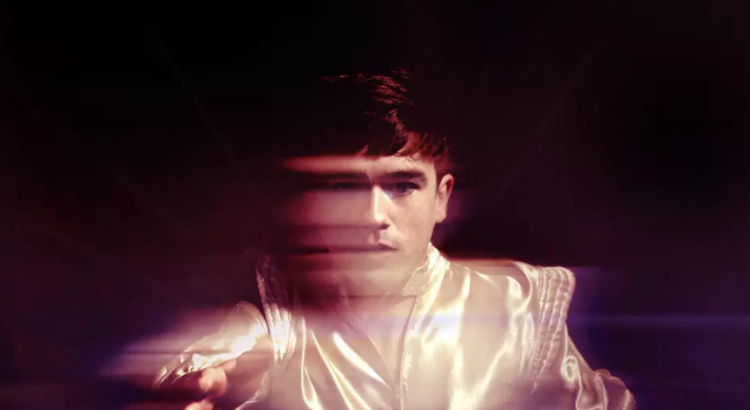
Ever since his win at the Glastonbury Festival’s Emerging Talent Competition in 2015, the music world has had its eye on English singer-songwriter Declan McKenna. At the time of his victory, the rising star was just 16 years old.  Less than a year later, McKenna was taking the indie rock scene by storm with his breakout single “Brazil,” an upbeat critique of the 2014  FIFA World Cup and its suspected corruption scandal. Shortly after, McKenna put out his debut album, titled What Do You Think About the Car? to mixed, but overall positive reviews. With a few standout songs, and an eclectic, energetic combination of  garage rock, jazz, and synth-pop, the young star’s first album made him one to watch. After a three year interval, McKenna has finally released his second album;   Zeros, which debuted in August,  is an artistic triumph that maintains McKenna’s unique energy while offering the depth and consistency that his first album lacked. 

While What Do You Think About the Car? was branded a very political album, thanks to its numerous social critiques of topics such as political corruption, inequality, media frenzy, and religious hypocrisy,  Zeros  has taken this message to another level, while also creating a layered story for the listener to follow. The unity of the album is truly one of its strengths, not just in sound, but also in theme. Zeros takes place in some sort of dystopia, or wasteland, perhaps suggesting we have left the days where we could make societal improvements, as McKenna begged us to do in his first album, behind. Many critics have compared the overall feel to an episode of Black Mirror, and I have to agree: there is something truly sinister going on here. The story often follows Daniel, who first appears in the song  “Daniel, You’re Still a Child,” and crops up numerous other times throughout the album. This particular song is one of McKenna’s best, with a catchy chorus reminiscent of some of McKenna’s own influences, namely U2. 

The sound, marketing, and topic of the album are very united in this futuristic theme, while also taking on a retro feel. Many of McKenna’s other idols, like Queen and David Bowie, are also  clearly represented across the tracks. All in all this album is much more “rock and roll” than the rhythmic pleas of What do You Think About the Car?  Personally, I think “Rapture” is the best song on the album, and truly McKenna at his finest: it meshes apocalyptic, desperate lyrics with strong guitar licks, retro drums, and of course, McKenna’s unique vocal presence that is arguably the star of any track. It represents a more mature sound that many of his previous hits failed to quite attain, and is a real step in the right direction for the future of McKenna’s music. 

Though I did appreciate the more showy, rock and roll feel of this album, I also would have liked to see a little more of McKenna’s own roots, as opposed to just the influences of other rock legends. At times, the inspiration felt a little heavy handed, and I wish he would try less to emulate these greats, like Queen and Bowie, and try more to simply infuse his own music with a touch of their influence. Though it had its shortcomings, one of the strengths of McKenna’s first album was his own novel approach to the rock genre and his refusal to be put in one box sound-wise. I liked that Zeros was more cohesive, but I wish it had a song or two more reminiscent of the raw, emotive songs from his earlier discography, namely “Bethlehem” or  “Basic.”

Overall, this album remains a great success for McKenna, and I think it rounds out his discography nicely. Dynamic and distinctive, McKenna still refuses to let his sound be nailed down, and I think he will only continue to evolve in the future. I urge you to check out his entire discography for some social critiques with a good beat and captivating vocals. Zeros has solidified McKenna’s role as an artist to watch for years to come. 


REVIEW: City of Birmingham Symphony Orchestra’s 100th Birthday Celebration

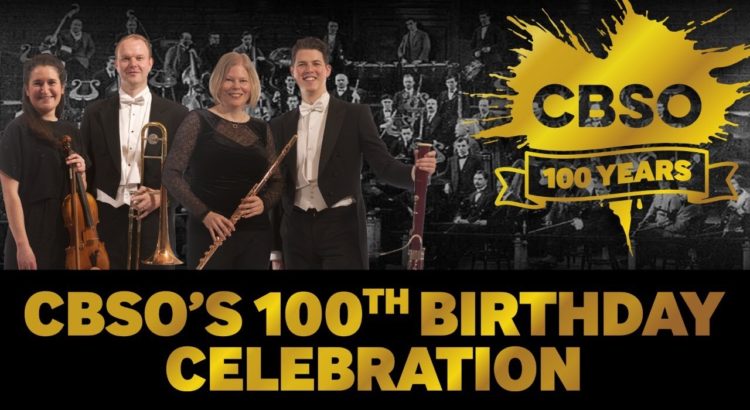
Perhaps it is fitting that an orchestra that came into being during the “unprecedented times” of “a city recovering from war and pandemic” is celebrating its 100th birthday this year. That said, while the City of Birmingham Symphony Orchestra (of Birmingham, England) celebrated its birthday in a – yes – unprecedented way, it was also an innovative and forward-thinking commemoration.

Given the current restrictions on large gatherings like concerts during the COVID-19 pandemic, I have been thinking quite a bit about the ways in which performers are continuing to engage with audiences across time and space. I firmly believe that art conducted online is just as much art as any live, in-person performance, just through a new medium, and the City of Birmingham Symphony Orchestra (CBSO) illustrated this beautifully. While I would have loved to hear them perform in the immaculate acoustic environment of Hill Auditorium as they were scheduled to prior to the pandemic, and headphones undeniably will never match that experience, the new artistic medium of the internet in turn allows for greater accessibility, flexibility, and learning.

For me, the online format meant that through interviews, videos, and historical photos included in the presentation, I was able to learn far more about the CBSO as an organization than I ever would have at a live performance, and I have to say that I was impressed by what I learned. Through outreach, commitment to its community, and investment in younger generations, the CBSO seems to be paving the way for orchestras of the 21st century. Their youth ambassador program, which was highlighted during the celebration, quite literally puts the orchestra in the hands of the younger generation by giving a group of young adults age 16-21 the opportunity to program and present their own concert with the full CBSO. The CBSO is also not limited to the “classics” of composers from previous centuries, and though there is always room for improvement, it was delightful to see new music, old music, and music from pop culture all on the same program (according to their website, the CBSO performs “music that ranges from classics to contemporary, film music and even symphonic disco”). As a student studying music performance myself, it is heartening to see an orchestra so committed to creating a vibrant, relevant artistic community.

One of my favorite pieces was cellist Sheku Kanneh-Mason’s performance of Camille Saint-Saëns’s Cello Concerto in A Minor. Even through the medium of the internet, the expressivity of his playing was evident, which has made me even more excited for his upcoming UMS digital recital with his sister, Isata Kanneh-Mason, in October! Roopa Panesar’s sitar playing for A R Rahman’s Slumdog Millionaire Suite was also superb, and the excellent camera work for that piece added to the experience. Under the direction of Sir Simon Rattle, the orchestra also performed works by Sir Edward Elgar (the first conductor of the CBSO), Igor Stravinsky, and Hannah Kendall.

Overall, although I missed the experience of seeing the CBSO perform live with Sheku Kanneh-Mason at Hill Auditorium, their online centenary celebration offered a window into the orchestra that I never would have gotten from a live concert. Though it may be different than what we are used to, arts engagement during the pandemic can offer entirely new perspectives on artists and their work.

The CBSO’s 100th Birthday Celebration is no longer available for streaming through the UMS website, but it can still be viewed on YouTube.

PREVIEW: Virtual Event: City of Birmingham Symphony Orchestra’s 100th Birthday Celebration

If, like me, you were looking forward to the City of Birmingham Symphony Orchestra’s UMS performance before it was cancelled due to the COVID-19 pandemic, you won’t want to miss out on the stream of the City of Birmingham Symphony Orchestra’s 100th Birthday Celebration!

The virtual event will begin streaming free on demand on the UMS website at 2 pm on Saturday, September 5 – exactly 100 years to the hour since the City of Birmingham Symphony Orchestra’s first concert! According to UMS, “[the first concert] was a gamble: in unprecedented times, a city recovering from war and pandemic had put its faith in the power of live music to enrich the lives of all its citizens.” These words ring true today as we live through our own unprecedented times, and indeed, another pandemic a century later. Though we won’t be experiencing live music as part of this celebration, today’s technology is fortunately allowing artists to connect with their audience remotely in new and innovative ways.

To learn more and to watch the virtual event, visit https://ums.org/performance/virtual-event-city-of-birmingham-symphony-orchestras-100th-birthday-celebration/

REVIEW: American Standard

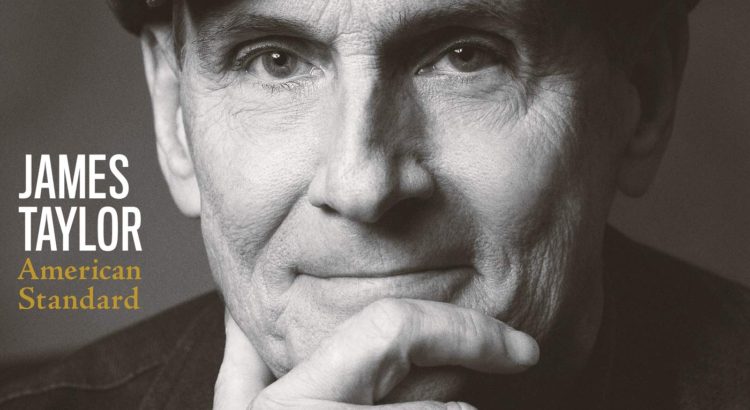
James Taylor’s new album American Standard has an overwhelmingly familiar feel to it, which I think is both to its benefit and to its detriment. While it delivers on the expectations alluded to in the title (the album contains American musical standards including well-known showtunes and popular songs such as “Sit Down, You’re Rocking the Boat” from Guys and Dolls and “Moon River” from Breakfast at Tiffany’s ), it does not really introduce any new material since all the songs featured are covers.

As noted above, Taylor’s new album consists exclusively of covers of well-known American songs. Even though the songs he chose are essentially all beloved tunes, this was a bit disappointing to me, given that Taylor is known as both a singer and as a songwriter. At the least, I had hoped for some original songs, even if they were not written by Taylor himself.

That said, the album still has a lot to offer, and I found it quite enjoyable to listen to. The word that keeps coming to mind in relation to the collection of songs is comfortable. Not only is Taylor’s warm, mellow voice comforting to listen to, but Taylor sticks to a relatively comfortable vocal range and his signature vocal style. For instance, Taylor’s rendition of “God Bless the Child” is undeniably in his own musical mold, and consequently quite different than Billie Holiday’s original version (which has made its own mark as an American standard). I did not, however, find myself constantly comparing the two when listening to Taylor’s version because the way he has made the song is own is rather classic and singular in its own way. There is not anything wild or revolutionary on this album, but that is clearly the point. The instrumental accompaniment is simple and never overpowering, consisting mainly of guitar with some light percussion. It is easy to imagine that Taylor is singing straight to the listener, and each song seems like a story that Taylor is telling personally.

Overall, American Standard blazes no new trails in American music, but it does continue the legacy of one this country’s most popular recording artists. (Taylor has won multiple GRAMMYs, was inducted into the Rock and Roll Hall of Fame in 2001, and has sold over 100 million records). Especially given the turbulence of the current world, perhaps Taylor’s artistic choice to play off of familiarity was what was needed at this moment.