PREVIEW: Artist Spotlight: Ordinary Elephant

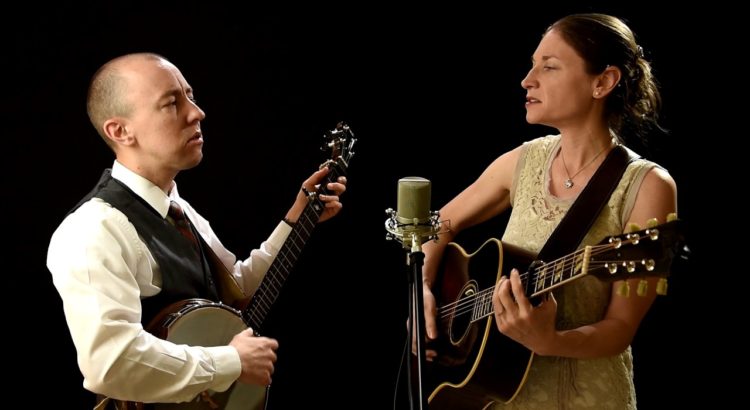
This upcoming Tuesday, October 29th, you can catch me at The Ark as they hold an Artist Spotlight for Ordinary Elephant, winner of the Artist of the Year Award at the International Folk Music Awards in 2017. I have only recently discovered this folk duo, yet I’m very excited to enter into this musical space with them. From my listening on Spotify I found their music to be thoughtful and charming with the swells of an autumn chill.

The doors of The Ark open at 7:30, and the show starts at 8:00; while this event is free to the public, it will accept non-perishable food items to go towards Food Gatherers!

REVIEW: Cappella Pratensis – Missa Maria zart

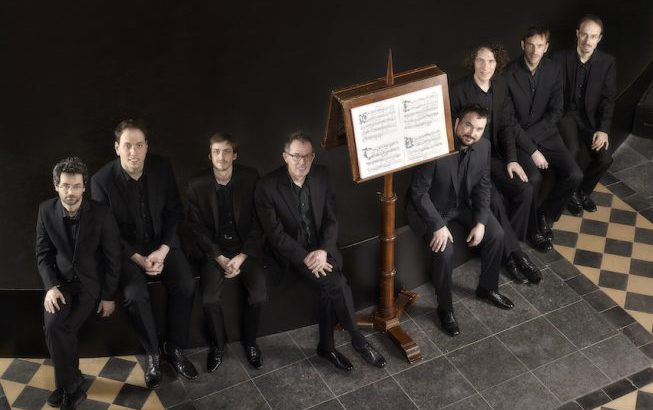
Cappella Pratensis’s performance of Missa Maria zart was an excellent opportunity to experience Renaissance-style polyphony – which may sound foreign to our ears – live. Despite its significant differences from the music of today, the Dutch-based ensemble deftly showed that such music can be both accessible and enjoyable.

At over an hour long, Missa Maria zart is one of the longest, most complex Mass settings (compositions putting the text of the Catholic Mass to music) known. Running throughout the entire mass is the same underlying melody, known as a cantus firmus, and the entire piece is consequently known as a cantus firmus Mass. In the case of Missa Maria Zart, the cantus firmus is a German melody called Maria zart, or “Sweet Mary.” The performer’s comments during the pre-concert lecture, as well as the program notes, helped audience members to gain a greater understanding of the music and its complexities. Additionally, the text of the entire mass, as well as the English translations, were printed in the program, which allowed listeners to follow along. The Mass’s music was an experience in itself: in the echoey acoustics of St. Andrew’s Episcopal Church, the resonant harmonies and interplay of the voices rung throughout the space. Despite the piece’s extraordinary length, I found myself engaged throughout its entirety.

Outside of the music, I was impressed by several other aspects of Cappella Pratensis’s performance. For one thing, it is a physical feat to sing almost continuously, without water or an intermission, for over an hour. Secondly, it was fascinating how other (non-musical) types of art were incorporated into early music making, including Cappella Pratensis’s historically informed performance. I enjoyed the opportunity to look at their partbooks, both their modern reproduction of Missa Maria zart, and their facsimiles of original chant melodies, up close. It’s crazy that the musicians of Cappella Pratensis can read four parts from the markings on the page. Called mensural notation, it looks vaguely like modern musical notation, but it’s not obvious how to read it. Also, I enjoy doing calligraphy when I have spare time, and aesthetically, the partbooks were works of art. The beauty of the lettering and flourishes around the notation are very different from modern musical notation, in which the parts exist with the primary utilitarian purpose of readability. Even their sturdy music stand, which was constructed of solid wood, featured intricate carvings on its sides.

In conclusion, I am glad to have had the opportunity to experience Jacob Obrecht’s expansive Mass setting, Missa Maria zart, in live performance.


PREVIEW: Cappella Pratensis – Missa Maria zart

If you would like to try something new in terms of music listening, join Cappella Pratensis, a Dutch-based early music ensemble, this Friday, October 25 at St. Andrew’s Episcopal Church. The performance will begin at 8 pm, with a pre-concert lecture starting at 7:15.

Missa Maria zart (Mass for Gentle Mary) is a 15th-century polyphonic, or multi-part, work composed by Jacob Obrecht. At the time it was written, the piece pushed boundaries – at 69 minutes, it is the longest known Mass ever composed. Centuries later, the piece is still beautiful to modern ears, albeit very different in sound from the “mainstream” music of today. That said, it is pieces like these that were the origins of the music we listen to today.

Tickets, which are $15 with student ID, may be purchased online at https://academyofearlymusic.org/portfolio/cappella-pratensis/ or at the door on the night of the performance.

PREVIEW: Miles Davis: Birth of the Cool

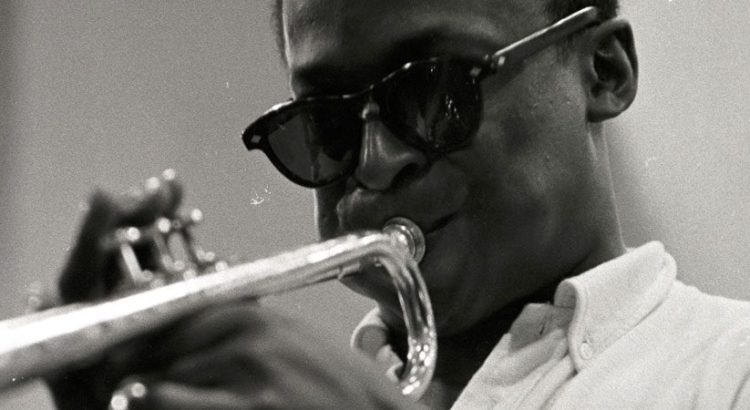
Are you interested in learning more about Miles Davis, one of the most iconic and influential musicians in all of jazz? Miles Davis: Birth of the Cool is a documentary currently showing at the Michigan Theater that gives audiences a glimpse of the “man behind the music.” Featuring interviews with Jimmy Cobb, Lee Konitz, Herbie Hancock, Wayne Shorter, Ron Carter, Carlos Santana, The Roots, and Flea of the Red Hot Chili Peppers, the film also includes archival photos, manuscripts, and some of Miles Davis’s original paintings.

For showtimes and ticketing information, visit the Michigan Theater’s website. Even better, screenings on October 18 through October 24 are on the Passport to the Arts, meaning that you can redeem one of the vouchers, found at locations across campus, for a free ticket to the film!

REVIEW: Chick Corea Trilogy

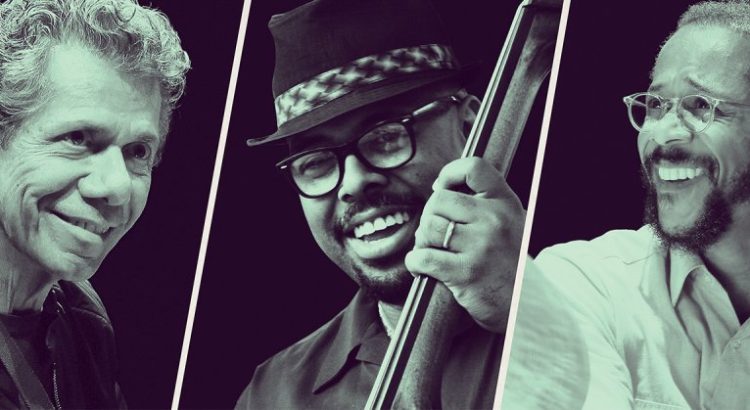
The Saturday evening performance by Chick Corea Trilogy at Hill Auditorium featured jazz legend Chick Corea (the fourth most nominated artist in GRAMMY history) on piano, Brian Blade on drums, and Christian McBride on bass, and it left no doubts that all three musicians have more than earned their place among jazz greats.

Christian McBride shone on the bass, garnering fervent applause from the audience every time he had a solo. In fact, he appeared to steal the show; as his hands flew across the instrument’s fingerboard, audience members shook their heads in disbelief that what they were witnessing was, in fact, real. When he pulled out his bow – which wasn’t until the third piece of the evening, Duke Ellington’s “In a Sentimental Mood” – the sound that rung from the stage was rich and warm, before he deftly slipped it back into its pocket and returned to playing pizzicato (plucking the strings). I, too, found myself smiling in awe each time McBride demonstrated his versatility and virtuosic skill.

While the trio performed several timeless works by the likes of Duke Ellington and Thelonious Monk, much of the set list comprised of arrangements by Chick Corea himself, including “La Fiesta,” “Windows,” “Spanish Song,” and what I found to be the evening’s most fascinating piece, “Scarlatti Intro Improvisation.” Performed as a lead-in to a keyboard sonata by 18th-century baroque composer Domenico Scarlatti, it pushed the boundaries of what was expected (in introducing the pieces, Mr. Corea remarked that he “tried to invite Scarlatti out for coffee, but it didn’t work out,” much to the audience’s amusement). In the first place, a keyboard sonata from the 1700s isn’t what one usually expects to hear in a jazz concert. However, Chick Corea’s ingenious lead-in capitalized further on this challenging of norms and included him playing the piano in unconventional ways. He plucked the strings of the open grand piano, and then ran his hand across the strings, creating new and creative sounds, and the audience loved it.

After several returns to the stage at the conclusion of the show, the trio performed “Blue Monk” by Thelonious Monk as an encore, and Chick Corea engaged the audience in the music. He would play a one of the piece’s short motifs on the piano, and then point at the audience to sing it back during the piece. The brief licks increased in complexity until by the end, all we could do was laugh when Mr. Corea pointed for us to sing. It was a memorable end to an evening of unforgettable jazz – when I walked down the sidewalk from Hill Auditorium a short while later, I was still humming those little tunes from “Blue Monk” to myself.

REVIEW: Isango Ensemble: The Magic Flute

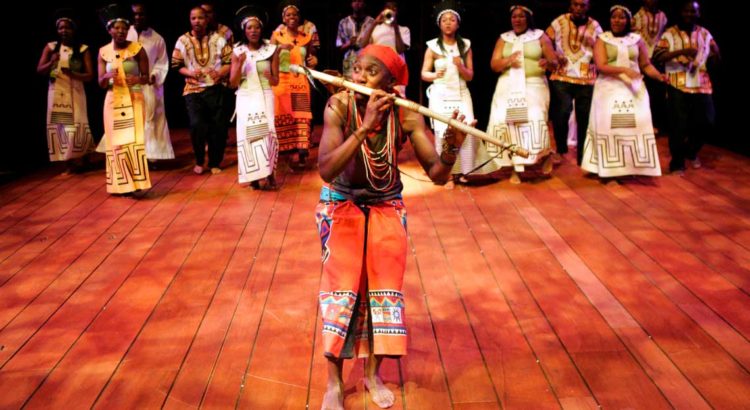
Through the University Music Society, I was able to attend the The Magic Flute put on by the Isango Ensemble this last Wednesday and it was undoubtedly an absolute highlight of my week. Being one of Mozart’s most cherished works, to spin The Magic Flute with a fabric of contrasting cultures is nothing short of an ambitious endeavor. However, the Isango Ensemble not only pulled-off this vibrant retelling, but put forth an absolutely stunning celebration of South African culture overtop the iconic musical themes and characterizations of Mozart!

What I believe sets this performance apart from other traditional showings of TMF is the orchestra of marimbas that underlie this classic tale. These marimbas set the mood immediately through the overture, and thankfully grew in variation and tone with the subsequent addition of soulful vocal backup, and percussive instruments, such as trash cans and a djembe. A casual atmosphere was presented through the setup of the orchestra’s placement around the simple set, and an element that I found particularly charming was the blurred barrier between actor and musician, as a player would present their part, slip off stage, and jump onto a rack of marimbas.

The beauty of this performance was in the weaving of classical operatic technique with the sultry timbre of African vocalization, with notes of a rich tonal quality that never fail to cut deep. On many accounts this show was almost overwhelming through the layering of succinct choreography, operatic vibrato, and sweet resonating melodies which soared above the ensemble all at once. On two or more accounts, these charming dance breaks were initiated by the playing of the magic flute itself, for when played it acts to build community and avert destruction and tragedy. This precious item is given to Tamino, a young traveler who finds himself swept into a quest to seek out and retrieve Pamina, the daughter of the Queen of the Night. A remarkable twist, however, is that the playing of the flute is represented by the bluesy trumpet playing of Mandisi Dyantyis, the production’s music director. Alongside conducting the orchestra of marimbas, Dyantyis remained in the background of this performance, but shone throughout the performance with grace and poise.

In a turn of events, however, there seemed to be a slight hiccup on the production crew’s part that took away from an important moment of the show. When the Queen of the Night made her first grand appearance, an intentioned flash of light to dramatize the movement gave way to the house lights inexplicably flying on. While this mistake is forgivable, it did make for an uncomfortable and slightly confusing 30 seconds of production time.

Ever since I had heard of the showing of this production I’ve been anticipating attendance, and my hopes were not let down. The Isango Ensemble puts forth a flowing, rich craftsmanship and does great honor to the work of Wolfgang Amadeus Mozart. This work represents the best of reimagined art, and I can’t wait to see what UMS brings to fruition next!