REVIEW: Yerma

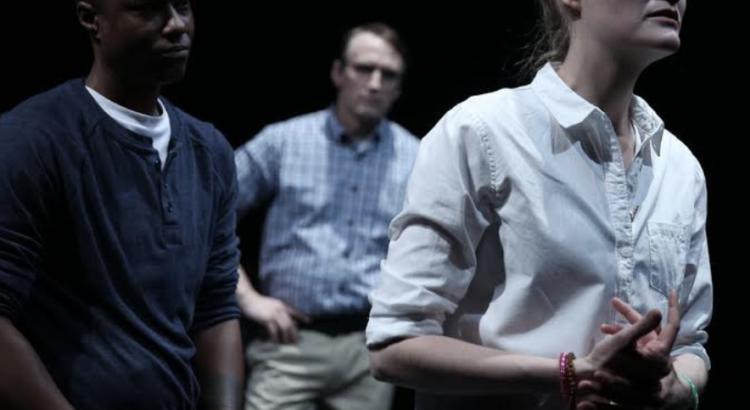
The lead has an amazingly strong voice, full and deep and unquestionable. All the women do, unfaltering in their convictions. It’s such a weird quality for these women to have, given that all but a few are totally accepting of strict gender roles and woman’s mere purposes. Still, when together, they put an unwavering voice to what they think, even when their opinions reinforce structures that force them to compete with other women, to stay trapped under man’s thumb. The women speak in extremes, graphically referencing the terrible pains of pregnancy and raising a child, then reassure themselves that this is some kind of gift to them. How quickly they flip from horror to ecstasy here is almost comical.

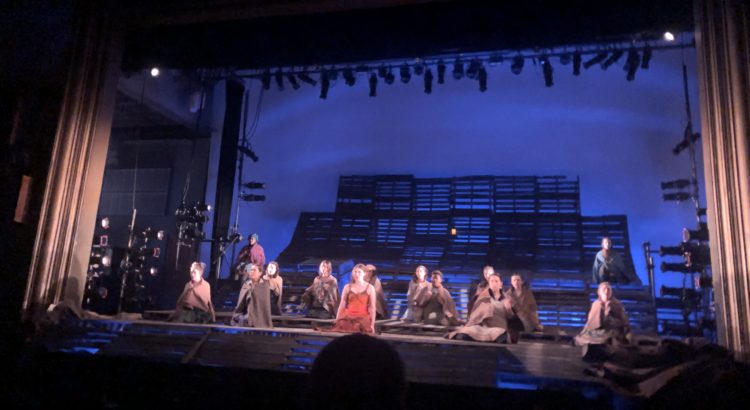
I saw it as Federico García Lorca, the playwright, reversing feminist theory in order to point out the ridiculousness of misogynistic society’s values. If this was his vision, it’s a commentary well before its time. This guess seems likely, given my research on the man. Since his youth, he was an artist, and was until his probable murder by Fascist forces in 1936. He traveled widely and made friends in high places, joining an artist group called Generación del 27, of which the great Salvador Dalí was also a member. Given his enlightened lifestyle, he was surely unbound by overly-structured concepts of gender like the ones explored in Yerma. His work with the famed surrealist was an obvious influence in the visceral language and design in this dramaIts modern iterations like this production follow those roots with beautifully disconcerting set, lighting, and costume design.

Most interesting to me was the background (and often foreground) presence of the gaggle of mothers. There was a lot of complexity in their mixing of being threatening while caring (however genuinely is unclear), passive while bubbling with activity. Their ideologies are cult-like, their group singing more like a chant. They’re representative of the ever-present, stifling cage that gender expectations create for women. Maybe they’re not always vocal, but their eyes are watching.

The singing was beautiful, both the Spanish and English, though the Spanish seemed to make the theatre more silent as we all sat rapt. It could be a little pitchy at times, but this is understandable given the minimal or complete absence of instrumentals. Watching the stage lights reflect off a soloist’s focused eyes reminded me of a song off an old Tracy Chapman tape my mom used to have–“Behind the Wall.” Singing alone is terrifying despite how powerful it is, making it the perfect medium for many of the scenes in this production.

There are a million more qualities of this show I could talk about. I’m not a frequent theatre-goer; it takes a specific type of person to really be into drama, and I am not that. But when I watch a play that’s good, I become attached to it. Yerma and all the actors and crew involved in this production are now a part of my heart.

 

PREVIEW: Don’t Let the Pigeon Drive the Bus!

Calling all children (and children at heart)! This Saturday at 3 pm, the Michigan Theater will present an exciting musical adaptation of the iconic children’s book, Don’t Let the Pigeon Drive the Bus!, written by the series’ creator Mo Willems himself. As a part of the Michigan Theater’s ‘Not Just for Kids’ Live Performing Arts Series presented by Toyota, this show promises an engaging mix of puppetry, pigeon song, and performing arts gold for the entire family.

For some context, Don’t Let the Pigeon Drive the Bus! is a humorously illustrated children’s book starring a pigeon who really, really wants to convince the reader to let them drive the bus. The book, Willems’ first of many, received the Caldecott Honor in addition to multiple picture book awards, including being among the “Top 100 Picture Books of All Time” in a 2012 poll by School Library Journal.

Tickets start at $20 each for general admission, with Meet & Greet tickets available at VIP prices.

PREVIEW: Yerma

Late-week drama that makes you think? For me, it’s always on the agenda. The trap of the crumbling mind is most dangerous around that time, especially in mid-February as the snow blows round in aimless wind. I, too, wander and float in no particular direction. Brain destined to be liquified through stress and its resulting apathy.

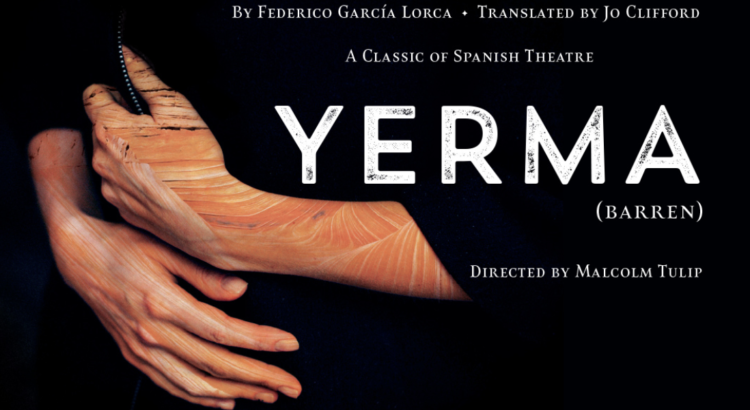
Theatre is an excellent way to mitigate such debilitating effects. This week at the Lydia Mendelssohn Theatre, U-M’s Department of Theatre and Drama presents Yerma, the artful, tragic story of a barren woman of rural Spain tormented by her inability to conceive. It’s a journey, it’s a statement about gender roles, it’s a reaction to our reasons for living.

Showtimes include the following:

Thursday, February 20, 7:30 PM

Friday, February 21, 8:00 PM

Saturday, February 22, 8:00 PM

Sunday, February 23, 2:00 PM.

Get your tickets here. 

REVIEW: Is This A Room: Reality Winner Verbatim Transcription

Five years, three months: the longest sentence ever given for leaking classified information to media sources. This is Reality Winner’s punishment for her confessed involvement in the spread of private documents regarding Russian meddling in the 2016 United States presidential election. Given this record, are we not obligated to ask questions? Does this historical event not deserve to be emphasized, elevated to a position of art?

This play is thoughtful, unassuming in its simplicity. Art written in the moment of speaking, the best kind. The liberty they took with the background score was a little heavy for me sometimes, especially when it went on for prolonged periods below speech. We are already invested in the story, so the added dramatic tones were only distracting, kind of like a soap opera.

Still I was struck by how baldly pained actress Emily Davis’ expression was throughout the play, perfecting the panicked mix of emotions Reality Winner must have been feeling at the time. The FBI agents were not heavily dichotomized in tone, which was a relief, but instead reflected flawed humanity rather than stereotype.

But is the act of turning Reality into a play just, or some kind of spectacle-making that preys on her turmoil while wearing the disguise of the artist? Is there enough of an argument against ordinary journalism’s story-driven (and thus not always compassionate) tendencies for the theatre medium to survive? Provocative titles to articles like “Does Reality Winner ‘Hate America?'” seem to provide evidence for one. Other

In making the script a verbatim transcription of the interrogation, do we lose valuable insight into the case? There is zero analysis of the events here, nor is there any real background information beyond online and program literature. The point was, I guess, for the audience to draw their own thoughts together about the case, with only the absolute barest bones with which to work.

The trouble I have with this strategy is that no one in the audience is truly coming in with no background knowledge and/or opinions related to the case. Even those not exposed to media stories about Winner have no doubt heard the countless reports on collusion in the election, forming and borrowing speculations on the truth. Even the baseline action of creating this play is a statement that this story is hers, and deserves telling; that the outcome may not have been a rational one.

I suppose still that in our information age there is no real neutral ground. We are exposed to so much media, tinted with biases coming from every direction, mixing with our own, and coming out the other side a completely unique concoction. It’s easy to become confused with what our beliefs are based on. So a verbatim transcription of an interrogation, regardless of its background tunes, is probably as close to perfect as we’re going to get. Thankfully we see enough value in the honest truth to produce this kind of play, and for it to be so well-received. What a curious thing.


REVIEW: Is This a Room

It starts with a foggy, black stage and a spotlight on a woman. That woman is Reality Winner. You may not recognize her name, but you might’ve heard her story. She leaked a document about the 2016 election to The Intercept and was arrested and sentenced to 63 months. However, as she sits in prison, Half Straddle, a New York Based-company, has kept her story alive, and they brought it to Ann Arbor in their UMS debut. 

The premise of the concept itself made the theatrical piece intriguing. With nothing to go off of but an audio transcript and the reported aftermath, I felt like there wasn’t much to the story. 

But boy was I wrong.

The tone, the body language, and the pauses—all of which were purely imagined for the stage—dictated the play more than the verbatim words. Every cough was captured, As the actors walked around the small stage, it shifted from the driveway to the backyard to room to room. And you knew that with every step they took, they were getting closer to the gripping truth. However, due to the bare staging and the nature of the script, some parts of the play were confusing as scenes shifted or we heard simply one-sided conversations. Additionally, the sudden bursts of noise and flashes of lights were unexpected, and while some of them indicated parts of the transcript that were redacted, others were unexplained, leaving the audience wondering what was being left unsaid and why things were staged a sudden way. The disorienting sounds of a synth further enhanced the thrill.

The four actors of Half Saddle conveyed the tense situation and brought the transcript to life in their imagined enactment. Emily Davis captured the nervous chuckles and humor of Reality, trying to lighten up the conversation as Pete Simpson and TL Thompson played the two special agents who acted friendly through small talk but persisted in getting the truth. Becca Blackwell played an unknown male whose role was pretty nebulous, but they seemed to alleviate the tension with their body humor. Their combined presence on the stage—making it a total of three versus Reality—seemed to corner her intimidatingly. When you realize there were eleven agents interrogating Reality in reality, the nerves conveyed in the transcript seem completely reasonable. 

“Is This a Room” is a surreal interpretation of the events that went down on June 3, 2017. And it’s a reminder that the ramifications of that day remain today.

PREVIEW: Is This A Room: Reality Winner Verbatim Transcription

Art often has some connection to politics, but often it’ll be diluted, stylized past the point of meaning as much. It’s rare to see this kind of drama in an untouched form. The audience and actors here are forced to work with nothing but reality to create artistic drama, and that is a unique challenge.

The play follows the 2017 interrogation of Reality Winner, ex-Air Force linguist who was accused of leaking information on Russian meddling with the 2016 presidential election. In this current political landscape, this story is fully relevant to our wondering minds, many of which have been thus far unsatisfied with other media coverage.

Show times:

WEDNESDAY, JANUARY 29, 2020 7:30 PM
THURSDAY, JANUARY 30, 2020 7:30 PM
FRIDAY, JANUARY 31, 2020 8:00 PM
SATURDAY, FEBRUARY 1, 2020 8:00 PM
SUNDAY, FEBRUARY 2, 2020 2:00 PM // ARTHUR MILLER THEATRE

Tickets are $35 for general admission, and $12-20 for high school and college students. Find them here: https://ums.org/performance/is-this-a-room-reality-winner-verbatim-transcript/