REVIEW: Rocky Horror Picture Show

This year marked my fourth year witnessing the Rocky Horror Picture show and my second time seeing the shadowcast at the Michigan Theater. The Leather Medusas, the group responsible for Ann Arbor’s contribution to the tradition of this cult classic, have again put on a great (sold out!) show that has gotten even louder and more rambunctious than before.


Beginning with an introduction from Penny Weiss (Janet’s cousin dressed in full Pennywise-chic drag, naturally), the show had energy through the roof. Doling out the rules, calling out the audience, and initiating the Rocky Horror Virgins in the most hilarious way, Penny Weiss was an undeniable icon that evening. She will be missed as it’s her last year performing, but she did go out with a wonderful performance as The Criminologist with a remarkable ensemble cast to match.


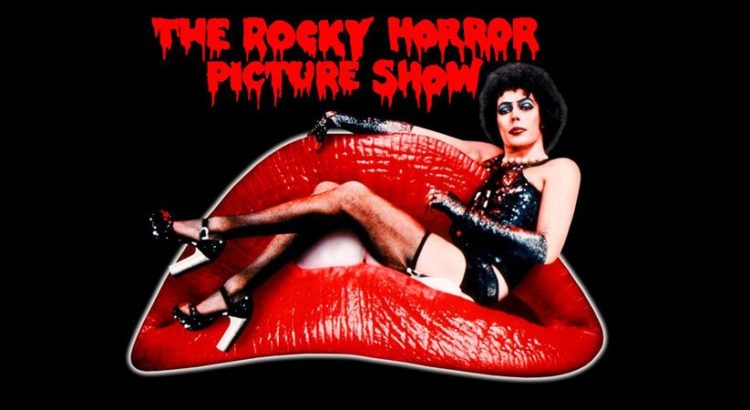
As soon as the curtains opened and the famous red lips appeared, people were not holding back with the call outs. At times there were so many people contributing to the cacophony that nothing was really heard but noise. It was amazing. Of course, where one sits determines the course of one’s night, and I had a pretty good spot. I was definitely getting a lot of noise, but every now and then a seasoned professional Rocky fan behind me would come out with some unexpected lines that caused the whole mezzanine to lose it. Central high points coming from the audience were the classics: an animated go at The Time Warp, a beautifully lit theater in There’s a Light (pictured), and plenty of playful oohs and cheers when the shadowcast got especially rowdy on stage.


Speaking of the actual stage work, the cast was fantastic. Sometimes I find it hard to not be mesmerized by Tim Curry’s amazing performance in the original, but throughout the movie I found myself watching and laughing at the little touches that made this student shadowcast special. Things like Eddie and Columbia’s impressive dance routine (complete with amazing, almost-gymnastic elements), Frankenfurter chasing Rocky up and down the theater aisles, and rampant, unabashed flossing brought something to the movie you just can’t get watching it on your laptop.


I highly encourage students to make Rocky a part of their Octobers next year (or next week– catch a showing that never fails to be hilarious at the Main Art Theater in Royal Oak if you missed this one)!!!
REVIEW: Isango Ensemble: The Magic Flute

Through the University Music Society, I was able to attend the The Magic Flute put on by the Isango Ensemble this last Wednesday and it was undoubtedly an absolute highlight of my week. Being one of Mozart’s most cherished works, to spin The Magic Flute with a fabric of contrasting cultures is nothing short of an ambitious endeavor. However, the Isango Ensemble not only pulled-off this vibrant retelling, but put forth an absolutely stunning celebration of South African culture overtop the iconic musical themes and characterizations of Mozart!

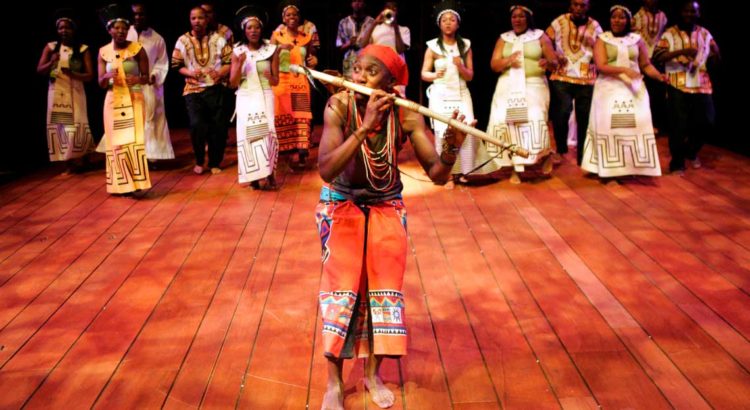
What I believe sets this performance apart from other traditional showings of TMF is the orchestra of marimbas that underlie this classic tale. These marimbas set the mood immediately through the overture, and thankfully grew in variation and tone with the subsequent addition of soulful vocal backup, and percussive instruments, such as trash cans and a djembe. A casual atmosphere was presented through the setup of the orchestra’s placement around the simple set, and an element that I found particularly charming was the blurred barrier between actor and musician, as a player would present their part, slip off stage, and jump onto a rack of marimbas.

The beauty of this performance was in the weaving of classical operatic technique with the sultry timbre of African vocalization, with notes of a rich tonal quality that never fail to cut deep. On many accounts this show was almost overwhelming through the layering of succinct choreography, operatic vibrato, and sweet resonating melodies which soared above the ensemble all at once. On two or more accounts, these charming dance breaks were initiated by the playing of the magic flute itself, for when played it acts to build community and avert destruction and tragedy. This precious item is given to Tamino, a young traveler who finds himself swept into a quest to seek out and retrieve Pamina, the daughter of the Queen of the Night. A remarkable twist, however, is that the playing of the flute is represented by the bluesy trumpet playing of Mandisi Dyantyis, the production’s music director. Alongside conducting the orchestra of marimbas, Dyantyis remained in the background of this performance, but shone throughout the performance with grace and poise.

In a turn of events, however, there seemed to be a slight hiccup on the production crew’s part that took away from an important moment of the show. When the Queen of the Night made her first grand appearance, an intentioned flash of light to dramatize the movement gave way to the house lights inexplicably flying on. While this mistake is forgivable, it did make for an uncomfortable and slightly confusing 30 seconds of production time.

Ever since I had heard of the showing of this production I’ve been anticipating attendance, and my hopes were not let down. The Isango Ensemble puts forth a flowing, rich craftsmanship and does great honor to the work of Wolfgang Amadeus Mozart. This work represents the best of reimagined art, and I can’t wait to see what UMS brings to fruition next!


PREVIEW: The Pirates of Penzance

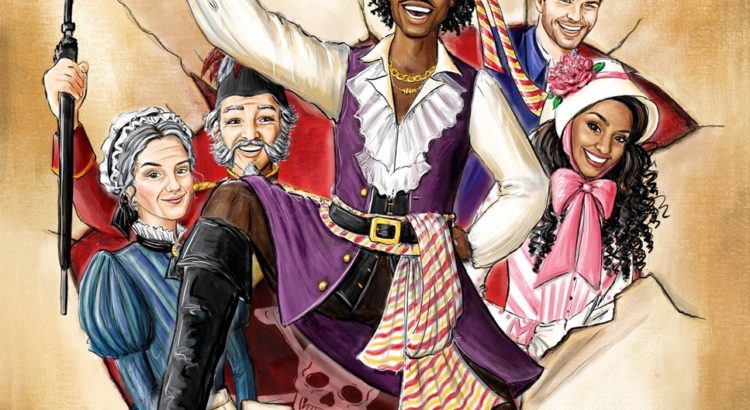
The Department of Musical Theatre is performing Sir Arthur Sullivan and Sir William Gilbert’s quintessential comic opera for two more nights! The Broadway version of The Pirates of Penzance,  featuring visual gags, delightful dances, and enchanting melodies, is in its final weekend of performances at the Lydia Mendelssohn Theater. If you haven’t seen this hilarious farce yet, you can still catch it Saturday, October 19th at 8pm or Sunday, October 20th at 2pm for a delightful, silly musical!van

PREVIEW: Rocky Horror Picture Show

This Saturday at 10 pm catch a one-night only showing of Rocky Horror Picture Show featuring a shadowcast performance by the Leather Medusas! This cult classic will not disappoint as the audience shouts, dances, and throws things all over the theater. To give a summary or a sneak peak into what to expect of the movie would be a grand disservice to those uninitiated, so grab an $8.50 student ticket and let’s do the time warp again!


It’s highly encouraged to dress up, if not as a character then as taboo as possible. Follow the cues of the crowd and PLEASE don’t be the Rocky Virgin that comes with the call out script memorized. Just come and let it happen (and don’t forget red lipstick).


If it’s any indication of the kind of fun that will be going on Saturday, here’s a list of banned props for the evening:

Rice/confetti
Water guns
Candles/lighters (flashlights are fine)
Whole rolls of toilet paper
Hot dogs/prunes


REVIEW: NT Live: The Lehman Trilogy

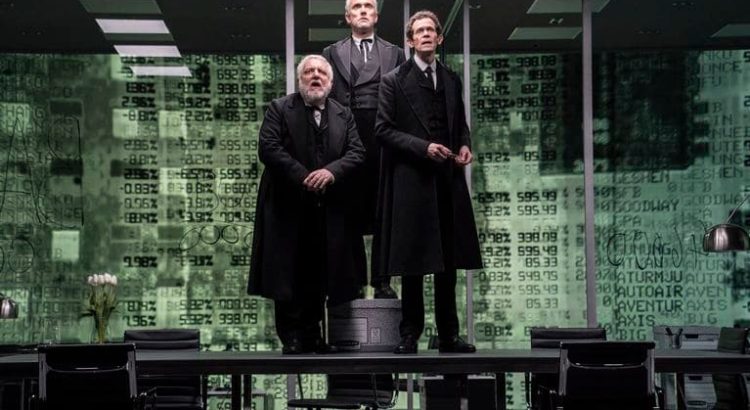
 The Lehman Trilogy consists of three men, a box, and a piano. From these elements emerges a case study of temporality, American capitalism, and what it means–and costs– to succeed.
At the core of the play is a business. It’s hard to label it as anything more than a business, because as the institution founded by the Lehman brothers changes hands, generations, and locations, it morphs from a simple fabrics store to a convoluted financial empire. This progression is slowed, stopped, and aided as history progresses and events like the Civil War and the Great Depression happen.
The audience watches a century and a half unfold in front of them thanks to a tight script, focused acting, and a clear historic backbone. Without brilliant performances alternating between expositional narration and multiple characters, the narrative would be totally lost. The bare-bones costumes and props further highlight the skill of these actors in how they construct multiple times and places.
Looking at the specific presentational elements of theatre, the construction of this play is pretty impressive. The set, an ever-present rotating glass box, mimics the march of time and the contained, capital-focused world. While we watch sons turn to fathers and fathers turn into moguls, the piano accompaniment plays what feels to be a fourth character, layering interactions with humanity and punctuating sequences with intensity, tragedy, or humor. A changing background screen aids the geographic and tonal shifts without being too flashy or distracting.
I did find some issues with the closure of the work, however. As the play ends with the 2008 financial crisis, the last scene has a sense of helplessness in the face of the Great Recession. This felt a little bit off-base in terms of the structure of the narrative. The play details the highs and lows of business as history affects the Lehman brothers and their business, maintaining a strong sense of continuity. Even through the Great Depression, despite its highly destructive effects, the play shows the eventual turning of the tides that leads to more success. The play doesn’t treat this next trial as a closing element to the narrative but it doesn’t clarify it as a part of the established continuation of effort of the company. If, say, the play hinted that the 2008 crisis would bring about the absolute demise of the company, it would be a much more satisfying ending. We as an audience would have claimed witness to the entirety of the lifespan of the company but instead we see the actors praying to survive and the premonition of a phone call closing it out. There’s no finality, something I would have accepted in the form of a clearer end to the Lehman narrative or in a statement on the vitality and perseverance in their work.
Ultimately, The Lehman Trilogy was an engaging approach to the traditional constraints of narrative timeline, limited actors, and staging found in theatre. Outside of some aspects of closure, it was highly enjoyable and a great way to spend a Sunday night.

PREVIEW: Isango Ensemble: The Magic Flute

In its UMS debut, the Isango Ensemble, a South African theatre company, will be presenting three performances of a re-imagined look at Wolfgang Amadeus Mozart’s captivating score, transcribed for an orchestra of marimbas. This production provides a familiar and classical background alongside a vibrantly-contrasted foreground of a South African township setting.

This show will be playing October 16th, 17th, and 19th at the Power Center. I’ve been anticipating this performance for as long as I have known about it, for alongside being captivated by the works of Mozart, the Isango Ensemble’s work has been highly praised for its inventiveness and captivating performance! Be sure not to miss the Isango Ensemble this week!

Isango Ensemble: The Magic Flute