
Review: The Qui to Happiness

“Man of La Mancha” is the adventurous story of a man on the brink of madness. To outsiders he may seem insane or even out of his mind, but to Sancho and Dulcinea, he is perfectly sane, seeing the beauty in life instead of the pain. This story “Don Quixote de la Mancha,” written by Miguel de Cervantes was the first Novel ever written. Pretty impressive. “Man of La Mancha” takes this classic and turns it into a musical fit for the stage, and oh how well it is done. I thoroughly enjoyed myself at the Power Center during Sunday’s matinee and, judging by the laughing and applause throughout the show, so did my companions in the audience. The student theatre group MUSKET does an excellent job performing and presenting this piece to the campus community.

I remember reading an excerpt of the novel in high school, but that only gave me the general story line of a self proclaimed knight in a time after chivalry, his battles with windmill giants and the evil enchanter, and his quest to be dubbed a true knight with his lady by his side. Incredibly funny! Especially when acted out by people on a stage. It was hard to believe that this man was actually so ridiculous as to think himself a knight, Aldonsa as his Lady Dulcinea, his servant as his Squire Sancho, and the Innkeeper as a mighty Lord of a castle. The presentation was wonderful.

The musical is written to take place in a jail in which Cervantes is being kept to await trial by the Spanish Inquisition. While waiting, he is put on trial by his jail mates. His defense is the story of his eccentric knight acted out by the prisoners themselves. This format flowed really well and the actors transitioned from reality to imagination seamlessly.

And it was so funny. Sancho provided some of the best comic relief AND he had the perfect singing voice to represent his character. You would have to hear it to understand, but it was comedic and sort of serious at the same time.

Then the show got really sad for a few minutes when Don Quixote’s nephew attempted to destroy this beautiful dream, but thankfully Dulcinea saved the dream and helped Quixote remember everything before passing away. “Don Quixote is not dead!” Dulcinea exclaims over the body of the man that had made up this identity. Cervantes’ story lives on today and imagination is key to society. Where would we be without Disney, yesteryear’s Don Quixote?

Definitely one of my top choices of the events I’ve gone to. I’ve enjoyed so many events so far this year that it becomes difficult to write that statement, but I am confident that it is a high ranking event in my arts calendar. And like I always say, get out there and see these things! They’re usually pretty cheap and provide many different times to attend. This is what makes our college experience an experience. I’ve expanded my cultural awareness, artistic involvement, and my own personal boundaries by going out to theaters and performances all year. Now it’s your turn.

As always,
This is Danny Fob: Artist and Art Reviewer

Review: Yoni Ki Breathtaking

Last night I went to the 5th annual Yoni Ki Baat multicultural monologue show. This production showcases the talent of writers around campus that send in their work AND the performers of the Yoni Ki Baat group. The show focuses on woman empowerment, sexual liberation, cultural diversity, domestic violence, fighting false stereotypes, and the spectrum of relationships. The performers were very passionate and delicate with these pieces written by our own Michigan Wolverines. My fellow poetry slammers and I thoroughly enjoyed ourselves at this spoken word production

First of all I would like to give a shout out to the venue, Keene Theater in East Quad. I knew that I loved East Quad with all of its radicals, liberals, and all around extreme residents, and its interesting dietary options created exclusively for a large population of wolverine vegans, but this theater topped all of these assets. It was small, kind of cute, with an open stage that gave room for interpretation and audience inclusion. It reminded me of a Shakespeare theater, or if there had been no walls it would have been like a classic civilization theater from Ancient Greece. Sure maybe it’s not Epidaurus or Hill Auditorium, but the atmosphere that it provided was homey and warm. My slammer friends and I agreed that we will definitely be having an event there in the future.

Anyway, back to the reason you’re reading this, Yoni Ki Baat. Translated from Sanskrit as “talks of the vagina,” this show was created after the success of the “Vagina Monologues” as a place for creative expression for South Asian women. These young women honor and celebrate their yonis with poems like “Ramblings of a Hypochondriac Pussy Eatin’ Virgin,” “Bathroom Breakdown,” and “U-Hauls and Other Lesbian Stereotypes.” There were over 15 deep and entertaining pieces, so I would like to focus on my favorite three and let you imagine the power and creativity of the rest.

“My White Nepali Yoni,” written by Katie Hendricks and performed by Lindsay Walker, is the deeply heart wrenching story of a young girl fighting for her own identity. Born from Dutch missionaries, she was raised in southern Asia. Her family converted to Hindu and so she was raised as any young Indian girl would be. She identifies as Nepali, she practices Hindu, but the people she calls her own reject her because of her white skin. “This is my country, but where is my identity?” absolutely beautiful, and so sad. Can you imagine being raised as an ethnic group and then being rejected by them throughout the rest of your life? Being banned from the religious and cultural rights such as the treatment of your remains after death? I can’t.

“A Letter To My Aunt Flo,” written by Kelsey Trotta and performed by Ayesha Singh, was a wonderfully comic adventure through the period cycle of a young girl. Speaking directly to her “Aunt Flo” this young poet sounds her complaints about the physical and mental instabilities that this monthly relative inflicts upon her life. Ayesha had everyone in the crowd busting up when she described memories of these visits: her mothers description that made her believe that when she finally started having them that it would be beautiful and all “rainbows and unicorns,” her discovery at age 11 that they were not a fun experience, and multiple bouts of emotional havoc throughout life that this relative was responsible for. Ladies, I know this doesn’t mean much, but I feel for you. And for all of those jerks that dare to blame “that time of the month,” I’d like to see them try it!

And finally, “I Am Here,” written by Lia Wolock and performed by Sunny Shah with a short statement from each performer. This piece embodies culture, power, and emotion in one grand finale of expression. Young Sunny presents this piece about identity and physical as well as personal presence in a world that has been known for forgetting women in history and religion. Each performer takes on the identity of a great female while Sunny explains the significance of her own role as a woman and how it relates to her audience. It was very powerful, and sort of hard to explain unless you heard it yourself, but all the same, Amazing!

This was an excellent multicultural experience that I would definitely suggest to all students and faculty members. It was a great way to spend time with friends and feel powerful words wash over you like waves erasing your own worries. And most of all, it gave me a whole new respect for the Yoni!

As always,
This is Danny Fob: Artist and Art Reviewer

p.s. Sorry for the lack of pictures on this one. None were available and I don’t own a camera 🙁

Preview: Man of La Mancha? Don Right!

That’s right, the epic (and musical) tale of Don Quixote is coming to the University of Michigan thanks to the student run musical theatre company, MUSKET. “Man of La Mancha,” the musical reproduction of Cervantes’ famous novel “Don Quixote,” is a classic and has won 5 Tony Awards including Best Musical. Together with the cast of MUSKET we’ll journey through the strange adventures of the eccentric “knight” as he battles windmill giants and travels the countryside in search of adventure.

I am personally very excited for this event and I have been hoping to attend ever since I heard about it at Gayz Craze during welcoming week (that is a really long wait), so I’m sure that it will be a brilliant show. I’m actually surprised that I managed to snatch this event with all of the other [seen]sters picking fantastic events too. I guess I just got lucky.

I’m going to the last performance, tomorrow afternoon, Sunday, March 21st at 2:00pm. A matinee to help me relax after a long weekend of work and studying (or whatever) sounds perfect. The ticket was only $7 for students ($13 for adults) and I get to go to the Power Center again, which is quickly becoming one of my favorite places on campus.

It may be too late to buy your own tickets to this show, I feel for you, I really do, but this is just a reminder to seek out great events like this and experience college to its full extent. Partying can be fun, but try other things too. You never know how much fun you’ll have if you try new things, one of the reasons I have this amazing job as a [seen]ster which provides the resources that make it possible to me to experience this spectrum of art I’ve been writing about all year. Speaking of [art]seen, let me just add a small tip and inform you we’re accepting applications for next year’s [seen]sters. Apply for this amazing opportunity today and you’ll will have an amazing year next year!

Just to remind you what I will be writing about tomorrow:

What: MUSKET’s Man of La Mancha
When: Sunday, March 21st, 2:00pm
Where: Power Center for the Performing Arts
How much: $7

As always,
This is Danny Fob: Artist and Art Reviewer
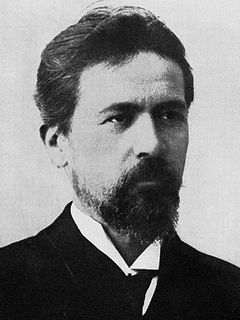
Preview: Who is Anton Chekhov?


The charismatic Anton Chekhov

Next Week, “Uncle Vanya” will be performed under the auspices of UMS  (more on this to come). It is a tricky and complex plot that baffles a lot of people. So getting to know its writer, Anton Chekhov, might help in our comprehension or at least make us accept the difficulty of the plot  for what it is and understand why it was intended thus.

Chekhov, hailed to be among the greatest short-story writers of all time by many,  was a highly cerebral artist who started writing in his spare time while training to be a physician, actually in order to make money. He continued to do so but didn’t pay much attention to writing as an art until Grigorovich, another eminent Russian writer told him that he had true talent. 

Chekhov started to pay more attention to his writing and always tried to experiment and depart from the road well trodden. His stories are tedious and it was Chekhov’s conviction that a true artist raises questions that didn’t exist and it was not his onus to solve those issues. His views in his plays and stories are definitely worth a read.

At the Ann Arbor District Library (Downtown branch) this monday evening, Michael Makin, Professor of Slavic Languages and Literatures, and Residential College Drama Lecturer Katherine Mendeloff will examine Chekhov’s role in Russian literature and society and as transformer and innovator of Russian drama. There will be a discussion specifically around the play “Uncle Vanya” and parts of it will be acted out by U of M students.

Prof Kate Mendeloff
Prof Kate Mendeloff

When I saw Prof Mendeloff’s name on the program, I knew I had seen it somewhere. I thought hard before I realised that she is the one of the key forces behind the Shakespeare in the Arb series! Every summer, a Shakespearen play is enacted at the Nichol’s arboretum and Kate Mendeloff  directs the plays.

Twelfth Night- Shakespeare at the Arb

I remember attending “Twelfth Night” last summer. It suddenly started pouring   and as the  brave actors still got on with the show, she was with them till the end, a bit drenched though. I thought that it was so nice of the director to be through it all. Also, her direction of the plays are awesome too. It will be a treat to listen to her. 

 So, to summarize,

What: Who is Anton Chekhov?

Where: Downtown Library (AADL), Multi-purpose room (visit www.aadl.org for directions to the downtown library)

When: Monday, March 22, 2010, 7 pm to 8.30 pm

$$: Admission FREE!

Chekhov is said to have been among the first to use stream-of-consciousness techniques in his works. Interested to know what that is all about? See you at the AADL then !

Yours sincerely,

Krithika, for [art]seen

Review: Well, all’s well that ends well!

I know how I had griped about how I hated Shakeapeare’s play, “All’s well that ends well”, as it has very less value and is male chauvinistic as far as Bertram, the hero is concerned. But I decided to watch the University of Michigan’s Musical theater Department’s version again as many critics say that for this particularly complex play, the interpretation (and of course, the acting) is what makes or breaks the play.

Set in the nice spacious and quaint Arthur Miller Theatre, the cast and crew changed the time period from the 1600s to a more modern setting in the 1950s and somehow, Helena spouting dialogues from the 1600s in a black evening gown instead of in a Elizabethan Costume somehow didn’t seem out of place at all.   The set was very minimalistic and it was all ok for the low-cost production which thus paved way for the actors to show off their skills.

The first half started off nicely but the pace was kind of slow with only a few moments of brilliance- Parolles’ monologue on virginity(“To speak on the part of virginity is to accuse your mothers, which is most infallible disobedience”), the scene with the boring King and his even more bored counts and the banter between the Countess of Rousillon and Lavatch, a fool in her pay. When I stepped out for intermission, there was a long line for the free show at the Basement Arts and I felt that I could have gone there instead. But I prevailed and the second half was not so bad.

The pace picked up and there were lots of interesting happenings-  the soldiers having fun at Parolles’ expense and the scene where a head-over-heels-in-love Bertram woos Diana, the “bed trick” and the building up of events for the climax. The beautiful actress who played Helena (Laura Reed, a sophomore) did a remarkable job. Lavatch the fool was brilliant as well.

Laura Reed as Helena

Then the end came and well, this wasn’t as great. When the  young, chocolate boy faced  Bertram (played by Tyler Jones who was very convincing as a naive dandy till then)  promises to be a faithful husband to Helena and “love her dearly, ever, ever dearly, you are like “What, how did that happen now?”.

In “All’s well that ends well”, Bertram can be intrepreted as a man who truly falls in love with his wife or as a man who matures into a more responsible person. In this version, it felt like a man who was more resigned to his fate. I didn’t quite like the way it ended and no offense to the actors, the end could have done better.

But I won’t blame it on the actors as then again, “All’s well that ends well” was  not a very popular play even in the Bard of Avon’s days. The play lacks finality unlike the other plays and you don’t find the spectacular twists as in other plays of Shakespeare. Is it a comedy or a tragedy? Marriage is described as a contract and there is no clarity in the purpose of the play. It is a tough play to choose and the actors’ efforts were definitely commendable.

I had seen “All’s well that ends well”  performed by London’s NAtional Theatre and broadcast telecast live at the Michigan Theater in partnership with UMS as part of the “National theatre Live” series. In that version, the actress who played Helena was flawless and Parolles stole the show with his bravado and superb comic timing. As for Bertram, he was a superb actor and when he delivered that last lone line, it was not so bad.

Overall, in the university of michigan musical theater department’s version, there was a continuity in the play and the transitions were smoothly done. The sound and stage effects were good too.  This was a brave attempt and one well done.

For [art]seen,

Krithika

The Cast and Crew
The Cast and Crew

Review : Our Town

Our Town

University of Michigan Department of  Theatre and Drama

The thing that struck me most as the play started in the archaic Lydia Mendelssohn Theatre was the simplicity of the props and the lack of a set and how close to reality and a make-believe world this was. The theatre was filled with a lot of elderly people, as if to reminisce an age gone by. How would the young people of today fit into a play from the 1900s? That’s what I was curious about.

There were two sets of tables with three chairs each separated by a lone street lamp. Two staircases,one each  at the far end of the stage represent the rest of the houses of the two families, the Gibbs’ and the Webbs. The play started with the Stage Manager walking in and addressing the audience directly. This was a nice twist and it felt so right!

Here’s a brief synopsis of the plot for the uninitiated.  Dr.Gibbs and Editor Webb are neighbors in a fictional town with one street that could actually be anywhere in America. But we are told that it is a town named Grover’s Corners, in New Hampshire. Their wives are friends and go to the Choir together. Their children go to the same school. George Gibbs falls in love with Emily Webb and they marry. The plot involves around their lives as well as other characters like Howie the milkman who are present in order to show the continuity of life in the quaint little town. In three acts, we see the lives of these characters as they go from life to death. So what is special about this play?

Everything! The lack of the set, makes it necessary for the actors to set the scene by their actions while leaving no room for errors in interpretation. Mrs.Webb stringing beans, the two wives setting the breakfast table, the young ones falling in love, standing ladders used to represent their houses- these are all poignant scenes where we are  made to focus on the characters on stage. Every action and every line spoken by the actor thus becomes important for the success of the play.

The stage manager (the narrator who did a marvellous job) weaves in and out informing us about the characters and also acting as one (like a grandma hit by George’s baseball or the preacher) in some cases.

Act One centers on the daily lives of the people in the town. Each character tells us something about the dreary reality of human existence and questions its eternity. For instance, Mr. Stimson, the drunken organist  who is the center of attention of the town’s gossipmongers, reflects a darker side of ourselves. Howie the milkman represents a laborer who is happy with his lot. Mrs.Soames lends some comedy.

Act two aptly titled”Love and Marriage”  precisely is that. George falls in love with a bright Emily when she tries to help him with his math homework. They resolve to be together over ice cream sodas. The innocent young love is so touching. When they get married, they have their whole youth in front of them and look so fragile but hopeful  to face the world.  And so what happens in Act three comes as a shock.

In Act three, Emily dies in childbirth and she joins her relatives (the now departed Mrs. Gibbs and her brother Wally Webb) and her fellow townsfolk in the cemetery. This scene was really well done. There were white chairs and each “dead” character sat still in clothes that they would be most remembered in. This scene was so poignant and full of questions- a reminder of the transience of the human state.

Emily doesn’t want to forget the life she lived and despite the warnings from the dead, she decides to visit her past life. She decides to pick a day and Mrs.Gibbs says, “Take the least important day in your life,that will be important enough.”

Emily’s ghost returns to Earth to re-live just one day, her 12th birthday, and realizes just how much life should be valued, “every, every minute.” Poignantly, she asks the Stage Manager whether anyone realizes life while they live it, and is told, “No. Saints and poets, maybe. They do some.” She then returns to her grave. The Stage Manager concludes the play with a soliloquy and wishes the audience a good night.

The play is a wake up call focusing on the “stop to smell the roses” theme. But when it came out, I am sure it was considered to be way ahead of its times.

I was worried about the relevance of such a play in today’s times.  But under Jerry Schwiebert’s superb directing, today’s teenagers with their iphones and ipods and short attention span, did such a superb job. In the Q & A session that followed, they said that it was very easy to slip into the character once they knew what the character did. Not for a single moment did any one of the characters feel out of place or time.

The walk back home was slow as I enjoyed the lovely winter night and took it all in.

For [art]seen,

Krithika

In deference to Thornton Wilder, no pictures to distract attention from the writing.