REVIEW: Seong-Jin Cho, Piano

Photos are provided by Peter Smith Photography

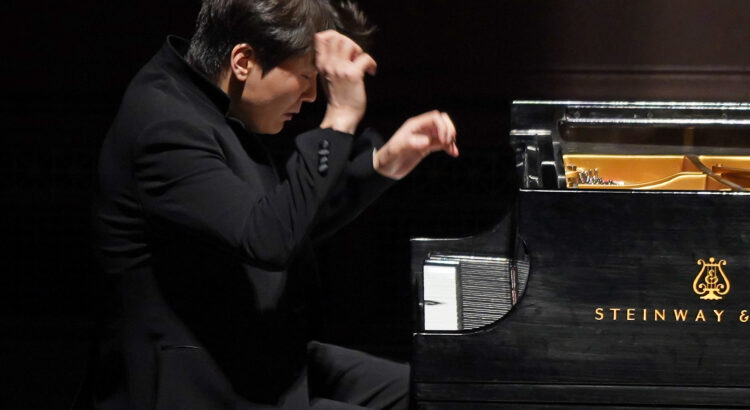
On February 7th at Hill Auditorium, pianist Seong-Jin Cho delivered a phenomenal performance of the complete solo piano works of Maurice Ravel. The concert lasted three hours, yet Cho memorized and played every piece with unwavering precision and passion. Funnily enough, before the concert began, an audience member behind me exclaimed that even a one-hour program of Ravel would be too long; I’d bet money they changed their mind by the end of the night.

Cho’s global reputation skyrocketed after winning First Prize at the 2015 Chopin International Competition in Warsaw. Since then, he has performed with the Berlin Philharmoniker, where Cho is currently the artist in residence, as well as the London Symphony Orchestra, Boston Symphony Orchestra, and more. 

At Hill, Cho’s ability to breathe life into the piano showed why he’s so sought after. He merged with the instrument in body and soul. Even when the music consisted of a single repeating note, it was beautiful and each tone rang with a pure, bell-like clarity. No matter how fast the glissando flew by, you could still hear each note sing. The lyrical lines blended seamlessly, yet I could distinguish which hand played which dynamics, melodies, and harmonies—even with my eyes closed. Cho never once seemed to lose focus or stamina.

The first piece, Sérénade grotesque, had a delicate, elusive character that made its theme hard to pinpoint. Menuet antique felt more tangible. Pavane pour une infante défunte evoked a giddy feeling of raindrops and fairy footsteps from melodic flurries and vast glissandos. Cho then moved into the peaceful Jeux d’eau and ended the first section of the night with the Sonatine, whose three movements featured harp-like textures.


After intermission, Cho resumed with Miroirs, whose five movements flowed so smoothly it felt like a single movement. In Gaspard de la nuit, I was struck by the soft yet clean notes—something I’ve always found difficult to bring out on the piano. 

Following the second break, Menuet sur le nom d’Haydn became one of the night’s highlights. It immediately captured my heart with chords that built into a dreamy atmosphere. Valses nobles et sentimentales brought me back to reality with dancing energy, especially in the Presque lent – dans un sentiment intime movement, which glittered. The followingPrélude carried a bittersweet emotion, while À la manière de Borodine surprised me with a melody that made me imagine horses frolicking. Similarly, À la manière de Chabrier resembled cheerful skipping. 

The final piece, Le Tombeau de Couperin, offered the most variety. Its six movements formed an emotional arc—sprightly, meek, brash, romantic—culminating in the last movement Toccata. Vif. That movement was especiallydemanding, ebbing and flowing between repeated notes, lush lines, and anxious descents that Cho played with awe-inspiring control. 

I’m glad this performance introduced me to the beauty of Ravel’s piano works. Cho’s ability to freely shape dynamics made him the perfect soloist to perform Ravel’s dreamy musicality. It had been a long time since I attended a solo piano recital, so this performance showed me how a soloist can express more subtle and endearing musical expressions even without the grandeur of an orchestra.
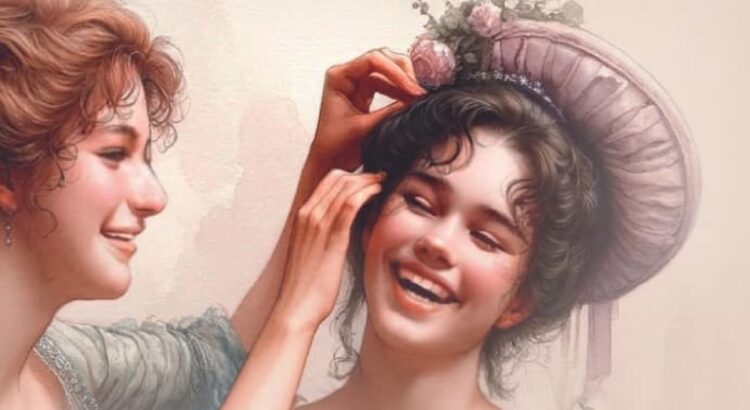
 

REVIEW: Sense and Sensibility: The Musical

March 13 | 7:30pm | The Encore Musical Theater Company


Wondering if Jane Austen’s Sense and Sensibility  would be a good musical was not a burning question on my mind. Yet it was answered at the Encore Theater last week to the sound of a four-piece orchestra and a starry cast from Broadway’s favorite shows.

The 1811 novel was adapted by Jefferey Haddow (Book & Lyrics) and Neal Hampton (Music) for the stage, and it’s been in production since 2009, almost 16 years—which is subsequently how long it felt to sit through the show.

(As it goes) In the 19th century, the two daughters of Mr. Henry Dashwood are left with no permanent income after his death. So, marriage to a wealthy man of status will cure all ailments. The girls desire stability, but more pressing is love. The pragmatic Elinor Dashwood (Chelsea Packard) struggles with unrequited feelings for Edward Ferrars (Adam Woolsey), while her passionate sister Marianne (Jessica Grové) falls deeply for the winsome but unreliable John Willoughby (Chad Marge).

With nineteen songs in Act I and a whopping twenty-one in Act II, the show lingered, with few musical ideas to latch onto. The piece felt dense, and not every moment that segued into songs felt convincing dramatically. Some numbers functioned akin to opera, honing in on a character’s feelings in place of advancing the plot. Which makes for a host of details but leaves much exposition to the scenes.

Ms. Packard’s voice is as silky and sophisticated as the five or six pastel dresses she wears, finding herself distant from Elphaba’s belting in Wicked. Her 11 o’clock number, “Not Even You,” explored her wildly flexible voice but fell flat from lackluster lyrics. Ms. Grové was a spunky Marianne on stage, and aside from nearly dying from falling in the rain, was convincing and vocally stunning.

In Act I, the Colonel becomes infatuated with Marianne after only one encounter (reminding him of a past love named Lydia), but Marianne runs off with the charming Willoughby for most of the show. The climax of the story felt grazed over: when we find out that Willoughby has been the abuser of countless women, including our beloved Marianne. The reveal lasted a mere moment on stage, so quick that I almost didn’t catch it. This prompted a swiftly smitten marriage between the Colonel and Marianne, which felt like a tardy continuation of their love story. I’m glad Marianne found a sensible husband, but I craved a depth to their romance throughout the musical for a cleaner payoff in the end.

I wonder about the impetus of telling this story now. The characters have troubles far away from modern strife, but at least they remind us to trust our hearts. Perhaps the true issues of these noble girls could be better solved in a rewrite.


Images thanks to The Encore Musical Theater Company. 

REVIEW: Jazzmeia Horn at the Blue Llama

March 16 | 8:30 pm | Blue Llama Jazz Club


Creative, conscious, commanding—Jazzmeia Horn packs it all into every note. The vocalist, composer, and educator brought a fierce trio to The Blue Llama last Sunday, featuring a set of (almost entirely) original compositions.

Ms. Horn is a decorated jazz vocalist based in New York City (originally from Dallas, TX). She won the Thelonious Monk Institute International Jazz Competition in 2015 and the International Sarah Vaughan Vocal Competition in 2013, as well as accumulated three Grammy nominations for her records “Love and Liberation” and “A Social Call”. She lives with her two daughters in the Bronx, which prompted intimate and animated stories about motherhood.

Her music is focused and refreshingly genuine. She finds deep harmonic exploration in her songs amidst lots of unique vocal qualities throughout her (multiple-octave) range. She mentioned church being a large part of life growing up, with clear inspiration from gospel music, accompanied by healthy doses of pop and R&B.

Most of the set included tunes from her 2024 album “Messages“, including “Tip” and “You’re Getting To Be A Habit With Me,” the only jazz standard of the evening. Each tune was dense and impressive, with numbers “Destiny” and “Free Your Mind” being my favorites for their contemporary feel and expansive vocals (in range and rhythm).

The room seemed to stop when Ms. Horn took a solo. There’s an air of fearlessness behind Ms. Horn’s improvisations. When she started an idea, she took the time to finish it, creating beautifully satisfying lines. Some of her improvisational tendencies give a nod to the great Betty Carter, one of the most rhythmically inventive jazz singers.

A sweet anecdote was tacked onto her second tune, “Happy Living”; she recalled memories of her grandfather’s story about the “man with two bags.” One of which has a hole, where he puts negative comments and thoughts. The other is held close to his heart with words special to him. She sings: “I don’t feel bad when others make me mad, I keep a hole in my bag on my shoulders, and I sing my own songs and just keep along on my journey.” Her performance, even more so than “Messages” through my headphones, felt beautifully intimate and personal.


Image thanks to BIMHUIS.

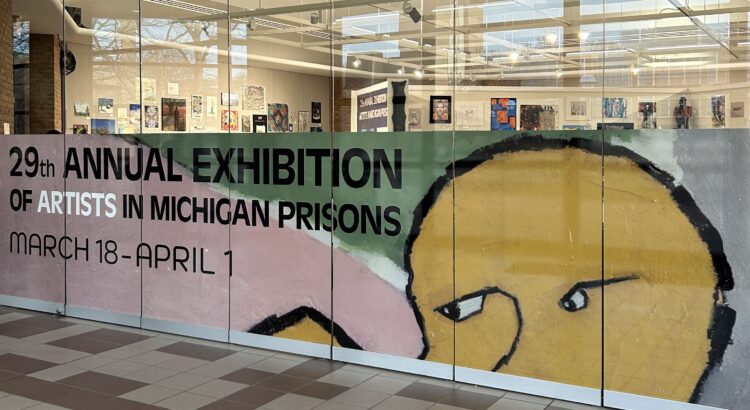
REVIEW: 29th Annual Exhibition of Artists in Michigan Prisons

In a crowded, white room, people mill about to see over 700 artworks scattered around walls, bins, and tables. What is the singular thing that connects all of these art pieces? They were created inside prison walls.

The Prison Creative Arts Project (PCAP) is an organization that aims to connect those “impacted by the justice system with the University of Michigan community for artistic collaboration, mutual learning, and growth” through classes, workshops, performances, literary reviews, and annual art exhibitions. The 29th Annual Exhibition of Artists in Michigan Prisons is PCAP’s largest endeavor hosting 772 original artworks made by 538 artists. 

“In His Eye” – William “Cowboy” Wright

The exhibit is divided into seven themes: connection, critique, natural expression, portraiture, prison as art studio, self, and what if? Each theme gives the viewer a chance to ground themselves in the chaos of the gallery. With bodies bumping into each other constantly, and hundreds of beautiful art to wrap the brain around, the space can become cacophonous. However, this chaos is the same trait that makes the gallery so wonderful: there’s something for everyone. 

One standout piece is “In His Eye” by William “Cowboy” Wright where a close up portrait of a squirrel stands tall and in awe, as the reflection of a man in a Michigan prison uniform kneels down with an acorn. This painting is humorous with the incredulous expression on the squirrel’s face; and it rings home for Ann Arbor residents who see friendly, fat squirrels so often on the university’s campus. Wright wields his paintbrush to shift the view of incarcerated men for his audience from whatever preconceived notions they had to that of the squirrel’s: giving, God-like, and beautiful. They say beauty is in the eye of the beholder, the squirrel’s in this case…

“Hold On” – Daniel Teribery

Another standout is “Hold On” by Daniel Teribery, which depicts an incarcerated man kneeling over a sunflower in purgatory of darkness (his cell); he is surrounded by artwork and staring greyly into the flower, as a hand reaches outgrasping the cell with verve. The interesting part of the painting is the way the hand looks to both be holding up the cell and break into it at the same time. Cracks in the cell’s structure could imply that the hand is pushing in, or perhaps they represent the slow degradation of the man’s mind. If it breaks… if the hand can’t hold on, then the cell will fall further into the darkness of the background. I’m not sure exactly, but Teribery’s symbolism succeeds in opening up these important conversations on life inside prison walls. 

Beyond these pieces, the 29th Annual Exhibition features art of all genres, styles, and materials. You want to see a portrait of a clown painted in realism crying over a hot dog? It’s there. How about abstract circles crafted with oils and cardstock? That’s there too. Figurines made out of toilet paper? They make an appearance every year! Truly, if you have the time to browse through all 700-some pieces you will find at least ten that you could spend hours analyzing and admiring, and at least three pieces that you feel compelled to display in your home. (I should know– I bought four pieces myself.)

The annual exhibition is a great opportunity to purchase art no matter your budget. Work ranges in price from as little as $15 to over $1,000. It’s a great opportunity to build your collection, and support artists on the inside, as all proceeds go straight back to the artists. 

The point of the gallery, however, isn’t to empty our pockets, fill our living room walls, and to pat ourselves on the backs when we use our money for good. The point, first and foremost, is to learn from incarcerated artists about life on the inside: to see them, to hear their stories and to trust their experiences. When an incarcerated person leaves prison after serving their time, they often measure the passage of time by counting the days they’ve spent in freedom. We, me and you reading this, are people living in the free world. We have the privilege to see all 772 artworks, even the incarcerated artists whose work is on display do not have the opportunity to view work made outside of their prison’s walls. I hope you take the chance to view this exhibit and open your eyes to new perspectives. 


The 29th Annual Exhibition of Artists in Michigan Prisons is currently being held at the Duderstadt Gallery located in the breezeway between the Duderstadt Center and Pierpont Commons. The gallery is open for viewing now –Sunday and Monday from 12:00 PM–6:00 PM, and Tuesday through Saturday 10:00 AM–7:00 PM– until April 1st. You can also view the art online at the link here. You can continue to purchase art from the exhibition until April 1st at 5:00 PM, but hurry! These pieces sell fast.

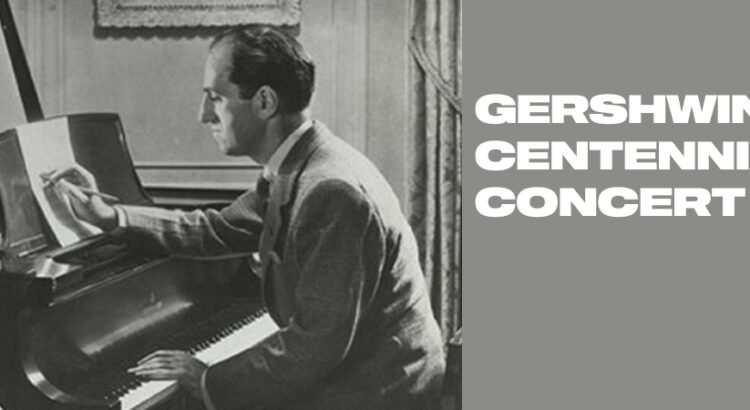
REVIEW: Gershwin Centennial Concert

Though composer George Gershwin and his younger brother, lyricist and Pulitzer Prize winner Ira Gershwin, are undoubtedly celebrated as two great contributors to American music, their works were surprisingly never standardized. As a result, numerous scores and recordings of their music circulate with inconsistencies in tempos and dynamics, and some have been lost to time. To preserve the essence of his granduncles’ works, University of Michigan alumnus Todd Gershwin created the Gershwin Initiative with the School of Music, Theatre & Dance (SMTD). As part of this initiative, SMTD annually hosts a centennial performance of the two brothers’ works. This year, Sunday, January 26th, a crowd of students and locals alike flocked to the Michigan Theater to catch the performance of the music written by the brothers in 1925.

Accompanied by pianist Jacob Kerzner, SMTD students Nicholas Alexander Wilkinson II, Oliver Boomer, Aquila Sol, and Elle Michaels sang George Gershwin’s compositions from Tip-Toes (“These Charming People,” “Sweet and Low-Down,” and “That Certain Feeling”), Tell Me More (“Mr. And Mrs. Sipkin,” “Three Times a Day”), Song of the Flame (“Midnight Bells,” “Vodka”), La, La, Lucille (“It’s Great to Be in Love”), as well as songs that Ira Gershwin wrote the lyrics for in Molly Darling (When All Your Castles Come Tumbling Down”), Lady in the Dark (“My Ship”) and A Star is Born (“It’s a New World,” “The Man That Got Away”). The students sang without costumes, props, or choreographies. However, their voices alone captured the sassy and hopeless romantic attitudes of their characters. 

What I found most interesting is that many of these songs were suggestively scandalous yet painted with a lighthearted tone of voice and upbeat melodies. The song that particularly stood out to me was “Vodka.” The funny and punny lyrics were easy to understand while remaining hilariously descriptive of what vodka does to the human psyche and body and the negative consequences that often follow its consumption. 

After the intermission, the University Philharmonic Orchestra (UPO) took the stage under conductor Jayce Ogren to play Overture to Song of the Flame. Shockingly, it was likely the first public performance of the overture in decades, and there are no known recordings of the overture. The overture is relatively short and played for around ten minutes. Still, the characteristic dreamy quality of Gershwin’s talent at blending jazz and classical music makes it feel even shorter. 

However, what left the deepest impression on me that night was Tzu-Yin Huang’s performance of Gershwin’s Piano Concerto in F. Accompanied by the UPO, the first movement starts with a suspenseful yet jazzy rhythm from the blaring band instruments. Then, the pianist has dramatic, slow notes before suddenly accelerating in pitch and tempo before returning to a bittersweet, syncopated blues melody. The contrast between a lullful minor key to a more powerful, almost angry melody with a cascade of descending thirds evoked a bittersweet emotion before transitioning into a quick tempo; the orchestra then takes turns with the soloist in sharing the spotlight. The second movement starts similarly with a jazzy, brass solo, that the piano interrupts after a slow, somber intro. The mood immediately shifts with playful staccato notes and grace notes. In contrast to the first and second movements, the third movement begins agitated with notes that requires the fingers to have incredible control in speed and power. I loved the end of the third movement, which further expands an overall theme heard throughout all three movements before having a classic tremolo ending. 

Overall, it was an incredible experience. I’ll be striving to attend the Gershwin Centennial concert in the future, and highly recommend others attend too!

REVIEW: 14+14 at WSG Gallery

Located in Kerrytown about a fifteen minute walk from the Diag (and only steps away from two other local galleries), WSG Gallery is an artist-owned gallery that displays and sells work by its 14 members. Among their number is Stamps School of Art & Design Professor Nora Venturelli, who teaches many of Stamps’ figure drawing and painting classes. While WSG’s work is priced well above a typical student budget, it can be visited and admired for free, and new shows are installed almost monthly.

For their annual “14+14” show in January, each member of WSG invites one additional artist to join them for a large group exhibition. This year’s invited artists included Stamps professor Lee Marchalonis, who teaches printmaking and artist books classes, and Stamps student Denali Gere. (Disclosure: I’ve worked with three of the artists in this exhibition in the past—with Venturelli and Marchalonis as professors, and with Barbara Brown during a visiting artist workshop.)

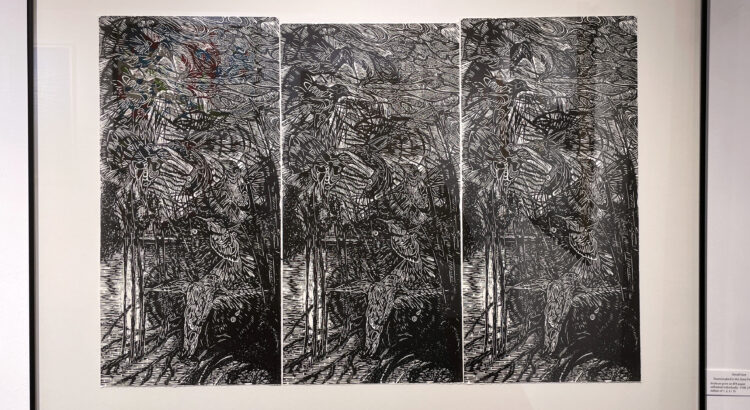
Denali Gere, “Hummingbird in the Great Fire – triptych.” Linoleum print on BFK paper.

With a total of 28 participating artists, the exhibition was packed with colorful artwork. The walls of the main gallery space were covered with artworks that spilled over into a small back room and downstairs into the basement. They covered practically every medium, including painting, drawing, photography, printmaking, fiber arts, and mixed media. Shelves and pedestals also held three-dimensional work like artist books (Barbara Brown) and ceramic sculpture (Monica Rickhoff Wilson, Marcia Pollenberg). One striking fiber installation by Boisali Biswas hung from the ceiling in the center of the room.

Cathryn Amidei, “Canopy.” Handwoven Jacquard, cotton, linen, synthetic.

It was exciting to see the work of members of the Stamps community on display in a professional, off-campus gallery setting. Nora Venturelli had several expressive, layered figure paintings and drawings on display. Lee Marchalonis’s work included a series of monoprints that depicted the soft glow of candlelight with hazy blue ink. And Denali Gere showed off her talent with astonishingly intricate linocut prints.

It’s difficult to choose standout pieces from an exhibition with so many strong works. There was much to admire in the broad array of media and styles, but I found myself particularly drawn to the fiber works, such as “Canopy” by Cathryn Amidei. Amidei uses a computerized jacquard loom to hand-weave detailed images with a mix of fibers. “Canopy” is filled with beautiful variations in texture that mimic the feeling of looking up through the branches of a forest overhead, with light streaming through the leaves. It was an image that felt immediately familiar and calming to me, captured perfectly in textile. Other works by Amidei in the exhibition depicted human figures, with the same skilled eye for light and form.

Boisali Biswas, “Echos of a Left Behind Place.” Fibers.

Another captivating fiber work was Boisali Biswas’s “Echos of a Left Behind Place,” composed of several textile elements hung in layers to create a domestic scene of a balcony with laundry hung out to dry. The subtleties of color and texture in Biswas’s weaving welcomed me in, but the gauzy fabrics made the scene feel delicate, tinging it with a feeling of nostalgia and memory.

As with any wide-ranging group exhibition, not every piece spoke to me. But the abundance of excellent work made the exhibition as a whole feel like it was bursting with creativity. The 14+14 show left me excited to return to WSG Gallery for future shows. For students looking to expand their horizons, I would absolutely recommend taking a trip off campus to see what the Ann Arbor artistic community has to offer.