PREVIEW: The Great God Pan

RC Players is putting on a play this weekend: The Great God Pan, by Amy Herzog.

It’ll be playing this weekend, 8pm Friday and Saturday, and 2pm Sunday.

Admission is free! If you’re in the area, what could be a better way to get out of the apartment/residence/math lab over the weekend?

I’ll be seeing a dress rehearsal today, Thursday, and I’ll post the review before the play officially opens tomorrow.

EDIT: Well, I failed. The full rehearsal was delayed and then cancelled. I ended up seeing it on Saturday.

Inline image 1

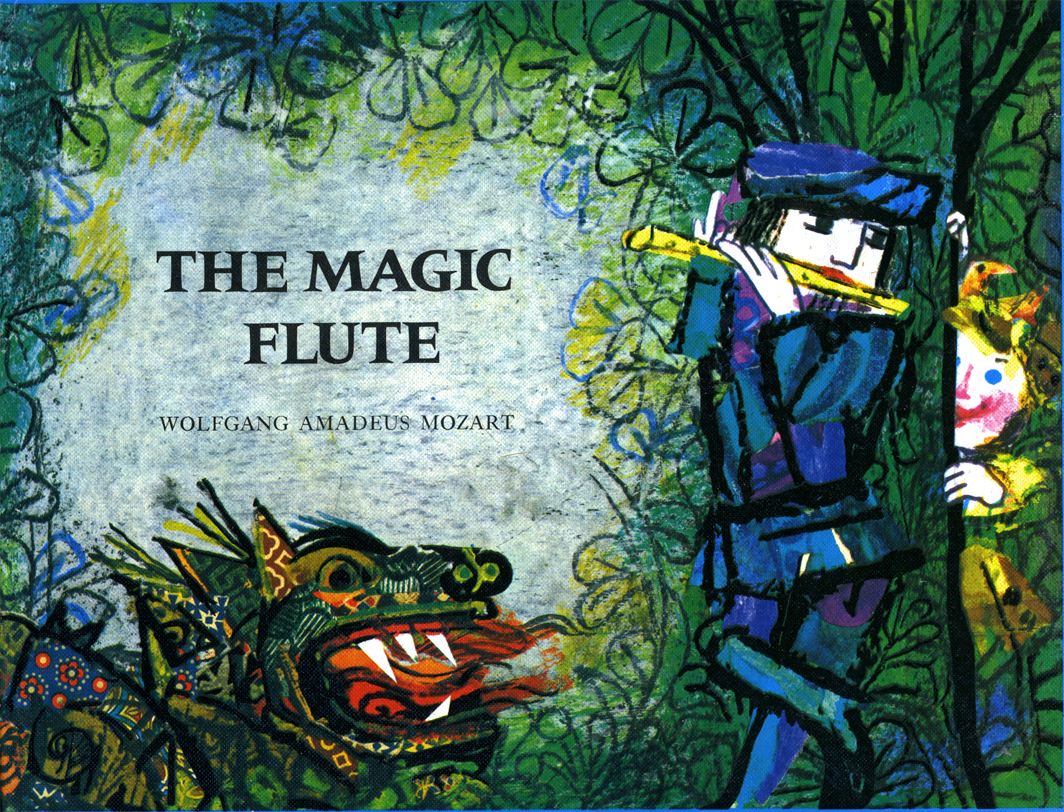
PREVIEW: The Magic Flute

Presented by the School of Music, Theatre, and Dance, students studying opera will be performing “The Magic Flute” on Thursday, March 27 at 7:30pm; Friday, March 28 at 8:00pm; Saturday, March 29 at 8:00pm; and Sunday, March 30 at 2:00pm.

This performance of Mozart’s opera at the Mendelssohn Theatre is sure to be terrific, and tickets may already be sold out! For up-to-date information, you can contact the League Ticket Office at 734-764-2538.

The Wind Rises

The Wind Rises, rumored to be Japanese animation filmmaking legend Hayao Miyazaki’s final film, is currently airing at the State Street theater. I attended a screening this past Friday, and was blown away by this inspirational movie. Not only is the core theme of perseverance inspiring, the breath-taking animation rouses a desire to envision lofty goals.

The film follows Jiro, a brilliant engineer whose dreams of flying are complicated by his poor vision. After joining an aerospace engineering company in 1927, Jiro confronts a moral dilemma–should he pursue his dreams even when airplane technology is the new frontier for World Wars? Jiro’s intentions are pure-hearted, he merely wants to realize a childhood dream. Nevertheless, I felt a strain on my allegiances during the film, unsure whether I wanted to see a brilliant mind succeed when its inventions were capable of so much destruction.

The tension between purity and corruption resonates over the course of the film, in dialogue, plot, and imagery. Jiro’s core moral dilemma, his kind wife’s increasingly debilitating illness, and the horrifying transformation of the beautiful Japanese landscape into a war machine all share a common theme–the fleeting nature of innocence. As the film progresses, picturesque valley designs are covered in lifeless factories spewing smog over a once pristine land.

The Wind Rises’s visual style echoes the motif of corruption–a pathetic fallacy representing the corruption of Jiro’s dreams and family life in the historical backdrop of a war-torn nation. Although dismal, the art design is well done, poignant factory designs literal polluters of the landscape and metaphorical representations of the spiritual toll the war takes on Japanese society.

Yet despite his struggles, Jiro never gives up. In a strikingly bittersweet, beautiful moment towards the film’s end, Jiro’s wife walks out of their house, suggesting her death. Jiro does not see her death, rather feeling a powerful breeze pass across him. The wind delivers news of tragedy to him, but also offers an opportunity for upliftment. Jiro ascends into a dream state, and some of the most fantastical imagery appears on-screen. Hence the ultimately uplifting thesis of the film–no matter how dark external reality may seem, we always maintain the option to dream new realities.

Ultimately, it is our personal visions which go on to shape reality. Factories, mass production, pollution and war began as ideas in someone’s mind. Nevertheless, others possess the agency to dream new dreams and spread new myths to counteract our unfortunate circumstances.

REVIEW: How to Succeed in Business Without Really Trying

Musket How to Succeed


This was the first time I was ever introduced to the musical, How to Succeed in Business Without Really Trying, and I must say that it was perhaps the best introduction I could have to this musical. Musket’s performance of this over-the-top extravaganza was so incredibly well done that it could go straight on Broadway with no alterations. Let’s break down the performance piece-by-piece and really see where this talented group of students really soared.

First, let’s start with the acting. The acting was mostly on point, though there were a few instances where the acting was a bit more over-exaggerated than I personally would have like. Regardless of that, the acting genuinely helped to sell the lines and added a lot of character to the piece. Every role was uniquely acted and humorous in its own way. I must also give much adulation to Brenna Gildenberg in her role as Smitty. It was a smaller role than the two leads, but I thought it was the role that was best performed. Her charisma and perfect comedic deliveries really sold the character to me and made the whole play much more enjoyable than it would have been otherwise. I would really love to see what she could do with other characters, perhaps even in a dramatic role.

1975117_10152210398853886_1738138009_n


(From left to right: Karl Skyler Urban as J. Pierrepont Finch, Brenna Gildenberg as Smitty, and Kimmy Hay as Rosemary Pilkington)

Now, to move on to the singing. The singing was also wonderfully well executed. There was no missed note to be heard within the entire performance. Everyone sang beautifully and it was a joy to hear. It was especially amazing how the singing shined through on the comedic songs as well. Again, special commendations must be given for one particular part that really astounded me and that was Sunshine “Ximone” Rose as Miss Jones. Her vocal talents were most impressive during the song, “Brotherhood of Man.” When she entered the song, it brought to a whole new fantastic level that honestly made me a little giddy with joy. I do not know where the university keeps finding such amazing singers, but I hope they never stop.

Onto the final reason this play was truly well executed: the choreography. The choreography was absolutely the best part of the entire production. It was lively, original, and funny when it needed to be. I first realized that the choreography was going to be my favorite part during the song “Coffee Break.” After that song, I was hooked on the movement and they only continued to get better. There is no one standout from this part, everyone was fascinating to watch. (Though I have to bring up the surprising splits from Gideon Levinson and the great tap dancing from Karl Skyler Urban and Sunshine “Ximone” Rose.) I applaud the choreographer, Chrissy Papetti for what she was able to accomplish.

Unfortunately, even though I adored the performances of everyone, I was disappointed by the play itself. This is something that Musket could not change, but I was not too pleased with. The plot was okay, and genuinely funny, but seemed padded out to get extra time, and the songs were unnecessary. I love musicals, but the songs need to have a reason in order to be placed in a musical. Most of the songs had no actual bearing on the plot and didn’t really lead to any important character development. There were of course some that were there with a purpose, but this does not excuse the fact that most of them were not. In addition to that, many of the songs got tiring before they finished. A lot of them, like “Coffee Break”, are based on a single joke that lasts way too long for its own good. I definitely think that they could have been better, but that is not something could really be changed in Muskets performance. And of course this is only my opinion, the musical did win seven Tony Awards and was revived twice on Broadway, so it of course connects with a lot of people.

I did really enjoy my viewing of How to Succeed in Business Without Really Trying and if Musket can promise to continue to put on great performances like this one, then they have earned themselves a life-long fan.

PREVIEW: The Grand Budapest Hotel

What: The latest (greatest?) Wes Anderson movie.

When: A pre-screening tonight, but it should be in cinemas for a while.

Where: The State Theater

How much: $7 for students

Featuring an even bigger-name cast than usual for Wes Anderson, and already sporting a 91% on Rotten Tomatoes, it looks like The Grand Budapest Hotel will likely be the biggest movie out since Oscar Season.

Noise Void: Simon Alexander-Adams’ Masters Thesis

This Friday I attended a performance of PAT Master Student Simon Alexander-Adams’ Master Thesis, Noise Void. Noise Void is an advanced multi-media production created with digital compositing technology accompanied by an electronic score, solely created by Alexander-Adams. Alexander-Adams also made use of projection-mapping, mapping his project onto a series of screens in 3-D space in order to create a complex and immersive visual experience.

Noise Void is a short experimental piece drawing inspiration from the glitches everyday computer software produce. Alexander-Adams collected hundreds of sounds and images from corrupted Windows files as a starting point for the project. Seeing the presentation reminded me of the adage, “one man’s trash is another man’s treasure”. Glitched files are junk–useless, a waste of storage space. Alexander-Adams approaches corrupted date from a different perspective, seeing them as an opportunity to explore the recesses of cyberspace.

Noise Void, although quite experimental, maintains semblances of narrative. A blank screen freezes, glitches, and descends into the void of unruly data. I felt like I was tumbling through a vortex of information, bombarded by waves of sound and light. The visual experience is quite compelling. Jagged lines undulate violently across the screen, warping through phases of color and intensity.

The accompanying score is equally impressive. A drone of beeping digital sounds which clamor with increasing intensity as the lines of code move ever more frantically across the screen. This was clearly a meticulous work, as layers of audiovisual patterns gained increasing complexity, and despite the rhythmic nature of the piece, I never felt bored, I watched on fascinated by what could possibly happen next.

After a tumultuous ride through glitch space, Noise Void ends with a return to a static screen and shuts off. I interpreted this experience as a journey through a corrupted file as it’s being read by a computer–the computer tries to interpret the data, but ultimately fails. I’m not sure if my interpretation is correct, or whether there is really a single correct way to interpret this visual marvel, but the experience is certainly provocative. The meticulous design, crisp sound design, and intricate aesthetic culminate in an audiovisual experience unlike anything I’d seen before. The use of projection mapping enhanced the experience, adding a 3-dimensional aspect to the performance, heightening my immersion and whetting my desire to delve deeper into the void.

here is a link to Noise Void. Not as visceral as the live performance, but still an awesome video to watch.