REVIEW: CCPS Exhibition. Stasys Eidrigevičius: Collages

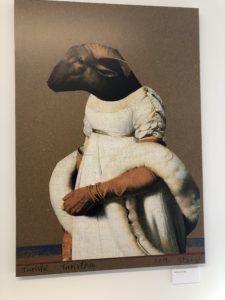
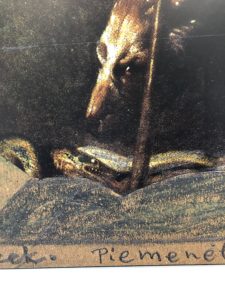
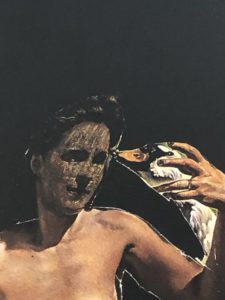
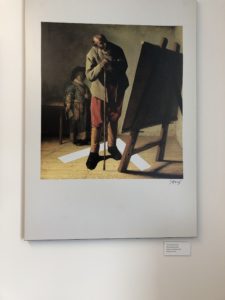
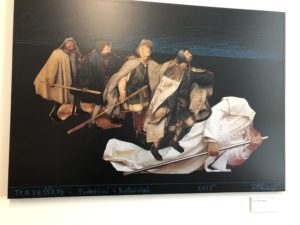
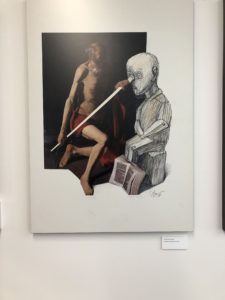
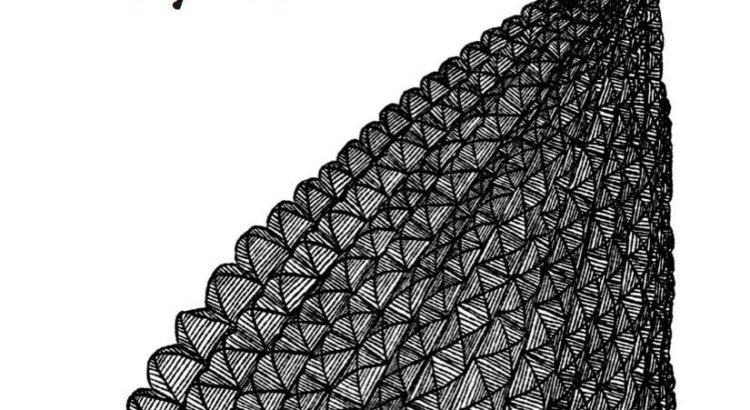
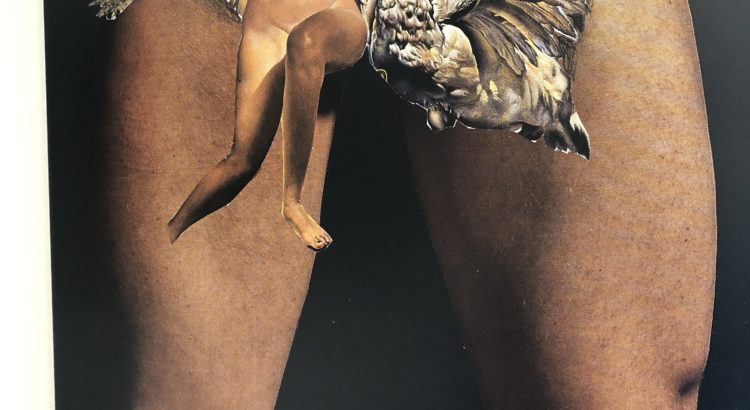
Before you read on, take a close look at Stasys Eidrigevičius’ pieces. Notice what you will about his placement of objects in relation to one another, the emphasis on odd shadows, all the shapes and angles involved. Regard each separately, trying not to immediately put any of the images together:
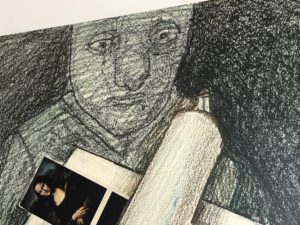
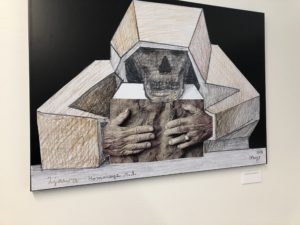
What can I say about these works? I was so befuddled by each one, torn by the wanting to fixate on the alarming details and the knowing that taking it as a conglomeration is the meaning of collage.

All I could do was be overwhelmed by slight curves in the edges of the pieces and the uncomfortably forced eye contact between figures. The expressions on characters’ faces ranged from haunting to somber to desperate to dazzled to sadistic to sly. I wasn’t sure what to make of the positions Eidrigevičius puts these persons into. It feels like each piece has an element of force that I find unsettling. Hands grip, eyes pierce, feet trample. Everything seemed too jarring to work together as cohesively as I expected it should.

Eidrigevičius further adds chaos to his work through additions made by his own hand. He deals in scribbled shading and blocky figures, asymmetrical faces and indiscernible expressions. I was so distraught by the time I’d spent ten minutes in the room with the artwork that I could hardly see straight. An unfortunately poetic, single tear rolled down my flustered cheek. Seconds after the only other people entered, I had to hightail it out of there, but not before I heard their first impressions (“Very symbolic,” says the man with an angular European accent. “Hm,” replies the woman, curtly. “I’ve been trying to figure out what the symbolism is,” he continues, illuminating nothing).

I don’t know that I could pick out any one symbol that persists throughout the pieces, or even a general grouping of motifs. Everything seems literal to a point of discomfort (mine), but I suppose there was a similar line of thinking throughout the collection. Something in each piece is being trapped, maybe not by the specific creature in the image, but by something. Entrapment could be a metaphor for something else, or it could represent nothing else but itself. Perhaps the artist is feeling constricted by the world’s narrow view of what art should be. Maybe he is reflecting on a home country whose practices of censorship are too harsh for goodness to grow.

Or maybe, as I always prefer to believe, Eidrigevičius strives only to challenge the limits of his viewers’ and his own thinking by combining unrelated objects and ideas. His mind knows few borders between things, preferring to string a doodle onto the end of everything. He sees shadows that might not be there, connections bridged between the physical and the emotional. There may or may not be anything much deeper than artwork that wishes to be fully open to interpretation.

If you’re interested in seeing Eidrigevičius’ work in the flesh, I urge you to visit Weiser Hall’s International Institute Gallery, room 547. The exhibit will be up until the end of November.
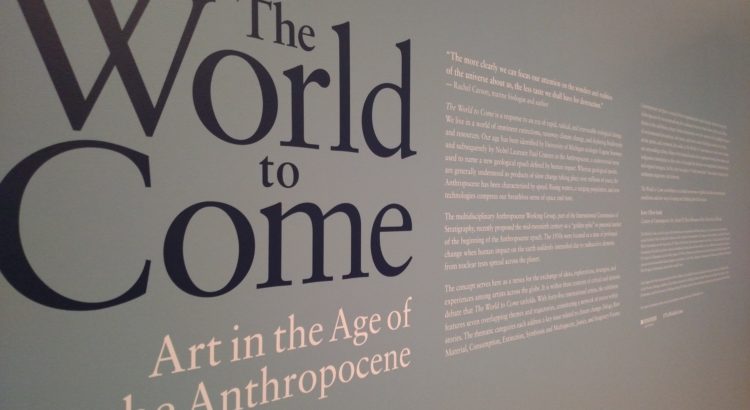


REVIEW: The World to Come: Art in the Age of the Anthropocene

The University of Michigan Museum of Art’s new exhibition Art in the Age of the Anthropocene is a powerful collection that forces museum-goers to grapple with the harsh realities of human impact on the environment, climate change, and our future. Here is a sampling of what I found to be the most impactful pieces:


Chris Jordan: CF000313, unaltered stomach contents of juvenile Laysan albatross (2009) & CF000668, unaltered stomach contents of juvenile Laysan albatross:

These photographs show the half-decomposed carcasses of albatross, the former location of their stomach filled with brightly-colored plastic detritus. According to the placard accompanying the work, their parents would have mistaken the plastic for food and fed it to their young (as well as eating it themselves). As a result, albatross of all ages suffocate and die. The photographs cannot avoid being interpreted through the lens of Samuel Taylor Coleridge’s poem “The Rime of the Ancient Mariner”: “the death of the albatrosses heralds humanity’s impending destruction.” However, I believe that one of the purposes of this exhibition is to work toward a world where the impending destruction doesn’t come to pass. All hope is not lost, if only we would wake up to the reality of what is happening to our world.


Nicole Six & Paul Petritsch: Special Intervention 1 (2002):

You will hear this work long before you see it. A video in a dark room off the main gallery, it shows Petritsch in the middle of an expansive frozen landscape, repeatedly chipping away a circle around himself with a pickaxe. “Regardless of impending disaster, he persists in this futile and ultimately deadly activity” … clearly a commentary on our own inaction regarding climate change. The sound of this pickaxe echoes across the entirety of the exhibition, and it continued to echo in my mind once I left the museum. It drills into your skull, incessant and without letting up, and even now I can hear it in my mind’s ear.


Kimiyo Mishima: Akikan [Empty Can] (2012):

From far away, these appear to be actual crumpled soda and beer cans, but close inspection reveals that they are impeccable ceramic replicas. Sitting in a glass case in a museum, it is impossible not to wonder if this is what the future will see us as. Is the legacy we are leaving behind on the planet one of disposable materialism resulting in environmental destruction? Is this what the archaeologists of the future will find we left behind?

REVIEW: Collection Ensemble

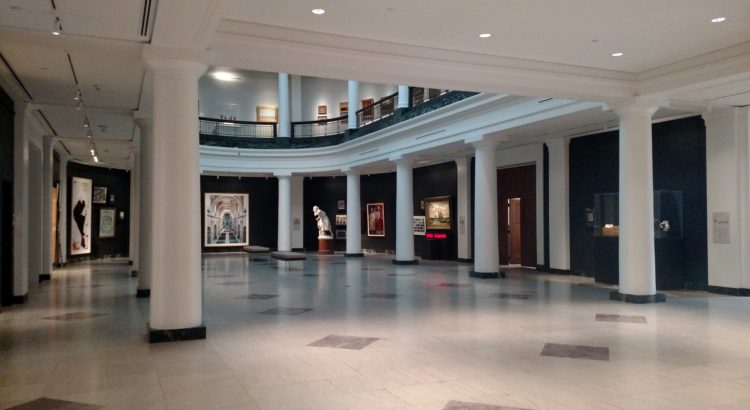
Walk into the University of Michigan Museum of Art, and you will be greeted by Collection Ensemble, the new museum entry way. It is certainly a stark contrast from the previous collection in the apse, which housed only European and American paintings from the 19th and 20th centuries. Where heavy gilded frames once hung on white walls, a diverse collection of art graces the now-black walls in the grand, columned space. Collection Ensemble is a museum entrance fit for the modern world: it feels sleek, modern, and almost minimalist compared to what only just recently hung on the very same walls. The white columns stand out against the black background, and though the frame of the entrance is still very much recognizable, it’s fascinating to me how something as simple as a change in the color of the walls could change the entire feel and light dynamic of the museum’s space.

The first thing I noticed when I walked in the museum’s front doors was Candida Höfer’s photograph Basílica do Palácio Nacional de Mafra. From far away, it appears to be almost a portal through the end of the apse, like you could just keep walking right into it. Walk closer, though, and you will see that it is actually a photograph of a Baroque church. Almost ironically, two marble statues, one by Richard James Wyatt and the other by Randolph Rogers, remain unmoved on either side of the photograph, survivors of the apse’s reimagining.

The exhibition is divided into nine “gatherings,” separated by the apse’s already existing columns. Among the titles of these spaces are “Community Blocks,” “Constructing a Scene,” “Light Details,” “Entrancing,” “The Cosmos + Me,” and “Water Protocols.” I appreciated these carefully thought-out names, as they offered a lens through which to view the artwork in each gathering. Additionally, signs with each gathering title give a “key” of which artwork is which.

Also new is the seating space just inside the doors of the museum. With comfy seating, coffee table books about art, and art hanging over your head, the little area seems as much like someone’s home as it does an art museum. From the vantage point of this seating, it is possible to admire most of Collection Ensemble.

If you haven’t yet had the chance to check out the University of Michigan Museum of Art’s new entry space, stop by for a visit!

REVIEW: Bookmarks: Speculating the Future of the Library

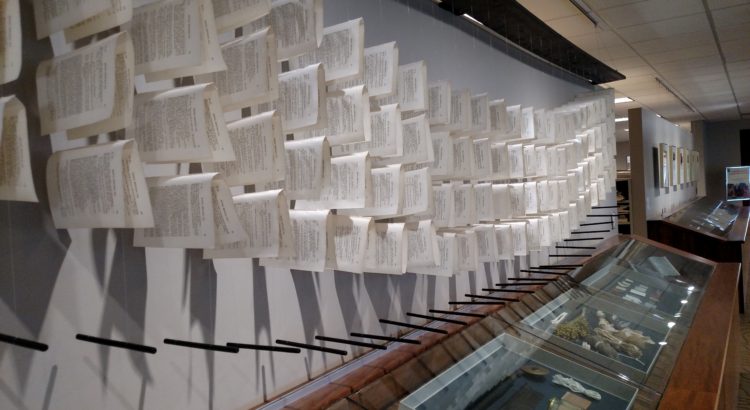
Spread across campus in the Hatcher Graduate Library, Shapiro Undergraduate Library, and the Art, Architecture & Engineering Library, Bookmarks: Speculating the Future of the Library is a mixed media exploration that does just that.

The main installation in the Hatcher Graduate Library, In Search of the Pale Blue Spin, is an audio walk through the library created by Stephanie Rowden & Jennifer Metsker. Visitors may use their own personal device or borrow an mp3 player and headphones from the information desk. The walk is inspired by Jorge Luis Borges’s short story Tlön, Uqbar, Orbis Tertius, and although I found the context of the story confusing, I must believe that that was part of the point.

More than anything, In Search of the Pale Blue Spin encourages “travelers” to stop and notice the details of the library. The calm voices in the recording, along with ethereal string bass and clarinet, usher listeners out of the everyday. You may have spent hours doing homework at the Hatcher Graduate Library, but have you ever stopped to take in the mosaic-like paintings in the North entrance, the arched ceiling of the reference room that is reminiscent of a train station, or the carvings of men in horses on the second floor? As the voice in the recording led me through the stacks in search of a mysterious book about Earth, I was able to be present in the library in a way that studying there doesn’t allow. I had never really stopped to take in the illuminated stained-glass window depicting a boat at sea, and I certainly had never noticed that it includes the letters “U M” at the top. Furthermore, I had never even been to some of the areas that the audio walk took me through.

Along the way, there are other pieces of art that are a part of Bookmarks. One of these works, Sophia Brueckner’s work Captured by an Algorithm, appears to be a set of Victorian-style porcelain plates at first look. However, further scrutiny, and a reading of the artwork’s description, reveals that the plates are printed with images made by applying Photoshop’s Photomerge algorithm to scans of romance novel covers. Each plate also includes a Kindle Popular Highlight from a romance novel. In other words, the set is a juxtaposition between what is old and what is new, and between what appears to be and what is.

Despite my enjoyment of In Search of the Pale Blue Spin, I cannot agree with its view of the library’s future. After heightening listeners’ appreciation of the library, the audio concludes, “Some of us have appointments to get to. Some of us are just tired. We need to say goodbye now. We need to say goodbye to the library, though we hope that it will still exist.” The World Book Encyclopedia may have become obsolete in the age of the Internet, but this does not mean that libraries are dead. They certainly are changing and must continue to, but evolution is the very thing that prevents extinction. In the twenty-first century, libraries have the opportunity to embrace and expand their role as epicenters of community and education, and we should be giving them new life by working to make them as accessible and relevant as possible, not mourning their death. We should not and cannot write off libraries just because the world (inevitably) is changing.

Bookmarks: Speculating the Future of the Library is free and open to the public and will continue through May 26. For more information, visit the exhibition’s webpage.

REVIEW: Xylem Release Party

Xylem, according to the opening letter of the 2018-2019 issue, has existed since 1990. I myself have been a part of the two most recent issues of the magazine, and even in the span of that one year it evolved immensely. I can’t imagine what it must be like to be a part of a publication with that type of history and capacity for growth. This year’s issue presented a unique collection of artists, each expressing their own forms of metamorphosis. While the release event itself was inspiring, the magazine is what I would like to preserve in writing.

One of the pieces that stood out to me during my initial read through of the magazine was Notes on Colors by Christine Mackenzie. Instead of normal stanza breaks, Notes on Colors separates lines with simple dashes. This creates a stream of consciousness feel to the read of the poem, which strengthens its subject matter. Notes on Colors, to me, is about being able to associate other senses with the perception of visual color. The poem utilizes a lot of nature imagery, like the feeling of wind to evoke the blue sky of a summer’s day or cranberry juice drying on your tongue to evoke the heat of redness. All in all, it’s a brilliant poem focusing on multiple forms of perception to solidify its expression of one.

Another piece that was particularly striking was Elizabeth Le’s Out of Many, One. The aspects of the poem that I found the most captivating were in its discussion of “broken language.” This is a theme I’ve discussed many times in past classes, so I’m familiar with its academic discourse and what it can bring to a classroom conversation. Despite that, I haven’t come across that theme a lot in my everyday life, so I thought it was refreshing to know the subject matter in a different context.

Out of Many, One accomplishes a lot in the small space of the poem. The narrative voice contrasts itself with certain aspects of her mother, illustrating how eloquent the mother figure is and how inadequate the narrator feels by comparison. The importance of physical beauty and musical talent are important to the narrator because they are emblematic of her culture. The narrator, however, feels as if she doesn’t belong to neither American culture nor her native one. Most of this internal struggle stems from observations she makes about language. Le ends her poem with “Bless it despite its ugliness. / Bless it / anyway.” It was a powerful poem with an optimistic conclusion.

The cover of the magazine itself is also really cool, with a glossy feel to it and a stark black and white color scheme. Images are printed in color on special paper in the middle of the magazine. While I understand the practicality of that, part of me wishes the images were spread a little more throughout the other works. Overall, however, I’m really glad to be featured in the 2018-2019 issue of Xylem, with my work residing alongside many other incredible pieces of art.

PREVIEW: Xylem Release Party

Xylem is one of The University of Michigan’s literary magazines. The magazine features University of Michigan undergraduate artwork, including poetry, fiction, creative nonfiction, artwork and photography.

Tomorrow, April 9th, Xylem Literary Magazine is hosting their annual release party to celebrate the newest issue of their magazine. From 7-9pm, the event will be held in the West Conference Room of Rackham Graduate School (on the 4th floor). Published authors and artists will get a chance to grab copies of the magazine, read their work, and celebrate another successful issue of Xylem!