REVIEW: GLOSS: Modeling Beauty

Gloss: Modeling Beauty was a pleasant surprise. All I knew about this exhibit was that it “explores the shifting ideals of female beauty that pervade European and American visual culture from the 1920s to today,” which was the UMMA’s online description. I expected magazine covers of willowy, white women in the highest fashion from the early 1900’s and today’s fashion magazines with sleek, androgynous women. Maybe it was just me, but I found the theme of the exhibit to be different from what the online description conveyed. Rather than depicting shifting trends in actual beauty standards, I felt like the exhibition portrayed the photographer’s stance and mentality towards fashion and beauty in their time period.

For example, one of the first images shows a black women posing for an advertisement in typical Harlem 1920’s attire. The photographer, James Van Der Zee, tries to offer an alternative to the mainstream white models of the time. Another photographer had several images of women in more experimental, sexual clothing, but it was the 1970’s during the sexual revolution… so it’s not too out of place. The gesture of empowering women was appreciated. To be honest though, some of them I just didn’t “get”. According to the plaque, Paolozzi’s pop art photos were supposed to “engender comical and ambiguous analogies”. Yeah, I found them very ambiguous.

The work that stood out the most for me was a set of six photos from a clothing catalog for the store Bloomingdale’s. The set of photos are honestly kind of creepy more than anything else. Each photo has several women in the shot, but it looks like they are all doing their own thing and just happen to be in the same space. There is little interaction between them and their expressions are oddly intense. One woman sits on a couch and stares directly into the camera completely straight faced, which I actually found a little unnerving. Maybe that was the point…? I’m not sure. Each image also has a high contrast between light and shadow which heightened the bizarreness for me.

One thing did disappoint me a little. The exhibition was quite small– taking my time and reading every single plaque, I went through the two walls of photos in about twenty minutes. Overall, I appreciated the few pictures with women of color. I wish there had been more diversity but the absence makes sense since the exhibition is a reflection on whom society deems worthy of representing beauty.

Would recommend if: you have spare time between classes, you understand photography more than me, you want some insight into how photographers use media as a tool for communication.

PREVIEW: GLOSS: Modeling Beauty

Interested in fashion and photography? How about beauty and culture? If so, come peruse the photography gallery in the UMMA, right on central campus— for free.

GLOSS: Modeling Beauty examines how beauty ideals have changed in America and in Europe since the 1920’s. The exhibition features glossy images of female models from fashion magazines. Hanging along side these works are images from documentary photographers who depict the fashion of everyday life. Lastly, artists like Nikki S. Lee contribute photographs presenting alternative notions to mainstream beauty and fashion. Come see how beauty standards for women have evolved and, of course, for some fashion *inspiration*. After all, it’s only open until January 7th, 2018.

Time: Everyday (except Mondays). Where: UMMA. What: Awesome visuals by awesome photographers (~Andy Warhol~).

(Image: UMMA website. https://umma.umich.edu/)

PREVIEW: Ragamala Dance Company

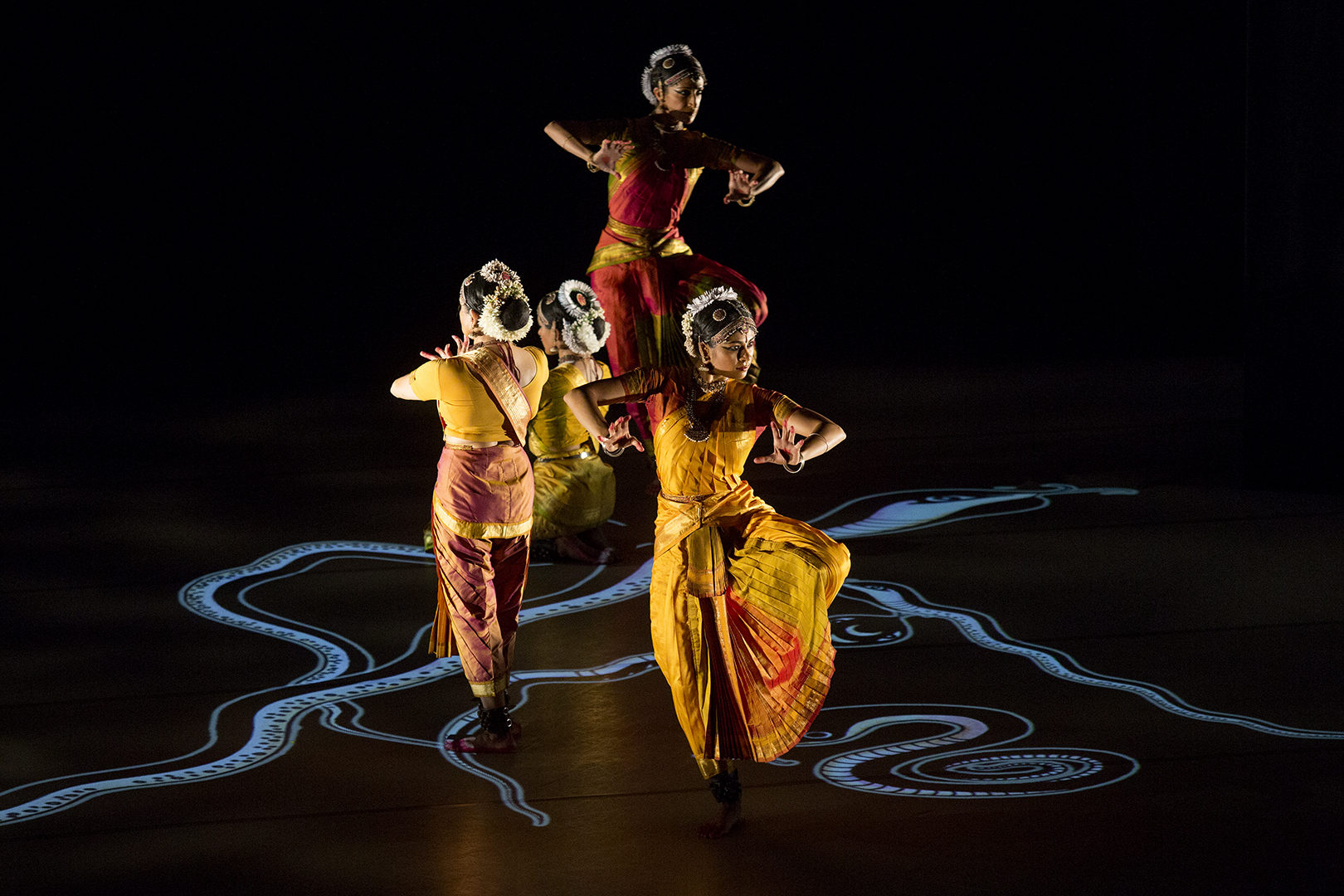
The Ragamala Dance Company is a group that performs the South Indian classical dance bharatanatyam. This performance will be based around the game Paramapadam (from which Snakes and Ladders originated) as well as the 12th-century Persian epic The Conference of the Birds. The board game will be represented by paintings projected on the floor, done by Chennai-based visual artist Keshav. “The live music for Written in Water is composed and performed by Amir ElSaffar, interwoven with original South Indian Carnatic compositions by Prema Ramamurthy” (UMS).

I have never been to a bharatanatyam performance with live music before, and ElSaffar’s music is a really beautiful blend of different styles. Furthermore, the fact that they are blending visual arts, music, and dance is so exciting. I can’t wait to see how they blend those types of art into the Hindu and Sufi traditions that form the context of the performance. The performance is Friday, October 20, at 8pm in the Power Center. Tickets are available at ums.org.

(Photo credit: Bruce Palmer/UMS)

REVIEW: ENSPIRED

While EnspiRED is a fashion organization, they described the showcase last night as their annual multimedia event.  The purpose was to highlight the work of all artists around campus, making last night “more than just fashion.”

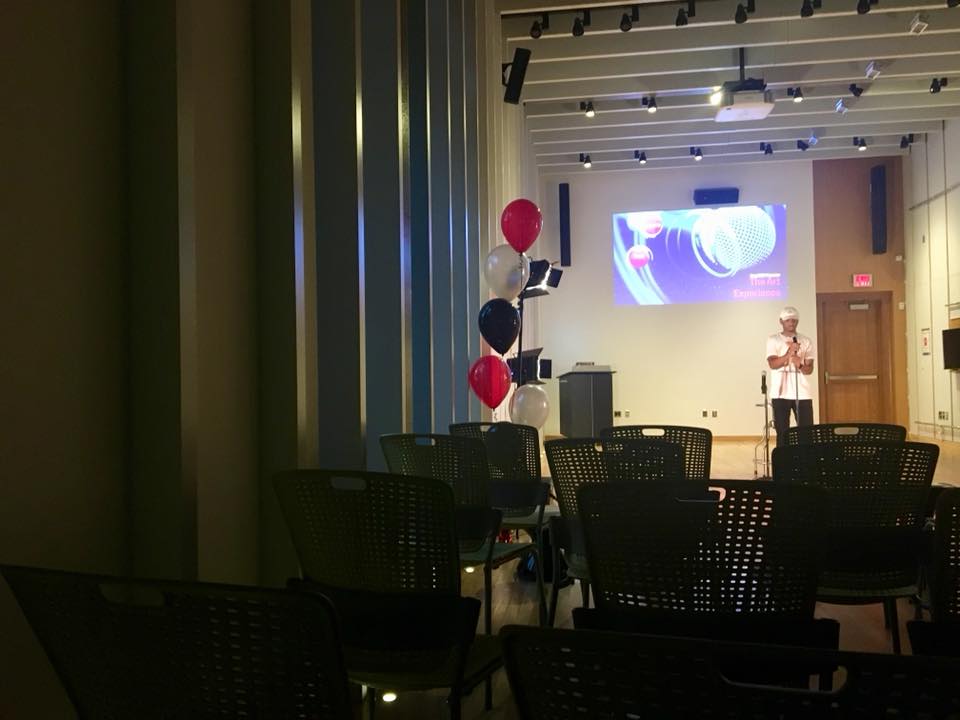
There were two paintings and a photo print making up the display part of the event, while the majority of the night consisted of live performances.  There were no labels on the visual art but I got a photo of the canvases near the door.

Chase Garrett, a poet, was the first live performer.  It was a political narrative preaching optimism even though the state of America is less than favorable at the moment.  It seemed to resonate with the audience, who was very responsive throughout the evening.

Next was a singer/guitarist, Jake Lemond.  While he reminded me a little of The Lumineers’ main singer, he was unique with his stage presence and skill with the guitar.  He played three songs, most of them alternating between a Travis pick-style verse and a strummed chorus.  There was a lot of strum pattern and vocal variation which made each song different.  He even used harmonics at the end of his last song!

Dennis London, another poet, came next.  His first piece was a rap in the middle of a song played over the speakers.  His second was, in my opinion, a love poem.  He called himself a “photographer by day” and talked about his newly-published book.  The book is about how happiness is earned.  The motivational speech he gave at the end of his performance seemed to be a snippet of that message.

After that, the dance group Ambiance performed.  They were an all-female group.  Their performance was an interesting mix of modern dance, showcasing fluidity of movement and form.  They also incorporated some ballet movements into the piece (which I only recognized because of a history of dance class I’m taking this semester) as interludes between dance exchanges.  I was sitting near the back, however, so it was difficult to see what they were doing sometimes as there was a lot of groundwork.

Unfortunately, my phone died during intermission and I was unable to take notes for the second part of the night.  It was, overall, a very cool experience.

Review: That Brown Show

As I expected, That Brown Show (TBS) was an impressive array of performances. I’ve got to begin by saying that audience etiquette is very different at this performance than they are in most performances I attend. Here, there was constant shouting from the audience, and sometimes the performers acknowledged them, too. It’s interesting, that interaction, because it’s something I’ve noticed just at TBS really.

The show began with renditions of both the American and the Indian national anthems. Both singers were quite good, but it proved to be quite the juxtaposition between styles of music: Alicia Kalsi, who performed the American anthem, sounded just faintly as if she were trying too hard, adding grace notes and extending her high notes – exactly how everyone that performs the American anthem does. Meanwhile, Vaidehi Dongre, who performed the Indian anthem, seemed to add very little froufrou to the song, and that plus the anthem’s narrower vocal range gave it a comfortable, effortless feel. I find it intriguing to compare the different definitions of a “classically trained” voice between American and Indian culture, because the way these two anthems were sung is a perfect example of the difference.

Most of the acts this year had a story to them. I can’t quite decide whether or not I liked the use of a video to introduce the premise. Some of these premises were surprisingly dark, and while I don’t object to the showcasing of serious themes, it seemed to cast a temporary shadow on an event that is normally (at least as far as I’m aware) on the exuberant side of things.

Each act was strong, very tightly knit and immaculately choreographed. Sahana Music’s performance was so beautifully blended I couldn’t tell who was doing what (though I wish I could have, because they all sounded fantastic). Michigan Raas had an amusing premise, that of one of India’s more well known dating websites) and their synchrony (barring a slight mishap) was excellent. Taal, who themed their performance on Alice in Wonderland, had a larger set piece that obscured some of the text on the screen, but this was more than offset by the way their dancing matched the disjunct quality of the book, and the clever way in which they created the face of the Cheshire Cat. Sahana Dance did a fantastic job of melding multiple dance forms together seamlessly, and their formations were so clean that even though I was in the balcony and not at the right height to appreciate the uniformity, I still did. Maize Mirchi had excellent harmonies and rhythms in their performance, although I’d definitely like to know what songs they sang and/or how they choose their music, because I didn’t see much of an Indian influence in their performance. Novi Nazar, a high school group, was a new addition to the ensemble performing at TBS (or at least they were for me – I’ve never seen them perform before), and I was impressed with their performance. The Michigan Bhangra Team had a wonderfully lively performance, and happened to use a snippet from one of my favorite songs, but I do wish the people dancing offstage in the wings had stayed behind the curtains more. Izzat, the show’s closing act, had an incredibly dynamic performance, with very nicely synchronized movements.

In the lobby of the theater was an art gallery showcasing a series of photographs taken to showcase the South Asian experience, each with a caption. The photographs were beautiful, but I do think the captions told more of a story – or maybe that’s just because I gravitate towards words.

The main impression with which I left the theater was that the choreography had been excellent. It is difficult enough to get two people to move in unison, but twenty? A near impossibility, and yet these groups all accomplished it magnificently. It speaks to the caliber of these groups and the dedication they have towards their art. I’m very glad I got to experience it.