REVIEW: The Four Winds

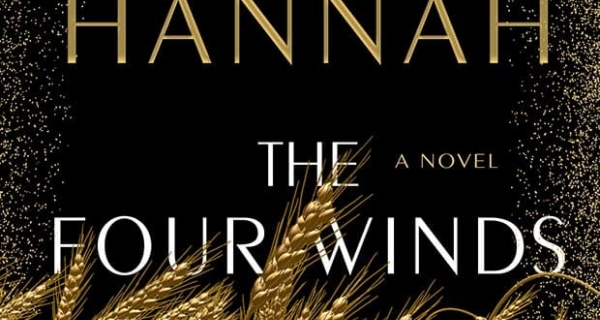
Set in the 1930s and telling the story of a family who fled Dust Bowl-ravaged Texas for California, The Four Winds by Kristin Hannah is not a comfortable book to read. That said, however, its descriptive prose and well-developed characters has the potential to draw readers in, and certainly kept me turning to the next page. Furthermore, despite the immense pain contained in the book’s pages, there is also an undercurrent of hope and survival, making it a worthwhile read in the current times. At over four hundred pages long, it is an excellent book for summer reading.

Elsa Martinelli, the main character of the book, is a woman who does not know her strength. As a young girl, a heart condition kept her from participating in many activities. Her family treated her as weak and as an outsider, and the resulting feelings of inadequacy haunted Elsa in a failing marriage and into middle age. However, she rises from these ashes to find family in her children and mother- and father-in-law, whom she fights fiercely for. This fierce love leads her to make one of the toughest decisions of all – to leave the Texas farm that is her family’s livelihood, but where everything is dying as a result of the dust storms, in search of a better future for her children.

However, life is not automatically better in California. Although the Martinellis escape the dust and its associated health consequences, work is hard to come by. Migrants fleeing the dust storms, referred to by California locals by derogatory terms such as “Okies” or “your kind,” were forced to live in inhumane tent camps, scraping together money to afford the most necessities. Though the story takes place nearly a century ago, it is hard to read it and not draw comparisons to the treatment of twenty-first century immigrants and refugees. So much progress has been made in so many areas since then, and yet we still tolerate, and even perpetrate, the same gross violations of human rights and dignity:

“Elsa couldn’t believe people lived this way in California. In America. These folks weren’t bindle stiffs or vagabonds or hobos. These tents and shacks and jalopies housed families. Children. Women. Babies. People who had come here to start over, people looking for work.”

However, fortunately, the human spirit also remains today as it did in the 1930s. In the Author’s Note, Kristin Hannah observes that strength can be drawn from others’ persistence in past hardships and applied to current struggles like the pandemic: “We’ve gone through bad times before and survived, even thrived. History has shown us the strength and durability of the human spirit. In the end, it is our idealism and our courage and our commitment to one another – what we have in common – that will save us.”

Even when things kept getting worse for the Martinelli’s when it seemed as though it was already as bad as it could get, they held onto one another, to friends, and to hope for better days. That is a message well worth four hundred pages.


REVIEW – Please Stand By: The 2021 Stamps School Senior Exhibition

Please Stand By: The 2021 Stamps School Senior Exhibition is a virtual showcase that highlights the work created by the graduating students of the Penny W. Stamps School of Art and Design. As a featured artist myself, I can personally claim that the creative process has been immensely complicated due to the COVID-19 pandemic. However, evidenced by the impressive display, the unprecedented conditions we’ve experienced together this past year have not prevented our collective perseverance and the creation of astonishing projects! Even though it is saddening that most senior studios went unused, I couldn’t be more proud of my fellow classmates for advancing their practice and fostering immense creative and professional development through their studies. Congratulations! 

That being said, if you haven’t checked out the exhibition, you should definitely give it a look! Here is the webpage: https://www.stampsgrads.org/classof2021/senior-exhibition/. Ironically, even though everything is digital, we have amassed a lengthy selection of books. In Between: este lado y el otro lado by Olivia Prado, a multidisciplinary artist, is a book that resists preconceptions of Mexican-American identity through the juxtaposition of poetry, drawing and painting, photography, and text messages with family members. Prado intentionally creates a multi-faceted narrative that contends with expectations for artists of color to reduce personal experiences to simplified concepts for white viewership and consumption. By offering a variety of rich and formative experiences, Prado opens a space for people to better understand, yet not entirely, the complexities of personhood as it relates to the communities we are a part of.

Additionally, because the website format allows for each artist to upload up to ten documentation photographs, the display configurations of more sculptural works are highly mutable. This is applicable to the Parasitic Vessels: Forms of Disuse series created by recent-graduate Ellie Levy. Levy is particularly interested in the introduction of invasive protrusions and modifications to bowls as a question and critique to the utilitarian nature of ceramic design. Although, with this mutation comes a supplemental and beneficial quality to the human interaction with an object. How do we perceive the bowls differently? As the material body of the bowls are mutated, a fused identity is created through a balance that allows for new existence. The parasite becomes a catalyst for the imaginative.

These are two of the many amazing and captivating works in the exhibition, which will remain permanently in the digital space. I encourage you all to explore what we have created!


Artist Information:

Olivia Prado – Website: https://odprado.wixsite.com/oliviapradoart

Ellie Levy – Website: https://ellielevyceramics.com; Instagram: https://www.instagram.com/erlceramics/

REVIEW: Broken Horses by Brandi Carlile

Despite being familiar with Brandi Carlile’s music, her new book Broken Horses took me by surprise. Generally, I would expect memoirs by artists to be enjoyable, perhaps gratuitous, for fans, but Broken Horses is, I daresay, of a different breed. It is impressive in its wisdom and authenticity, and a book that I would recommend regardless of whether the reader has listened to Carlile’s music.

The book chronicles Carlile’s life and development as an artist through present-day, and is punctuated by song lyrics (Carlile’s, as well as other songs and artists mentioned in the prose, including the Indigo Girls, Elton John, Dolly Parton, Johnny Cash, and others) and annotated photos. It is part narrative and part introspection, and it is self-deprecating, humorous, and raw.  The cast of characters is extensive, anchored in the center by Carlile’s musical “family,” including her bandmembers Phil and Tim, her wife, Catherine, and two daughters.  It is a vivid portrait of a human being who also happens to be a GRAMMY-winning singer-songwriter.

Broken Horses also traverses a wide range of themes in its three hundred pages: family, friendship, sexuality, religion, forgiveness, and many others. Carlile offers her thoughts and experience of each, without pretending to have all the answers. One of my favorite passages in the entire book is in relation to the genesis of the 2018 album By the Way, I Forgive You. In addition to its insight (even in its admission of lack of insight), it also, in my opinion, captures the essence of Broken Horses as a whole:

“Before I start sounding too earnest, understand that I wasn’t “teaching” forgiveness. I was and still am learning it. I’m not evolved. I’m as much a part of the problem as every other person in the world. This isn’t wisdom or insight, it’s a work in progress and it never did come from me. It came from our parents and grandparents. Our flawed heroes and our favorite TV shows. We were just playing dress-up and trying forgiveness on like a costume. We intend to learn these lessons over and over again the hard way for as long as we’re human. If you want the real thing 100 percent pure, the Everclear …you should talk to Lazarus.”

-Brandi Carlile, Broken Horses (2021), Chapter 17: By The Way

Quite fittingly, I would describe Broken Horses as a song above anything else (which makes sense, considering the author). It is a song of the human experience, and one that is not to be missed.

REVIEW – “Akeem Smith: No Gyal Can Test” at Red Bull Arts Detroit

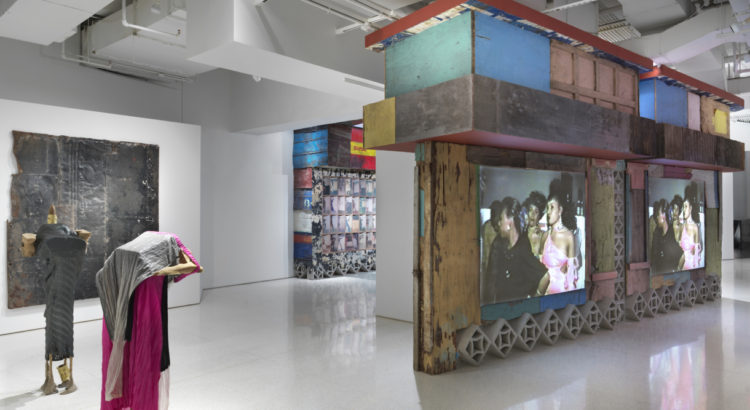
Akeem Smith’s No Gyal Can Test exhibition at Red Bull Arts Detroit transgresses disciplinary classifications and the expectancy for a singular ethnographic history of dancehall, which is readily accessible to a globalized audience eager to exploit its cultural legacy.

In Jamaica, upper-class families grill their home to deter robberies of their houses. Smith utilizes these grills to protect the archival dancehall photographic and film footage behind, which ranges the two decades between the 80s and 2000s. Protruding from the flat walls of the building’s underground tombs, these decorative homes symbolize the artist’s attitude toward a global viewership that commodifies the hypervisible women of the movement. The voyeurim of the gallery visitor questions the assumed invitation to peer through cast iron metal shields. What is offered and what is withheld? On the other hand, their installation can also be perceived in relation to wealthy Jamaicans’ refusal to accept the cultural and political revolution of dancehall as a national signifier. Viewers are meant to question their position within, or outside of, the household in order to better understand what is deserving of safeguarding.

In these and other wall works, photographs and videos are intentionally obscured, offering a limited visual scope to the memories they document. Queens Street, an assembled building with an exposed interior,  encases a single-channel video that plays abstracted and slowed-down footage of a dance. Because there is a gap between the welded metal doorway attached to the front of the house and the leftmost edge of the adjacent window, viewers are situated awkwardly outside this personal space peering indoors. The portrait included in Black Queen, a minimal and rectangular wall work made with salvaged, black building remnants, is hidden from view behind an top section of latticework. The woman’s face is almost entirely encased in its shadow.

Curated by Maxwell Wolf and Kenta Murakami, this unique expression of love culminates the preceding twelve years of archival work and outreach to honor the legacy of the dancehall community Smith grew up around in Kingston, Jamaica. Born in Brooklyn, NY and raised in the Waterhouse District in Kingston before returning to Crown Heights, Smith is the godson of Paula Ouch, the founder of the Ouch fashion house, an all women’s team that shaped the visual loudness of the era. Several of their garments on view are draped on mannequins sculpted by collaborative artist Jessi Reaves that commemorate the women of his youth and particularly Sandra Lee, the central fashion and hair stylist. Jewelry by Brando, his grandmother’s former partner, is juxtaposed alongside these original pieces. The interwoven nature of his life is further solidified through his grandma, who raised him alongside his mom, and co-owned La Roose club in Portmore, a coastal city that borders Kingston. Materials – corrugated zinc, tarp, repurposed wood, and breeze – from the building’s facade, as well as other disused social spaces, make up the main components of Smith’s deeply-personal installations.

While Smith’s process implements specific protocols to procure and ethically compensate Jamaicans who provided him with the exhibition material, the extension of these guidelines within the gallery are ultimately left to the discretion of the visitor. What is implicated through the exhibition’s free admission and allowance of photography that facilitates a capturing of images among visitors?

Akeem Smith: No Gyal Can Test is on view at Red Bull Arts Detroit in Eastern Market every Friday – Sunday from 12 pm – 7 pm until July 30. Reservations are required. Appointments to see the Soursop offsite installation at Woods Cathedral in Detroit can also be made using the same webpage: https://ngct.redbullarts.com


Artist Information:

Akeem Smith – Instagram: https://www.instagram.com/akeemouch/

PREVIEW – Akeem Smith: No Gyal Can Test at Red Bull Arts Detroit

Installation View of Akeem Smith: No Gyal Can Test at Red Bull Arts New York 2020. Photo by Daro Lasagni. All artwork courtesy the artist and Red Bull Arts

Red Bull Arts Detroit is hosting the second iteration of Akeem Smith’s traveling exhibition, No Gyal Can Test. This show, which premiered on April 16 and runs until July 30, explores the dancehall community in Kingston, Jamaica. Through collaborative sonic-sculptures that four-dimensionally collage ephemera – photographs, videos, garments and jewelery, along with architectural materials sourced from musical congregation sites now existing through public memory – Smith transports a display of togetherness resonant today in the ever-evolving and globalized community. Because Detroit’s cityscape reveals prevalent musical archives encoded within architectural fragments of former music and dance spots, I’m excited to see and hear how Smith’s exhibition is intimately recontextualized within a local arts space.

REVIEW – 2021 Graduate Degree Exhibition of Cranbrook Academy of Art

2021 Graduate Degree Exhibition. Photo- Katie McGowan

The 2021 Graduate Degree Exhibition of Cranbrook Academy of Art at the Cranbrook Art Museum offers a straddling of separate spheres across time and space as it relates to memory, the physical and digital body, and disciplinary categorizations. The exhibition features a wide range of work across concentrations. Among those defined below are architecture, fibers, and photography. While the highlighted artists are classified by their majors, much of the displayed work transcends limitations imposed by the mediums’ historical working methods and perceptions. This feature is highlighted in And that’s on who? Mary had a little lamb., the tufted rug of Qualeasha Wood, a student of the Photography department “embracing her role as a young hot ebony on the internet,” a phrase that begins her artist statement. In this wall hanging depicting a sunny day, a blackened silhouette of a woman holding a red pair of scissors is positioned in the foreground in front of a lamb. It can be assumed that she is going to shear its fleece as “white as snow;” however, this vision and that of implied race is never truly offered to the viewers. With photography technologically rendering images of the body within rectangular space, Wood physically and metaphorically rejects this contained geometry of the black body within the landscape to offer and reject consumptive access among viewers.

In Chickpea Landscapes, an illuminated wall-based sculpture of Jessy Slim, an Architecture student, Slim attaches clay she prepares with garbanzo beans, a food staple native to the Middle East, to backing fabric. Held up in areas with stakes, the cloth undulates and protrudes to form a mountainous topography that cracks like rock fissures peeling from its foundation. It is through these material explorations, and physical transformations, that Slim interrogates how immigration from Lebanon has displaced and reconstructed her memories tied to home. Physical recollections being kneaded only to flake from the landscape and crack, asking to be tended to with hands bearing witness to past views and meals eaten. This position of the in-between, a journey on the traffic-ridden freeway, is also highlighted in Same Road Different Day, a circular embroidered wall piece by Fibers student Kaylie Kaitschuck. Surrounded by hot wheels driving single file down the dotted line yarn roadway is a landscape to get lost in. Butterflies flap their wings; snakes slither toward burning bushes that flowers emerge from; goldfish swim in a pond surrounding by a checkerboard path with a swerving car; lightning strikes; the sun strikes a smile; a series of frowning faces ascend a yellow ladder to happiness; airplanes and sharpened, levitating pencils fly; hands reach for clouds at the end of the rainbow which tell you to “DREAM BIG.” What time is it? The pink band watch doesn’t work; instead its clock face is a portal. Am I spiraling? Is this a spiral? Where and when am I being transported? The road goes in circles, and I’m still stuck in traffic.

Yikes.

I think I’ll get off the freeway at the nearest exit and make the trip back to Cranbrook before the end of the week, after which the work is deinstalled.


Artist Information:

Qualeasha Wood – Website: https://qualeasha.com; Instagram: https://www.instagram.com/qualeasha/

Jessy Slim – Website: https://www.slim-studio.com; Instagram: https://www.instagram.com/_actuallyslim/

Kaylie Kaitschuck – Website: https://kayliekaitschuck.com; Instagram: https://www.instagram.com/kayliekaitschuck/