REVIEW: Mod Metallic Trays

With the wellness day coming up, I thought that a small art project would be the perfect way to destress and enjoy my “spring break”. This craft was an art project supplied by the Ann Arbor Art Center, and in the kit included some instructions, one package of white Model Magic air dry clay, a huge thing of gold paint (relative to the size of the clay), a paintbrush, and a piece of wax paper for letting the clay dry on.

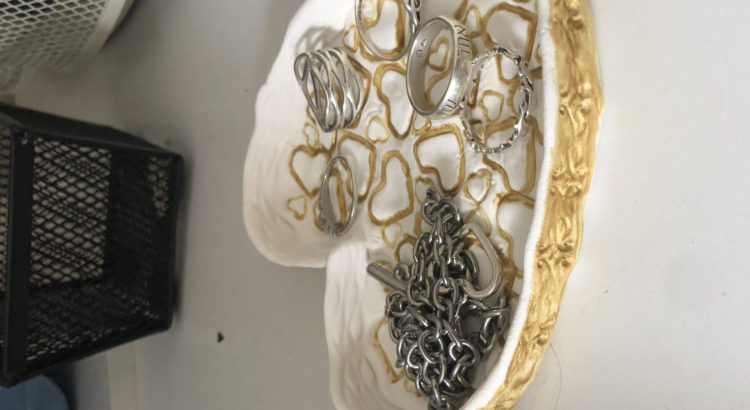
First I looked through the instructions, which were pretty basic, and detailed how to create a pinch pot as a starting point to the suggested crafts. These included a ring tray, small bowl, and flat lipped tray. I chose to do a flat lipped tray, but make it heart shaped, just to make it interesting. The instructions also suggested using materials from around the house to push imprint patterns into the clay, which I thought was genius. I used a couple of my rings that I wear every day to make the shapes that I included on my tray, as well as some necklaces that I have which have heart-shaped pendants. I had so much fun looking through my room and trying to find different items that I could use to push shapes into the clay.

Here it is from the top, with two different necklaces used to make shapes in the clay for the inside of the bowl. I also tried to make shapes on the inside of the lip of the tray with another ring, but for some reason those did not turn out as well. You can sort of see them on the sides of the tray in the above picture as well. Pushing the necklaces in to the clay was hard without accidentally making other markings from the necklace, as well as not pushing against some of the shapes that were already there and causing them to fade a little. You can see that it was hard to make the hearts uniform in terms of depth. But it looked pretty cool at this point! Below, you can see I used another ring to do a different design along the outer edge of the tray too.

I waited 24 hours for the clay to dry like the instructions said, and then I started painting! The gold paint they provided was so sparkly and pretty, I wish I had more things to paint it with. It especially looked gorgeous because I was painting in the light of my window, so the sun was making it look so cool. Below you can see I outlined each heart on the inside of the tray along the lines of where I pressed them into the clay. I think it turned out looking pretty cool! I didn’t try to make it super neat or anything because I wanted it to be more fun than perfect. 

Below you can see I painted the whole outside so as to be able to see the pattern too. I love how it turned out overall and it was also a blast to mold the clay and paint.

This was one of the most fun things I have done for a review in a while! The art I review is not usually so hands-on, and I had a really good time playing with the clay and painting it with that gorgeous gold paint in the sun.
REVIEW: Ann Arbor Film Festival, The Room Presumed

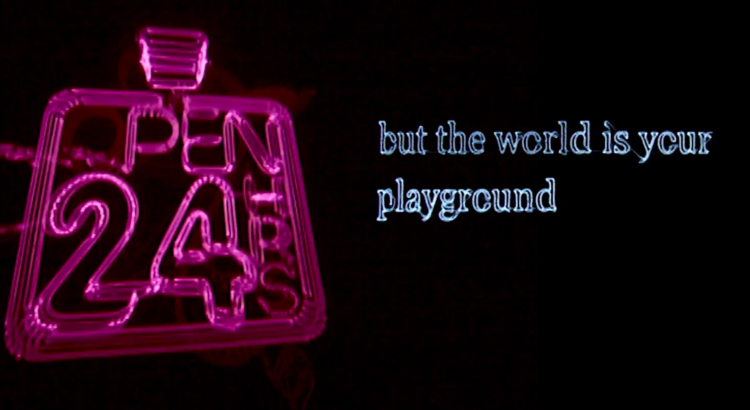
I attended one of the free performances put on by the 2021 Ann Arbor Film Festival, The Room Presumed by Scott Kiernan. Just from the description on the Ann Arbor Film Festival website, I wasn’t quite sure what I was watching exactly, but I was intrigued by the idea of watching something created with machine learning. 

In this piece, trippy visuals set on the backdrop of a black screen are accompanied by text that appears sentence by sentence. When the performance began, I was unsure of when the “real” performance would start and assumed I was seeing human-written words appear on my screen. My confusion deepened when at random points, the script would suddenly make no sense, or repeat phrases, and then return to a seemingly “normal” cadence.

If you’ve ever played around with artificial intelligence (AI) poem generators or AI meme generators (This Meme Does Not Exist), you might recognize these glitches as trademark giveaways of tech-created text. Or perhaps it’s just an innate disposition to be able to tell when something just doesn’t sound human. Once it fully clicked that this was probably a machine-written script, I couldn’t tell if I was more disturbed or less disturbed by it.

I crashed the day’s afterparty for the Ann Arbor Film Festival on gather.town, which I had never been on–a site where participants are avatars, and your proximity to other avatars determines how much you can see or hear them. I accidentally found myself in an AAFF director chat before I found Scott Kiernan’s group and joined the conversation about what that piece really was about. 

The script we experience in The Room Presumed is created by a machine learning algorithm partially trained on an early 1980’s thought experiment at Atari. During this experiment, Kiernan explained, computer scientists at Atari imagined the possibilities of virtual reality, but without the tools to do it, resorted to improvisational acting.  

The end result of this machine learning script, as Kiernan explained, is to make fun of what we call immersion and reveal how non-immersive VR can be. As homage to this original thought experiment, at the end of the performance there flashes a picture of the Atari building today, an unmarked, bland corporate building. 

This piece caused me to truly think about my relationship to reality and to technology, and reminded me of an article I read about AI-”created” art. While an AI can turn out surprisingly humanlike (and disturbingly un-humanlike) pieces, what it creates is always going to be based off of the human-created content it is fed, yet that doesn’t in turn make an AI piece human-created. In a similar way, VR will always be a tech-warped version of our true reality, and therefore, as Kiernan pushes us to see, it cannot be truly immersive.

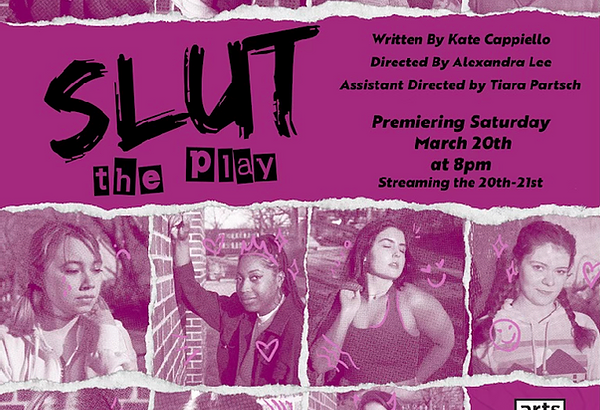
REVIEW: Basement Arts’ SLUT The Play

Content warning: this play and review contains topics of rape and sexual violence. 

Centered around 16-year-old Joey’s testimony about the night she was assaulted by three of her friends, Slut: the Play interweaves Joey’s interviews and the reactions of Joey’s female classmates. The play itself has a rich history, initially created by the all-girl, non-profit theatre organization The Arts Effect. Slut: the Play was eventually adapted into the Netflix Series Grand Army.

The organization of the play translated well to a Zoom format, utilizing a mix of filmed (masked) group scenes, Zoom calls, and individual recorded monologues to tell the story. The ability for monologues to be filmed in genuine locations was a powerful dynamic in Basement Arts’ adaptation. Joey’s friend Jane talking to an unseen mother in a kitchen. The sister of one of the perpetrators pleading him for answers while sitting cross-legged on her bed, laptop on her lap. 

Strong acting throughout, I was gripped by the cast’s performance. The play was difficult to watch at times, with disturbing content matter both in terms of sexual assault descriptions and some character’s reactions to the events in question. However, I think it was a brutal call to recognize the many different aspects of a toxic culture that often discourage survivors from speaking up. 

The titular word, ‘slut,’ starts off as a sex-positive term among Joey’s classmates for their dance team nicknamed “The Slut Squad,” but turns into a horrible, derogatory, blame-filled word once Joey steps forward with her story. A community reacting with victim-blaming and accusations of lying leave Joey wondering if there will ever be resolution for her, considering the way her community has responded to her coming forward. The play ends, however, with a small glimpse of hope–the words “I believe you.”

Basement Arts did a speaker series to accompany this show, including interviews with Sexual Assault Survivor Advocate Vanity Catoni-Ellis and co-creator of the play Meg McInerney, which I think was an important supplement to the show, considering the heavy content material. Overall, I believe Basement Arts handled this production well, making it work for the current circumstances in order to ensure the meaning of the material wasn’t lost.

Basement Arts asks patrons to consider donations to the following organizations in lieu of ticket prices:

First Step – https://www.firststep-mi.org
Safe House Center – https://www.safehousecenter.org

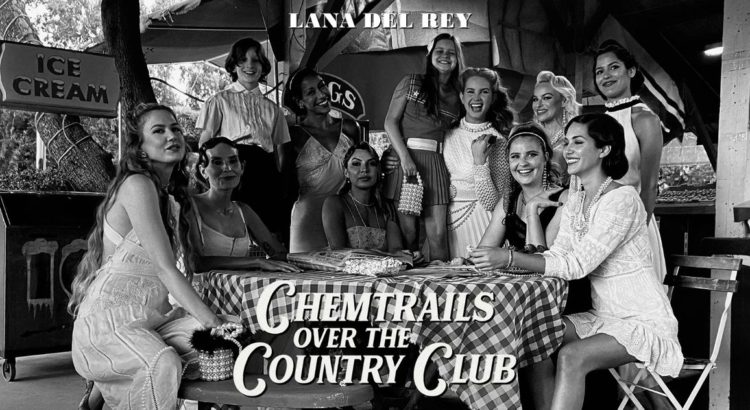
REVIEW: Chemtrails Over the Country Club

Two days after the album’s release, I can finally pull myself from my folk-Americana-alt-indie haze to write a coherent review of Chemtrails Over the Country Club— Lana Del Rey’s sixth studio album. To say I was dubious that this album could come close to her last work, the masterpiece that was Normal F*cking Rockwell (NFR), would be an understatement; when I first hit play on Chemtrails, I expected to be disappointed. Lana has a beautiful voice and can write successful songs, but her subject matter and music tends to stay in one wheelhouse; mix Hollywood glamor and greed with older men and despair, and you have a Lana song—  probably one that I’m going to like. Still, what I really had been wanting from her was something new, and I got that on NFR as she reigned in her voice and subject matter so that the melodrama became a bit more authentic. I loved that album; it gave us a more personal sound that made me wonder if she had peaked. I mean, after NFR, after “Happiness is a butterfly” … what else was left to say? 

Evidently, there was plenty. On Chemtrails, she expanded upon that sound, adding elements I never thought I would hear on a track by Lana Del Rey, while stripping away elements I had come to expect. Covering Joni Mitchell, paying homage to American folk, and featuring country singers, Lana has taken her devotion to Americana to new levels on Chemtrails, combining her love for Hollywood with a love of something else that is distinctly American: country music. 

When I say country, I mean old school country, rooted in blues and American folk. Lana’s past music has occasionally been bluesy, with elements of jazz, but stringy acoustic guitar and brass instruments are usually not something I would expect from her. Yet, in “Dance Till We Die,” she belts to a heavy beat against a saxophone and some bluesy guitar. It’s definitely one of the best moments on the album, and thankfully, this record no longer uses whatever weird vocal effect her old music used to have that made it sound as though she was singing on a 1950s microphone. Instead, her voice sounds clear and controlled, a definite improvement. 

Another standout is “Not All Who Wander are Lost,” which, once you hit the chorus, sounds absolutely nothing like a Lana Del Rey Song. It’s hopeful, and happier than 90% of her music, with beautiful harmonies that I can only guess come from producer Jack Antonoff, who’s known for using grand instrumental buildups. I can also hear his hand in its twangy guitar interlude and closing solo, which, again, are not things I would expect on a Lana track. Lana first brought Antonoff on for NFW, and I think we partially have him to thank for the slightly less performative, more confessional style on some of her newer songs. 

Something I also really appreciated were features of other artists. “Breaking up Slowly” features “outlaw country” artist Nikki Lane, and Lana also brings in Zella Day and Weyes Blood to cover Joni Mitchell’s “For Free.” It transforms into something beautiful and orchestral… something in which Antonoff surely had a part. 

There are some songs that sound more like classic Lana, like “White Dress” and “Chemtrails over the Country Club,” which I was able to appreciate in contrast to some of the other songs. “Wild at Heart” strikes a really nice balance between old Lana and this new sound. It’s a beautiful triumph that, at times, even reminds me of Tammy Wynette (who is referenced in “Breaking Up Slowly”) and other classic old country, while still feeling like Lana. “Dark But Just a Game” is another song that really blends the old Lana with the new, sounding like Born to Die and Ultraviolence, at parts, while still feeling more confessional and raw than the music of her past. I think that balance is crucial, because other songs, like “Let Me Love You Like a Woman,” that feel straight off Ultraviolence or Honeymoon are definitely the weakest for me. I guess I’ve just heard her do that type of song before, and I’ve heard her do it better. I would leave that sound in the past. 

Overall, though, I am surprised to say: I love this album. It delves into a side I didn’t know Lana had. I like that it plays into other parts of American music, because American culture has always been a big part of Lana’s subject matter, but now she’s using that in a new way. She references many other artists in her lyrics, including Joni Mitchell, Tammy Wynette, and Kings of Leon, nodding to the new folk and country elements this album brings in, and, of course, the rock upon which she has always depended. 

So, in conclusion, is it better than Normal F*cking Rockwell? Well, I haven’t decided yet. But the fact that I have to ask that question at all is an incredibly good sign.

REVIEW: Raya and the Last Dragon

*WARNING: MILD SPOILERS*

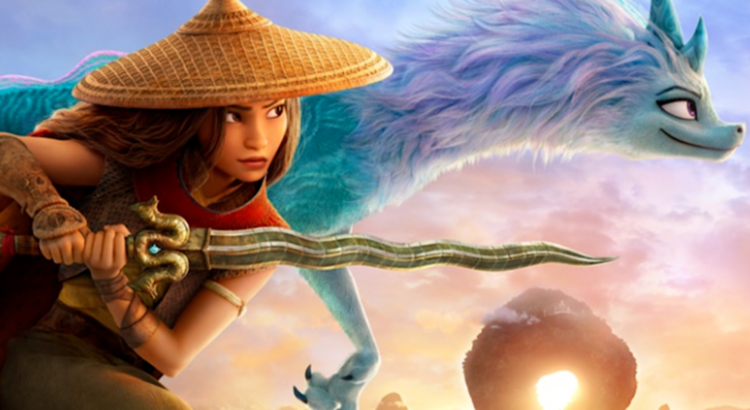
Disney’s new Raya and the Last Dragon introduces us to the titular heroine, Raya, as she navigates a fractured society in order to find the scattered remnants of a magical orb which holds the power to banish evil beings called Druun from the world. The film is available for purchase now, and will eventually be free with a Disney+ subscription later on this year. Raya’s adventure takes us into different regions of a land previously called Kumandra, all of which are home to different warring tribes. The film suffered a bit in terms of the storyline, dialogue, and character development, but it still managed to be a fairly entertaining movie about the importance of trust.

The film opens with an introduction to the new world that Disney has created, which is a land with a large river (which is shaped like a dragon) running through it. The audience is introduced Raya, who promptly sends us into a flashback sequence where she describes how the world got so messed up. We see a young Raya training with her father, who is the leader of her tribe and the guardian of the Dragon Gem. After a training session, Raya’s father tells her that the other tribes are headed for their home, and asks her what she would do in response if she were leading. The scene that follows is definitely meant to serve as exposition to try to build the world as quickly as possible. Raya describes the various tribes and assumes that they are about to go to war. Her descriptions are full of stereotypes and negative interpretations of the other tribes’ ways of life, which is where I took my first issue with the film. I’m under the impression that this scene was meant to be harmless, and was just meant to introduce us to the other tribes of Kumandra, but I couldn’t help feeling like Raya had been educated to hate the other tribes, and that we as an audience were just supposed to roll with it. I would have felt a little better if Raya’s stereotypical views were challenged later on in the film, but for the most part, that dialogue seemed to be brushed under the rug and left for the audience to interpret. I thought that this could have been a good opportunity for Disney to explicitly state that we need to educate ourselves in regard to our biases and views of people who are different from us, but it just fell flat. For instance, one of the tribes is called Spine, and Raya states that it is full of big strong meatheads who are violent and stupid. The character from Spine is named Tong, and he is actually the most articulate character, using very descriptive vocabulary when speaking. We also learn that Tong was a father, and that he is a good and loving parent, but the stereotype that Raya held about his people is never challenged while he is on screen. Tong’s character instead leans into that stereotype through the rest of the film, and many of the other members of the different tribes do the same.

Another issue I had with the film was the introduction of conflict. In Raya’s description of Kumandra, she literally says that the reason that the tribes are fighting over the Dragon Gem is “people being people,” which rubbed me the wrong way. This seemed like a cop-out in order to not have to give the characters from the other tribes any motivation. All of the tribes were trying to steal the Dragon Gem from Raya’s home, and we are never given a clear reason as to why. There are subtle references to Raya’s home having an abundance of resources as a result of having the Dragon Gem, which Raya says isn’t true, and her father agrees with her. A character from the tribe of Fang said that they “had’t had rice in a while,” which would indicate that there may have been famine in the regions outside of Raya’s home, but we are never shown if that it true or not. Again, I think this is a missed opportunity by Disney. It seems like the writers were trying to set up a conflict where the antagonists were as relatable and understandable as the protagonist, resulting in a climax where they realized that they were more alike than different, but we just aren’t shown why the other tribes even wanted the Gem in the first place. Even Raya’s father wanted the Gem to stay in their tribe, as he guarded it with his life. I think it could have been a good opportunity to explore the idea of hoarding wealth instead of sharing it among the people. If the other tribes believed that the Gem could fix the problems in their region, why not let them borrow it for a while? Why guard it with your life? And most importantly, why educate the youth of your tribe to view outsiders as untrustworthy and evil? I was left with a lot of questions, and I felt that the storyline wasn’t as fleshed out as it could have been. There seemed to be nods to other drafts of the script scattered through the film, and I wonder if some of those ideas were left on the cutting room floor.

Now for some good things about the movie. Disney is obviously trying to flex their animation abilities with this film. The scenes are very aesthetically pleasing, and some of the effects on rocks, plants and wood are borderline photorealistic. We could see some of this popping up in Frozen 2 with very well-rendered rocks and water. I felt that this film was especially an ode to the animators’ ability to animate water, every use of water in the film is stunning. We see waterfalls, rivers, rain, and even droplets of anti-gravity magic water. The characters all seemed to be based off of rudimentary shapes, one being a triangle, another being a square, and another being an oval, which I though was an interesting way to construct the bodies of the characters and make them all a little bit more unique looking. One interesting aspect of the credits was the acknowledgement that the film was completed from 400 different homes because of the restrictions due to Covid-19. This is no doubt an impressive feat, but I can’t help but wonder if this may have contributed to some of the issues in the storyline and dialogue. I’m sure that folks were stressed, in need of motivation, and unable to communicate as effectively as they would have been able to had they been in person. After thinking on it for a while, I decided that I was more impressed with the movie after seeing that acknowledgement, and I respect the team’s determination in making a film through this struggle.

At first, I was a little disappointed with Raya and the Last Dragon, and I thought that it missed the mark when it had a lot of potential behind it. It was a little choppy, a little rushed, and a little unfocused. The characters were underdeveloped, but ultimately we knew what they were somewhat like by the end of the film. The story seemed like a list of chores to check off instead of having compelling motives for the characters, but we understand why the characters need to unite in the end (for the most part). The animation was gorgeous (even though the dragons seemed a bit out of place in the world), and the movie mirrors the real life unity and determination that the team displayed in order to create something bigger than themselves. If you’re looking for a lighthearted film to pass some time with friends or family, Raya and the Last Dragon is worth checking out (especially once it comes out for free with the Disney+ subscription). 6.5/10

*Raya and the Last Dragon costs $29.99 for early access, it will be available to all Disney+ subscribers from June 4th.*

REVIEW: Playing With Fire: Jeannette Sorrell and the Mysteries of Conducting

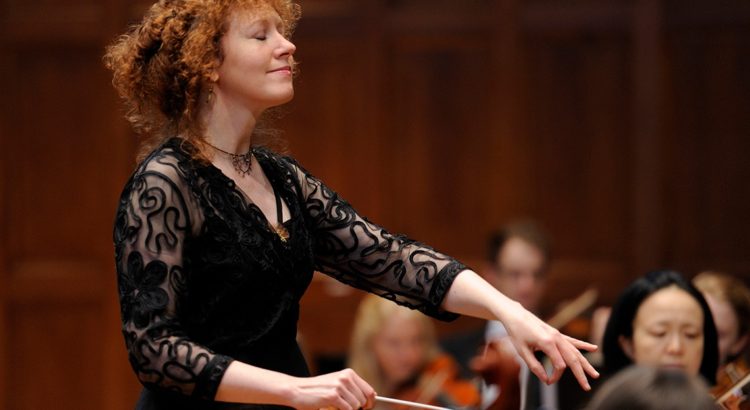
The documentary begins with Sorrell conducting and working with her own Baroque orchestra, Apollo’s Fire. I can immediately see her enthusiasm for and commitment to the work; it comes across in her physicality and the way she instructs her orchestra to play. Apollo’s fire only plays on historical instruments because it is a Baroque orchestra, which I thought was so cool. She really did a great job finding her own niche when Julliard and other prominent institutions turned her away for wanting to be a woman conductor.

Her own performers also laud her skills and conducting abilities, explaining that she is great at trusting them, at choosing new players, at understanding the music, and at guiding them to a great performance. Even her own ex-husband, who is still a member of the group, has nothing bad to say about her and still enjoys being part of Apollo’s Fire. I also loved hearing the players explain how some of their own instruments work, and how they are more complicated than todays instruments and their differences.

Apollo's Fire Playing Now Online In 'Playing With Fire' | Arts & Culture |  ideastream

Sorrell, at one point, describes herself as “kind of driven”, but it is clear through her own experiences and others descriptions of her that she is more than driven, she is passionate. You can hear it in the way she talks about the music, and how she instructs others as well as plays herself. Her skilled expertise is apparent when she guides us through her own marking-up of a piece and when she directs for a group on stage. She also teaches budding conductors, and explains to the students how the music builds a story, and each marking in the music is an important element in the storyline the piece is creating. I never realized how much of a real story is coming across in every change in tempo, volume, and emotion of the music. I loved how she interpreted them using the knowledge of what the piece was supposed to be about but then also went further and put her own spin on it.

And, of course, I also really enjoyed hearing all of the beautiful music that was interspersed into the documentary as well. I am so glad that they included a lot of playing as well, not just information about her story and conducting abilities. It not only was fantastic to listen to, but it also helped to demonstrate that her skill in conducting is very real and impressive.

Photo Gallery – Jeannette Sorrell – Apollo's Fire

Overall, I thought this documentary was a great overview of what it is like for Sorrell to be a conductor, teacher, and just plain talented person. If you are interested in conducting at all, or just a very empowering story, I would highly recommend this documentary!