PREVIEW: The War and Treaty Livestream

Join musical duo The War and Treaty for a livestreamed virtual concert on Saturday, March 20 at 8pm EDT!

The War and Treaty, which is comprised of husband and wife Michael Trotter, Jr. and Tanya Blount, is originally from Albion, Michigan. They defy the boundaries of genre, and their sound is a blends folk, blues, gospel, and other musical influences. The War and Treaty also performed at the 44th Ann Arbor Folk Fest, and I am especially excited for this concert after their awesome performance there!

Tickets are available at https://sessionslive.com/warandtreaty/tickets. Additionally, to learn more about The War and Treaty, visit https://www.thewarandtreaty.com/.

PREVIEW: Chemtrails Over the Country Club

Ten years ago in 2011, Lana Del Rey hit the alternative music scene with her first major studio album Born to Die. Since then, she has cranked out a handful of successful albums, earning herself the title “Queen of Alternative” from numerous big names in the industry like Rolling Stone, Billboard, and Pitchfork. Tomorrow, she hopes to add to that success, with her seventh studio album, Chemtrails Over the Country Club. Chemtrails has big shoes to fill after her most recent album, Normal F*cking Rockwell (2019),  a smashing critical success that received universal acclaim.

I’ve liked Lana’s music for years, though, as her music career has flourished, she has created many social and political controversies; one can’t help but wonder whether, in the last year of tumultuous social change, she will be able to hang onto her success given her troublesome tendency in this regard. 

It will be interesting to see if these controversies finally catch up with her, or if she can match her previous success. Either way, I’m looking forward to listening. Chemtrails Over the Country Club will be available on music platforms and in stores tomorrow, March 19. 

REVIEW: Tom and Jerry

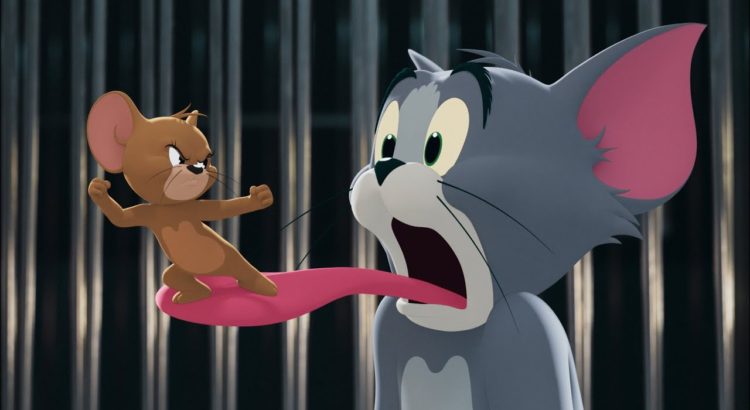
The movie begins with a skyline view of New York City, illustrated to look as realistic as possible, and a singing bird. The bird is cartoon against a real-life backdrop, and singing Can I Kick It by a Tribe Called Quest. This intro scene basically describes the vibe of the entire movie, which is abstract and out of place, but also nostalgic and occasionally familiar.

The first thing that gave me pause was that Tom, Jerry and their other pals that were included in the movie had gotten an update to their cartoon features. They were much more highly detailed and had more specific attributes than the original cartoons. This was quite off-putting, especially when they were set against the normal looking background. However, they were not so different that I couldn’t recognize the other characters who made short appearances, including Spike (the bulldog), Butch (the street cat) and his cronies, and Toodles (the pretty cat who Tom always goes after). I did not know they were going to include some of the other original cast, and it brought back some fun memories to see them there.

Another important factor of the movie was the way Tom and Jerry interacted. In the old cartoons, they are virtually invincible and constantly testing the limits of their invincibility, dropping anvils on each other, falling out of windows, smacking each other across the face with various objects, and generally beating each other up. They included this same level of violence in the movie, but it was super disconnected from the realistic background of New York City. When they first started beating each other up, I found myself wincing, because it felt so much more real and painful since they were in the actual world, not a fully cartoon world. But I did appreciate that they used a lot of the classic moves that are typical of Tom and Jerry, and recognizing some of these antics made the movie feel a lot more nostalgic. However, they overused the idea of the “pet fight cloud”, when two or more of the animals get into a punching match so big it turns into a blur of fists. This happens occasionally in the show for just a couple of seconds until something breaks up the fight, but the movie used it as a plot point. They had several of these punching matches that caused serious damage to the hotel where Tom and Jerry were staying, and it just seemed so silly and incongruous with the way the movie had previously shown the relationship between cartoon animals and real people. This idea got taken a bit overboard when they used to to move the story along, and it looked even more weird when it became a force of change in the real world. I thought they should have done a better job with keeping the cartoon and authentic worlds separated.

Overall, I had fun watching the movie. Even though it was definitely a bit strange, and the storyline was not great, it was enjoyable to see some of my favorite cartoon characters from childhood duke it out once again. I would recommend this movie if you are just looking for something fun and easy to watch.

REVIEW: Deadly Secrets: The Lost Children of Dozier

“When I try to remember it, most of the time all I see is red… a red haze… I do remember thinking I was going to die.” This is how Robert Straley, a former student at the Dozier School for Boys, describes his time there as a thirteen year old in the early 1960s. The Dozier School, located in Marianna, Florida, operated for over 100 years, seeing thousands of “troubled” young boys pass through its doors by order of the state. Tragically, dozens of the Dozier students never left the school’s grounds; by the time it closed in 2011, Dozier reported 31 children died while in attendance. Deadly Secrets: The Lost Children of Dozier, directed by Heidi Burke, follows the reporter who brought the story to light and the forensic anthropologist who made it her mission to identify the boys beneath those unmarked graves.

The story starts with Ben Montgomery, a reporter for the Tampa Bay Times who first speaks to Straley about Dozier in the early 2000s. Montgomery then meets hundreds with stories exactly like Straley’s: boys from poor families who had committed minor infractions that sent them straight to Dozier, without the consent of their parents. At Dozier, they experienced brutal mental, physical and sexual abuse at the hands of the guards, who were often community members with families of their own. “They became men like demons,” Straley says of the guards during the film, “and when they went home they hugged their grandchildren and went to church.” 

As Montgomery delves deeper into the horrors of Dozier, his writing catches the attention of the other key player in Deadly Secrets— forensic anthropologist Dr. Erin Kimmerle from the University of South Florida, who hopes to excavate those unmarked graves. Upon doing so, her team finds the bodies of 55 children buried at Dozier, a number significantly higher than what the state reported. Dr. Kimmerle employs forensic analysis to test the DNA of the excavated remains against the DNA of possible family members she tracks down through old ledgers and state records. It’s frustrating work, as most records are incomplete, or simply wrong. Still, amazingly, she identifies the remains of nearly 20 of the 55 missing boys. 

Kimmerle’s diligent work and Montgomery’s vital reporting are inspiring, but the real heart of this film lies with the students and their families. One such family member is Cherry Wilson, whose brother Earl was sent to Dozier when Cherry was six years old. That was the last time she saw Earl, whom she recalls lovingly as always bringing her candy, though she has thought about him every single day since he left. Kimmerle was able to identify Earl’s remains and return them to his family. 

Overall, I wish the film dedicated more time to the students themselves. I think their memories were more essential than detailing Kimmerle’s struggle to excavate, or Montgomery’s newspaper articles. Still, this story would not have been brought to light without their dedication to the cause, so I understand why the film covered them in such depth; I wouldn’t necessarily cut any of their parts out, as they were still interesting and important, but I would add more coverage of the students. 

Deadly Secrets does really capture the haunting details of Dozier, most of which I have left out, because hearing these chilling stories from the mouths of the survivors themselves is infinitely more powerful than reading them on a screen. The film itself can be tricky to find; I was only able to view it thanks to UM’s Center For Midlife Science and their film series: “The Disappeared: A Human Rights Film Series & Discussion,” which explored the idea of enforced disappearance. This was the last event in the series, and it closed with a discussion featuring  Ford School of Public Policy professor Susan Waltz and School of Public Health professor Siobán Harlow, who shed more light on how the Florida government perpetuated these disappearances. Overall, both the event and the film were important and insightful. If you can find the film, I recommend you give it a watch; at the very least, look into this fascinating story and learn the names of Dozier’s lost children. 

PREVIEW: Playing with Fire: Jeannette Sorrell and the Mysteries of Conducting

Playing with Fire: Jeannette Sorrell and the Mysteries of Conducting is a documentary featuring Apollo’s Fire and the St. Paul Chamber Orchestra. This UMS digital presentation explores the art of conducting, and in particular follows the Grammy award winning conductor Jeannette Sorrell. Sorrell was told by the Julliard School and the Cleveland Orchestra that no one will hire a woman conductor, but she persevered. She formed her own Baroque orchestra, called Apollo’s Fire, which quickly rose to fame and won awards. In the film, we watch her work and teach at music festivals, as well as rehearse with Grammy winning orchestras.

I am excited to watch this because I love to watch women rise beyond those who tell her no or deny her, and achieve success. Also, I know nothing about conducting and I love to watch orchestras, so I think this will be a really interesting documentary!

It is available through UMS Digital Presentations, starting on March 12: https://ums.org/performance/playing-with-fire-jeannette-sorrell-and-the-mysteries-of-conducting/

REVIEW: Nomadland

If you search for this movie online, you will find that it has a 94% on Rotten Tomatoes and Metacritic, and 86% of Google users liked the movie. However, I would be in the minority of people who definitely did not find it to be a good movie. While it had some elements and beauty that I enjoyed, I finished the movie thinking, “What the heck just happened?”. Even though there were some points that I found meaningful, I struggled to find meaning or have interest in the movie as a whole.

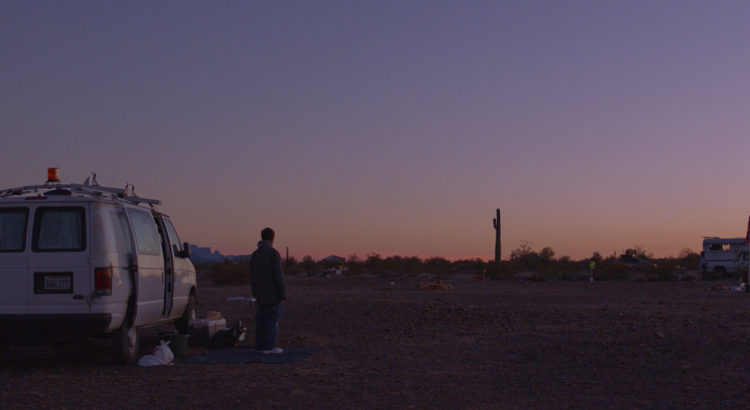
The film follows Fern, a woman who leaves home to travel around the US in a van. The movie had no plot or arc at all, not even a character arc for Fern, and I kept wondering where the movie was going, even in the last 15 minutes or so. It felt like the audience was just accompanying Fern on her journey, and that there was no resolution or storyline at all, which kept me in a constant state of confusion and anticipation the entire time. I would have preferred for there to be any kind of plot, or at least a resolution at the end for Fern, but there was none that I could see in my viewing. I kept thinking that Fern was going to find some kind of peace or change in her life, but she just kept plodding along, driving in her van and working wherever she was able.

The movie did have some elements that I enjoyed. Most of the scenery she surveyed was absolutely gorgeous, especially in Arizona, with views of the deserts and mountains that I had never seen before. I could certainly appreciate the mastery in some of the shots of the landscape. I also thought some of the relationships that Fern had with others she met on the road felt very real and tangible. The dialogue, for the most part, felt almost unscripted, and sometimes made the movie seem more like a documentary than a film. The people that she encountered were eccentric and engaging, and had their own stories to tell that were sometimes heart-wrenching. I wish they had focused more on all of the people Fern met, rather than on Fern’s journey, which felt very dull at points.

Overall, I would not recommend this movie to others, because it did not follow a moving, compelling storyline, and was very mundane. While I found the lives of the people Fern met to be intriguing, the focus on Fern’s day-to-day activities was not enough to keep my interest or make me excited to see what came next. I can appreciate that this movie was displaying what it is like to live so uneventfully and simply, but I think it came across as just plain boring.