REVIEW: The Clements Bookworm: “Framing Identity” Online Exhibit, Empowerment and Resilience in the Black Experience

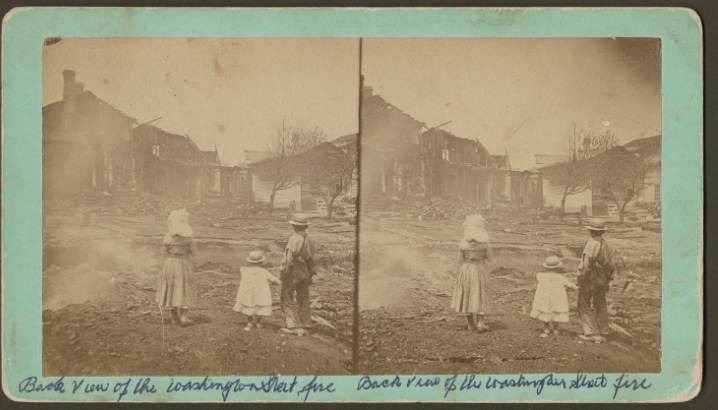
Like a telescope, the camera takes a lens to both distance and bring closer the image on the other side: something captured which previously went unexplored, an instant in time that is taken and set into memory. In both instruments, what we see is something we’ve created with the help of the setting of the time, the cultural moment, the positions of various actors across a space. Just as a telescope offers a look into the positions of an infinite number of celestial bodies in relation to one other, a camera creates a record of social climate, inequities and labor for justice.

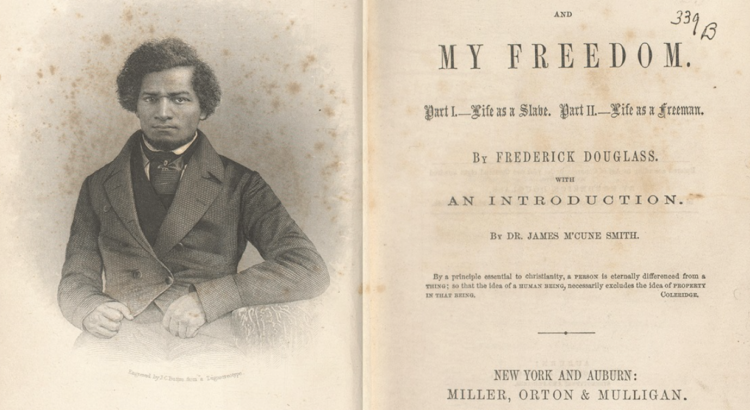
But that’s enough for botched and rambling similes. The Clements Bookworm discussion was a great addition to simply viewing the online exhibit alone. Samantha Hill was invigorated as she spoke on the pieces in the collection, highlighting many Michigan photographers and communities. There wasn’t time to go through each picture in the detail it seemed she wanted to, but her summaries did a great job to show overarching themes and the changing trends of the representation of Black individuals and communities over nearly two centuries. The reversal of negative stereotypes/caricatures in portrayals of Black people is an ongoing, complicated process which the artistic greats of history, like Frederick Douglass, expanded into new media.

As photography became omnipresent, saturating first the print news and eventually dominating the Internet, it grew in accessibility, challenging everyone to really consider their identity, how they’d like to be perceived, where they fit into the rest of society. From the first powerful, dignified portraits of Douglass to today’s glamorous Fenty photoshoots, self-expression and framing of POC has evolved and strengthened with race discourse and culture, continuously inspiring new questions and conversations, driving our society towards equity.

Hill discussed The Colored American Magazine, one of the first periodical publications to celebrate Black art and achievements. I wish she had talked a little longer on this, given the great influence of media representation, especially after the Internet became ubiquitous. She brought it into the present a while later, with examples of former President Obama in magazines.

For me, the media brings up an interesting thought: how does putting one’s representation back into the hands of another change the resulting image? Whitewashing in magazines and Instagram ads is an obvious example, but what about posture, facial expression, two important factors in Douglass’ revolution? The style of dress, the position of the subject in what kind of background? We’ve seen a regression of some kind, or rather a continuation of what had already existed. What would Douglass say to us if he saw how his vision and goals have evolved?

For more online events from the staff at the Clements Library (which I’d definitely recommend attending!), check out their Facebook page, William L. Clements Library. Discussions occur fairly frequently, covering a range of art and history topics. If you’d like to watch the recorded webinar from this exhibit, you can find it here. 
 

REVIEW: The Weight of God: “The Curious Case of the Soul”

Existential dread: it’s something many of us try to avoid thinking about, and yet it’s not really avoidable at all. We’re bombarded with this concept in memes, Tweets, movies, and everyday conversations. And then there’s the awareness that we live on a planet that’s floating around in space, surrounded by even bigger planets and stars, surrounded by galaxies that are far too vast for us to conceptually comprehend. Whoa. 

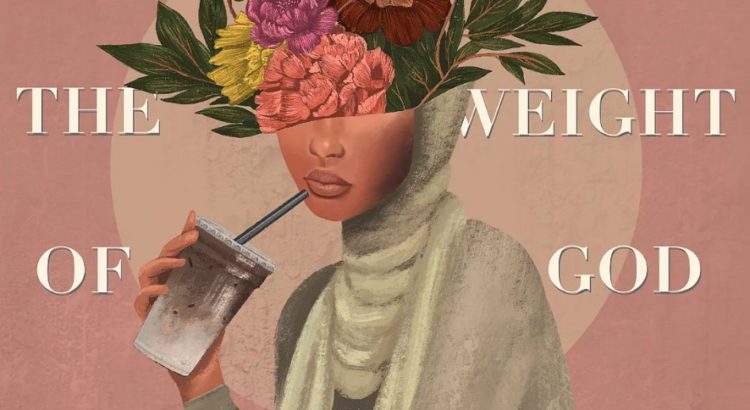
In the first episode of her podcast, The Weight of God, host Fareah tackles concepts of existentialism and nihilism through philosophical theory, religious history, and her own soulful insight. Fareah is a student, writer, and an aspiring scholar at U-M. Her work always pushes me to give more generous thought to life’s big questions, and The Weight of God is no exception. This episode, “The Curious Case of the Soul (pt 1),” is a meditation on the meaning of life, and perhaps why we’ve become so disconnected from it. 

When you really think about it, everything we do in life can feel kind of absurd. This is the reasoning of philosopher Albert Camus, who also authored “The Myth of Sisyphus.” In this myth, Sisyphus receives a punishment by the Greek gods that sentences him to rolling a boulder up a hill (which rolls back down once it gets to the top) for the rest eternity. Sometimes it feels as though our lives are like Sisyphus: and endless cycle of repetitive tasks—and for what purpose?

Yet, perhaps there is a different way of contemplating our existence—one that feels liberating instead of suffocating. In the second half of the podcast episode, Fareah addresses the origins of civilization’s dissociation from its spiritual core. As she explains, the rise of Western science, philosophy, and industry has brought with it a “radical separation from God.” We often forget that humans used to rely on spirituality in order to make sense of the world and derive value from life. In contemporary Western society, our capitalist economy emphasizes a more materialistic understanding of the world, dictating that an individual’s value comes from the things we own and produce. However, these things are often out of our control, and that lack of control often breeds dread about our ability to survive. 

As Fareah explains, this may be a source of our existential fear. The world becomes a burden that must be carried by every individual. Fareah concludes that we’ve lost our spiritual history which used to be a source of meaning, and in its place, we are left with an capitalistic individualism that feels isolating and unstable. 

I don’t consider myself to be someone who’s religiously observant, but this podcast definitely made me think about the role of religion in history and in human thought. One of the reasons I found this podcast so engaging was because it didn’t feel like a lecture or a persuasive essay; rather, it felt like an invitation to think alongside Fareah. Furthermore, her expressive voice, emotive storytelling, and inclusion of music brings her “audio immersion journalism,” as she describes it, to life. 

Visit The Weight of God website to listen to the podcast and learn more: https://theweightofgod.wixsite.com/twog

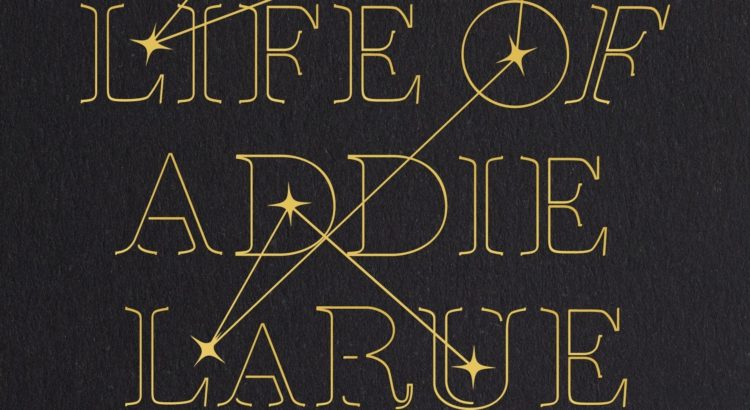
REVIEW: The Invisible Life of Addie LaRue by V.E. Schwab

“…it is sad, of course, to forget.
But it is a lonely thing, to be forgotten.
To remember when no one else does.” 

Adeline LaRue, a young girl in 18th century France, makes a deal with the devil. Or, something like the devil. She’s given the chance to live and be free–but with all dark deals, there is a catch, and that is that she will live until she wants to give up her soul, but that no one can ever remember her, and in this way she walks through the memory of the world as invisible. She cannot say her name, she cannot write, she cannot create or break things. Until, three hundred years later, someone remembers her. 

I’m surprised at the speed with which I devoured this book. I felt like everywhere I turned I was hearing about this novel–from the internet, from friends, from the UofM Honors Reads program that’s scheduled a discussion of the book for early March. Wanting to get a head start for the Honors Reads session, I picked up the book early. I had not predicted that I would be done with the ~450 page sucker in the matter of a few days.

I didn’t want to like this book as much as I did. The books I tend to gravitate towards are typically dark and almost pretentiously intellectual–think Donna Tartt’s The Secret History or Kazuo Ishiguro’s Never Let Me Go. This bestseller, while still possessing some dark and gothic elements, in tone was relatively fluffy and light-hearted. It still managed to captivate me. 

V.E. Schwab has spun a tale that reads smoothly and effortlessly, though at times the pace is slow and repetitive–a flow fitting for the world of our spirited, immortal heroine Addie.

If you’re like me and romance in books has never really struck your fancy, you may find yourself frustrated with the love story of the novel. Beginning the book, I was intrigued to discover how Addie would choose to handle her curse, and was a little disappointed when the story shifted more than I had hoped into a somewhat cliché love triangle trope (albeit with some interesting twists). However, even I was able to set aside my cynicism and enjoy how love and connection mattered in the life of a girl cursed to never experience any.

Despite the heterosexual romance, the representation of bi, pan, and queer characters in the book was, as NPR’s Caitlyn Paxson describes, “refreshingly casual for fiction.” I also appreciated the use of art to weave together the story of Addie LaRue throughout each of the book’s sections.

If not just a fun and entertaining read that I was begrudgingly sucked into for a few days, this book did cause me to think about the idea of living forever with the curse Addie carried. How would I spend my time if I had as much of it as I wanted? In the end, I realized my answer was still relevant to the finite time we all have living now. No matter how many limited or unlimited years, months, days, hours, minutes, seconds we get: it’s not as much about how much time we get, but instead how we choose to savor every bit of it.

3.5/5 stars

PREVIEW: The Clements Bookworm: “Framing Identity” Online Exhibit, Empowerment and Resilience in the Black Experience

Photography, while being a comparatively new art form, has a rich history. Its power to explain and illuminate complicated ideas in a single image is immense, and has led to some of the most impactful art in the world.

This month’s event focuses on Frederick Douglass’ transformative work in photography; how his lectures and images inspired the next generations of creators to bring the Black experience into the art world. Join in on an online viewing and discussion with Clements Library fellow Samantha Hill and graphics curator Clayton Lewis February 19th at 10AM.

Register for the free event here: myumi.ch/gjgzR, or view the virtual exhibit any time.

REVIEW: Malcolm & Marie

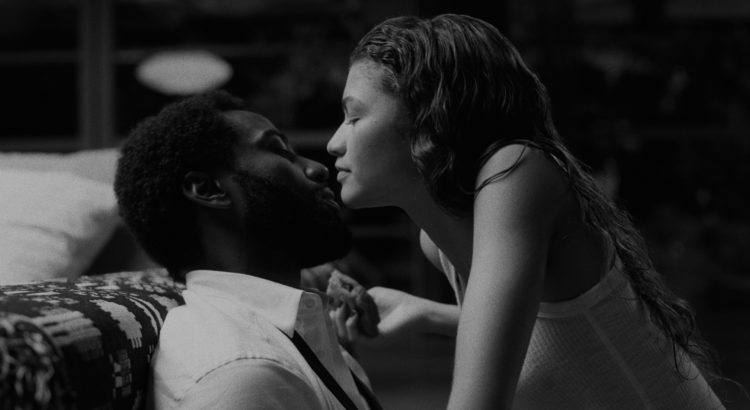
Many artists have attempted to utilize our current situation in order to inform the art that they create. Netflix’s new film Malcolm & Marie is notable for being the first Hollywood film written, financed, and produced during the pandemic. Written and directed by Euphoria creator, Sam Levinson, the story deals with an up-and-coming film director, Malcolm (John David Washington), and his girlfriend Marie (Zendaya) as they return home from Malcolm’s film premiere. Shot gorgeously in black and white by cinematographer Marcell Rév, the two characters go through one long and fraught night, with their large house in the middle of a California desert serving as the film’s only location. 


Coming into this film from my background in theatre, I was intrigued. Some of my personal favorite plays take place in a similar set-up; a small group of characters having interesting conversations within a singular setting. I was curious to see a writer and director whose work I had enjoyed in the past (including a similarly small-scale episode of Euphoria filmed during the pandemic) tackle this genre in the medium of film. Where I ended up being ultimately disappointed, however, was in Levinson’s screenplay.


At the core of the story, was the toxic relationship between the characters of Malcolm and Marie. The film’s strongest moments revolved around the cinematography, direction, and poignant music choices that highlighted this fraught relationship and where it stood at various points in the film. However, the film’s emotional core was often lost and obscured in Levinson’s long-winded rants about Hollywood filmmaking and film criticism delivered through the character of Malcolm. Throughout the film, Malcolm goes on a series of rants against a white female LA Times critic who had once given him a bad review. Other reviewers have been quick to point out, a similar occurrence in Levinson’s past where an LA Times film critic wrote a scathing review of Levinson’s 2018 film Assassination Nation. A similar situation is brought up in Malcolm & Marie, but Levinson decides to tie it to a discussion of black identity being reflected in filmmaking. This is an interesting point of conversation to be brought up, and if it were written better, it may be easier to excuse Levinson, a white writer, using Washington, a black actor, as a mouthpiece to his frustrations. Ultimately, however, Malcolm’s long tirades serve only to alienate Marie and the audience from his character further. Washington tries his best with the material, but his performance suffers heavily in these sections as the character is not allowed to have nuance and charm. 


It is Zendaya’s character, Marie, that is the most intriguing but feels the least developed by the time the movie is over. Early on in the film, we learn that she is unappreciated by Malcolm, yet he leans on her heavily for his creative inspiration. This is an interesting dynamic and Zendaya plays it well, however, due to the bluster of Malcolm’s character, Marie soon finds herself entangled in unwinnable screaming matches with him and it starts to get exhausting to watch as an audience member. The film does offer a few moments of reprieve, often accompanied by music, but these do not come often enough to get the audience emotionally invested in the characters again before their next argument comes.


Overall, this film was an interesting study of what could be done by a small, accomplished group of creators during the pandemic, but it failed to work for me as a film on its own merit. However, I do think that it is worth checking out if it is something that you were already interested in, as it evoked complicated feelings in me, and I could completely understand how it could be experienced differently by different individuals.

REVIEW: The Dig (2021)

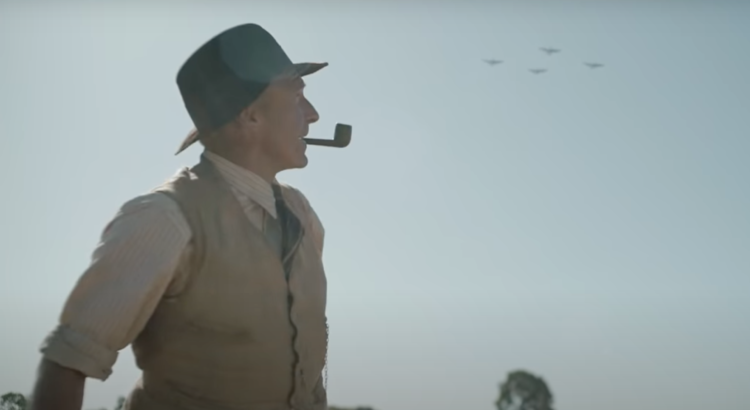
The Dig focuses on excavator Basil Brown (Ralph Fiennes) as he works on a site in Britain in 1939, owned by Edith Pretty (Carey Mulligan). The driving force of the film becomes the people who are brought to the site as they unearth an ancient artifact. We’re given glimpses into the lives of incredibly complex individuals, all who have their own internal and external struggles, and the only thing that has brought them all together is the dig site in the countryside.

Without giving too much away, I’d like to praise this movie as much as possible. From the beginning you can see how beautiful the film is, the sprawling landscapes of grass and trees, slightly obscured by morning mist or shrouded in a thick fog, the billowing clouds full of rain allowing only the most brilliant sunbeams to pass through, and quite frankly the dirt which looks so rich and velvety that you want to be there, in the film, just to dig your own hands into the gorgeous earth. I was blown away again and again by the scenery, and if nothing else, the film is worth the watch just to look at how beautiful nature can be. On top of that, the performances given by Mulligan and Fiennes are spectacular, and both are able to make the audience feel the way the characters are feeling, sometimes incredibly excited, other times extremely frustrated or full of existential sorrow.

One thing that I absolutely loved about the film was its spirituality and how it reminds us of our place in the universe. Each character has to wrestle with the idea that they are impermanent, that in a thousand years they will be forgotten, and all that will remain of them are some fragments of their possessions. We can see characters greedily cling to things that will preserve their past, which creates a dynamic between some upper class individuals and some of the workers on the site. Some of the highly educated want the glory associated with making such a momentous discovery, but those who actually did the work learn to let go. The characters that we sympathize with are those who realize that they are playing their part in an intergenerational saga. They aren’t meant to live forever as a famous name in history, they’re meant to live their lives and create a history for all of us to learn about.

I would encourage everyone to watch this movie. While it is admittedly quite Eurocentric (which I think is to be expected from a period piece based on a true story which took place in Britain), it delivers justice to hardworking people and critiques the upper class’s desire for self preservation. I think you would be hard pressed not to be sucked into the storyline within the first fifteen minutes of watching, and until you’re invested, the imagery will keep you more than satisfied. If you like to see how brilliant actors can be, watch Fiennes in the first opening scenes, listen to his accent and recognize that this is the same person who played Voldemort in the Harry Potter franchise (what a range!). Stay for Mulligan’s beautiful transformation as she struggles with letting go of her son, and the drama that develops when Lily James’ character is introduced at the halfway point of the film. The more I think of this movie, the more I realize how brilliant it really was, the direction, writing, sound design, and acting are all phenomenal. If I were to keep writing I’m sure I would give too much away, so I’ll contain myself and stop for now. If you can, please watch this movie, I’m sure you won’t regret it. 10/10