
REVIEW: La Raza Art and Media Collective: 1975–Today

Fifty years after its founding, the University of Michigan Museum of Art celebrates the legacy of La Raza Art and Media Collective, a trailblazing group of Chicano, Hispanic and Latino/a creatives. Founded in the 1970s, the group organized community gatherings and produced creative work, including a multimedia journal. Now, these works from the collective’s history are brought into conversation with the present, in La Raza Art and Media Collective: 1975–Today.

At the center of the exhibition is a collection of material from the early issues of RAM Collective’s journal, including original copies of artwork that have been preserved by the Bentley Historical Library. This collaboration brings a different kind of experience than viewers may be expecting at an art museum. There are gems of poetry, artwork and essay writing among the spread of pages, providing a fascinating glimpse into the lives of Latino/a students and artists from fifty years ago, but finding them requires a willingness to spend some time reading through small print.

However, visitors searching for dramatic visual impact will be more than satisfied with the gallery space itself. One wall is papered with silkscreen prints by U-M Stamps School of Art & Design professor and alum Nicole Marroquin (MFA ‘08), using more imagery drawn from the Bentley archives. Another is painted bright green and features a mural painted by George Vargas, a founding member of RAM Collective, along with Nicole Marroquin and Mina Marroquin-Crow. And the gallery’s two walls of floor-to-ceiling windows are adorned with ribbons of transparent film created by Michelle Inez Hinojosa (Stamps MFA ‘23) that give a colorful tint to the light flowing into the gallery and the view onto State Street. Together, they bring a bold and bright atmosphere to the exhibition, letting the vibrant history and present of the university’s Latino/a community spill out of the journal pages and onto the walls of the museum itself.

A view of the gallery windows, featuring the work “The Ribbons, the Future” by Michelle Inez Hinojosa.

Of all the contemporary artworks created to accompany and transform the historical work of RAM Collective, a highlight is the collection of zines produced by Stamps School of Art & Design students, working in Nicole Marroquin’s Social Spaces class. These zines engage with the history of RAM Collective and the artists and communities involved, drawing on the Bentley’s archives to continue the mission of the collective in the present.

One zine, created by a group of students (Megan Fan, PingYu Hsu, Julian Kane, Jaden King and Violetta Wang), presents a selection of images from George Vargas’s sketchbook during his time as a graduate art student at U-M. The students write, “As art students ourselves, we became inspired by this work.” Another, produced by Liana Kaiser, presents a poignant collection of poems from a Detroit organization called La Casa de Unidad Cultural Arts and Media Center. Visitors are encouraged to take a zine with them when they leave, “so that La Raza Art and Media Collective carries on.”

Zines and other materials created by Stamps students in Nicole Marroquin’s Social Spaces class. The backdrop is silkscreened wallpaper created by Nicole Marroquin.

The exhibition’s true strength is how it embodies the spirit of collaboration, coalition-building and solidarity that the original RAM Collective was founded on. The array of contributions from original members of the collective, more recent Stamps alumni and faculty, and current students brings multiple generations together to continue La Raza’s mission.

La Raza Art and Media Collective: 1975–Today is on view at UMMA through July 20th. All exhibition signage is presented in both English and Spanish.
REVIEW: Blue Velvet

When I was 15 years old, my life changed forever when my dad took me by the shoulders, looked me in the eye, and said “Watch Blue Velvet. Trust me.”

At the moment, I wasn’t quite aware that he was prompting me to watch a two-hour psychosexual meditation on the dark underbelly lurking beneath society’s surface, featuring sado-masochism, drug-addled perverts, and erotic blackmail. But watch it I did. Then I closed my laptop and stared up at the ceiling for an hour contemplating my newly-lost innocence. 

David Lynch, the celebrated director of Blue Velvet who recently passed away at the age of 78, was a giant of filmmaking. In movies like Blue Velvet, Mulholland Drive, Twin Peaks: Fire Walk With Me, and Eraserhead, Lynch introduced audiences to revolutionary ways of seeing the world. I always suspected that Lynch was some kind of hologram placed on Earth by an advanced alien species, hovering somewhere between genius and madness, meant to transport us mortals into a higher plane of existence. His filmmaking talent even added a word to our lexicon – “Lynchian” – meant to connote surrealism that uses a dreamlike aesthetic to expose malice, absurdity, or hypocrisy in society. This “uncanny valley” quality that Lynch’s films embodied earned him a cult following as well as mainstream appeal. 

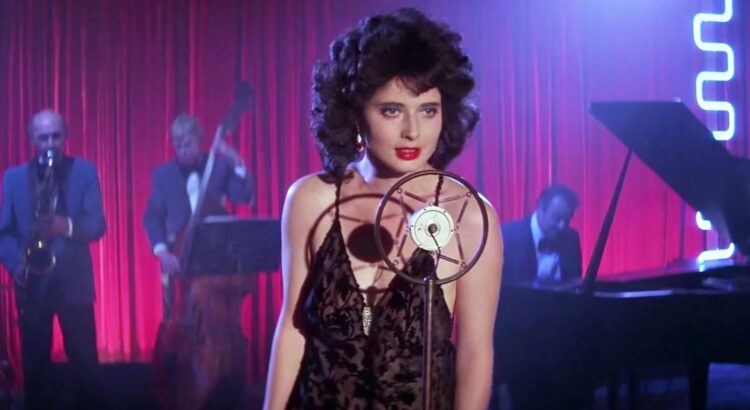
Nowhere are these Lynchian elements more at play than in Blue Velvet, released in 1986. The film features Dorothy (Isabella Rossellini), a battered woman blackmailed into sexual slavery by the sadistic Frank (Dennis Hopper). In an ironic twist, Frank’s games reveal masochistic urges repressed deep in Dorothy’s psyche. She is simultaneously repelled and titillated, expressing these conflicting emotions by initiating a sadomasochistic relationship with the clean-cut Jeffrey (Kyle MacLachlan), who is ashamed of his urges but drawn to the alluring older woman. The three characters – Frank, Dorothy, and Jeffrey – exit society’s confines and enter a lusty place of debauchery and degeneracy. 

Through colorful metaphors, a haunting score, and cast members that are clearly willing to bare all for the sake of art, Blue Velvet earned its place in film history. The marriage of surrealism and erotica, tragedy and eros, death and love – these are philosophical concepts that artistic leaders have wrestled with for millennia. More recent films featuring BDSM dynamics, like Secretary, Fifty Shades of Grey, and Babygirl, can only aspire to the emotional power that Blue Velvet oozes. Each scene is perfectly calibrated to press the audience’s buttons. So enduring is the film’s appeal that the Michigan Theater specifically chose to play it to honor Lynch’s legacy. This type of masterpiece earns either one star or five stars, but nobody leaves the theater without an opinion. 

There is only one filmmaker who can somehow master horror, erotica, surrealism, and mystery all at once. That man is David Lynch. In my opinion, to even write a traditional film review of his work is to diminish his genius. So I will leave it at that – anyone who hasn’t watched Blue Velvet is missing out. 

REVIEW: Disfluency

What are disfluencies?

My first question about the film “Disfluency” was answered within the first ten minutes: they are “natural interruptions in the smooth flow of speech”—the “uhs,” the “ums,” the “sorries” that fill the gaps in our conversations. It’s a fitting title for a film centered on Jane (Libe Barer), a linguistics student who unexpectedly fails her final class during her senior year of college.

Embarrassed and adrift, Jane retreats to her Michigan hometown for the summer, living with her parents and older sister, Lacey (Ariela Barer), while completing an independent study to earn her final credits. But Jane isn’t the same person her family remembers. Haunted by PTSD after a sexual assault at the start of the semester, her focus unraveled, and failure followed. Her sadness and withdrawal are apparent to her family, but Jane struggles to share her experience. Instead, she eventually opens up to her neighbor, Amber (Chelsea Alden), whom she’s teaching sign language. Through this unexpected connection, the pieces of her trauma slowly surface.

Few movies have moved me to tears quite like “Disfluency.” Maybe it was the achingly familiar depiction of a Michigan summer—its bittersweet nostalgia and quiet moments of reflection. Maybe it was the intimate setting of the Michigan Theater, where the small audience heightened the film’s vulnerability. Or maybe it was Libe Barer’s raw and nuanced performance as Jane—a character so painfully real in her silence, resilience, and search for understanding.

The film’s use of linguistics adds layers to Jane’s story. After a childhood accident left her temporarily unable to speak, she learned sign language, and now offers to teach Amber, whose son is deaf. Language becomes a means of connection but also a symbol of Jane’s struggle to reclaim her voice. In moments of panic or flashbacks, Jane repeatedly says “sorry” or “um”—the very disfluencies referenced in the film’s title. The movie skillfully parallels this linguistic thread with the experience of survivors grappling with whether and how to share their stories. Though the motif at times feels a bit overt, its exploration of the fragility and power of communication is profoundly moving.

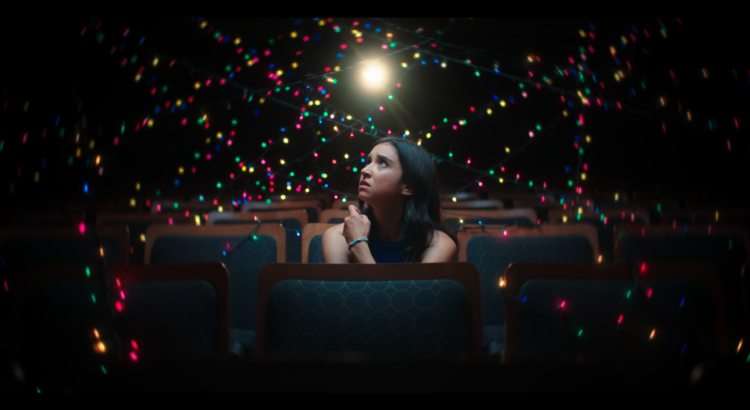
Visually, the film portrays PTSD with a raw and creative intensity. Through sudden flashes of string lights, cuts to a theater stage, and fragmented jumps in time, director Anna Baumgarten captures how trauma unpredictably intrudes into Jane’s reality. These moments, disorienting yet poignant, mirror the mental landscape of someone navigating PTSD. In her Director’s Statement, Baumgarten shares that “[i]t was born out of my own experience struggling with imposter syndrome and PTSD in the aftermath of sexual assault during my senior year of college.” This personal connection resonates throughout the film, grounding it in authenticity and empathy.

The heart of the movie lies in its depiction of relationships, particularly the dynamic between Jane and Lacey. Played by real-life siblings Libe and Ariela Barer, their bond feels natural and layered, moving effortlessly between playful banter and profound conversations. The film takes its time to find its footing, but once it does—about twenty minutes in—it becomes an emotional force, drawing the viewer deeper into Jane’s story.

I do wonder how the film resonates with viewers who don’t share my personal connection to Michigan summers. For me, the setting’s familiar warmth heightened the emotional impact, amplifying the quiet moments of reflection and nostalgia. But even without that shared backdrop, the film’s raw portrayal of PTSD and resilience is bound to leave an impression.

Disfluency had only a brief screening at the Michigan Theater but is now available for digital viewing on various platforms. If you’re craving the warmth of summer amid the chill of winter—or simply want to experience a devastatingly honest and beautiful story—I can’t recommend it enough.

REVIEW: Gladiator II

Gladiator II is not my Roman Empire. The much-anticipated sequel to Ridley Scott’s Gladiator, released in 2000 to an enraptured audience, is deficient in almost every respect. From meandering plotlines to undeveloped characters, Gladiator II will have audiences on the edge of their seat – ready to get up and leave. 

While Gladiator saw Maximus Decimus Meridius – an exiled Roman general – reduced to slavery, forced to serve a corrupt emperor, and on a noble quest to avenge his murdered family, Gladiator II sees Lucius Verus Aurelius – the exiled Prince of Rome – reduced to slavery, forced to serve corrupt twin emperors, and on a noble quest to avenge his murdered family. Yet where the first Gladiator lived up to its promise of grandeur personalities fighting a larger-than-life battle, Gladiator II falls short. Paul Mescal (a grieving Lucius), Pedro Pascal (the Roman General Acacius), Connie Nielsen (Maximus’s former lover Lucilla), and Denzel Washington (the delightfully conniving Macrinus) are all phenomenal actors. But they cannot make up for a script that has no idea where it’s going. 

Director Ridley Scott seems determined to recreate the magic of the first movie, yet turns his all-star cast into Atlas, holding up a failing plot on their backs. Dialogue veers off into the melodramatic, especially when it comes to Lucilla, who apparently has no role in this movie except to stand around looking beautiful and sad. Twin emperors Geta (Joseph Quinn) and Caracalla (Fred Hechinger) giggle about like two spoiled, all-powerful drag queens, but do little in the way of meaningful development or emotional depth. The most tragic of all is Mescal, who spends much of the film glowering into the distance and changing deeply-held beliefs on a whim, depending on what a stagnating plot needs him to do. 

Nor can extravagant fight scenes and wild plot twists make up for the lack of any emotional core. Scott leans heavily on CGI in his Colosseum – great white sharks, rings of fire, and whatnot – but I heard more suppressed laughter in the theater than oohs and ahhs. Scenes that were meant to spark tears were forced into the plot too quickly without the necessary suspense, attempting to break tension that just wasn’t there. I’ll withhold the two major plot twists for the sake of spoilers, but even Washington, playing a former-gladiator-turned-master with big ambitions, is not given the proper tools to make his character work. Crucial scenes were either introduced too quickly, giving me whiplash, or drawn-out excruciatingly slowly, making me yawn. 

I’m not saying that Gladiator II doesn’t have entertaining moments, but you would be better served re-watching the original. Because without a strong sense of direction, Gladiator II’s Rome is pure clownishness. 

REVIEW: Culture Night- A Journey Through Tradition

I didn’t know what to expect when I decided to attend Culture Night at Kochoff Hall. Sure, I’d read about the performances—a mix of traditions from around the world—but I was curious about how it would all come together. As someone from a different cultural background, I was eager to see how the evening would speak to me.

Photo credit: IGSA

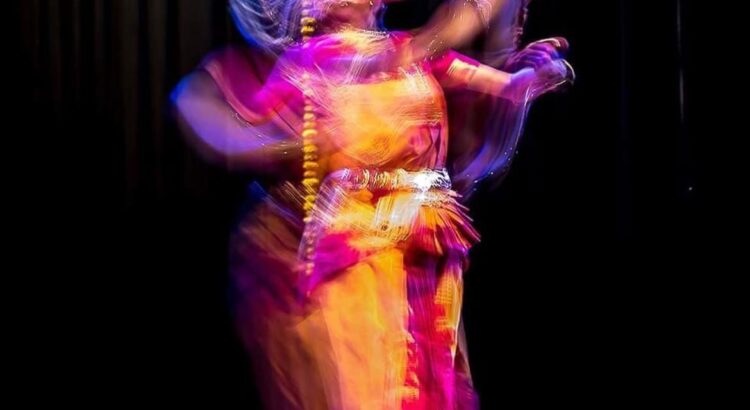
The first act, a South Asian classical dance, immediately set a high bar. The dancer’s precise movements were mesmerizing, but what really struck me was her storytelling. Without speaking a word, she pulled the audience into a narrative that felt deeply emotional. I found myself leaning forward, completely absorbed in the graceful yet powerful choreography. It was the kind of performance that made me forget where I was for a moment.

Then came the African drumming ensemble, and the energy shifted completely. The beats were loud and unapologetically bold, reverberating through the hall. I couldn’t help but tap my foot and clap along. It wasn’t just music; it was a heartbeat that seemed to connect everyone in the room. I caught myself smiling at strangers during this performance, feeling an unspoken sense of unity.

The third act—a modern spin on European folk music—was surprising in the best way. I wasn’t sure how I’d feel about blending traditional violin with electronic beats, but it was a perfect harmony of old and new. It made me think about how cultures adapt and evolve while staying true to their roots. That realization felt personal, like it was challenging me to think about my own heritage in a new light.

Photo Credits: IGSA

The evening’s final performance, a Polynesian dance, was my favorite. The dancer moved with a grace that felt effortless, their body swaying like waves. I could almost hear the ocean and feel the island breeze through their storytelling. The vibrant costumes and the way they seemed to embody the spirit of their culture left me in awe. It was peaceful yet powerful—a perfect way to close the night.

But Culture Night wasn’t just about the performances. The energy in the room made it special. People from all walks of life were there, clapping, cheering, and sharing in the experience. The decorations and the warmth of the audience added to the magic, making the hall feel like a celebration of not just cultures, but community.

When I left Kochoff Hall, I felt different. I’d come expecting a show, but what I got was a deeper sense of connection—to the performers, to the audience, and to the idea that art transcends borders. Culture Night wasn’t just entertaining; it was a reminder that no matter where we come from, we can find common ground in celebrating the beauty of our differences.

REVIEW: Mufasa: The Lion King

Despite the many negative reviews surrounding the musical drama film Mufasa: The Lion King, I actually really enjoyed it. The storyline acts as both a prequel and a sequel to the original animated The Lion King. While it’s not life-changing or particularly essential, it’s a fun film that adds to the world-building of the original in an endearing way. Perhaps it’s because I had low expectations and didn’t know exactly what to expect, but I found the online reviews overly harsh for a movie primarily directed toward children.

The plot begins with the lion cub Kiara, Simba’s daughter, who is frightened by a large thunderstorm. She doubts her capabilities and expresses that she could never be brave like her grandfather, Mufasa. In response, Rafiki, an elderly and wise mandrill, tells her a story to encourage her. He recounts how Mufasa was at her age and how he grew up to become the great king we saw in The Lion King. Mufasa, who we originally see as proud, confident, and courageous, is depicted as more vulnerable and dispirited in his youth. He struggles to believe in himself or accept praise, which seems hard to believe given his personality in his adult form. Through the animals Mufasa encounters on his journey, the film explores themes of family, belonging, and love. His journey proves his worthiness as king and highlights the qualities that make him a true leader. The plot is a coming-of-age story, fitting for its intended audience. This aspect resonated with me, and I believe many children would connect with it too.

The narration is engaging, with the story progressing at a good pace. However, while Mufasa’s character development is well-paced, the development of other characters either lacks depth or, particularly toward the end, feels rushed. As the movie reaches its climax, the character arcs become hurried, especially in the conclusion, which makes their actions seem almost out of character. One factor that held the character development back was the CGI animation. While the visuals were strikingly realistic and beautiful, the realism made it harder for characters to express themselves facially or display more creative body language. It also became difficult to differentiate the lions, as they generally shared the same appearance aside from slight changes and their voices. While these details may stick out more to adults, younger children may not notice them as much, meaning a cartoon version might have appealed to a wider audience.

This placed a greater emphasis on the voice acting and music, which I think the film did well. The instrumental soundtrack was a great homage to the original, with many elements inspired by or directly recreated from it. I also appreciated that there was often music playing in the background. In addition to the bright sunshine and natural scenery, this contributed to the triumphant and joyful emotions in the film. However, one disappointing aspect was the singing, which I felt could have been of higher quality, as it could have been another opportunity to express the character’s personality. 

I think the film’s weaknesses largely stem from the characters not feeling as relatable. However, most of the movie’s strengths lie in its overarching messages and foreshadowing of events that occur in the original. I think it would be a great film for young children to understand self-growth, confidence, and friendship. Though it may be an unpopular opinion, I don’t think it is a waste of time or detracts from the original The Lion King in any way, unlike other prequels and sequels I’ve seen. I would still recommend it to people of all ages, but it’s important to approach it with an open mind.