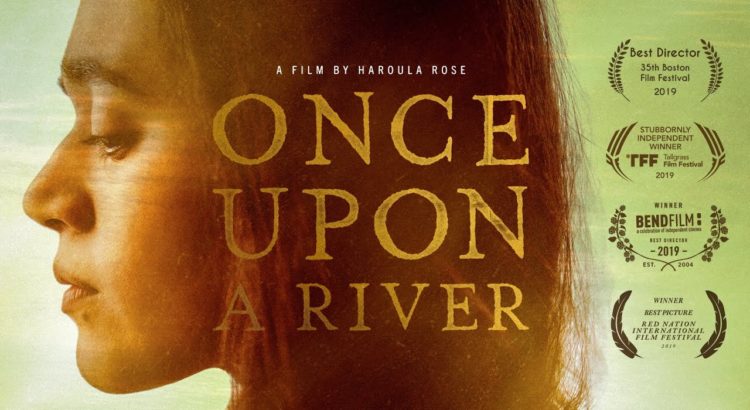
Once Upon a River is a drama set in rural Michigan, on the edge of the Stark River. Margo, a Native American teen, endures trauma and tragedy before setting out on a quest to find her estranged mother. On her journey, she meets all sorts of interesting people, and comes to understand herself, while leaving her difficult past behind.
I am excited to see this film because I love a good coming-of-age story, especially with a non-white star. The movie sounds very intriguing, has won awards in several different film festivals, and is adapted from a bestselling novel of the same name.
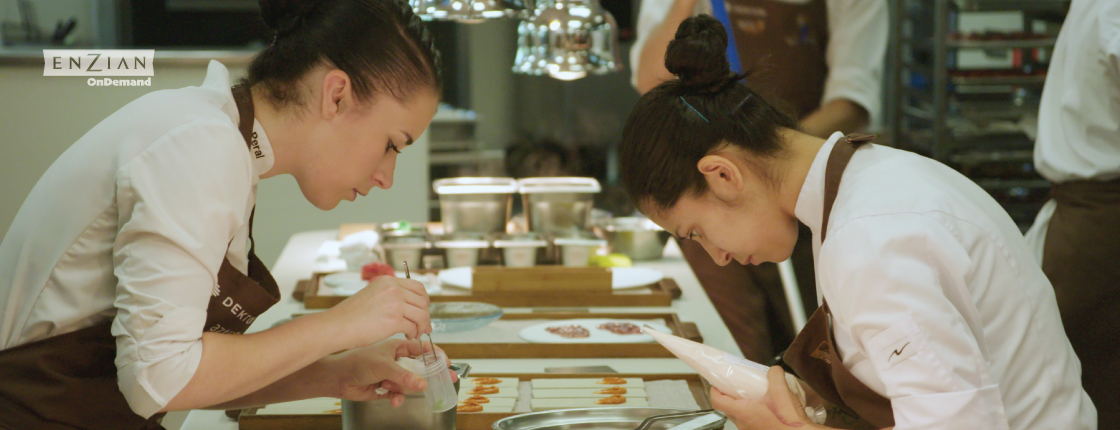
Stage: The Culinary Internship follows 20 hopeful chefs as they participate in a program at one of the top 10 restaurants in the world, called Mugaritz, in Spain. The interns stay there for a year if they can make it through the brutal training and daily hardships, learning how to make difficult, unique dishes and withstanding the pressure of a busy kitchen that demands perfection.
Through the documentary we learn about a few of the students specifically, who have come from all over the world to learn at Mugaritz. The documentary focuses a lot more on the lives of the students than on the restaurant itself, and it follows them through several months of their internship and some of their personal struggles in the kitchen. A lot of them decided to go home instead of moving on to the second round, or quit the program because of its difficulty. This was surprising to me, as I thought that such a selective program would make people want to stay and that it would have gathered people who were much more passionate about cooking than it seemed. It felt like perhaps the documentary missed out on a lot of the struggles of people day to day, and skipped over their difficulties. It just showed them deciding to leave and exiting the program, which seemed a little confusing. Also, I was expecting more of a focus on the food they were making and how it was made, so this was a little bit of a disappointment to me. I liked hearing about the stories of the different people, but I would have really enjoyed a focus on the foods as well.
But what was shown of the foods was incredibly interesting. They have a whole team of people who just design the ideas for the foods, giving them a backstory and reason before sending off someone else to figure out how to make them. And the foods they made were so odd, from the actual items used in the dish themselves to the presentation of the platter. I was so intrigued by their use of all sorts of flowers, animal parts, and things I had never even heard of. The head chef of the restaurant even remarked in the documentary that he did not care if the patrons thought the food was disgusting, he just wanted to incur some kind of reaction from them. I thought this was very interesting, because usually a restaurant tries to make dishes that appeal to people that they will enjoy.
Overall, I liked the documentary, but I would have preferred more of a focus on the food than the different interns, as I was so much more interested in the different things being made and the way the restaurant operated. If you like culinary shows and weird foods, than I would definitely recommend this documentary!
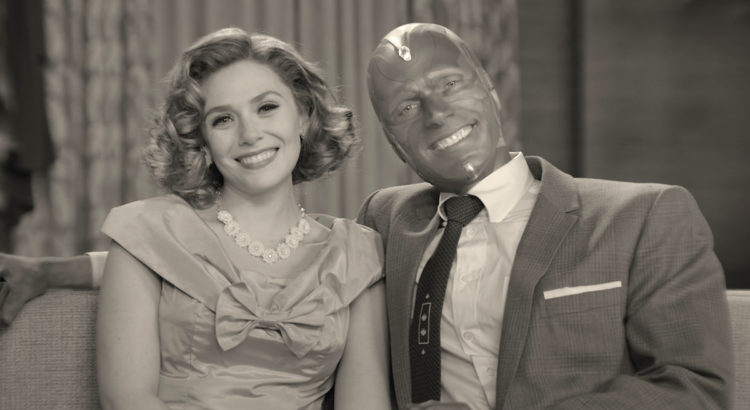
WandaVision is the newest Disney+ original series, starring Elizabeth Olsen and Paul Bettany in their MCU roles of Wanda Maximoff/Scarlet Witch and Vision. The series is Marvel’s first Disney+ original, and it also marks the first piece of media from the MCU since Spider-Man: Far From Home. The series follows Wanda and Vision trying to assimilate into suburban life, with the series stylized as TV sitcoms throughout the decades.
The series is said to take place after the events of Avengers: Endgame, but based on the 50s and 60s nature of the show, it’s unclear how exactly this story fits in with the larger MCU. The MCU has hinted at big changes and never-before-seen tropes and storylines to come, and with Elizabeth Olsen set to star in the Doctor Strange sequel, I’m hoping that WandaVision will not fall into the worn-out formula of the MCU.
The first two episodes of WandaVision are now available on Disney+, and episodes will drop weekly on Fridays with the finale premiering on March 5.
This award-winning documentary follows the apprenticeship of a small group of interns as they learn culinary skills and wisdom through one of the best restaurants in the world, Mugaritz. It is a Michelin-starred kitchen, under the world renowned Chef Andoni Luis Aduriz. The documentary reveals the inner workings of a restaurant such as this, and the difficult, risky journey these interns have embarked on.
I am excited to see this documentary because I love watching highly rated chefs and kitchens in action, especially when they are showing new chefs the ropes. I hope I can also pick up some cooking skills on the way as well!
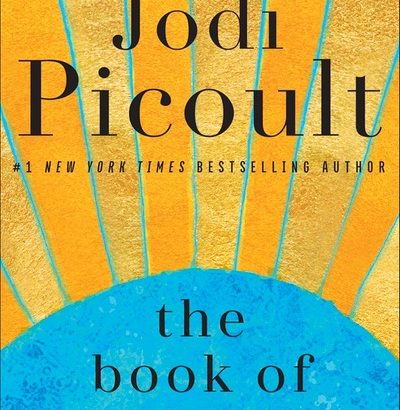
While I was excited to read Jodi Picoult’s newest book, The Book of Two Ways, it turned out to be less enjoyable than I had hoped. Although it is a masterful piece of writing, for me, the death-centric subject hit a little too close to home during the COVID-19 pandemic. In fact found myself avoiding the book and even starting another book at the same time. (Gasp!! I do not usually read multiple books at once.)
Death permeates nearly every page of The Book of Two Ways, and though this may be cathartic for some, it had the opposite effect on me. The novel centers around Dawn Edelstein, a death doula (a job described as like a birth doula, but “at the other end of the life spectrum”), and the divergent paths that her life could have taken. Readers learn that years in the past, she had been a doctoral candidate in the Yale Egyptology program, but she did not complete her degree. The story line alternates between past and present, and in the present-day, she finds herself caught in what could have been. Her dissertation was going to be on The Book of Two Ways, an ancient Egyptian text that is “the first known map of the afterlife.” As a result, there is no escaping the endless theme of death in either of the two storylines. However, what I think finally put me over the edge was a guided death meditation that Dawn completed with one of her clients she has as a death doula. Described in excruciating detail over multiple pages, readers contemplate what it feels like to die alongside the characters. Perhaps my futile desire to avoid this death-talk was all too human (Dawn aptly points out during the meditation that “not a single sentient being – no matter how spiritually evolved, or powerful, or wealthy, or motivated – has escaped death”), but it is the truth, nonetheless. The writing was excellent and the theme important, but I just was not in the headspace to appreciate it.
On the other hand, however, I did enjoy the book’s rich details that engross readers in its world. For one thing, reading The Book of Two Ways whet my appetite to learn more about Egyptology, and though some of the specifics in the book are fictional, many of the facts are real. Additionally, Dawn’s husband, Brian, is a physicist, and this leads to crash-course summaries of the multiverse, electron spin, and Schrödinger’s cat, all of which become instrumental to the plot.
Though I did not personally enjoy reading The Book of Two Ways, it is still a skilled piece of writing that I probably would have appreciated more in non-pandemic times. Indeed, if the quality of a book is measured by the amount of time that it haunts readers’ minds after it has been completed, I was still thinking about The Book of Two Ways for days after I had finished it.
How do women of color, specifically black women, employ mark making to transform overlooked spaces to imagine future potentialities? Focusing on making processes as generative healing, both Olivia Guterson and Avery Williamson, two muralists commissioned by the Ann Arbor Art Center, are interested in mobilizing the power of line as a tool for letting go. Collective loss and struggles for survival are projected into portals, offering lenses through which to map out realizable landscapes of growth, joy, and play.
During my conversation with Williamson, she remarked about the power of black abstraction as “a way to engage with the loss of [African American history] and alsoto celebrate the opportunity to imagine alternative worlds and lives.” Directing their focus to an incomplete archive, a juxtaposition of ancestral cloth, texts and annotations, and family photo albums, Guterson and Williamson’s work looks back as much, if not more, than it looks forward in order to self-realize diverse possibilities and individualized languages for expression. After sorting through queries, both theirs and mine, and pulling concepts and direct quotes from conversations with each artist, I am interested in a unifying question that runs through their work. How does the anonymity of abstraction lend its way to an ambiguous existence, encased within the permeable membrane between portraiture and landscape, that leaves traces of the past while denying the possibility of a future reimagined without gaps?
Olivia Guterson, a Detroit based interdisciplinary artist and new mother also known as Midnight Olive, began our conversation confiding in me that she didn’t talk much as a young child. Although this was temporary, her commitment to making things has developed in conjunction with the development of a mode of communication that is uniquely hers – a language of line based patterns. This creative sensibility is illuminated in her later remark, “To teach is to seek to understand and then make sense of for others,” a practice she compared to the artist’s process of making and leaving behind personal artifacts. The mural Guterson drew is exactly this, a release.
Talking about Nalo, her son of several months, and her grandparents, I came to comprehend the role of family in certifying her connection to art making. Sitting on the pavement of the parking lot as Guterson hugged to the wall to draw the last flower of her mural, she told me this was the third time Nalo and her had been separate for a several hour block. On prior occasions, he was strapped to her chest as she dragged her sharpie pen across white painted bricks to replicate patterns from her grandmother’s wedding dress on the leaves of drawn flowers. This collapsing of time and space runs through her work; a weaving of generations of familial history into floral landscapes that juxtapose imagery from the fabric and quilts of Black Americans and Eastern European Jews. It is this connection to family, and possible lack thereof, symbolized by her white Jewish grandmother not gifting her and her siblings with a quilt at the age of thirteen, or the legacy of enslavement inhibiting a clear drawing of ancestry, that has Guterson infusing her natural landscapes with historical motifs as a conduit for rebirth and growth. The white space in between the flowers allude to this, and complicate an already multifaceted relationship to the act of giving. “I needed to take up space because I was given space and I don’t feel that way anymore,” Guterson says. “I realized I didn’t need someone to gift me my heritage through a quilt or something. I had the ability to create my own language and a lot of healing through it.”
Olivia Guterson’s mural, 111 N Ashley St, 2020, Photo: Courtesy of Ann Arbor Art Center
Avery Williamson, an Ann Arbor based interdisciplinary artist, began making the meditative line paintings in 2017 in response to the epidemic of killings of black people at the hands of police. While these works existed primarily in black and white, a value scale consistently employed in Guterson’s drawings, “What the Water Gave Me” is painted with ultramarine, white, and payne’s grey acrylic paint and medium. The scattered marks, referenced by Williamson as “guts,” are produced throughout a long timeline of active processing, extended because of the scale of the work. Additionally, dictated by its size, Williamson stood above the metal panes, which lay face up on her studio floor, as she painted. This process, in which Williamson interacts with her “canvas,” or metal panes, in “as an arena in which to act”, (Rosenberg, 1952) is similar to painting methods of the mid twentieth century action painters. Harold Rosenberg, an American art critic and influential figure regarding Abstract Expressionism, wrote, “What was to go on the canvas was not a picture but an event.” Avery’s identity as a black woman offers an incredibly important perspective through which to reframe such critique, as many of the ascribed artists were white men, and see contemporary black abstraction through a process centric lens. Swimming through a series of events into a sea of expansive blue, this portal gives birth to the power of water and its dynamic currents into a hopeful future where black joy and healing are prioritized and unconstricted.
Avery Williamson, What the Water Gave Me, 113 W Washington St, 2020, Photo: Courtesy of the Ann Arbor Art Center
The meditative actions, or modes of creation, of Olivia Guterson and Avery Williamson unveil murals that exist as archival documents for the public’s viewing. Both artists expressed this act of leaving behind as an important part of iterative processing; a glimpse into a passing of moments let go of. “The personal archive can tell us so much more because there are fewer hands mediating us and our relationship to the objects and the words,” William says. I believe our only option is to enter these portals to explore all that these two women have left for us to discover.
Olivia Guterson’s mural is on display at 111 N Ashley and Avery Williamson’s “What the Water Gave Me” at 113 W Washington. In addition to these aforementioned artists, the Ann Arbor Art Center also commissioned eleven other muralists, so don’t forget to check out the other exhibited work while you’re in downtown!