REVIEW: DNA

Minor spoilers ahead. 


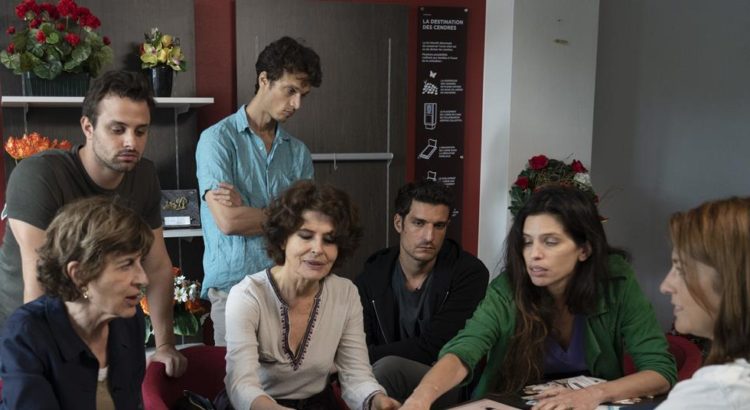
In her new film, DNA, French-Algerian director Maïwenn attempts to capture the generational struggle of understanding one’s cultural identity, which here locates itself within the film’s main character, Neige. Neige, alongside her Royal Tenenbaum-sized family, has difficulty coping with the death of her grandfather, an Algerian immigrant who is the unifying head of the entire extended family. His journey from a simple life in Algeria to an academic in France striving for Algerian liberation is the common myth that unites the family. When he dies, Neige is thrown into a—sometimes destructive—mission to discover the significance of her Algerian heritage.


Admittedly, this film is often pretty bland; the almost pointless use of handheld shots and blinding lens flares don’t do much for the viewer other than annoy us, and a good bit of the dysfunctional interplay between family members doesn’t amount to much more than trivial family drama. This is also a story we’ve likely seen some version of before. Whether it be Spike Lee’s Do the Right Thing or a blockbuster hit such as Bend it Like Beckham, the difficulties of mediating between different aspects of one’s cultural background is a subject that has been frequently explored in the 21st century; in an increasingly heterogeneous America, explorations of multicultural identity have become ever more important stories. 


But what makes DNA unique, despite its shortcomings, is the structure that Maïwenn gives to Neige’s character arc. In the beginning of the film, Neige doesn’t even feel like a main character. Though the camera may linger on a bit more than the rest of the family, there’s still plenty of screen time for her brothers, as well as the whole troupe in an ensemble. It isn’t until the halfway mark that Neige begins to escape the crowd of her extended family, and the narrative really begins to take an interest with her personal experience with grieving. In fact, as the film goes on, the rest of her family begin to appear less and less, and by the end we’re watching Neige walk around alone, starve herself, or bounce between appointments at the Algerian embassy to get her Algerian citizenship. Thus, we learn that Neige’s process of getting closer to her Algerian roots is a sort of a sweet irony, that to become a part of the Algerian community she must first retreat back into herself, away from her family and into her own solitude. 


The film’s ending finds Neige on a solo trip (possibly even a move?) to Algeria, and it’s apparent that she’s pretty out of place as a French-passing woman in the streets of Algiers. She wanders through the crowded streets like a tourist, often against the flow of traffic. But, even though she’s left the family she’s known her whole life and has presumably become a stranger in Algiers, Maïwenn asks us to remain hopeful that Neige—as well as her viewers—can find a community they can call home: the film’s final shot is Neige in slow-motion, laughing joyously at the Algerian flag fluttering against her back. Her smile is nothing but contagious, and the cut-to-black punctuates Maïwenn’s love letter to the aimless children of immigrants in France. 


DNA (2020) is streaming exclusively on Netflix.
 

REVIEW: Soul

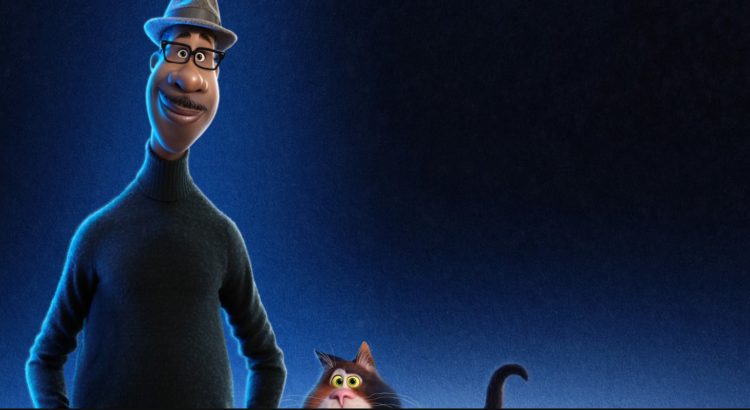
Soul is Pixar’s latest film, and as always, Pixar gets deep. Soul follows the story of a middle school band teacher who lives and breathes jazz music. He dreams of living the life of a great jazz musician, but just when he gets a once in a lifetime opportunity, he becomes separated from his soul. At its core, Soul is about purpose, about meaning of life, and about gratitude. It encourages viewers to fall in love with the little things, even when your dreams might be out of reach.

A double entendre, the title Soul refers both to the jazz-influenced music genre that originated in Black communities in the 1950s and 1960s, as well as to the spiritual essence of a living being. Together, both of these meanings drive the film. We meet our protagonist, Joe Gardner, as he’s leading middle school band practice, looking drained and hopeless. We soon discover that, despite his immense love jazz, he has been met with rejection after rejection in his efforts to make performing his career. Then, out of the blue, Joe gets the opportunity to perform with a famous jazz saxophonist. Joe is over the moon and literally starts dancing in the streets. 

All of a sudden, the screen goes black. We learn that Joe is gravely injured and unconscious, and the film takes a deep dive into philosophy as we now meet Joe’s soul. Pixar has a way of creating spaces that blur the line between reality and imagination, using playful imagery to approach topics that border the solemn and ominous. Here, we experience this space with Joe as he realizes, in a panic, that he’s nearing the Great Beyond. Yep, Pixar really just made a movie about life and death for 8-year-olds.   

Throughout the rest of the film, Joe tries desperately to get back in his body on Earth, and along the way, he meets characters and gains perspectives that completely change the way he thinks about his life. Through Joe’s eyes, we rediscover beauty in the “normal,” even the monotonous, parts of life. Just as Soul instills a deep sense of gratitude in its protagonist, it encourages its viewers to live in the present; to notice the magic of a leaf falling from a tree and to savor the flavor of a good meal.

Soul demonstrates a transformation in Pixar that has unfolded over the course of my lifetime. It’s gone from talking monsters to introspective questions of purpose and gratitude. This film is also notable because it’s Pixar’s first that centers a Black character, and portrayals of Black culture and Black joy have been largely absent from Disney. 

One of the most interesting things about this film is that the climax isn’t where you think it’s going to be. Joe gets what he wants well before the movie ends, so we don’t get that big Hollywood finish of everything falling into place. Instead, we’re left with a sense of uncertainty about Joe’s future. In the closing moments, he’s just a normal guy. The thing he wanted most doesn’t make him happy. Joe realizes that the only cure for his ever-present ennui is to fall in love with all parts of his life, from his treasured jazz music to the rumble of the subway. I truly am walking away from Soul with a renewed sense of appreciation for the little things.

REVIEW: Friend Goals

Tank and the Bangas just dropped a quarantine EP that hits close to home as we round up the final month of 2020. In just 21 minutes, Friend Goals brings us through a journey of funk, hip-hop, soul, jazz, and spoken word that speaks to experiences many of us have shared over the past year. While Friend Goals directly addresses COVID loneliness, its upbeat dance mood and theme of self-love breathes fresh air into a dreary time.

I first heard Tank and the Bangas on a Tiny Desk concert and was mesmerized by the band’s creativity and versatility. This New Orleans group has a way of blending playfulness and soulfulness in a way that feels like it shouldn’t work, and yet works so well. They are led by Tarriona “Tank” Ball, whose emotion and vocal expression give the group its characteristic energy and adventurousness. 

In most of the band’s music, including Friend Goals, Ball alternates between a voice that sounds resonant and impassioned, and one that sounds more animated and lively. I’ve never heard vocal performance quite like hers before, nor have I heard an artist boldly weave poetry into music like she does. The way she moves seamlessly between all of these techniques is fascinating to me. 

The EP’s second track, “Self Care,” is the quintessential quarantine bop we all need. It is not necessarily a happy song; rather, its lyrics convey relatable feelings of frustration and loneliness while simultaneously encouraging acceptance and self-love. The lines, “Feeling lonely I mean it / Seen the shadows I seen it / Tryna find the meaning” address the introspective loneliness born from solitude that many of us have experienced over the past nine months. The lyrics also acknowledge that sometimes it’s hard not to do things like call up your ex and relish in the familiarity and comfort of past happiness. However, that’s not all the song does. While recognizing that taking care of yourself can be difficult right now, “Self Care” wants you to embrace it. The track features a handful of vocalists in addition to Ball, including Jaime Woods, Orleans Big, and Anjelika “Jelly” Joseph, and they all sing with a strong energy that feels empowering to the listener. The last line, “I’m ready to get myself back” emphasizes acceptance and appreciation of oneself. 

Altogether, it’s a song that holds a lot of different emotions, and like the lyrics, the music also taps into several moods. The opening features a penny whistle melody that repeats throughout the whole track and feels almost eerie. Yet, when the beat drops, you can’t stop your head from nodding along to the upbeat rhythm. “Self Care” is a complex song for a complex year.

As a whole, the EP sounds like a patchwork of thoughts. “Mr. Insta” underscores our social media obsessed culture through a rumination on online fame and its discouraging downfalls. On “Friend Goals,” Ball incorporates storytelling of childhood memories and delivers her bars with an animated vocal expression. These techniques uplift her message about the rarity and joy of long-lasting, meaningful friendship. 

This EP is an exploration of different corners of emotion and musical genre. Though brief, it feels deeply honest.

PREVIEW: Wolfwalkers

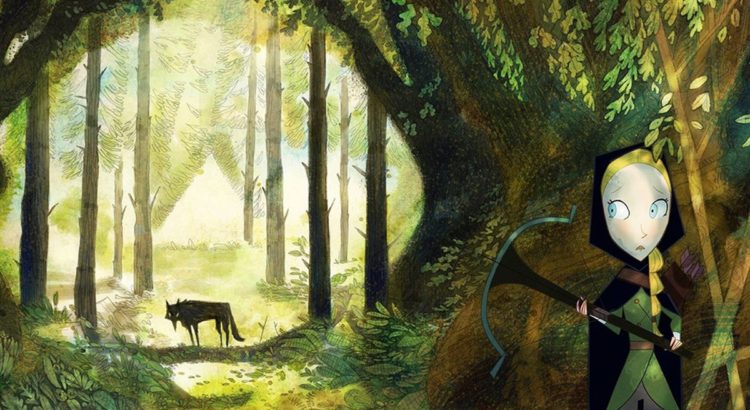
Wolfwalkers is a new animated film by the studio that produced The Secret of Kells, Song of the Sea, and The Breadwinner. The recent release follows a young hunter who comes to Ireland with her father to wipe out the last pack of demonic and evil wolves. However, the young girl saves a wild native girl who introduces her to the world of the Wolfwalkers, the very thing she and her father are sworn to destroy.

I have seen both Song of the Sea and The Breadwinner, and I love the studio’s art style. It’s been a while since I watched The Breadwinner, but I recently saw Song of the Sea and I loved the attention to the backgrounds in addition to the character designs in the film. The art is reminiscent of what you would find in a children’s picture book. From just the trailer, I’m glad to see the art in Wolfwalkers is in the same style and as beautiful as always, and I’m really looking forward to watching the film!

Wolfwalkers is now streaming on Apple TV.

REVIEW: Minari

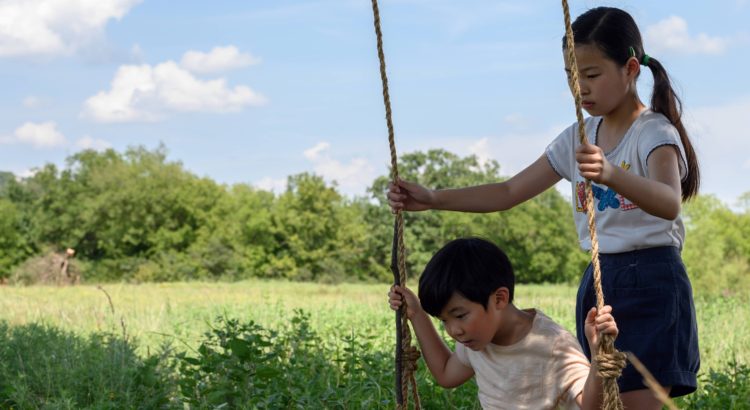
Minari is an A24 film set to release on February 12, 2021. Written and directed be Lee Isaac Chung, the film is a semi-autobiographical telling of Chung’s own childhood, following a family of Korean immigrants who move to rural Arkansas during the 1980s. The film stars Steven Yeun and Han Ye-ri as the parents, Alan Kim and Noel Kate Cho as the children, and Youn Yuh-jung as the grandmother.

Minari is a family drama at heart, and it follows the perspective of multiple characters, rather than solely the perspective of the little boy who represents Chung. This is essentially what makes the film so successful and so moving. We see the point of view of a father who wants his kids to see him succeed at something, and we understand why he moved his family out to this tiny farm, and why he is so determined to stay and make a living there. We also see the mother’s outlook on the situation, and how her husband’s promise to always protect and provide for the family seems to become overshadowed by his obsession with the farm. And we see the kids grapple with their entire life being turned upside down, their parents fighting because of it, and having to adjust to a rural lifestyle where no one looks like them, and also having to welcome grandma into their tiny home. Finally, we see grandma, who arrives to the family farm later, but is immediately able to sense the tension and simultaneously empathize with the struggle to feel at home. We see grandma provide a sense of solace through her own strangely foul-mouthed yet tender ways.

This is really an ensemble film, and every performance is convincing and powerful. Under Chung’s direction, Yeun plays a firm but loving father, one who is still likable though the audience cannot fully back all of his decisions. Ye-ri is not a nagging mother; instead, she is quiet but determined, and she is not reduced to the fact she is a married woman with children. The kids are a joy to watch, with their realistic sibling relationship that involves fighting, but also trying to help each other understand their new life and why it’s such a strain on their parents. And grandma is a scene-stealer, with her love of Mountain Dew and tendency to always speak her mind.

Above all, it’s clear that Chung poured so much love and care into his film. And though he tells a story that he must have been too young to fully understand, the way he chose to not only revisit his own experiences but also those of his parents turns his film into something more easily understood and much more universal. In reflecting on how he came to this understanding, Chung says,

“just as [Yeun’s character] is trying to farm and to chase this dream, I felt like for many years I’ve been irresponsibly chasing a dream of filmmaking. So something within understanding my dad’s pursuit and then also the conflicts that can come from that. And then also understanding the perspective of what it’s like for my daughter to be watching what I’m doing and my wife’s concerns and all these things. I felt it was helping me to see my parents in a different way. Then when my parents saw [the film], to see that they felt I had seen them. The way that they responded was ‘You understand us; you see us.’ And to me, that was incredibly moving.”

PREVIEW: Big Mouth Season 4

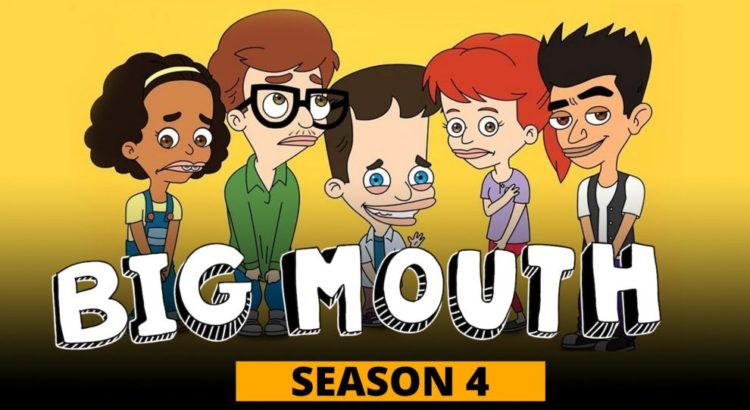
Big Mouth Season 4 follows our classic cast as they experience summer camp, the first few weeks of school, and several new kinds of “monsters” that come along with being a teen. The season contains 10 episodes, about 20 minutes each, and they are all available now on Netflix. If you are a fan of Big Mouth, be sure to catch this new season!

I am excited to watch this season because I love this show so much. I think it does a great job representing lots of different experiences that people went through around middle school times, and also has hilarious and completely inappropriate jokes. What could be better? I can’t wait to enjoy this newest season!

Watch it on Netflix: https://www.netflix.com/title/80117038