REVIEW: Ann Arbor Polish Film Festival, Short Films

Short stories, done through any medium, have always felt the most challenging and striking to me. Reading Neil Gaiman in high school English really sealed that feeling for me, especially the story collection Smoke and Mirrors: Short Fictions and Illusions. There’s a good amount of slack inside a full-length text that simply doesn’t exist for short story tellers, and in losing that there is a whole lot of additional meaning, interpretable and explicit, that invites itself in. Maybe that’s why I think and write and feel only in vignettes.

So let’s not waste any more time: here’s what I thought:

Tumble, style-wise, did not meet my expectations. True, the colors were moody and there was an interesting rabbit motif hanging around (symbolic of timidity, hiding away, uncertainty in oneself, I think), but it was weirdly repetitive even while having a small running time. The lack of explanations for how Adam’s guardian angel becomes visible to others and solves the problems Adam shares with his mother (they fight to the very end, and nothing is resolved) had the potential to be open-ended mysteries for the audience to consider, but they just feel too much like actual plot holes.

Marcel was no doubt my favorite; I will always, always be a sucker for a soft and quiet romance. The frank tone of the film’s setup reminded me of my favorite movie, Amelie. The idea of a stark change like that happening (going from virtual invisibility to becoming a member of society) as a result of a chance event has so much magic in it. I was also a fan of the division of warm and cool colors/lighting throughout the movie; the glow of little changes. The ending was a point of disagreement between my friend and I, though–for whatever reason I assumed the last line implied she had jumped from the balcony while he slept, but my friend argued that Marcel was only expressing his happiness that the two were together in the same apartment. The ability to have two wildly different interpretations like that makes the movie all the more powerful. 

View to the Wall had a physical pull to it, like I was being closed into a clearly-defined, small space, drawn into Larysa and Borys’ new home.

While I describe that like affection, I was cold throughout. Being artists, the characters were appropriately expressive, the actors who played them able to communicate minute, complicated emotional shifts very well. So much of the hopefulness of starting a family and starting anew as immigrants felt quite tragically earnest. Making a life for yourself is such a fragile thing.

Ricochets was more austere than I thought it would be, or maybe had hoped. The relationship between the brothers was not as thoughtful as it could have been, made a little too dichotomous. Still, it spoke quite clearly to how easily the state of the world can dissolve closeness.

While these movies are no longer available to stream on the Michigan Theater site, be sure to check back periodically for more–the Michigan and State Theaters have been hard at work providing opportunities to see movies while their capacity for in-person viewing remains altered. Keep up to date at https://www.michtheater.org/blog/
Review: Europa, Europa (1991)

Running time: 1h 47 min

Director: Agnieszka Holland

Countries: France, Germany, Poland

Genre: Drama, War, History

Rated R

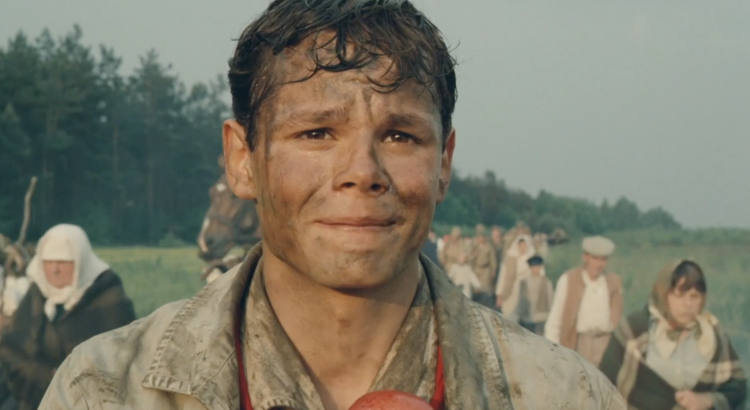
The 27th Ann Arbor Polish Film Festival presents the recently restored version (2016) of Europa, Europa. I missed the big screen experience this year, but the stunning color and clarity impressed me from beginning to end. An adaptation of Solomon Perel’s autobiography, Europa, Europa tells the story of a Jewish boy trying to survive and at the same time trying to figure out his national, religious, and social identities during the Holocaust period. It was shot in 1989, another historically important period: the Berlin Wall fell in the same year and several communist countries in eastern Europe (Poland, East Germany, Czechoslovakia…) began to abandon the one-party rule. So, when the film crew was reenacting Nazi Germany history, history also unfolded before their eyes. The remarkable mixture of fiction and history in Europa, Europa can also be credited to director Agnieszka Holland’s sensitivity to historical incidents that she herself didn’t experience. It wouldn’t be too far-stretched to say that Holland’s own life trajectory left a mark on the film. Her father’s mysterious death was associated with the secret police. She studied film in Prague (FAMU) and was thrown in jail for her participation in political movements during the Prague Spring. Like Solomon, she was once an artist in exile, separated from her daughter. (More on Holland’s background; I recommend this Q&A with Holland on Europa, Europa. Her sense of humor is incredible!)

To me, the pacing feels fast and in a way parallel to the ideological polarization between Capitalism and Communism. Five minutes into the film, I already saw a brit milah, a nudity scene, and the tragic death of a girl. The storytelling is unconventional. For one thing, circumcision is an important thread in the plotline. There is a comic effect built into every turning point. Maybe absurd is a better word to describe my experience—I kind of just freeze at frightening moments, moments when Germans attacked the protagonist’s school, when his Jewish identity was exposed to his admirer, when he was pointed with a gun, etc. I can’t tell how the protagonist Solly will react. Sometimes he’s alert, but often sometimes his behavior calls attention to the fact that he’s just a teenager.

With a sense of whimsical unexpectedness, Europa, Europa is not a purely tragic story, but it’s certainly not childish neither. Holland does not fabricate victimhood and avoids any simplification of humanity. The protagonist is not a traditionally heroic figure, and the story is more about things that he has no control over happening to him. At the Russian orphanage, Solly betrays his religion and becomes a supporter of Stalinism. He is then taught to hate and to kill by the Nazis. He sees traumatic war-time cruelties and has to make moral compromises on the fly. With his friends dying in front of him, there isn’t much reason for him to anchor his identity in his near environment. Naturally, he feels guilty and hyper stressed; his complex inner feelings are expressed through his surreal dreams, where Stalin and Hitler dance in close embrace, and Hitler is indicated to be a Jew hidden in a closet.

Although Solly’s journey is jaw-dropping, he’s never been in the ghetto. His closest encounter with other Jews’ lives is when he bypasses the ghetto in a tram run by the Nazis. Similar to how Solly only has a few glimpses of the horrifying ghetto scenes, I think the film also keeps a distance from the history and nests safely in a youth’s narrative. (If you’re interested in watching authentic imageries of the Warsaw Ghetto, check out A Film Unfinished (2010))

Review: The Neurosurgeon (2020)

Running time: 80 min

Director: Magdalena Zagała

Country: Poland

Genre: biography documentary

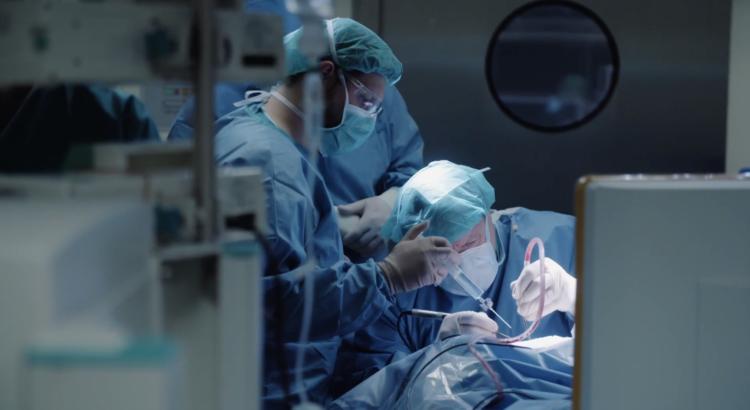
Our brains learn, remember, solve problems, and they are at the same time fragile, deceptive, and mysterious. The winner of Ewa Pięta Award for Best Documentary at this year’s AAPFF is The Neurosurgeon/ Neurochirurg, a film that gives an inside look at world-leading neurosurgeons’ daily work and work philosophy.

The main subjects Dr. Mirosław Zabek and Dr. Krystof Bankiewicz are two pioneers in the field of vascular microneurosurgery. Both have lots of titles and awards after their names, and most importantly, they are the experts who have cured some of the rarest brain diseases and performed surgeries that have never been done in history. Following these two legendary Polish neurosurgeons in meeting rooms and operating rooms, the film not only presents a career and working environment less familiar to the public but also showcases the process of difficult medical surgeries and a heart-to-heart talk about brain diseases and death.


Blending both the doctors’ and patients’ experiences, The Neurosurgeon documents five families coming to a Warsaw hospital looking for help. There aren’t many dramatic moments in The Neurosurgeon. Rather, it’s in little moments we the audience recognize fear, compassion, and love. The first case is a young father of three, who has a recurrence of a brain tumor. The camera captures him asking his wife to keep his wedding ring safe, and it is uncertain when he can put it back on. The second patient has been agonizing over her uncontrolled jerky body movements due to Parkinson’s disease. The film also introduces the audience to AADC deficit, an incurable genetic disease that affects children’s breathing, speech, and motor development. Around the world, there are about 130 children diagnosed with AADC. Two of them are in Poland and appear in this documentary. The last case is a popular Polish actor facing the risk of losing his ability to ever speak again. The camera goes into the operating room with these patients, filming neurosurgeons cut a bony opening in their skulls, conduct deep brain stimulation, and other medical procedures that are otherwise not seen by the general public. After recoveries, patients almost magically regain control over their body and are able to function more normally.

Although health impairment is a heavy topic, the tone of The Neurosurgeon is rather calm and even cheerful in the sense that it celebrates technological advancements, vibrant science communication, and the positivity to embrace uncertainty in life. There are times when a doctor has to refuse a surgery for the consideration of the patient’s life quality, or simply because there is nothing the doctor can help with. There are also times when the doctor sees the patient coming back to breath and gain a second chance to live.

REVIEW: The Trial of the Chicago 7

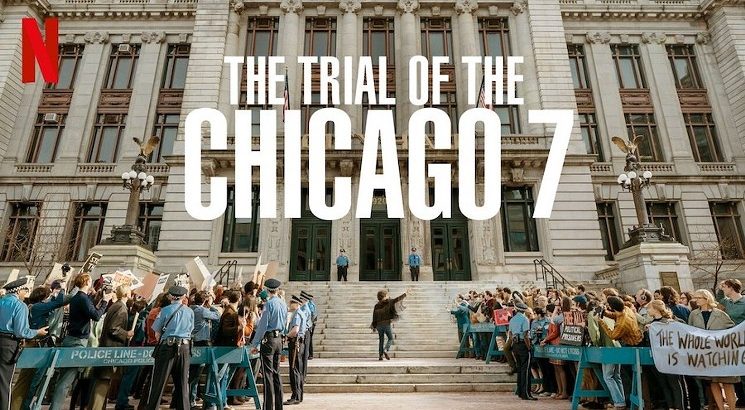
To start out with, I do not like political movies, or tv shows, or Law and Order, or anything of that genre. However, this movie was so much more than just a political trial between the United States and its dissatisfied people, it was an inspiration. The movie follows a trial between the US government and the leaders of 7 different protest groups who were at the Democratic National Convention in Chicago in 1968 and engaged in violence with the police. The 7 defendants were charged with conspiracy (among other charges) between their groups that they went to the convention with the intention of causing violence, when in actuality they meant to protest peacefully.

First, the movie did require some background knowledge that I did not have, and I had to look up a bit about that time period and the people in the movie including political leaders and some unfamiliar jargon. So I would say the movie was not one hundred percent accessible to someone who is learning the history of the Vietnam protests for the first time through this movie. I also thought the pace of the storyline at the beginning was a bit fast, as they sped through the process of how the trial actually came to be and I was definitely confused right when the trial started about what exactly was going on.

Those critiques aside, everything else about the movie was just amazing. I could not believe it was a true story, and when looking up some facts afterward I found out that most of it is true, especially the courtroom difficulties with the judge. The cast was also absolutely stacked, and they played so well off of each other, especially Eddie Redmayne and Sacha Baron Cohen. I also really enjoyed the humor that Sacha Baron Cohen and Jeremy Strong brought to an otherwise very grim and serious plot line.

I really admired the style of how the movie transitioned between the present trial and its goings-on with the actual protests that had happened. Someone in the cast would say a specific sentence, or start describing something, and the audience was transported back in time to that event happening. They also mixed in what I think was actual footage from the protests with the movie version, which made it feel even more realistic and heart-wrenching when the protesters were being beat up by the police. It was actually a bit unnerving, because a lot of the protests and police brutality were similar to what is happening today and the protests that began this summer. I find it kind of depressing that 50 years later, we have to fight the same way to try and get our government to listen to us.

Overall, I would highly recommend this movie, for lovers of political drama and for those who just want to know more about our past. The movie is available on Netflix, and I think it is a great watch because of how relevant it is, with protests still going on over the Black Lives Matter Movement and other political issues today.

REVIEW: I NEVER CRY

Spoilers ahead.


Isolated in the basement of my house on a Saturday night, I try to tune out the pounding music that somehow manages to penetrate the two small windows separating me from fun. The rage of the closet light that won’t turn off is getting to me, so I waste no time in beginning my foray into the Ann Arbor Polish Film Festival, by way of Piotr Domalewski’s I Never Cry.

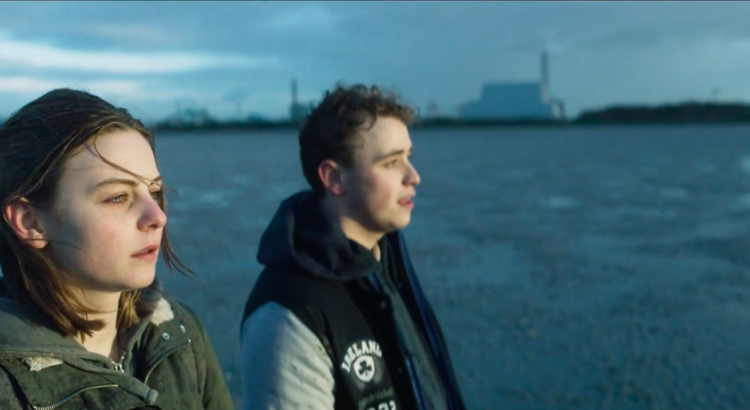
I Never Cry is a long awaited film for the “Euro-Orphans:” the kids whose parents left countries like Poland to work in the Western powers of the UK, Ireland, France, etc. The film’s protagonist, Ola (Zofia Stafiej), is one of these kids. When her father dies in a construction accident in Ireland, she must leave her mother and disabled brother behind in Poland to retrieve his body. With only a backpack and a dwindling pack of cigarettes, the 17-year old girl bounces around Dublin, doing her best to thwart the different levels of bureaucracy that stand in the way of her father. Ola’s story is one of amusing despair, as she drinks around Dublin and desperately clings to the few cigarettes she finds (12 euros for a pack of cigarettes? No thanks). In this search, Ola finds she knows very little about her father, and the mission gradually becomes about understanding him rather than finding him.

In stories about grief, by now it’s a cliché for the characters to spend the course of the narrative soothing their loss by trying to figure out who the deceased “really was;” if I’ve lost you already with my trite summary, I’m sorry.

But where Domalewski succeeds in this film is the subversion of that trope, because for Ola, she can’t seem to find out anything about her father. From the man at the hiring agency, to her father’s boss, to his roommates, Ola gets nearly nothing of significance about her father. The most she learns about her father is from his mistress, a hair-dresser scraping by who shows him a framed picture that Ola’s father drew of her—“he likes to draw.” And that’s it. That’s the most we learn of Ola’s father. Domalewski holds the man of the narrative’s longing at arm’s length, trapping us in Ola’s feeling of ignorance, of lostness.

The Euro-Orphan does not get a conventional redemption here. Instead, after discovering that her father’s mistress is pregnant, Ola gives the mistress the money that her father left Ola for a car, with the hope that she uses it to go to makeup school and get a better job. Her dreams of a car mean an escape—but realizing there is no escape from her cycle of poverty, she defers her dreams to the next generation. Like Ola, the viewer isn’t left with much hope with regard to the story at hand. But we must hope with Ola that her gift to her father’s future child pays off. At best, we hope with Ola for a do-over, for a kid that has a better life in a better place.

Psych 101 tells us that between ages 40 and 65 is the stage of development in which we worry about our contribution to society, to the next generation, to the things that will outlast us. But, with our legacy ever-present in the social media era of recording everything we do, I think it’s easy to find ourselves wondering at younger and younger ages, “what world do I leave my kids?” For the generation of “savers,” I Never Cry is a brutally realistic picture of what we have to sacrifice for the rest of humankind.

REVIEW: Tenet

Christopher Nolan’s Tenet opens with a thrilling hostage sequence that introduces the film’s central concept of inverted time. Shortly after the conclusion of the sequence, we see the lead protagonist seek out a scientist who advises him, “Don’t try to understand.” As the movie progresses, you realize that this line was written in for the audience.

Tenet follows a CIA agent who must prevent World War III by manipulating and traveling backwards through time. It isn’t time travel, but it is. It’s about inverting entropy. It’s confusing. However, the character motivations that drive the main plot are straightforward enough that even though you have no idea what’s going on, you’ll still have a good time.

The film’s action sequences can be largely credited for preventing the audience from leaving the theater or turning the movie off in frustration. I personally can lose interest in a movie during long fight or chase scenes, but Tenet’s action sequences are unique and engaging because of the inverted time. Objects that are inverted move differently – cars drive backwards, bullets are caught in guns, and waves flow in reverse. And because time can be manipulated, characters can move backwards in time to revisit certain situations. And though these characters are moving normally in their own eyes, non-inverted individuals will see these characters moving in reverse. Regardless of whether you think this concept is ridiculous or intriguing, you will surely appreciate the dedication of the cast and crew to the filmmaking process. Some scenes featuring time manipulation were filmed forwards and backgrounds. The composer, Ludwig Göransson created music that would sound the same forwards and backwards. Although the film is easy to criticize because of its debatably unnecessary complexity, there are just so many layers to the film that make the act of watching it such an immersive experience.

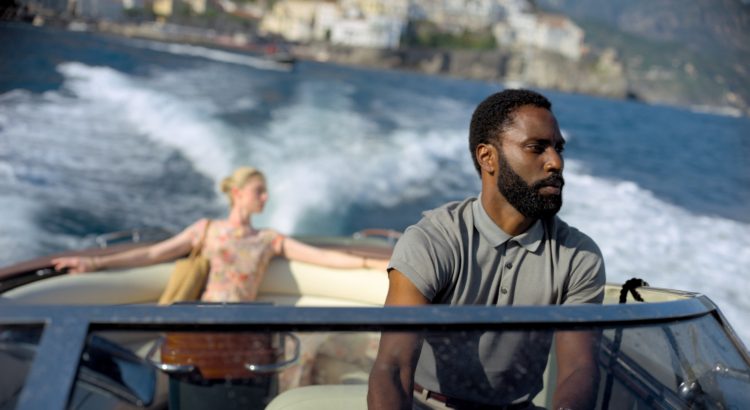
Furthermore, this is Nolan’s first film starring a nonwhite lead. John David Washington shines – he’s suave, funny, and has a strong moral compass. Some of Nolan’s past films have come under rightful criticism for only featuring underdeveloped female characters, and Tenet has come under scrutiny for presenting its female lead as a damsel in distress. However, I understood this character, Kat, played by Elizabeth Debicki, to be someone who merely starts out as a damsel in distress. Over the course of the movie, she develops more of a sense of self and comes to understand her own capabilities. Although Kat’s main motivations are centered around being a mother, she is not portrayed as weak or overbearing. Her character arc revolving around being reunited with a child is similar to that of Leonardo DiCaprio’s character in Inception. Although Kat is treated as a punching bag by her husband and she is a pawn in the Protagonist’s larger plan, I believe that she has a satisfying conclusion to her arc, and that Debicki’s stellar performance was that of a woman who proves she is no longer a damsel in distress.

If you like Inception and Interstellar or just Nolan’s films in general, you will at least be able to appreciate Tenet. I think it’s a pretty perfect film to watch right now: the action, cast, and score are all just engaging enough to fully immerse you into the movie-watching experience. I would recommend Tenet for anyone who is looking for a two-and-a-half hour break from reality.

Tenet is playing at the State Theater through Tuesday, November 10th, and it will be available digitally and on Blu-ray starting December 15th.