PREVIEW: Ann Arbor Polish Film Festival, Short Films

Movie Night Clipart

This weekend is Ann Arbor’s 27th annual Polish Film Festival! If you’re anything like me, you’re constantly searching for ways to put off doing actual assignments or anything remotely productive. Lucky for you, here’s another opportunity to do just that!

I’m a big fan of foreign film; it seems that many countries are far more in tune with the creativity is takes to make a truly weird, mind-bending movie (I have a lot of French and Thai favorites in that category). It’s interesting to note the differences in styles of acting and plot progression as well.

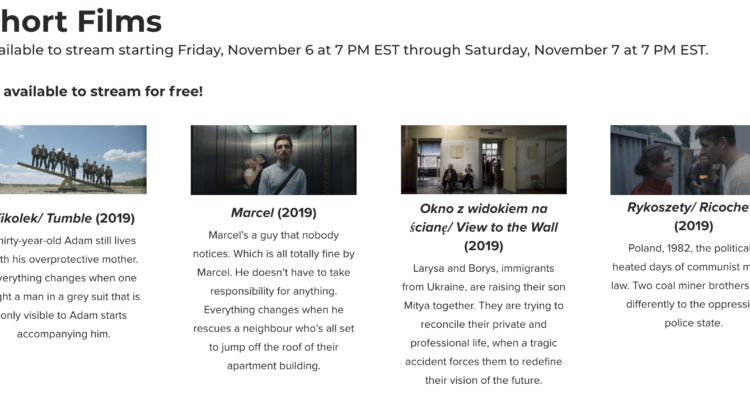
There are a few different sections of the film festival, so if you have the time, I’d encourage you to check out all of them. But I’ll just be watching the short films section; I have a whole list of other things I’m using to avoid work this weekend. On the menu are four 2019 movies, all dramas with some interesting spice, from political tension to a supernatural entity.

The short films are free to stream Friday, November 6 at 7pm through Saturday at 7pm, via https://www.michtheater.org/aapff2020/


Preview: Europa, Europa

Based on writer Solomon Perel’s true story in the WWII period, Europa, Europa (1990) follows a Jewish boy’s escape from Germany’s systematic persecution and tells his miraculous survival story passing off as a Nazi. Our young protagonist, in director Agnieszka Holland’s own words, is “the toy in the hands of history.” He first experiences family separation and becomes a Russian orphanage for two years. When he encounters a Nazi troop in Russia, he poses as a German Aryan and joins the army in order to survive. This is no different from jumping out of the frying pan into the fire, as his true identity can be exposed at any moment. dir. Holland depicts Solomon’s complex wartime life and brings his burning lie about his identity into a closer examination.

Join this year’s Copernicus Lecture which features director Agnieszka Holland in conversation with U-M Professor Johannes von Moltke and Professor Benjamin Paloff: this Friday night at 7 pm, free and open to the public.

Europa, Europa is part of the 27th annual Ann Arbor Polish Film Festival’s feature film series. This year, AAPFF is going online (Nov 6 – 8) and will present a selection of jury-awarded documentaries, short films, and the latest Polish feature films.

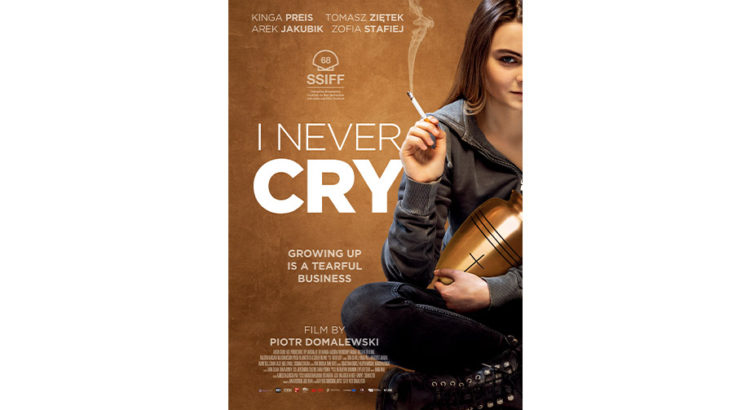
PREVIEW: I Never Cry

From the ever-growing Polish film scene comes Piotr Domalewski’s sophomore feature project, I Never Cry, a story of a young Polish woman who must make a journey to Ireland in the hope of retrieving the body of her recently deceased father. Domalewski rides on the success of his feature debut Silent Night, which won Best Film at the Polish Eagles, Poland’s equivalent of the Oscars. While Silent Night comically explored the life of a poor Polish family, I Never Cry seems to be more intent on chronicling the coming of age of a woman in European society—from the “Second World” of Poland, to the highly westernized nation of Ireland. For the American viewer, we are provided an opportunity to observe life off the American island, on a continent where another country is a two-hour drive away and one has no choice but to construct their identity across the borders of a global community.


I Never Cry is featured in the 27th annual Ann Arbor Polish Film Festival, hosted virtually from November 6-8 on the Michigan Theater’s Virtual Movie Palace. The festival has historically provided a platform for Polish cinema to gain wider recognition in the Ann Arbor area and, ultimately, the United States.

Review: RBG

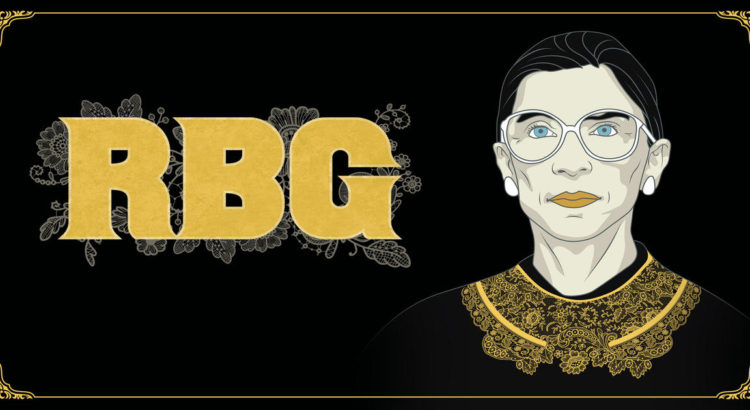
The RBG documentary follows the legal life of Ruth Bader Ginsberg, from her days as a young lawyer all the way to her time on the Supreme Court. I was very moved by this documentary to an extent that I did not expect, and I encourage anyone (especially women) who do not know about the profound change that she brought about in this country to watch it.

First off, I did not know the extreme injustices in the law education and job field that she had to endure as “being a woman was an impediment”. I could not believe the laws that were in place that discriminated against women when she was getting an education and beginning to work in the legal field. I feel like after watching this movie there is an extremely large amount of things in my daily life I have taken for granted in terms of the equality of women in the education system and beyond. Justice Ginsberg forged a path and formed laws that protect women in ways that I did not know she orchestrated, like allowing them to attend an all male military school, including them in service as jurors, and hundreds of other federal laws that discriminated on the basis of sex.

The documentary also commented on her day-to-day life and some more personal aspects other than her impacts in the legal world. I was amazed at how she burned the candle at both ends, caring for a 14-month old child while still in law school full time, and raising a family as she became a more prominent and important lawyer, especially while she was working for the ACLU. She also worked extremely hard at every case she was part of, working until early in the morning until apparently 4 or 5 am. Even into her older life when serving on the Supreme Court, she would stay up working and then go to the court at like 7 am.  Her husband and family described how she had to literally be pried away from her work at the office, with her husband sometimes coming to physically bring her home to have dinner and go to bed.

Moreover, the documentary had a lot more instances of Ruth herself talking about her life or commentating on major events than I expected. I really enjoyed hearing things from her point of view. My favorite part was when they asked her to watch the SNL skit that parodies her, which made her laugh very much. She was also so cute, with specific neck laces for dissenting or majority opinion, as well as a dry and clever sense of humor.

Overall, I really enjoyed watching the documentary and I would recommend. It is terribly disheartening to know that she is no longer around to help the Supreme Court see right and wrong and come together on a decision, and I can only hope that the future looks like what she imagined: with equality for all people under the law.

PREVIEW: RBG

RBG is a documentary honoring Justice Ruth Bader Ginsberg’s live and legacy in the justice system. It follows her from being a Supreme Court Judge through her life and her unprecedented popularity as a pop culture icon. Magnolia Pictures is offering it in their virtual cinema for just $7.00, and the proceeds all go to the American Civil Liberties Union Foundation in support of their Women’s Right’s Project. Ginsberg actually was one of the project’s co-founders back in 1972. The $7.00 includes both the purchase of the film (not rented) and a long-form Q and A session with the award-winning directors of the documentary, Betsy West and Julie Cohen, which was filmed earlier this summer. I am excited for this film because I think it is a great way to honor the passing of RBG earlier this year, and I think it will be a great documentary as well!

You can purchase the film to watch here: https://magnoliapictures.vhx.tv/checkout/rbg-michigan-theater/purchase?purchase=1

REVIEW: Nectar

From “Harlem Shake” originator and YouTube star to R&B and lo-fi singer-songwriter, Joji’s entertainment journey has been anything but predictable. Now, with the release of his sophomore studio album, Joji demonstrates that he is certainly not finished evolving and growing as a music artist. Nectar’s soulful, floating sound encompasses expressions of longing, heartache, joy, and distress.

“Ew” opens the album with a melancholy tone that seeps into every subsequent track. This track speaks directly to a former lover, and its self-deprecating lyrics contribute to the heavy feeling of heartbreak. Its soft falsetto later gives way to an intensifying instrumental section, and as the strings and piano swell, their harmonies become ominous and unsettling.

“Sanctuary” feels more hopeful and less despondent than many of the other tracks. In an album where much of the vocal performance is in a high falsetto, the lines “Not anyone, you’re the one / More than fun, you’re the Sanctuary” stand out. Joji sings these lines in a lower register with a rich vibrato. This temporary shift in vocal delivery makes these lines sound distinctly warm and loving.

The album does feature some more upbeat, lighthearted sounds, like in “Daylight,” “Tick-Tock,” and “Gimme Love.” Yet, amidst these cheerful beats, pensive and melancholy lyrics complicate their meanings. “Gimme Love” begins with a catchy, poppy sound, but the first verse reveals a sense of woundedness. Joji sings of vivid memories that are now hurting him, preventing him from healing and moving on. About halfway through the track, the beat abruptly shifts to a slow, dreamy sound that reflects the desperate tone of the lyrics. Joji paces his delivery of the last line of the song, with each word ascending higher and higher until the last word gets wrapped up in a musical crescendo. This last line, “But I can’t let you go,” feels like a candid confession.

Joji also features other artists on the album, such as Omar Apollo, Lil Yachty, and BENEE. “Afterthought,” the collaboration with BENEE, brings in more narrative storytelling than is present in other tracks. The verses reflect on moments of tension in a past relationship while the chorus recalls the joy associated with that lover. The lines “So lost in these diamonds / So lost in this paradise” speak to the beautiful memories, but they are immediately followed by the line “Don’t speed on that highway.” Perhaps it is cautionary. Joji may want to relive memories to be reminded of what blissful love feels like; but sometimes remembering how happy you used to be just intensifies how lonely you feel now.

Joji brings the album to a close with a powerful ballad. In the second to last track, “Like You Do,” Joji’s full vocals are offset by intermittent, unsettling instrumental harmonies that reinforce the desperation that comes through the lyrics.

Nectar has been critiqued for some inconsistency in instrumentals, as well as a lack of complexity in the latter part of the album. Despite this commentary, however, I think most of the songs carry a valuable genuineness that feels incredibly comforting. Joji sadness, interspersed with tainted sunny memories, serves as a reminder that heartache can feel inescapable and draining. But everyone goes through that sometimes. Nectar reassures us that these feelings are human.