PREVIEW: A.M.I.

Between online classes, meetings, schoolwork, and arts events, most of us are beginning to resent our forced bond with technology. Still, somehow, staring lovingly at our screens on Netflix remains our go-to pastime (or procrastination habit, if we’re being honest here). Lucky for us all, I have a movie suggestion that might just marry the two conflicting sentiments: A.M.I.

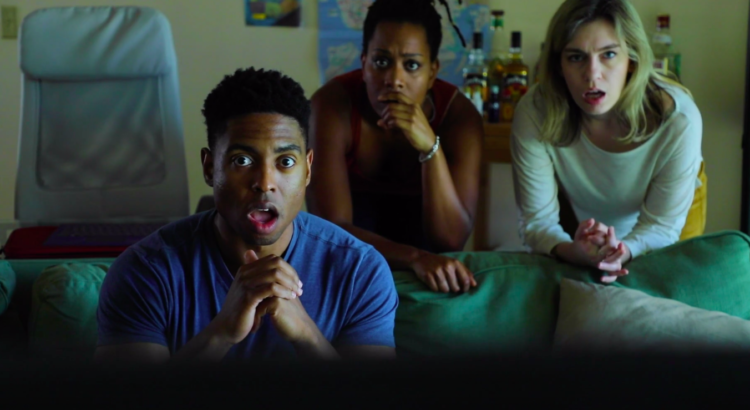
It’s about a gal mourning the loss of her mother, then happening upon a new app with customizable artificial intelligence personalities. She forms a deeply emotional relationship with the voice, but it soon turns much more sinister than sweet mother-daughter talks…

This sounds like an interesting concept, but still an easily consumable slasher flick perfect for the Halloween season and our stressed brains decaying from midterms.


PREVIEW: Carrie Newcomer at the Ark online

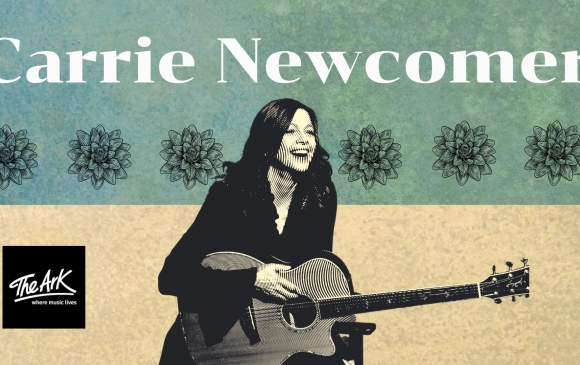
This Saturday at 8pm, singer-songwriter Carrie Newcomer will present a concert entitled “The Age of Possibility: A Moment and Movement” online through the Ark in Ann Arbor. She will also be joined by pianist Gary Walters and violinist Allie Summers.

I’m particularly excited for this event because I attended another one of Carrie Newcomer’s virtual concerts earlier this summer, and it was an excellent experience. Her online concerts are presented through a platform called Mandolin, which is similar to Zoom, but developed specifically for music. Though I was a little skeptical of the idea of an online concert at first, the platform has a chat through which audience members can engage with the artists, and you can even react by sending different emojis (such as hearts or clapping) throughout the performance. Even though we can’t be in person, and even though the experience was definitely a new and novel one, it was a way to feel a sense of connection and community across time and space.

To purchase tickets, visit https://www.theark.org/shows-events/2020/oct/17/carrie-newcomer. Tickets are $20 for an individual and $30 for a family, and the link to the concert is sent out after purchasing. Additionally, this concert is a way to support the Ark, a local arts venue!

REVIEW: BoxFest Detroit Film Festival

It’s early and my tea is still warm. At this point in my life, waking up before 9 AM makes me feel like I’m a child again, watching the day start and letting each breath fill me with the hope of a ripe new day. The fun things happen late at night, but the beautiful ones happen just after the sun rises, when the day hasn’t yet accumulated any of the complexities that come with time. It’s also the perfect time to watch amateur films.

I click play to begin the BoxFest Detroit Film Festival, a contest that has for the last 16 years served as a platform for up-and-coming women directors. This section is “Box 3” a set of 5 narrative short films.  First up is an animated short, Chatterboxing!: it’s delightful, it’s funny, and it combines drawn animation with photographed objects to create a lively, kinetic verbal-boxing match. Chatterboxing! is a clean high compared to the rest of the films; it’s something that might be featured as a Disney short. And it lures us into a kind of false sense of security.

The other four films do not have the luxury of animation’s universal simplicity. The rest are live-action and thus much more susceptible to all the technical shortcomings of low-budget films. A Basement Film, the longest piece of the event—and the most emblematic of the low-budget genre—is plagued with distorted sound, strangely delivered lines, and no color-grading. So, what are we left with? Story. Without the traditional pleasures of mainstream film aesthetics, narrative eclipses all else. We must force our way into the narrative like a benevolent intruder, searching the narrative for any signs of life. We’re looters who have shown up to the party a little too late, and we must be content with any useful thing we find.

When everything else is stripped away, A Basement Film is a surprisingly close-to-home vignette about a girl who struggles with her mental illness during a basement hangout. The dialogue falls short and the camera lingers a bit too long after someone speaks, but we truly get a film about the culture of the basement, complete with meandering conversations about the future, awkward groping, and psychedelics. It feels honest, even if it feels rough around the edges—really, because it feels rough around the edges. Even the over-lingering shots seem to reveal the little moments of silence that make real life so uncomfortably real. So, when A Basement Film does a character well, that character feels especially done well. The stoner guy who’s actually really smart but is content working his blue-collar job and learning about drugs on the internet—that’s some variation of someone a lot of us have met. And this same sincerity applies to the remaining three films, whether we’re watching a video game possess two boys, the apocalypse test a couple’s relationship, or a group of teenagers navigate the intersection between faith and blackness.

Really, the best thing about low budget films is how little people care about them. When a student film begins and one hears the deafening roar of a camera’s internal microphone (God forbid), most people check-out. After all, film is a mixed-media, comprised of sound, photography, and story. If a movie can’t hold up its end of the bargain in providing you all those elements, why watch? We know what it takes for a movie to be entertaining, and we expect that standard to be met. But, when we go beyond our expectations to be entertained—or, more aptly, below them—we stumble upon the little kernels of beauty that often go unnoticed in a polished Hollywood film. There’s a freedom in it, to portray something simple without the control of a studio that needs to turn a profit. Rather than grimace at the faults of these amateur films, I revere them because they give me a little bit of hope that there are still young people out there doing the work of stumbling in the dark to find good art. And hey, you’re bound to stumble onto something, someday.


I drain my tea and look for something productive to do.

REVIEW: Real and Imagined: Fabric Works and Video Animations by Heidi Kumao

I walked into the gallery with a stomach ache, and walked out with an even bigger knot.

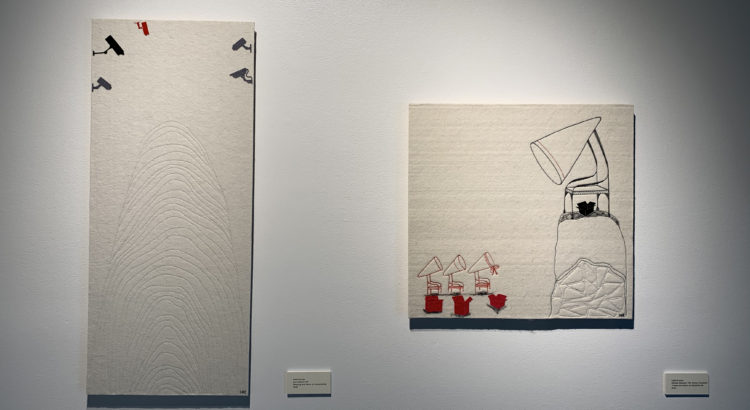
Heidi Kumao has put together an excellent portrayal of the gaps in justice systems in cases of sexual violence. It is often characterized as a short list of events, identifiable with clear beginnings and ends. We know who the players are (we call them aggressors, rapists, victims) and what should happen to each party after the event has occurred (getting fired, jail time, police report, testifying). We know what counts and what doesn’t, and what responses are valid. Of course, none of this is actually true; there are countless ways in which someone can be affected by sexual violence, and to reduce such experiences down to more easily digestible stories is a powerful insult, putting into question a violated person’s reality.

The layout of Kumao’s pieces is minimalistic on purpose, each stitch and fabric scrap made infinitely more intentional. And while the arrows on the floor (to direct single-direction traffic in the gallery, allowing for social distancing) were not a part of the exhibition, they fit the theme: there is one way to reconcile with and bring justice to sexual violence. It’s procedural.

A textile medium was an inspired choice: fabric is manufactured neat and orderly, but on close inspection it has a propensity to unravel, to knot, to incorporate impurities, to lasso in sharp burrs, to tangle. It has holes in it, all over the place, it’s easily pierceable, complicated, diverse in stitch and texture. Lint and fuzz make abrasion evident, stains remain embedded. It calls up thoughts of bedding and thus the fiction of dreams, as the exhibition title suggests. It’s also representative of traditional womens’ work: sewing, mending, weaving, embroidering.

Her motifs capture well the double-edged properties of gaining a platform for self-advocation. Thechair is a seeming promise of a seat at the table, but it always comes paired with a spotlight, and an audience (the Langston Hughes reference is intentional, given the added layer of opposition  that women of color face in their search for justice). Connections are tenuous threads, which grow into chaotic knots and simplify into lines, noting the difference between reality (complex stories, lasting results, diverse reactions) and the imagined (straightforward descriptions, single narratives).

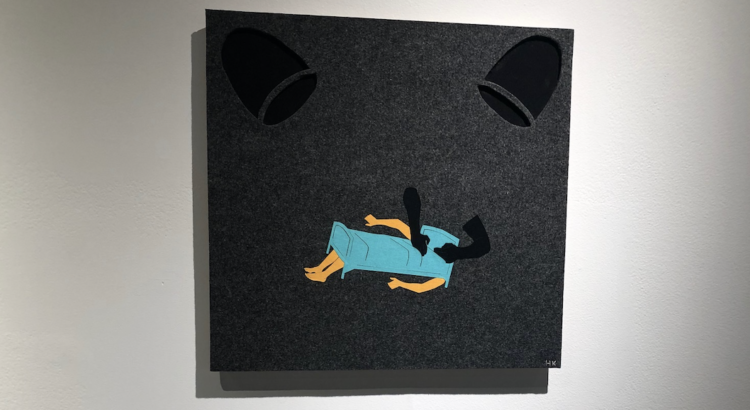
The most poignant piece to me was one called “Reluctant Narrator,” a little square scrap of felt maybe six inches wide. One chair sits with another, a tangle of thread upon it, which the other chair is pulling into a thick, straight line. 

It’s become the norm to accept heroism only in those able and willing to share their trauma with strangers, putting themselves on a stage and accepting skepticism and hatred in exchange for benefitting the good of others. We welcome the poised, and lack respect for the silent.

The exhibition will be on display until December 4th. The gallery is open 2-7pm Tuesdays and Fridays to anyone with an Mcard; unfortunately, they’re not presently able to open to the public. However, they have a wealth of online resources like discussions with their featured artists and news about goings-on in the Ann Arbor art scene on their website, https://stamps.umich.edu/.


REVIEW: Succession

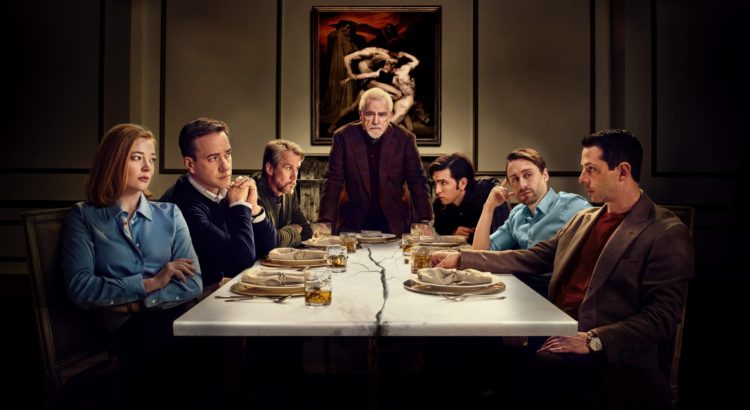
Succession is the most recent recipient of the Primetime Emmy Award for Outstand Drama Series. The HBO dramedy/satire follows the Roy family, led by patriarch Logan Roy, CEO of international media conglomerate Waystar Royco. With Logan’s health in decline, his four children and the rest of the company grow concerned over the future of Waystar. Produced by Adam McKay and Will Ferrell, full of scheming and betrayal with nine Emmys under its belt, it seems that Succession is well on its way to becoming Game of Throne’s bigger and better successor. The bar is low, but there’s no way HBO will repeat the same series finale catastrophe, right?

The show is so entertaining to watch because the characters all kind of suck. They’re all looking out for themselves and only themselves, they’re constantly in competition with each other, and they’re always stabbing each other in the back. They’re not just realistic because they’re inspired by the Murdochs (who own or have owned The Wall Street Journal, Fox News, and 21st Century Fox), but because they’re human beings in a modern-day setting, and they’re also simply human beings who are flawed. We hear about rich families like the Roys every day, and we also know normal people who are just like them. Take the character Tom Wambsgans, for example: he’s a people-pleasing Waystar executive, always cracking questionably funny jokes. And he loves having power. He bullies poor cousin Greg on the daily, but even so, he knows his place. He’s dating Logan’s daughter, Shiv, and is frequently shown trying to remain in Logan’s good graces, whether it’s trying to find the right birthday present for him or simply not verbally attacking people in Logan’s presence. Sure, Tom’s a little amped up in the show for satirical purposes, but you definitely know someone just like him. You may be thinking that Tom sounds like a horrible person and there’s no way you know anyone like him or relate to him at all, but I can guarantee that as you watch the show, you will be so entertained. You will love watching people tear each other down for their own personal gain. You will hope for the worst and the extreme. And does that not make you just as bad as the Roys?

I can’t praise the genius of Succession without crediting the show’s writer and creator, Jesse Armstrong. He has previously written for Black Mirror and Veep, so you know he knows what he’s doing. He’s delivered two impeccable season finales. In the finale of season 1, there’s this ~thing~ that happens. And as it’s happening, you know what’s going to happen. But when it happens, it happens – Armstrong fills you with dread, has the thing happen, and doesn’t stop there. He showcases the immediate aftermath and leaves you anticipating what it means for the characters, the plot, and the show as a whole going forward. The season 2 finale is more subtle, but after the ~thing~ happens, you realize he had left clues throughout the episode. Armstrong is very clever, and he should be regarded as such. He knows what we find entertaining, and he’s created a massive ensemble of characters who aren’t necessarily lovable, but you can’t help but be invested in their stories. Succession has already won Emmys for writing, acting, and directing, and it has a very promising future. As long as Bran Stark doesn’t end up as the next CEO of Waystar.

REVIEW: Real and Imagined

Professor Heidi Kumao’s solo exhibition features fabric works and experimental animations that capture ordinary conversations and relationships. What sets Professor Kumao’s work apart from other artwork exploring a similar concept is not only the unique medium, but also the fact her work is told from a feminist perspective. She explores underlying emotions and tensions in everyday interactions by representing trauma and power imbalance. The title, Real and Imagined, reflects public support for and backlash towards women who have spoken up about assault, harassment, and misconduct. A woman’s experience can be believed to be an honest account but dismissed as wrongly remembered or entirely made up.

Professor Kumao’s work is minimalistic, but her work is far from lacking meaning or appearing overly simplistic and therefore unclear. Her work is almost playful or childlike – the style is reminiscent of something you’d see in a picture book. However, the seemingly innocent appearance of Professor Kumao’s artwork is sharply contrasted by how effectively she is able to convey emotion in her work.

For example, in the above piece titled “Consultation,” we see what is unmistakably a gynecologist’s office, with the door, chair, and the exam chair with stirrups. Although there are only really three focal points in the piece, with the background being all white, Professor Kumao was able to clearly set the scene, as well as create an atmosphere of unease with the vivid red. Red, as we all know, is often associated with danger or a warning, but Professor Kumao deliberately created a sense of discomfort rather than immediate danger. The scene can be interpreted as simply unsettling, but also preceding or directly following the suggested danger.

The jumble of thread sitting on the chair appears multiple times throughout the exhibition, including in the below piece titled “Reluctant Narrator.” In this piece, the thread is being pulled at, hinting at the unraveling of a narrative. She once again uses red, but the thread is in more disarray than the thread in “Consultation.” This seems to directly reference the “Reluctant” part of the title, again creating a sense of unease. On the other hand, in “Consultation,” the thread is still entirely intact, suggesting that perhaps there is something that happened around the time of the scene depicted.

Obviously, these are just my interpretations of some of Professor Kumao’s work, but I find it so impressive how effective her work is. There is always some blank space in each piece, but rather than leaving each piece seemingly unfinished, she is able to tell a story without overcrowding the felt canvas. Furthermore, I can only imagine how long it took to create this exhibition. The felt cutouts have a sense of depth, and you can always tell which way a chair or spotlight is facing. Her shapes are very distinct and it’s clear why she chose to include them – office chairs to represent power imbalances and spotlights to represent public scrutiny.

Overall, Professor Kumao’s exhibition is very strong and very impactful. It leaves room for interpretation, but it isn’t needlessly confusing. It’s clear that she put in a lot of time and care into this project, and I would encourage you to see it in person.

Real and Imagined is currently on display at the Stamps Gallery, which is open on Tuesdays and Fridays to visitors with an M-Card and a mask.