
REVIEW: I’m Thinking of Ending Things

I’m Thinking of Ending Things is Charlie Kaufman’s first psychological thriller as both writer and director. I watched two films he has written in preparation: Being John Malkovich and Eternal Sunshine of the Spotless Mind. After this week, I can say with absolute certainty that Kaufman is a brilliant writer. Do I always understand what’s going on in his mind, though? Nope.


It’s difficult to talk about the film without spoiling everything – I’ve been mulling over the ending of the film for the past three hours and am just now beginning to piece the narrative together, to find meaning in the events leading up to the conclusion, and to solidify my interpretation of the film in its entirety. But, that’s what I love about this film – it makes you think.


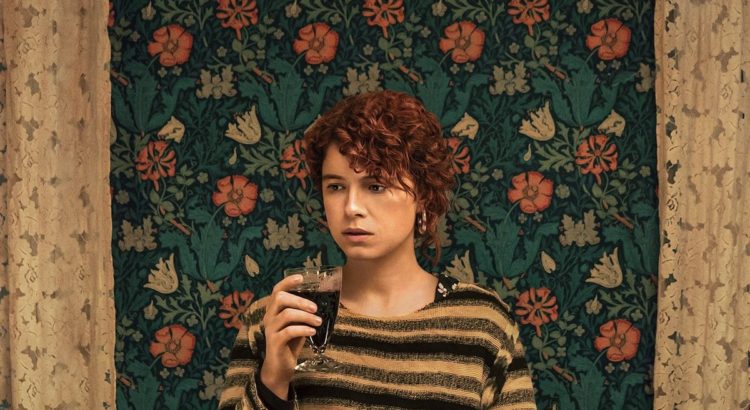
Before I delve into more specific details, I should mention that the film is about an unnamed young woman who joins her boyfriend on a trip to visit his parents, but she doesn’t foresee their relationship lasting much longer. The film begins with the couple’s drive to the family farm. From the get-go, you understand why the young woman is thinking of ending things. The two are both well-educated – the boyfriend, Jake, is able to keep up with his girlfriend’s explanation of her research and the paper she has to write. They both like poetry. However, they have differing interpretations of poems and clashing opinions on philosophical debates, but they are unable to articulate their thoughts and hold a progressive conversation without being afraid of offending each other. The couple will then fall into complete silence, and when Jake asks what his girlfriend is thinking about, she tells him she’s thinking about vague, in her head stuff, while she tells the audience she doesn’t think she wants to a continue a relationship where she can’t even tell the other person what’s on her mind.


From the moment the couple starts their road trip, it’s clear there’s a sense of unease between the two. I think that this shows just how good of a writer Kaufman is. The dialogue isn’t clunky – although it can be confusing, he portrays realistic conversations between two intelligent individuals who are falling out of love. And what I find most impressive is how Kaufman is able to write all kinds of couples, from a shallow and almost manipulative attraction in Being John Malkovich, to Eternal Sunshine, which depicts the initial euphoria of meeting someone devolving into irritability and volatility, and ultimately a breakup. Furthermore, Jake and his girlfriend’s relationship in I’m Thinking of Ending Things is different from Clementine and Joel in Eternal Sunshine – we only get the young woman’s point of view, and we never see them connect on the level that Clementine and Joel do.


I have many more thoughts about the film, but they all fall into spoiler territory. So I’ll leave with the fact that there is very little music, which makes the musical moments stand out. The use of sound really sets the uneasy tone of the film – you just always feel like something’s off. Whether it’s complete silence punctuated by uncomfortable dialogue, the rhythmic thud of windshield wipers, the jingling of a dog’s collar, the minimal score, or a song from Oklahoma!, you find yourself wondering what it all means and why you feel uncomfortable. Of course, this is aided by the performances of Toni Collette and David Thewlis, and Kaufman’s messing with the concept of time, as introduced in the trailer for the film.


Overall, I highly recommend this film. You might hate it, but it’s just so interesting and there’s just so much to unpack. If anyone wants to talk about spoilers please leave a comment! I need to talk about this film!

PREVIEW: I’m Thinking of Ending Things

PREVIEW: I’m Thinking of Ending Things


I’m Thinking of Ending Things is an upcoming Netflix film written and directed by Charlie Kaufman. Kaufman is most known for writing and/or directing Being John Malkovich; Synecdoche, New York; and Eternal Sunshine of the Spotless Mind. The three films are of the comedy/drama/romance genre, whereas his newest film is described as a psychological horror film. I’m Thinking of Ending Things is based on the Ian Reid novel of the same name, which follows a young woman who joins her boyfriend to visit his parents.


The premise of the film is reminiscent of Get Out, but the trailer proves it will be a very different movie. It currently holds an 85% from critics on Rotten Tomatoes, and depending on how I’m Thinking of Ending Things continues to perform, it could be an indicator to other distribution companies that their films could also perform well on streaming services, and ultimately encourage more new films to be released on streaming platforms


The film stars Chernobyl’s Jessie Buckley, Jesse Plemons whom I can never separate from Todd in Breaking Bad, Toni Colette of Hereditary and Knives Out, and Professor Remus Lupin himself, David Thewlis. I’m Thinking of Ending Things premieres on September 4 on Netflix, and the trailer is available now: https://www.youtube.com/watch?v=cDTg62vsV4U

REVIEW: Avatar the Last Airbender and The Legend of Korra

Avatar: The Last Airbender and The Legend of Korra both explore a world created by Michael Dante DiMartino and Bryan Konietzko in which some individuals possess the ability to “bend” one of four elements: water, earth, fire, or air. The two animated series follow Aang and Korra, two incarnations of the Avatar, whose duty is to maintain balance in the world and act as a bridge between the human and spirit worlds. The Avatar has the ability to bend all four elements, and is reincarnated into a new body each time they die.


Avatar was added to Netflix in May, and despite it being a kids’ show that aired from 2005-2008, it quickly made its way into Netflix’s top 10 list where it stayed for 61 days, breaking the record previously held by Ozark (57 days). I didn’t watch Avatar when it first aired, but when I watched it this summer, I loved it. I think what makes Avatar so successful is that even though it’s intended for a younger audience, it doesn’t shy away from serious topics, which expands the target audience. The show addresses themes from gender discrimination to war, imperialism, and genocide. Another way the show is successful is in how it’s structured: it’s episodic, so the episodes can stand alone, but they all contribute to the overall plot. This makes the show more exciting, as each episode tells its own story.


Not only does Avatar have a great plot, it also has unique and lovable characters. Even the side characters have their own personalities and motivations. Since Avatar is a kids’ show, the creators did not show any onscreen deaths, and they were able to work this as a character trait into the main protagonist, Aang. Aang is a monk and also twelve years old, and refuses to kill the man who was responsible for the genocide of his people. This man, Fire Lord Ozai, is the main antagonist of the show, and when he and Aang finally face each other, the conclusion is unexpected but original, and overall very satisfying. One very popular character is the son of the Fire Lord, Prince Zuko. I believe that I can reasonably claim most people that watch the show love Zuko. He’s essentially Kylo Ren and Jaime Lannister, but actually written well, and with motivations that actually make sense.


Recently, there have been plans to develop Avatar into a live-action series on Netflix. However, the original creators of the show, DiMartino and Konietzko, both announced they would be leaving the show. They stated that Netflix had a vision to make the show more mature, but they still wanted the show to be for kids. I initially was 100% on the creators’ side, but after watching Korra, I’m intrigued by what a more mature Avatar show would look like.


The Legend of Korra is intended for a more mature audience – for the kids who watched Avatar and then grew up. The show’s villains essentially represent communism, theocracy, anarchy, and facism – and it gets pretty dark. In season 4, Korra has PTSD and spends a good part of the season in recovery, and her character isn’t the same as season 1. It’s quite sad that Korra started off as a cocky and fun-loving young woman, but in order to be humbled she had to process a great deal of trauma. The creators of the show have proved that a more mature story can successfully take place in the world of Avatar and Korra, and it’d be interesting to see Netflix’s spin on an already iconic story. However, if Netflix is going on the Riverdale-maturity route, then I completely understand why the creators chose to leave. I also understand the creators’ frustration with a lack of creative freedom, as there are reports that Nickelodeon gave the creators a really difficult time during the production of Korra – not only because she is a female Avatar, but also because she is a woman of color. The ending of season 1 is a little rushed, and the beginning of season 2 is rather slow, but Nickelodeon initially only gave the creators one season, and greenlit season 2 halfway through the airing of season 1. Then, seasons 3 and 4 – the strongest seasons of the show – weren’t aired at all and were uploaded to Nickelodeon’s online streaming service instead.


Overall, Korra gets a lot of hate, but I think you can be understanding of the circumstances surrounding seasons 1 and 2. Both seasons are still very good, and season 3 is on the same level as Avatar. I’m interested in seeing what’ll become of the live action show as the creators did say some individuals they hired themselves have stayed on the show. But for the time being, watch Avatar: The Last Airbender and The Legend of Korra on Netflix!

REVIEW: American Standard

James Taylor’s new album American Standard has an overwhelmingly familiar feel to it, which I think is both to its benefit and to its detriment. While it delivers on the expectations alluded to in the title (the album contains American musical standards including well-known showtunes and popular songs such as “Sit Down, You’re Rocking the Boat” from Guys and Dolls and “Moon River” from Breakfast at Tiffany’s ), it does not really introduce any new material since all the songs featured are covers.

As noted above, Taylor’s new album consists exclusively of covers of well-known American songs. Even though the songs he chose are essentially all beloved tunes, this was a bit disappointing to me, given that Taylor is known as both a singer and as a songwriter. At the least, I had hoped for some original songs, even if they were not written by Taylor himself.

That said, the album still has a lot to offer, and I found it quite enjoyable to listen to. The word that keeps coming to mind in relation to the collection of songs is comfortable. Not only is Taylor’s warm, mellow voice comforting to listen to, but Taylor sticks to a relatively comfortable vocal range and his signature vocal style. For instance, Taylor’s rendition of “God Bless the Child” is undeniably in his own musical mold, and consequently quite different than Billie Holiday’s original version (which has made its own mark as an American standard). I did not, however, find myself constantly comparing the two when listening to Taylor’s version because the way he has made the song is own is rather classic and singular in its own way. There is not anything wild or revolutionary on this album, but that is clearly the point. The instrumental accompaniment is simple and never overpowering, consisting mainly of guitar with some light percussion. It is easy to imagine that Taylor is singing straight to the listener, and each song seems like a story that Taylor is telling personally.

Overall, American Standard blazes no new trails in American music, but it does continue the legacy of one this country’s most popular recording artists. (Taylor has won multiple GRAMMYs, was inducted into the Rock and Roll Hall of Fame in 2001, and has sold over 100 million records). Especially given the turbulence of the current world, perhaps Taylor’s artistic choice to play off of familiarity was what was needed at this moment.

REVIEW: Silver Landings

Though today Mandy Moore may be better known for her career as an actress – she is the voice of Rapunzel in Tangled and plays Rebecca Pearson on the television series This is Us – she is also an accomplished singer/songwriter. Fans of This is Us will have been exposed to glimpses of Moore’s work on the show, since her character Rebecca is also a singer, but her albums offer a better picture of Moore as her own vocal artist. Silver Landings, released in 2020, is her seventh studio album.

The music itself eludes categorization into a single genre, instead audibly combining elements of pop, rock, and folk both from now and decades past. Indeed, both the musical style and the lyrics seem to be reflective of Moore’s career up to this point. For instance, her song “Fifteen” is in reference to her early success (she was fifteen when her debut single “Candy” launched her into the spotlight in 1999). The deliberateness of this album an especially notable treat for listeners, given that Silver Landings is Moore’s first album in over a decade; her last album, Amanda Leigh, was released in 2009.

Most of the album is upbeat in a relaxed and laid-back sort of way that seems evocative of the ends of long summer days, but one of my favorite songs is actually the slower ballad “If That’s What It Takes.” To the slow strumming of guitar, Moore sings “As the years keep slipping away / We’ll be the birthday cake / While the world turns itself inside out / We’ll be the butterfly / When they’re burning the carnival down / We’ll stay on the Ferris wheel / Oh baby, if that’s what it takes.” Another one of my favorites is the more upbeat but still reflective “Stories Reminding Myself of Me.” The line “Turning a corner so bittersweet” from the refrain seems representative of the entire album.

Overall, the feel of Silver Landings is one of a mature and varied musical style, with the album offering listeners a balanced plate of sonic influences. Moore deftly changes the timbre of her voice to match the lyrics and mood of the song, going from cool and detached to a warmer and richer sound. I found the album to be both mood-lifting and relaxing to listen to, which makes it a welcome escape from the current world.

If you are familiar with any of Mandy Moore’s previous work as a singer or as an actress (or even if you aren’t), I would recommend her newest album, Silver Landings.

REVIEW: The Dutch House

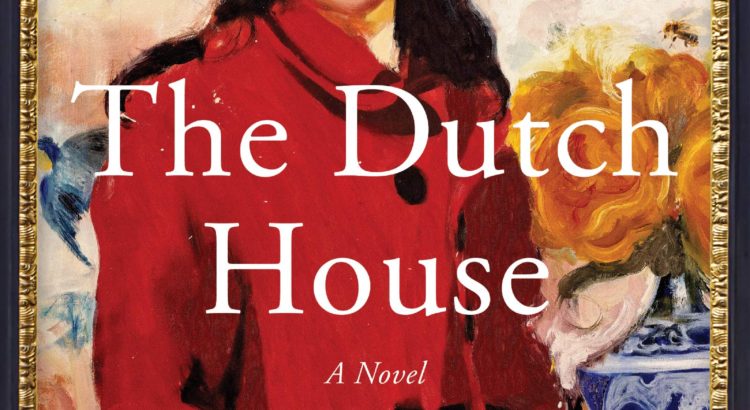
Though Ann Patchett’s novel The Dutch House tells the story of a brother and sister, Danny and Maeve, the real star of the story is the titular estate of their early childhood. The descriptions of it are lavish: the Dutch House “was a singular confluence of talent and luck,” and “seen from certain vantage points of distance, it appeared to float several inches above the hill it sat on.” Its front windows “were as big as storefront windows and held in place by wrought-iron vines.”

In fact, the house takes on a sort of mythical quality as the novel progresses, both in the mind of the reader and in the minds of Danny and Maeve. For the two characters, it comes to represent both an idealized version of the childhood that was taken from them, as well as their mutual hatred of the woman who took it from them. The Dutch House was originally purchased at the end of World War II by Danny and Maeve’s father, marking the beginning of his real estate empire. He was not an affectionate man – according to Danny, “the only thing our father really cared about in life was his work: the buildings he built and owned and rented out” – but he thought the house was wonderful. Danny and Maeve’s mother, on the other hand, felt entrapped in this grand home that once belonged to the since-deceased VanHoebeeks, and she left them when Danny was too young to really remember her. Later, their father was remarried to a woman named Andrea who already had two daughters. The pivotal event of the story, however, is that when Danny and Maeve’s father died, Andrea kicked them out of the house. Danny was still in high school, and Maeve was left to be his guardian, and neither of them had any claim to the Dutch House or any of its contents. The only thing left to them was an educational trust fund, which Maeve strategically drains by forcing Danny to go to medical school.

Though it is by all indications a work of historical or realistic fiction (the story inches closer to modern-day as it follows the siblings through adulthood), the enormous character of the Dutch House makes it read almost like a tragic fairy tale of sorts. It is a place of pain and a place of memories, and it nearly overshadows those of the living characters. The Dutch House’s mythical quality is reinforced by Danny and Maeve’s longstanding ritual of sitting in a parked car on the street in front of the house. It takes the whole story for readers to understand the relationship between the house and the two siblings, as well as the relationship between Danny and Maeve. I will not spoil the ending here, but I will say that the novel comes full circle at its conclusion.

The Dutch House is an engrossing novel of loss, relationships, and loyalties, and I would recommend it to anyone looking for something thought-provoking and enjoyable to read!