REVIEW: Normal People

At first glance, Sally Rooney’s novel, “Normal People”, is extremely simple. It tells the story of two high school students, Connell and Marianne, and their unusual and potent attraction to one another. The book follows the two through the end of their college careers, and the end of their relationship (which still deserves an ellipse and the phrase “for now” stuck on the end of it). The novel, recently turned into a limited series through the streaming platform Hulu, premiered late last month in its entirety. What the television series does so well is it reveals with great dexterity and skill the underlying tension and complexity of Marianne and Connell’s relationship.

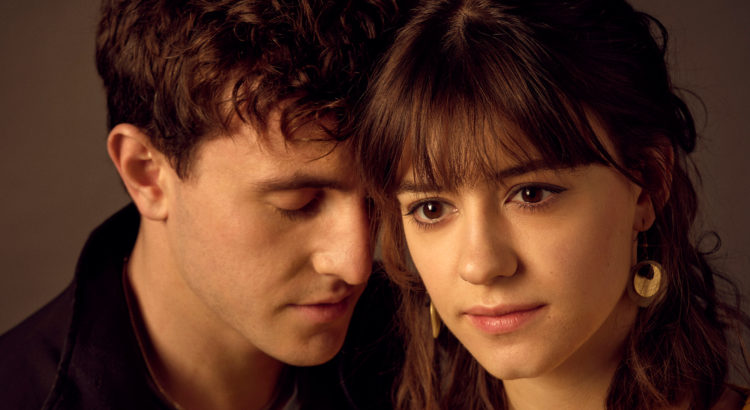
Daisy Edgar Jones and Paul Mescal, the main actors playing Marianne and Connell, are fairly new faces to the screen. The series is full of a myriad of close-up shots of the two actors, and several intimate, long, and artfully-shot sex scenes. The two actors’ chemistry on-screen is undeniable, and their performances ground the series in genuine human connection. The ensemble of actors that join them on screen deserves much praise as well; Aislin McGuckin, the actress playing Marianne’s mother, Denise, and Fionn O’Shea, playing one of Marianne’s boyfriends, Jamie, in particular, come to mind for their performances.

One worry I often have when watching screen adaptations of books is not even so much the accuracy of the script, compared to the events in the book, but rather if the on-screen version will be able to capture the same magic and essence of the novel it is adapted from. I think it is telling that Sally Rooney had a hand in writing all twelve episodes; that is to say, it shows. The series has the same careful, diligent, and gentle approach that the novel is so renowned for.

The charm of “Normal People” lies in the title itself. It is a simple story, about two imperfect people who always manage to find their way back to one another. It is shaded by the belief in “soulmates”, and elevates two ordinary characters to an extraordinary love. “Normal People” represents something the majority of the population wants; true, unconditional love. The series is an effective adaptation because it understands the heart of the story, and doesn’t try too hard to extrapolate unneeded details from the source material. It is a simple show; not particularly flashy or thrilling, but it is refreshing to me that it does not have to be. The simplest shots are oftentimes the most captivating. Rooney and the rest of the creative team train the audience early on to find the magic in the details, whether it be the slight raise of Marianne’s eyebrow or the way Connell wrings his hands and laughs when faced with a serious question. “Normal People” has done an exceptional job of parring down the series to exactly what is needed and nothing more.

In a world of endless streaming options, whether it be movies, podcasts, or television series, it can be overwhelming to make a choice of what to view or listen to. I would highly encourage those that are looking for something true, genuine, and delicate to consider taking the time to watch “Normal People” in its entirety. It does more than justice to the beloved novel; it illuminates it.
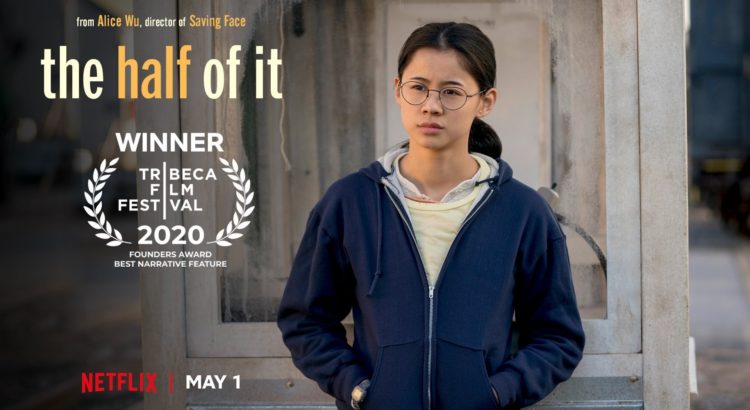
REVIEW: The Half of It.

The Half of It opens with Plato’s Symposium as Ellie recounts Aristophanes’ creation myth. It begins as a film of poetic quotes about love, of loneliness and endlessly searching for another half, built on the foundations of archetypes and classic storylines like this. This movie is another succession of Cyrano de Bergerac, another story about high school, another experience about the desperate longing of unrequited desire.But within these frames, the characters give nuance to adolescence in Squahamish. Ellie, Paul, and Aster – enveloped inside their own private worlds that rotate around the different constants of their lives – feel the pains of growing up in different ways. They experience the loneliness of being misunderstood or unseen, of wishing for a greater life that’s both intensely moving and frightening to them.

Ellie is created with particularly fine lines, strokes that paint a complex person. She’s characterized by her experience as being “other,” as an Asian-American immigrant in a predominantly white town, an atheist in a church community, a girl who is in love with another girl. These subjects are explored carefully, and there is no right answer to anything. Most of the moments where Ellie grows are quiet and simple, without the cinematic flair of teenage romcoms.

The film uses its created environment well, the town framing most of their interactions, as we see Ellie and Paul again and again in the same places, each layer of the story adding another dimension to Squahamish. Despite the repetition, the cinematography is quite beautiful at times; there’s the scene where Aster and Ellie swim in the groves, talking about intangibly vast things as they float in the water, light and trees all around them.

The second half of the movie veers into more complex character interactions. While the setup of the first half builds steady momentum, the denouement still has to tie together issues that are only brought up in the latter half. The ending has mixed pacing as a result of this, with some plot points that are resolved in a timeframe that feels natural, while others come on more suddenly.

Towards the end, there’s a tonal switch too, where the film ultimately decides it’s not about “getting the girl,” and while romance is important in The Half of It, the movie becomes more about the seduction of a happier life, the romancing of the start of their adulthood. Their unrequited desires move beyond an individual and towards the world and their futures.

The Half of It encapsulates the longing for another half, whether it’s a person, or a dream, or a life. Despite the fine details added to the characters and their surroundings, the film catches the universal feeling of the uncertainty in those seconds before you reach out and make your move into the world you’d envisioned for yourself.

Check out The Half of It on Netflix today.

REVIEW: Future Nostalgia

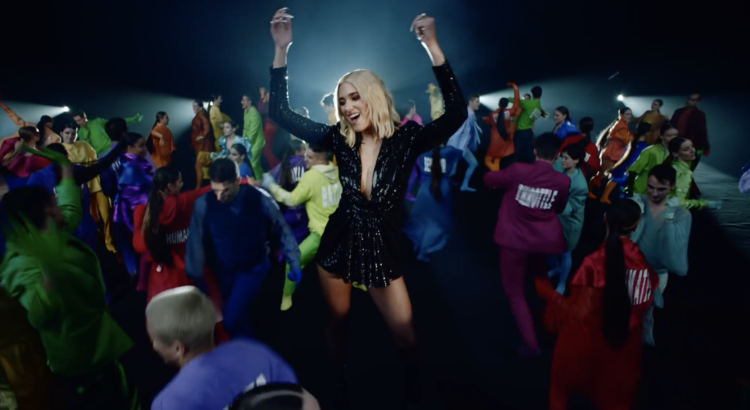
Around the time I first listened to this album, I saw this article discussing Dua Lipa’s 80s inspiration for the music video to her song “Physical.” That same modernized 80s feel is easy to see in the rest of her latest album, Future Nostalgia. Every song has the bright percussive beat, rounded guitar plucks, and electronic effects similar to those found in classic 80s songs. Similarly, there is little dissonance in the chords, giving the songs a welcoming, sunny feel. This is probably a good part of why I like this album so much. It evokes the same feeling as the actual 80s music that is my go-to for comfort food in music form. As I discovered while writing my review for Niall Horan’s album Heartbreak Weather (the title song of which, incidentally, was also featured in the article I mentioned above – I’ve clearly got a type), the presence of a moving base line also makes a major difference in my enjoyment of a song, and I can hear that in her songs. Her use of backing strings, perhaps most clearly seen in “Love Again,” provides added depth to the music. Musically, the songs in this album are all unique creations. They evoke this nostalgic, familiar feeling, yet the melodies and chord progressions are not generic at all. The songs surprise me as they develop, which makes the listening experience exciting.

I don’t have too much to say about the lyrics, since that’s not usually my focal point in music, but there are occasional phrases where she hits the nail on the head perfectly: for example, “I don’t wanna live another life, ’cause this one’s pretty nice,” she sings in “Physical.” Similarly, the song “Boys Will Be Boys” (though its martial music and social message seem out of place when the rest of the album is about the thrill of romance) is a concisely written summary of the still-daily struggles women live through, encapsulated in lyrics like “It’s second nature to…put your keys between your knuckles, when there’s boys around.”

My favorite part of the album, though, is the fact that all its songs are danceable. That, of course, is a function of the musical elements I wrote about above, but it’s worth a separate mention that the songs on Future Nostalgia make it impossible to listen passively. Like any 80s pop anthem worth its salt, these songs will make you want to move with them, even if you’re just sitting at your desk.

REVIEW: It Was Divine

“I’m not asking for too much/I’m asking the wrong motherfucker

Just ’cause we’re in love/Doesn’t mean that we’re right for each other”

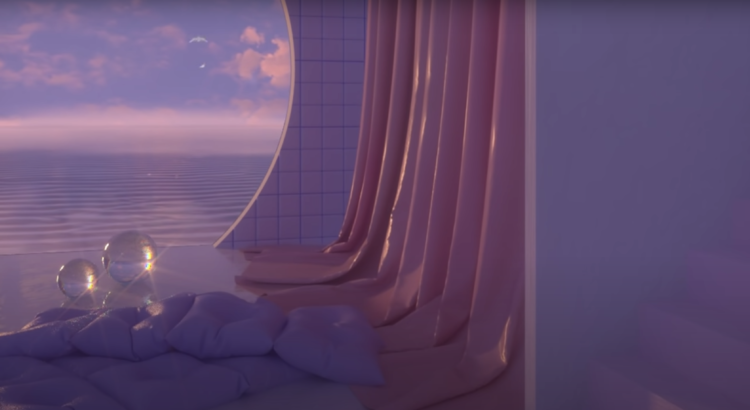
Alina Baraz croons this out of pure self-love in “To Me”, the emotional turning point of her masterful debut studio album, It Was Divine. If emotive self-transformation were a sprawling mansion, It Was Divine would be the blueprint – each track is an artfully composed mood in itself, while the album narrates a tumultuous relationship from start to finish.

Baraz introduces her R&B-soul dreamscape with “My Whole Life”, a romantic carpet-ride of a song that perfectly encapsulates the overwhelming wonder of finding ‘the one’. Backed by romantic string instrumentals, Baraz repeatedly choruses: “I can see my whole life when I’m with you”, as if transfixed by the extent to which she can imagine the entirety of their joint futures. From this track onwards, Baraz constructs a spitting musical image of early relationship paradise: songs in the album’s first half are lush with motifs like vibrant sunsets, distinctive perfumes, and lavish resorts. “Off the Grid” featuring Khalid reflects the effortless nature of being comfortably in-tune with one’s lover – Baraz and Khalid sing promises like “Say the word and you know I’ll follow/Off the grid in the El Dorado/Could be nice in the summertime/We could sit inside, in the silence”. According to an Apple Music interview, Baraz describes their frequent collaboration as “effortless” and “in sync”, as the song’s infectiously vibe-able chorus suggests.

“Can’t keep makin’ a home out of you/Just ’cause you’re asking me to

I’m not asking for too much (Can we do it over?)”

“To Me” and its subsequent interlude, “Memo Blue”, effectively transition the tone of It Was Divine from hopelessly-in-love to reprocessing love as an independent emotion. “Memo Blue” resembles an immersive ASMR experience – the plinking of piano keys awakens Baraz from her rosy paradisal getaway, followed by soul-searching lines “I can only meet you as deep as you have met yourself/I can only reach you from where you are”. Baraz follows these important realizations with the hypnotic “Who Got Me”, a song of pure self-love featuring springy drum beats and Baraz’s distinctive, ethereal warble. By the song’s third verse, Baraz seems to transcend any doubt expressed by “Who got me like I do/When all of this is through”. The instrumentals recede while her voice, a born-again bird surging towards the sky, swells into a higher key.

It’s only fitting that Baraz ends It Was Divine with “The Beginning”; the album commands a similar regenerative power that reflects Baraz’s intent to introduce a new chapter into her music. This album is pure, unadulterated art, and Baraz’s ‘divine’ energy ties the work together with not a song out of place. I would highly recommend adding It Was Divine to your music libraries and watching its superbly aesthetic lyric videos on Youtube.


REVIEW: Heartbreak Weather

Whether I’m cleaning the bathroom, doing the crossword, or deeply entrenched in a design, music is usually my constant companion. Niall Horan’s new album, Heartbreak Weather, has been one of the albums keeping me company as I wrap up the school year.

What I like about this album can be classified into two categories. First, the instrumentals are engaging enough to stand alone. The chords aren’t hackneyed – songs aren’t interesting when I can predict all the notes that come next without having even heard the song before – but they are still comfortable. The instrumentals are deeply layered, with only a light reliance on engineered sounds, making the music seem more genuine. Even in the slower songs, the simplicity of the acoustic guitar is shaded by the strings in the background. I’ve lost count of how many times I’ve listened to this album since I first took a listen in March, but each time I do there is something new I hear in the songs.  I realized, for example, while trying to articulate why this music appeals so much to me, that there is always a moving base line. Most songs, of course, have a base element, but some simply hold a note. In my favorite songs on Heartbreak Weather, however, the frequent use of a shifting base line gives the songs a level of movement that keeps me engaged.

Second, the lyrics are different. I often don’t pay attention to the lyrics in a song, but these lyrics discuss the nuances of relationships, not the generic moments or feelings we hear so frequently. For example, in “Bend the Rules,” the lines “Cause on paper you don’t break them, but it hurts so bad the way you bend the rules” addresses some of the grey area in relationships that I don’t see surface often in songs about love. As Horan has stated was his intent with this album, the songs explore all facets of relationships, in a variety of musical styles, making the album suitable for listening across many moods. Similarly, some of the imagery in the lyrics is wonderfully specific. For example, “Are you all dressed up but with nowhere to go” in “Put A Little Love On Me,” or “And yeah we were dancing, dancing to Bruno” evoke precise images that make the listening experience so much better.

Most of my personal music “classics” – the albums that feel like home whenever I listen to them – are albums from the 80s to which I grew up listening. There are few modern albums that have made it into that category so far, but Heartbreak Weather is well on its way to making it in.

REVIEW: Mary Ventura and The Ninth Kingdom: A Story

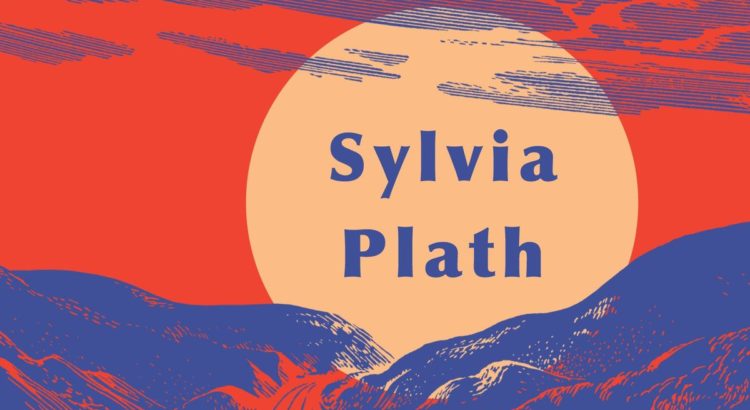
As much as Mary Ventura and the Ninth Kingdom bears a whimsical title similar to that of a fantasy bildungsroman, this short story, recently recovered from the Sylvia Plath archives, is anything but. Underneath Plath’s vivid narrative lie dark ideas that foreshadow the author’s first major suicide attempt in 1953, mere months from when she finished writing the story in December of 1952. Upon its completion, during which Plath was a 20 year old student at Smith College, Plath submitted the story to the Mademoiselle magazine where it was rejected and largely forgotten until its official publication last June by Harper Perennial. The story follows a young woman named Mary Ventura and her reluctant journey by train to an indeterminate location referred to as ‘the ninth kingdom’. Shrouding the ninth kingdom is an unsettling aura of mystery – it is both Mary’s final destination and the last station of the train’s travel north – and despite Mary’s various inquiries, the reader remains equally in the dark of what is to await her.

“There are no return trips on this line,’ the woman said softly. ‘Once you get to the ninth kingdom, there is no going back. It is the kingdom of negation, of the frozen will. It has many names.”

Though the story makes for a one-sitting read, Mary’s allegorical tale requires more than a once-over in order to extract Plath’s views on female independence, fate, and mortality. What strikes me as most interesting is how the story not only ends but begins with a sense of finality: from the moment Mary climbs aboard her train of fate, she crosses an implied point of no return. Mary’s parents dismiss her concerns and assert that “Everyone has to go away sooner or later”, plunging Mary into a seemingly inevitable state of oblivion and compliance. Following this, a secondary character whom is referred to only as “the woman” emerges; unlike Mary, the Woman has taken the train before and is knowledgable in the ‘rules’ which passengers must abide by – one could interpret her as the classic teacher in a bildungsroman, or even Mary’s innermost thoughts, personified. This is emphasized by how Plath’s attentive prose draws a stark contrast between the Woman’s comforting presence and the bleak, sanguine train environment. Plath paints Mary’s surroundings in smoke and blood, a foreboding palette interrupted only by moments of the Woman’s “tenderness” and gentle guidance. The colors orange and red seem to flood Plath’s imagined world; from the plush seats and red ticket stubs that match Mrs. Ventura’s “painted red mouth” to the ominous sun visible from the train window, an “orange color… deepening into red”.

Mary Ventura and the Ninth Kingdom is, as Plath affirms, a ‘vaguely symbolic tale’ – however, as with any allegorical tale, it’s difficult to ascertain what the ninth kingdom, the train, or Mary’s escape truly represent. Taken optimistically, the train and its oblivious passengers could represent a clockwork lifestyle from which Mary springs free out of sheer will, empowered by a refusal to accept a predestined path. However, interpreted with Plath’s battle with depression and early suicide, the train ride could represent a grappling with the truth of one’s impending doom, with Mary’s escape alluding to choosing premature death instead. With Mary’s premature suicide or train departure comes the ultimate irony – though freedom blooms from the ending’s springtime imagery, Mary is forever shackled with oblivion over her journey’s defining question: “But what is the ninth kingdom?”