
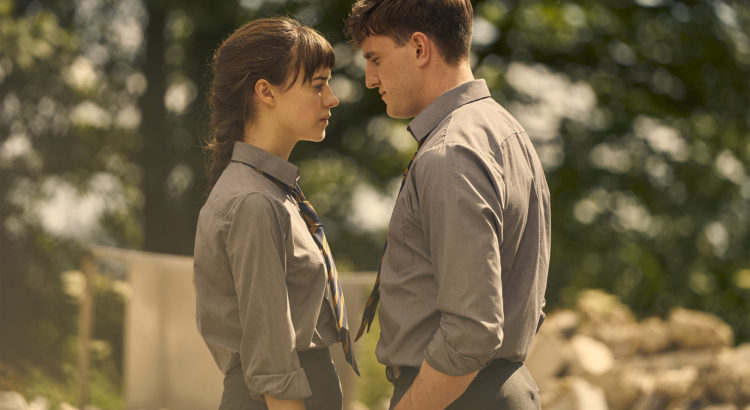
Based on Sally Rooney’s award-winning novel, “Normal People” is set to premiere as a limited television series April 29th on Hulu. “Normal People” follows Connell and Marianne’s intrinsic attraction towards each other through their high school and college careers. Rooney’s novel is fueled by passion, trauma, and the most unusual power struggle between the will-they-won’t-they couple. Daisy Edgar Jones plays the Marianne to Paul Mescal’s Connell. The entire series, comprised of twelve episodes, will be available to watch on Hulu Wednesday, April 29th.
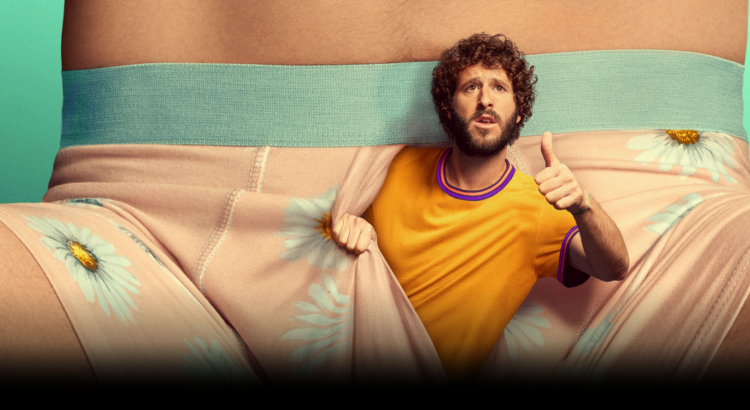
PREVIEW: Dave
This Hulu show is based on the life of 20-something-year-old Dave Burd, a semi-famous youtube rapper (aka Lil Dicky). Dave is constantly trying to get big in the rap world, but finds a lot of derailments and problems in his personal life. The show is inappropriate and pretty embarrassing, but absolutely hilarious, with lots of famous guest stars including Justin Bieber and Macklemore. The show began on March 4th, and the season finale is April 29th. Recommended for fans of Big Mouth, Sex Education, and, of course, Lil Dicky himself. Watch here:
https://www.hulu.com/series/dave-ac3a96f0-9614-46af-b524-f59c7d281946
REVIEW: New Waves
Lucas, the main character in Kevin Nguyen’s novel that released early last month, “New Waves”, is a twenty-something, unambitious, mess. Working as the sole customer support representative at tech start-up Nimbus, Lucas and his closest friend Margo, an engineer at the firm, spend the majority of their time outside of working drinking at mediocre bars and complaining about work. When Margo is fired from the company for her lack of “team morale”, Lucas and her hatch a plan to get back at the company by stealing all of their username information.
But what happens when the friend you commit a federal crime against your previous employer with is hit by a car? Lucas is left to pick up the pieces, and as he takes on a job at a competing tech firm, Phantom, curiosity gets the better of him. But diving into Margo’s history and search history leaves Lucas with more questions than answers about the person he thought was his best friend. Nguyen navigates with dexterity Lucas’ grief and the fallout of loss while leading readers down a mysterious trail into Margo’s past.
Lucas is not exactly the kind of character a reader is used to rooting for. He is lazy, messy, and at times cruel. He has no real dreams he is pursuing. He only moved to New York City to escape working at his parents’ bed and breakfast back home in Oregon. His only real friend is Margo, and even the details and seriousness of their relationship is shrouded with a certain apathy. It’s unclear whether or not their friendship continues because of genuine connection, or pure convenience. After her passing, and a handful of discoveries, Lucas admits he was in love with Margo, “but what if I could love someone and not want to f*** them?”. This is where Nguyen falters.
The admittance comes a little over halfway through the novel. In some ways, it’s incredibly satisfying. From the beginning of my reading of the novel, I wondered if the matter would be addressed. While I was glad to get an answer, the minute I had it I realized I would’ve been better off without it. Lucas’ love for Margo is most interesting when it exists as a Schrodinger’s cat; it both exists and does not exist until this moment, and the novel is better off without Nguyen’s direct address of it. By doing so, Nguyen reveals the primary issue with his novel; it lacks any form of internal engine. Anything interesting in the novel conveniently happens to the characters, as opposed to any action happening based on the choices the characters make. And while it is engrossing initially to see Lucas flounder after the death of his beloved friend, it is apparent fairly early on that the character is aimlessly wandering through life, and will continue to do so for the foreseeable future. While Lucas does grow somewhat of a spine through the course of the book, it misses the mark for me. My desire for Lucas to grow, to change, to try is never fully met, despite what appears to be Nguyen’s careful cultivation of this feeling in readers.
“New Waves” is far from bad. Nguyen’s writing is admirable, and his form and integration of technology hit a mark that many “modern” books fail to do. But at the end of the day, “New Waves” is a story about a whole lot of things happening to someone who doesn’t care enough to let it alter their outlook on life.

REVIEW: Before Love Came to Kill Us
If Jessie Reyez’s Before Love Came to Kill Us was a quarantine essential, it would be a serrated knife used to saw through a loaf of thick-crusted, homemade bread. Released this year on March 27, Reyez’s debut studio album wastes no time ripping into the artist’s grittiest emotions and slicing away with expansive, genre-bending gusto. The versatility of Reyez’s vocals and unapologetically blunt lyricism are present throughout the album, with sounds ranging from the swaggering, synth-infused “Ankles” to the reproachful Spanish ballad “La Memoria”. Though colored by a multitude of musical genres, each song seems to inflect different emotional responses to the messiness of love and the realization of one’s own mortality.
Reyez introduces her work with a distinctive vulgarity, declaring “I should’ve fucked your friends/It would’ve been the best revenge/For the fire that you started”, before continuing to saw away with impassioned remorse at the memory of her ex-lover. Reyez’s raspy declarations are accompanied by the almost ironically soft tones of a piano and string quartet, reflective of how the song’s mood glides through extremes. The singer slips between the fiery indignation of being “sick with feeling like I deserved better” and the quiet jealousy of “if I blow your brains out, I could guarantee that you’ll forget her” – delivering unforgettable lines with no semblance of mercy.
Before Love Came to Kill Us includes several of Reyez’s previous releases – like raw 2017 single “Figures”, and”Imported”, a slinky R&B collaboration with 6LACK. Though the tracks fit in thematically, with “Figures” cracking down on post-breakup hurt and “Imported” commenting on immigration and casual love, something about each seems to disrupt the album’s emotional flow. Perhaps the two singles flavor differently in emotional maturity – while the rest of Before Love Came to Kill Us exudes loud confidence even while tackling great insecurity, “Figures” and “Imported” display vulnerability more blatantly.
One of my favorites from this album is “Ankles”, a gloriously self-assertive production drawing upon both choir and trap sounds that make the listener feel as if they were curling their lip at their own unsavory ex. Reyez chants along with the instrumentals by continuously bearing a disparaging truth about her ex’s future: that regardless of who he finds, “these bitches can’t measure up/To my ankles/Levels? (Nah)”. She does this while bearing the truth of her own realizations – that the ex and their relationship, in all its cheating toxicity, had managed to string her along with guilt – not once, but twice. Reyez finishes her masterful rampage surrounded in ticking drum beats and the last strains of a choir, asserting that like her ex’s future prospects, he is “backwards, 2 feet/Shallow, too real”.
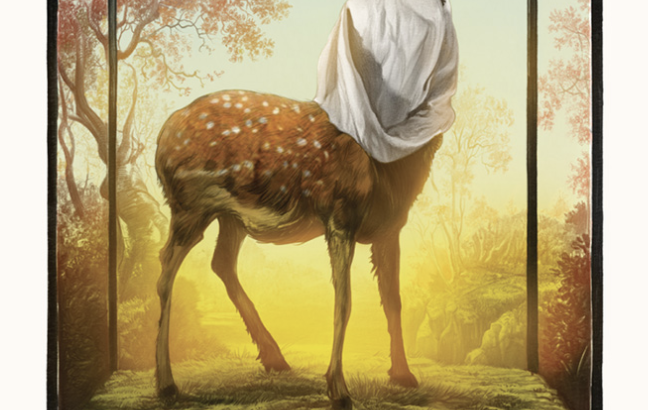
REVIEW: The Killing of a Sacred Deer
I always try to go into movies (and, well, most other events in my life) completely blind–I hate to watch trailers or read plots; just knowing basic facts ahead of time, like which actors are in the cast, upsets me. This has become a self-enforced law in virtually all areas of my life. So it wasn’t until a few minutes in that I realized that Colin Farrell, the very man who enchanted me in The Lobster played a main character (I found out later that the director was also the same in both movies). Exactly what I didn’t want to happen happened then: based on this new knowledge gained early in the movie, I began forming expectations. When I first watched The Lobster last year, alone in my dorm room in early spring just before the sun went down, I was floored. After it ended, I walked outside and hung onto a stop sign to keep from blowing away, though the air was still.
The result of comparisons like these is almost always disappointment. To regard a piece only as a continuation of a body of work, rather than its own autonomous thing which works in cooperation with itself, is a mistake that typically cannot be undone. This is probably why I didn’t exit my house at the end to clutch at a telephone pole or something. In fact, I forgot how it made me feel almost directly after, which is completely different from my relationship with other movies. 
Still, at some parts I was taken back to the old feeling, that sick gut high-pitched thing stuck somewhere in a nasal or orbital cavity when your mind bends a little painfully. I got this towards the end, as the children begin competing to be spared. Nothing else was starkly shocking in the same way. Not when Steven forces donuts down his son’s throat, or Anna flatly suggests it’s only rational to kill one of the children. When nothing really strikes, there is nothing to grab onto, nothing that connects us to the story.
Nicole Kidman, despite her brilliance in drama, was out of place in this movie. She thrives in hard-hitting, emotional film, not parts where she needs to seem totally unfeeling. Similarly, the presence of Alicia Silverstone got my goat at first, until I separated her from her Clueless days: as she’s grown up, her glazed-eye stare has shifted from strangely flirtatious boredom to  something closer to slightly-conscious paralysis. The way her face moves can be disconcerting, bringing about an inexplicable sense of panic in my chest. And all three of the kids were perfect for this kind of acting, as all children are.
 It was also clear the crew put thought into how they played with lighting. Much of the time, scenes were engulfed in golden light, sometimes artificial, but warm all the same. Maybe it was just the presence of Kidman, but it gave me some Eyes Wide Shut sensations. Rather than acting as a contrast to the coldness of the characters, it invited me into readily accepting the social norms of the world Lanthimos creates.
The movie wasn’t bad, but it was forgettable. Instead of still thinking of the questions it raises (it is morally wrong to have a favorite child? Who is most responsible in medical malpractice situations? What kinds of guilt can we handle, and how much?), I’m just flashing back to Martin messily eating spaghetti with a white shirt on. Unfortunate, maybe, but it’s the truth.
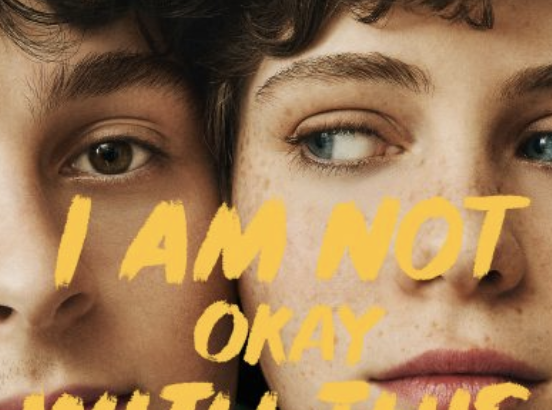
REVIEW: I Am Not Okay With This
Despite a general acceptance of non-heterosexuality in modern media and society, queer characters are often placed in plots that are only focused on their ~journey of self-discovery~ or in supporting roles that stereotype and tokenize them. So often, they are reduced to their sexuality, communicating to the audience that this is the only part of their identity worth mentioning. Surely, it’s important to feature queer characters in media, but every story can’t only be about their struggles with unaccepting parents/religion/schoolmates/colleagues/whatever. We normalize queerness by incorporating it in media in a wide variety of ways. 
So I was overjoyed to find that this series has a queer star who spends some time recognizing her sexuality, but is primarily preoccupied with a full storyline about her new mind powers and their possible connection to her late father.
Based on Charles Forsman’s comic of the same name, the series honors the original work, often taking sections of text into the script verbatim. I’d say that the writers could have taken some more liberty with dialogue, which could be lacking in originality sometimes. The media move from comic to television necessitates this; while comics with a minimalist art style depend on fast-paced conversation between characters to drive the story, live action dialogue is generally less important. Makers of television are freer to insert some more artistry in angles, lighting, wardrobe, delivery and content of lines. 
A lot of talented people worked on the series: people responsible for Stranger Things and The End of the F***ing World, actors who starred in the updated version of IT. But if I know anything about logical principles, I know that past performance is not indicative of future results. I Am Not Okay With This is an unfortunate piece of evidence for that rule.
Along with the lacking dialogue, there were too many illusions to late 20th century pop culture, like The Breakfast Club-esque episode and the constant Carrie references. While I understand the the entire plot is literally another reboot of that classic Stephen King story, they could have strayed a little farther, style-wise. The spring fling dress is even similar to the one Sissy Spacek wears in the original movie, pale pink satin with spaghetti straps. She does the whole walking home from the dance in the middle of the road covered in blood thing, and she doesn’t add to it. If you’re going to pull so directly from classic works, you need to do something that differentiates it from the original, pushing it farther, bringing into modern times so it can be understood within current social politics.
It’s sad when the arc of creativity starts to decline for previously awed artists. This feels like the desperate reaction to writer’s block that should’ve been given some more time to simmer. Still, most folks are wont to continuously seek out media that gives them the same kind of satisfaction as they’ve experienced in the past. So, at this psychological level, the series does a great job. Though that feels like some kind of exploitation, it fills a demand. I’m not sure I’d call it art, though.
