REVIEW: Hänsel und Gretel

Photos are provided by Peter Smith Photography

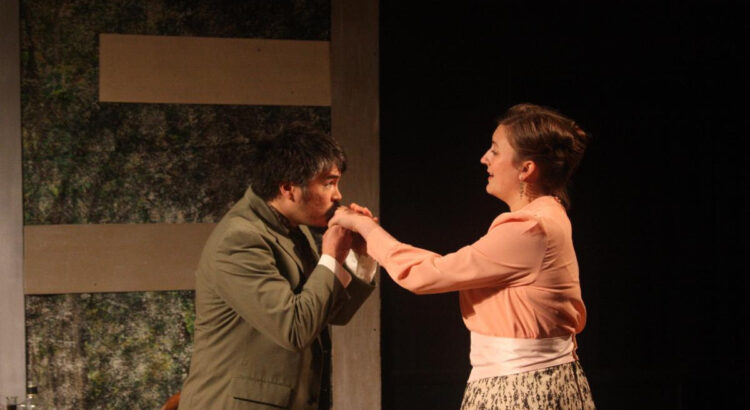
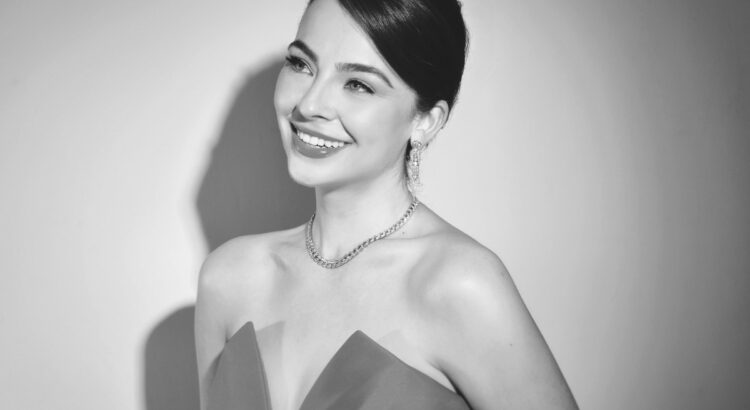
From November 14th – 17th, students from SMTD’s Department of Voice & Opera presented Hänsel und Gretel, a whimsical and comical opera inspired by the Brothers Grimm fairy tale. On opening night, I walked in expecting a darker, more traditional retelling. Having recently read the original story for my English class, the haunting imagery and fast-paced plot were fresh in my mind. What I witnessed instead was a playful and modern reinterpretation that completely reimagined the tale I thought I knew. 

The opera began with Hansel and Gretel doing chores at home while horsing around. At this point, there was no dialogue; instead, the introduction was driven entirely by the music, with decorative trills and glissandos setting the tone. This lack of narration effectively established the scene, suggesting their actions were simply part of their daily routine. What stood out to me was the siblings’ dynamic, which differed from the original story. In this version, Gretel had more depth and independence. For instance, she had some attitude, and the two siblings squabbled early on. By the end, their tumultuous relationship evolved into a partnership where they worked together to overcome their struggles, making their character arcs feel more rewarding.

I was truly amazed by the quality of the music, particularly Hansel and Gretel’s vocals. Their voices projected clearly, and their vibrato and dynamics added a compelling layer to the storytelling. The pit orchestra, which was noticeably larger than those in musicals I’ve seen, played a pivotal role. Their synchronization with the actors heightened the emotional impact of the scenes, particularly in the introduction, and their technical consistency throughout the two-hour performance was impressive. 

The set designs were among my favorite aspects of the production, particularly in Act II and Act III, when the visuals became increasingly surreal. The TVs hanging around the stage were a quirky and creative touch that enhanced the eerie atmosphere of the woods and the chaotic energy of the Witch’s house. By displaying images like green mist and blinding lights, they played a crucial role in establishing the mood of each scene. The Witch’s house, made entirely of brightly branded cereal boxes, was both unexpected and amusing, providing a modern twist on the traditional gingerbread aesthetic.


The Witch was undoubtedly my favorite character. From the moment she appeared on stage, I was completely captivated by her eccentric and flamboyant costume. It was a riot of bright colors and peculiar accessories—such as eating utensils—and cleverly mirrored her chaotic personality and desire to consume the children. Her absurd and unpredictable presence made her scenes incredibly fun to watch, and I found myself smiling throughout. The audience shared my feelings, as frequent laughter echoed during her antics. 


Overall, this was an enjoyable performance. The chaotic and playful nature of the plot kept me engaged, especially when the production deviated from the original tale in surprising ways. The opera felt like a magical adventure that breathed new life into a familiar fairy tale. However, since the entire performance was sung in German, I often had to look away from the stage to read the subtitles, which detracted slightly from my experience but didn’t overshadow the production’s many strengths. I highly recommend this production to anyone who enjoys fairy tales and is open to seeing them reimagined in unexpected and creative ways.
REVIEW: 33 Variations

December 6 | 11:00 pm | Newman Studio


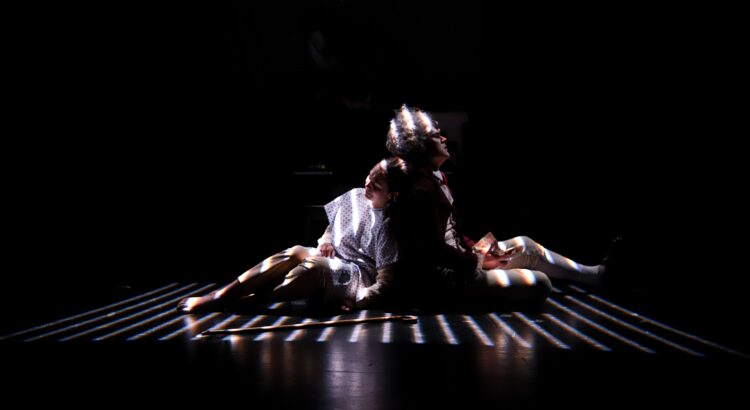
Humans are naturally doused in curiosity. We’ve discovered the depths of Earth’s oceans while making our way to parts of outer space we probably were not intended for. The desire for complete discovery exists on both the largest and smallest of scales. A riling little mystery from the composer Ludwig von Beethoven’s expansive musical life has enchanted playwright Moisés Kaufman, writing a play of the same name: 33 Variations, in which he sends leading lady Dr. Katherine Brandt on her own expedition to uncover the reason for his insist creation of the tune.

In 1819, music publisher Anton Diabelli commissioned Beethoven to write a short variation of his waltz for a larger publication. Beethoven found it pedestrian and blew it off, but at some point, something intrigued him about the tune. This detail left out of history led him to ambitiously compose thirty-three variations on the waltz over the last few years of his life.

What changed? Why did Beethoven spend the height of his compositional years on a piece considered elementary?

Ella Saliba as Dr. Katherine Brandt.

Modern-day musicologist Dr. Katherine Brandt (Ella Saliba) travels to Bonn, Germany, to study Beethoven’s manuscripts from the 1820s. Clara (Aliyah Douglas), her restless daughter, disapproves of the journey due to her mother’s declining health from ALS and eventually joins her in Europe. The two often exchange fiery discourse, “You don’t love anything that you can’t understand,” Clara jabs. Their rocky relationship is exacerbated by Clara’s lack of career commitment and her cumbersome relationship with her mother’s nurse from the U.S., Mike Clark (Landon Wouters, whose character is hilariously inappropriate & full of laughs).

The play shifts between 19th-century Vienna and the present, while Beethoven (Nick Aiello) struggles to pay rent and faces his own ailments. His secretary, Anton Schindler (a charming James Parascandola), converses back and forth with Mr. Anton Diabelli (Marcus Byers) over four years while Beethoven writes his variations.

Through a plot with cadences that come off more bleak than cheerful, there is an abundance of humor woven into Kaufman’s hefty script. Aiello, Byers, and Parascandola are responsible for that—the three’s hilarious riffs were plentiful and cheeky. Perhaps nudging to the fact many of Beethoven’s variations do undoubtedly poke fun at Diabelli.

A young Ella Saliba earnestly waltzes through the life of the much more mature Dr. Katherine Brant. As Ms. Saliba explored Katherine’s ever-consuming and impassioned journey onstage, what the audience found was a deeply impressive, humble, and moving performance—resulting in a very misty curtain call.

James Parascandola and Marcus Byers.

One of the most exceptional parts of the play is the live pianist performing the “33 Variations” in real time. I would be remiss not to point out pianist Eric Head’s sensitive performance. This notoriously challenging work was greeted with poise from Head, providing an irreplaceable vibrance to the atmosphere.

Kaufman’s play may occasionally feel oversaturated with detail, but I was transfixed by his sentimental characters. The parallels between these two human lives across more than a century are deeply clever. Life’s ever-ticking clock is often responsible for igniting humanity’s obsessive quest for meaning in our short engagements on Earth, a theme poignantly embodied by Mr. Aiello and Ms. Saliba. I do hope Dr. Brandt found the answers she wanted, for she at least discovered the beauty nestled within the ordinary.


Images thanks to Basement Arts. 

REVIEW: Wicked

Good news! Wicked, the film adaptation of the first act of the smash hit Broadway musical of the same name, is wonderful.

Directed by Jon M. Chu, Wicked is a prequel to The Wizard of Oz. Based generally off of the novel by Gregory Maguire (Wicked: The Life and Times of the Wicked Witch of the West; unlike the rest of involved properties, decidedly not PG), as well as the 1939 movie, Wicked centers around Elphaba (a standout performance by Cynthia Erivo), who will become the Wicked Witch of the West, and Glinda (Ariana Grande), who will become the Good Witch of the North.

Wicked is a movie-musical, and unapologetically so. The chorus is vast and excellent. The choreography (by Christopher Scott) ranges from crisp and upbeat to gentle and heartfelt; and, when it’s happening, there’s a good balance between close-up shots and larger crowd shots. All of the songs from the Broadway musical’s first act are included, though almost all have been expanded (one, in service of a fun, fan-service cameo, so much so that it essentially constitutes a new song). The sets and costuming are minimally CGI, vast, bright, and colorful. Like many musicals, the whole effect can be a bit campy, but it’s not garish, and it doesn’t shy away from darker aspects of its plot.

The movie opens in the “present day” of the Wizard of Oz, after Dorothy has killed the Wicked Witch. Glinda arrives in her bubble to a town in Munchkinland, whose residents are rejoicing that the Witch has just been killed (“No One Mourns the Wicked”). After a short flashback detailing Elphaba’s birth, Glinda confesses that she did, in fact, know the Witch: the two went to school together, at Shiz University.

Grande is at her weakest musically in her opening number: this is the most “legit” (pseudo-operatic) piece for Glinda, and Grande lacks the technique to pull it off. Her voice sounds overly thin and weak, particularly on the higher notes. Presumably to compensate, the autotune and sound editing, generally tasteful, are palpably stronger here. Grande does make a much better showing for herself in the rest of the film, though. Most of Glinda’s singing is more pop than classical, which Grande does with aplomb; her performance in “Popular,” an upbeat number in which Glinda decides to give Elphaba a makeover, more than makes up for “No One Mourns the Wicked.” Grande also has impeccable comedic timing, aided by her sidekicks Pfanee (Bowen Yang) and Shenshen (Bronwyn James), and her chemistry with Erivo is impeccable. Erivo is the stand-out here, with a wry, rich, nuanced portrayal and a glorious singing voice. Her “Defying Gravity,” which ends the film, is a show-stopper in more ways than one.

While there are darker political machinations happening in the background, the heart of the film is Glinda and Elphaba’s relationship, and its slow shift from enemies to friendship. It feels real, and it’s refreshingly imperfect. They hurt each other, but there’s a sweet and genuine core to it, which heightens the stakes when the two must eventually break apart to Good and Wicked. 

REVIEW: Uncle Vanya

December 13 | 7:30 pm | Ann Arbor Civic Theater


Chekhov’s stories task audiences to examine the challenges of the human condition. Uncle Vanya’s troubles manifest in a more ironically despairing way. The production, which ran for a second weekend at Ann Arbor Civic Theater last Friday, centers on the near-penniless Ivan Petrovich Voynitsky (better known as “Vanya”), who claims to have the most troubles—at least he thinks so. His extended family joins him at his late sister’s estate, only to share his dissatisfaction with life. How does a play doused in apathy preserve itself over a hundred years? And who is paying the mortgage?

Vanya’s (Trevor Maher) loathing is interrupted when his brother-in-law, the ex-professor Alexander Serebrakov (Bryan Shane), arrives with his beautiful new wife, Helena (the stoic Nicole Arruda). She becomes the object of affection for both Vanya and the household doctor, Michael Astroff (a spritely Joseph McDonald). The two men are infatuated with Helena, while she harbors only ambiguous feelings for Astroff. Yet she grapples with an understated resentment toward Alexander (Mr. Shane, who led a stately and demanding performance).

While Dr. Astroff and Helena shared coy exchanges, the spark of love did not burn bright for the young Sonia (Mackenzie Finley), Vanya’s niece, who had a seemingly teenage infatuation with Dr. Astroff. Though he flirted with the idea of her affection, the only make-out sesh occurred between him and Helena (unknowing to Alexander, of course). All this romantic ruckus left “Waffles” (Larry Rusinsky) and the family nurse Marina (a charming Wendy Wright) as the standing symbols of support and consistency.

Trevor Maher as Vanya.

As Ms. Wendy Katz Hiller’s director’s note acknowledged, productions of Uncle Vanya are appearing all over the country: The Broadway Revival starring Steve Carrell ran last spring, and Andrew Scott’s one-man Vanya from the West End is culminating in a Broadway run next spring. In addition to those big productions, I’m confident you could find at least one Uncle Vanya in every major city across the U.S. Vanya’s existentialism and exhaustion are wrapped in a search for purpose, creating a character who can be frustratingly familiar. The beauty of Chekhov’s text lies in its sustained relevance across decades, revealing universal feelings that make the production feel timely at many points in our history.

The usual two-and-a-half-hour runtime was whittled down to a crisp 95 minutes by Ms. Hiller—a choice greeted with narrative clarity for modern audiences. We see a succinct plot line, only at the expense of some poetic dialogue (which works for me!). Though, I found myself pining for a dramaturgical deep dive into performance. Historical context enriches a story for me, especially as this work shares many stifling thematic elements with its Chekhovian siblings, The Cherry Orchard and The Seagull (as far as depressed people living under deteriorating wealth go).

Vanya’s inner turmoil brings a bittersweet resolution where life continues unchanged despite everyone’s despair. I begged to feel hope from this story, just as I often do in our modern world, but the only condolence I received was, “We shall rest!” from the optimistic Sonia. Though these characters feel bleak, the curtain call reminded me that hope does exist in the resonance of community-driven theater—where timeless art can be found in every nook and cranny of Ann Arbor.


Photos thanks to Ann Arbor Civic Theater. 

REVIEW: Stella Cole at the Blue Llama

December 15 | 8:30 pm | Blue Llama Jazz Club


There are few jazz vocalists more in demand than Stella Cole, an up-and-coming jazz singer from New York City who’s got as much glitz and glam as she’s got vocal chops. The Blue Llama Jazz Club welcomes her for the first time on the winter leg of her US tour.

Ms. Cole’s silky voice will surely transport you into a newly colorized film from the 1940s. With a sound reminiscent of The Golden Age of Hollywood, it’s no secret that Ms. Cole admires the aesthetic. The 25-year-old gained popularity during the pandemic singing jazz standards and Great American Songbook tunes on TikTok. Today, she boasts over 12 million likes on the app and nearly 770k followers on Instagram. Her debut single was released with Scott Bradlee’s Post Modern Jukebox in 2022, and now Ms. Cole has two studio albums: the newly released “Snow!” and the self-titled “Stella Cole”.

Her trio included Michael Kanan (piano), Mikey Migliore (bass), and Henry Allen-Barfield (drums). She began her set with the Jerome Kern and Johnny Mercer tune “I’m Old Fashioned,” which was a perfectly fitting introduction considering what followed.


There was no shortage of Christmas magic from Ms. Cole either. “White Christmas,” “I’ve Got My Love To Keep Me Warm,” and “It’s Beginning to Look A Lot Like Christmas” (to name a few) all made it into the set.

“I’m singing on the “Today” show later this week…” she said, introducing the next tune. “Is it okay if this is a practice run?” Audience members smiled, knowing they had received a first glance at her solo version of “Snow!”.

Her set was modest, focusing on her sumptuous vocalism as she performed primarily “Songbook” tunes in a fairly traditional style. The Songbook tradition can be stifling to some modern jazz musicians, but Ms. Cole fully embraced the beauty and relevance of that tradition in her more “straight-ahead” performances.


“The Boy Next Door” was one of my favorites of the set, plainly revealing her influence from the great Judy Garland. The ghost of the Hollywood star surely beams over Ms. Cole’s studio recording of the tune, as well as “Over The Rainbow,” which is featured on her first album. Ms. Cole’s suggestive tribute made me consider the history of American music and its influence on our modern times—Songbook tunes pop up all over modern jazz records. They are taught thoroughly in academia, and holiday songs released over 60 years ago play on the radio year after year. The pop music of America’s past carries into the future, thanks to its beautiful melodies and heartwarming lyricism, preserved through dedication to tradition.

“So many people of my generation aren’t familiar with these songs, and I’m excited about the opportunity to introduce this timeless music to a new audience,” Ms. Cole says. There is an endurance behind jazz’s relevance, which Ms. Cole is clearly devoted to preserving.


Images thanks to The Blue Llama Jazz Club. 

REVIEW: As Long as the Lemon Trees Grow – The Play

On December 6th, at 5 PM, the Ford Collaboratory in the Mardigian Library became a portal to war-torn Syria through the powerful stage adaptation of Zoulfa Katouh’s As Long as the Lemon Trees Grow. The story, which follows Salama Kassab’s heartbreaking journey through the Syrian civil war, was beautifully translated into a theatrical experience

The play centered on Salama (played by Leila Haddad in a standout performance), a former pharmacy student turned volunteer medic. Leila captureed Salama’s internal struggle with raw, unflinching authenticity. Her portrayal of guilt, hope, and despair—especially in moments of silence—felt like a masterclass in restraint. Haddad’s ability to convey emotion, especially in the quieter, more introspective moments, was mesmerizing.

Image Courtesy: Leila Ghaznavi

However, where the play truly shone was in its staging. Director Amira Shafiq, President of the Theater club, created an intimate, immersive experience that makes the audience feel as though they’re walking alongside Salama in the ruins of Homs. The use of minimalist sets striked a balance between realism and surrealism. The lighting design deserved special mention, with its stark contrasts between the warm glow of past memories and the cold, unforgiving present.

One of the play’s most intriguing choices was the personification of Khawf, Salama’s manifestation of fear. Actor Omar Darwish gave Khawf a chilling yet oddly sympathetic presence. His interactions with Salama—at times antagonistic, at times comforting—perfectly captured the inner turmoil of living through unimaginable horrors. These scenes, while impactful, occasionally slowed the pacing slightly, but they were essential in depicting her mental and emotional state.

The dialogue, much of it drawn directly from the book, was both poetic and raw, though some lines feel better suited to the page than the stage. While some of Salama’s reflections felt a bit expository when spoken aloud, they still carried the emotional weight of her journey.

“Perhaps this could have been remedied with more physical storytelling or additional silences to let the weight of the words sink in,” added Alexis Mohammed, a student at the University of Michigan Dearborn.

The supporting cast also delivered heartfelt performances. Yasmin Agha brought warmth and strength to the role of Layla, Salama’s pregnant best friend, though her limited stage time left her arc feeling somewhat underexplored. Karim Al-Rashed, as Salama’s brother Sami, offered moments of levity and hope, with his final scene leaving the audience in stunned silence.

One of the play’s most powerful moments was the climactic hospital scene. The chaos of wounded civilians flooding in, enhanced by overlapping shouts, frantic movement, and a pulsing soundscape, left both Salama and the audience breathless. It was a visceral reminder of the relentless toll of war.

That said, the play did struggle to capture some of the novel’s nuance, especially in depicting Salama’s quieter moments of healing and growth. The ending, while emotionally charged, felt slightly rushed, leaving the audience including myself, yearning for a deeper exploration of Salama’s transformation.

As Long as the Lemon Trees Grow is a story that demands to be told, and this stage adaptation did justice to its poignant message. With stellar performances, innovative staging, and a deeply personal tone, the December 6th performance was more than a play—it was a call to bear witness, to empathize, and to remember.