
REVIEW: Mariachi Vargas de Tecalitlán

Mariachi Vargas de Tecalitlán’s Friday evening performance at Hill Auditorium was a lively and colorful show full of life.

It was obvious that it was going to be a great performance right from the opener, which featured Mariachi Nuevo Santander (2019 National Mariachi Group Competition High School Division winner) and Ballet Folklórico de Detroit. The set included the two groups working together, with Mariachi Nuevo Santander providing the music and Ballet Folklórico de Detroit performing Mexican folkloric dance. The result was a visually and aurally stunning treat for the audience. As soon as each song finished and another was beginning, a new small group of dancers took the stage, resulting in seamless transitions and no break in the performance’s energy. Although it was the opening set for the evening’s performance and I knew that more music was to come, I found myself almost disappointed when Mariachi Nuevo Santander and Ballet Folklórico de Detroit’s performance time was up!

Similarly, Mariachi Vargas de Tecalitlán’s set (which was performed without intermission) did not disappoint. In addition to engaging the audience with their music and with invitations to clap and sing along, they are virtuosos in their craft. Perhaps most impressive is the fact that Mariachi Vargas has no performers that just sing – instead, the vocals for all their songs are performed by band members who trade out from the instruments that they are otherwise playing, proving their musical talent in multiple areas. Mid-song, one small group of performers would trade their violins or guitars for microphones, while the vocalists up to that point would return to their instruments. I also enjoyed the energy of the audience (which seemed to be nearly full). For me, it is as much the experience of witnessing a performance with hundreds or thousands of other people as it is hearing live music that makes concerts, rather than YouTube or recordings, meaningful and worthwhile.

The only issue that I had with the performance was that Hill Auditorium is not exactly suited for the acoustic environment created by microphones and large speakers. Though its magnificent acoustics make it easy to hear every instrument at an orchestra concert, Mariachi Vargas de Tecalitlán and other ensembles that utilize similar equipment present different auditory demands.  There was a large black curtain hanging behind the performers, which presumably helped to deaden the noise some, but unfortunately, the sound still seemed to be muddied and too loud at times (though this could have been a product of where I was sitting and may not have been a problem in other parts of the hall). That said, however, I still greatly enjoyed the performance.

The encore was, in my opinion, the best moment of the entire night, as it featured Mariachi Nuevo Santander singing alongside the musicians of Mariachi Vargas de Tecalitlán. It was a fitting close to a night of great music.

REVIEW: Sugartips Acoustic Duo

There isn’t nearly enough gentleness in the world. Everything is so loud all the time, the noises conflicting with one another and the angry fractures clashing. Background motivations seem to ruin the chance at pure intentions of bringing about joy. No one person or group or ideology is really blamable, though it would be easier if there was. Luckily we all have the opportunity to be soft and kind–we simply have to take it.

Even though Sugartips Acoustic usually does not deal in gentle tunes, the ambiance they create in every establishment they visit is one of fine relaxation. They play the classics, things everybody would know and feel comfortable singing along with a roomful of strangers. The experience is kind of like attending the wedding of a third cousin: maybe you don’t know many people, but you do know you’re somehow related to them all, however superficially. Also a lot of people are tipsy, and singing off-key to “Sweet Caroline.”

The pair performing in 2011.

Sure, Greg (the lead vocalist) could be a little flat, and he sometimes struggled to hit the higher notes, but perfect tone and pitch isn’t really the point. Greg and Ryan play music for the sake of it: to entertain, to enlighten, to fill a room with bubbling melody. Since the beginning of all music, this has been what it’s about. It is gentleness that drives them, and what has made them successful since their beginning way back in 2009.

It would be nice to see them perform a greater range of music, and maybe some more of their own compositions. I was excited to hear that their first ever original EP will be released this month! I’m glad that they are finding their own sound after such a long time experimenting with the music of others. This certainly isn’t easy to do; although I’ve been playing piano for years, the mere thought of composing anything myself is incredibly daunting. In all this time I’ve written almost nothing, even though I’ve played everything from Chopin to Adele and consider myself a creative person. There is something in all music makers that makes us immediately compare ourselves to the greats, even though they started from similar positions. I wish the Sugartips duo the best of luck in the next steps of their careers.

You can check out their music on Soundcloud, Youtube, or Facebook.

REVIEW: Oscar Nominated Shorts – Live Action

I’ll be going through and leaving my thoughts on each of these, though I’d like to say that it is really a shame that “The Neighbors’ Window” won. It was truly the least important and most cliché short of all five. That said, seeing these shorts in a theater setting was really unique and enjoyable and way more immersive than I think possible at home when you’re dealing with short film.


“The Neighbors’ Window”
Marshall Curry

As previously stated, this short was definitely the weakest of the bunch. It had this whiny quality throughout, that specific privileged metropolitan 40-year-old why-did-I-have-kids whining that I am sick of trying to identify with. Of course, the point at the end is for these whiny people to realize how lucky they really are but overall I just felt like the point is no one can be happy. The whole cancer element as a way of introducing hardship into the 20-something couple’s life made me roll my eyes. The visuals of shaving one’s head and getting a hospice bed are just so on the nose I had to wonder if this was a satire.


“Nefta Football Club”
Yves Piat, Damien Megherbi
This is the short that I assumed would win. It was clever, well-paced, and actually made my theater laugh out loud. In contrast to the heavier themes in this category, this short felt like a lighter way to go about serious issues. I highly recommend seeing this one, as it is thoroughly enjoyable both on its surface and in terms of technical cinematography and performance.

“Saria”

Bryan Buckley, Matt Lefebvre
This short was definitely hard to watch. I appreciated this story being told, and the way the camera travels throughout the story was impressive at times. I do feel like there was something missing from this, though. Maybe it was because the setting was something I’ve never seen before or because the ending felt like such a binary evil (though it was, but it verged on cartoonish I might say?), but I felt myself hoping for more contextualization I suppose. It is an important piece of film to see though, especially for US audiences.

“Brotherhood”

Meryam Joobeur, Maria Gracia Turgeon
This short was the most intriguing to me of all of them. Centering on a family whose oldest son is returning from joining ISIS, this short was gritty and touching and made me feel like I was offered a window into a world far away from my own. I highly recommend it.

“A Sister”

Delphine Girard
Finally, this piece was a really strong contender for me as well. It was a study of suspense and solidarity, and was probably the most engrossing of all the shorts. The lighting choices and dialogue specifically made this short a memorable and altogether artistic experience. As a woman works with a emergency line operator, one feels both impending doom and an unrelenting hope at the same time, which makes for a stressful but thought-provoking experience.

REVIEW: The Song of Names


***Warning: This review contains spoilers for the movie (and book) The Song of Names

———————————————————————————————————————

The film The Song of Names, which is directed by François Girard and is based on the novel of the same title by Norman Lebrecht, is part mystery and part historical drama. Centering on 56-year-old Martin’s (played by Tim Roth) search for his adopted brother, Dovidl (Clive Owen), the plot deftly intertwines present and past. There are frequent flashbacks to World War II-era London, chronicling young Dovidl’s rise as a violin prodigy (Jonah Hauer-King), and the bond shared by him and Martin (Gerran Howell), whom Dovidl affectionately calls Mottl. This relationship is shattered when Dovidl inexplicably vanishes hours before his much-anticipated violin debut. Hours turn into days turn into years turn into decades, and still there is no trace of Dovidl, nor an explanation of his disappearance.

Having recently finished Norman Lebrecht’s book, I found that the movie adaptation unfortunately compromised many of the novel’s nuances. In both the book and the movie, Martin begins searching for Dovidl when he witnesses a young violin player at a competition do something that can only be traced back to his adopted brother, whom he has not seen for decades. In the book, it is an aspect of the high school boy’s violin playing – it is described as “time stopping” rubato (rubato is a musical practice of momentarily speeding or slowing the tempo for expressive purposes) and Dovidl’s mastery of it was what made his playing sparkle. Though the young violinist’s use of it is not always tasteful or expertly controlled, for Martin it is an unmistakable piece of Dovidl’s musical DNA, only traceable back to his brother. However, in the movie, the tic that puts Martin on Dovidl’s path is his habit of bringing his rosin to his lips to kiss it before he begins to play. The high schooler at the competition also does this, “for good luck,” leading Martin to believe that this habit could only have come from Dovidl. Though on the surface this may seem like a minor detail, I felt that it diminished the sense of Dovidl’s singularity as a musician in the movie. On top of this, Dovidl and Martin’s childhood relationship is much tenser in the movie than in the book, and I felt like Dovidl’s character was also quite simplified in comparison. I certainly understand that details often must be omitted or condensed in order to fit a several-hundred-page book into a two-hour movie, as well as the fact that some things (such as Dovidl’s “time-stopping” rubato) might be rather difficult to portray on screen, but I couldn’t help but be a little disappointed by these changes. The biggest change, I will mention, between the book and the movie was the actual ending … but I won’t spoil the entirety of both in this review.

The overall plot of the movie, though at times slow, contained its fair share of moving scenes, including when movie-goers finally get to hear “The Song of Names.” Dovidl, who came from Poland to study violin in London, was originally only supposed to stay with Martin’s family until his father came back to get him. However, his entire family, which was Jewish, disappeared during the war, and Dovidl did not know where they were or if there was any hope of them being alive. The Song of Names is a sequence of the names of those who died at Treblinka, the death camp where Dovidl’s family was sent. Meticulously memorized by a group of survivors, it is from this song that Dovidl learns definitively that his entire family had perished. It is the most haunting scene of the movie.

Though The Song of Names has its flaws, I still enjoyed it as a movie. However, the discrepancies between the novel and its film adaptation have only strengthened my stubborn, near-universal refusal to see the movie before reading the book.

PREVIEW: Mariachi Vargas de Tecalitlán

On Friday, February 14 at 8 pm, Mariachi Vargas de Tecalitlán will perform at Hill Auditorium, with an opening act featuring Ballet Folklórico de Detroit and Mariachi Nuevo Santander from Roma, TX.

Founded in a small city near Jalisco by Don Gaspar Vargas in the 1890s, Mariachi Vargas de Tecalitlán “basically invented the modern mariachi,” and they are known today for blending both new and old styles. I’m excited to hear this world-class ensemble live.

Tickets are available at the Michigan League Ticket Office or on the University Musical Society website. As always, students tickets are $12 or $20 with ID.

PREVIEW: Portrait of a Lady on Fire

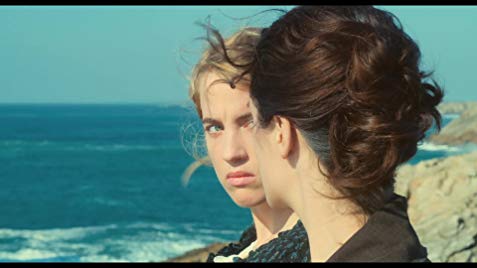
Portrait of a Lady on Fire is a film I have heard much about, despite its lack of attention in mainstream media and throughout the American awards season. Depicting the story of a portrait created in confidence, this French film features arresting cinematography and a look at an intense relationship between two women. This film has been nominated for everything from best actress to costume design to the Palme d’Or, and so there’s definitely something worth seeing here, even if it hasn’t been on many people’s radar.


Come out to the State tomorrow at 7 to see this surely fascinating film and support international cinema!