REVIEW: Anora

Yet another masterpiece from director Sean Baker. “Anora” is possibly the movie of the year, winning the prestigious Palme d’Or at the Cannes Film Festival last May. The film manages to be wildly entertaining and heartbreakingly tender, fusing together comedy and tragedy in a sincere, never tacky, plot. Baker has added a crowning jewel to his already impressive list of achievements – his movies, like “Tangerine,” “Red Rocket,” and “The Florida Project,” are all superb depictions of people living life on the edge. 

Anora (played by the excellent Mikey Madison) is a sex worker dancing in an upscale Manhattan club. She’s bratty and charming and sexy; the golden strands woven into her hair, her big brown eyes and pouty lips, and a thick Brooklyn accent seduce both clientele and audience. We might be tempted to make assumptions about this street-smart stripper, but she’s unfailingly competent at her job, wooing the helpless men around her with a sharp confidence and glamour, and even pulling out an accented Russian upon request. 

Yet Ani – as she prefers to be called – makes a cardinal mistake: she falls in love at the job. The object of her mascaraed eyes is Ivan (played by the up-and-coming Mark Eydelshteyn), who woos Ani with an ADHD, marijuana-fueled manic appeal and a ready checkbook. The relationship is initially transactional but quickly morphs into genuine affection. The trouble is that Ivan’s sexual adventures are paid for by his father, a wealthy Russian oligarch, who will surely not take kindly to his son’s gallivanting with an American stripper. 

Indeed – as anybody but Ani and Ivan could have foreseen – the relationship does not have a happy ending. I’ll spare any spoilers, but let’s just say that there is a scene where Ivan, pulling up his pants with one hand, sprints away from his own mansion and into the city, leaving behind two hired thugs and a weeping, half-naked Ani in his wake. This marks the end of the first act of the film, and it’s only downhill from here. 

It would be easy to divide the characters of “Anora” into two categories. The bourgeoisie and the plebeians. The upper class and the working class. The rich kids and their imprisoned servants. The buyers and the sellers. Baker avoids such cliches. Ani is no damsel in distress. She is unfailingly self-sufficient, brash and confident, completely sure of her own worth. But even the toughest Brooklyn girl has a breaking point, as one of the aforementioned hired thugs, Igor (played by a silent-but-strong Yura Borisov), empathetically foresees with a knowing eye. I say “empathetically” here because Igor and Ani are two sides of the same coin. Two young people, essentially enslaved by a spoiled brat, competently but dutifully making their way through an uncaring city. 

In a way, Ani is much like the impoverished kids playing make-believe in the Orlando motels that Baker depicted in “The Florida Project.” She has learned how to take care of herself, but yearns for love. She is equal parts brazen and naive. She and Ivan live in the same city, but in completely different worlds. And as she soon finds out, her dreams are pure fantasy.
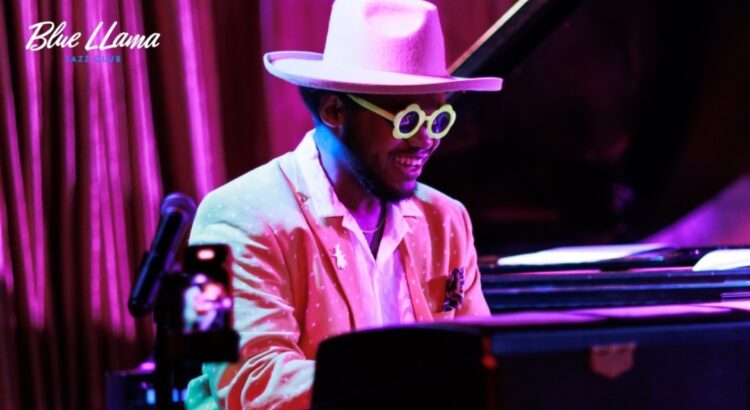
REVIEW: William Hill III at the Blue Llama

November 30 | 10:30pm | Blue Llama Jazz Club


No better place in Ann Arbor to see live jazz than under the magenta-blue lights of the Blue Llama Jazz Club. These dimly lit corners have housed some of today’s most esteemed jazz players since its opening in 2019, featuring all-star players from our own Detroit and beyond.

Tonight’s late-night set featured the spunky William Hill III, a pianist and composer currently based in Manhattan. Hill’s trio included Detroit-based players Dylan Sherman on the bass and drummer Sam Melkonian. I have seen a few of his sets at the Llama now, where he performs standards from the Great American Songbook along with his original tunes. And to celebrate December 1st’s icy debut, he wove in some holiday favorites.

It’s easy to return to Hill’s sets—he is overflowing with creativity and vibrancy in his playing. His improvisational language is deep and complex, with nods to the great Red Garland and Oscar Peterson (favorites of mine). Combined with his technical virtuosity allows for a really interesting exploration of the Songbook tunes we all know and love. He released his debut album “Three’s Company (Live)” this past July, recorded live at Detroit’s historic Cliff Bell’s Jazz Club.

The sound in The Llama is the second best reason to go (the first being the fantastic musicians, obviously), but the space resonates nicely for such an intimate setting and allows for both a beautiful visual and aural experience (at least from the tables along the back wall). A piano trio fills the stage and the sound in the room super nicely.

The very first tune included a tight bass feature from Sherman. He’s got a pliable sound, with light, effervescent improvisational ideas, making his interaction with Hill such fun to encounter. Never underestimate a swingin’ bassist.

I couldn’t catch the name of every tune but a few caught my ear: A striking version of John Coltrane’s “Moments Notice”, the Strayhorn classic “Take the A-Train”, and “Chant” which seems to be an original composition of Mr. Hill’s. He also included a favorite of mine from his record: “Jilly”, a sweet tune, one that captured the audience amidst its meditative waltz-i-ness.

Holiday tunes included: Duke Ellington’s “Sugar Rum Cherry” (a la Tchaicovsky’s Dance of the Sugar Plum Fairy); a jaunty and playful “Winter Wonderland”; and a burning “Sleigh Ride” accompanied by Detroit trumpeter Jauron Perry to complete the set.

I expect Will Hill III does well in Manhattan—he’s breaking out in the industry almost as fast as he can swing.


Images thanks @bluellamajazzclub Instagram.

REVIEW: Anora

Oh, Mikey Madison. What can’t you do?

From the start of “Anora,” the actress that is so soft-spoken in interviews blasts into the picture as Anora– nicknamed Ani– with her brazen confidence and strong Brooklyn accent. A 23-year old sex worker, we are first introduced to Ani in element working at the club. Between vape puffs, Ani charms wealthy visitors into buying dances from her, until her boss pulls her to a guest who requested someone who speaks Russian. 

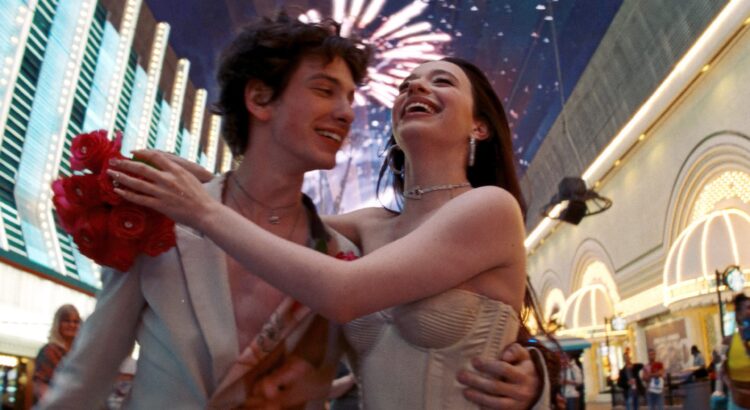
Ani speaks some Russian, and is then introduced to Ivan, who says she can call him Vanya (Mark Eydelshteyn). The next day, she visits his mansion for a private booking, where he tells her that he comes from a very wealthy Russian family. He offers her $15,000 in cash to be his “girlfriend for the week,” and so the whirlwind of sex, drugs and alcohol begins. It culminates with a shotgun wedding in Las Vegas so Vanya can stay in the United States. 

Ani and Vanya get married. Courtesy of Neon.

It seems like a happy ending for Ani, who now has access to all the riches she could ever imagine – but unfortunately it is never that easy. While she takes the marriage very seriously (“We are mah-rried and we are in love!”), when Vanya’s godfather and chaperone Toros learns he got married, the jig is up. The “muscle” – Garnick (Vache Tovmasyan) and Igor (Yuriy Borisov) —  arrives at the mansion’s front door, and a panicked Vanya sprints out the door, leaving Ani alone, confused and angry.

Toros arrives, and after a long sequence of fighting and overlapping yelling in Russian and heavily accented English, Ani is convinced to help them look for Vanya. And off we go into our second genre. 

The movie is described on google as a comedy/romance. Where is drama in that description? This genre-bender begins with a whirlwind Cinderella-story romance between Ani and Vanya and transitions into a situational comedy with “Home Alone” style injuries of the sterotypical “Russian goon” as the four look for the spoiled oligarch across the city and eventually in every night club. The final act of the movie – once a blackout drunk Vanya is finally found and is dragged to confront his parents – has a much darker tone. 

The four search for Vanya throughout New York. Courtesy of Neon.

This rollercoaster of a plot left me in tears at the very final scene, alongside Madison on the screen. From the barrage of sex scenes at the start to the dry ironic comedy of the middle, the ending is quieter, more subdued, and sad. And honestly, this was the best possible way to conclude the story. A classic “rags to riches” tale is so on the nose, and at first, that was where I expected it to go. When Ani leaves the club, for example, she carries a clear pair of heels and even explicitly says that she feels like Cinderella. For a moment, I feared it might veer into a clichéd rom-com, but it took a turn I didn’t expect.

One unique aspect of the movie was the constant interchange between English and Russian. For most of the Russian spoken, there were subtitles on-screen, but occasionally there was some Russian left untranslated. Madison said in an interview that she didn’t know any Russian before this role, and learning how to speak Brooklyn-accented Russian was even more difficult; but to someone who doesn’t speak any Russian like myself, it all sounded the same. 

Madison is spectacular as Ani. She portrays Ani as tough-as-nails but also vulnerable, both in key moments and with subtle expressions. Eydelshteyn also acts with incredible nuance; the sincerity that he adds to the immaturity of Vanya makes it believable that a street-smart Ani would fall for his promise of genuine love. 

“Anora” is both sadly ironic and darkly funny. Don’t underestimate the serious merit of this film from the flashy trailers; it will leave you with both more laughs and more thoughts than when you came in.

REVIEW: “touch” by Ericka Lopez

In most art exhibitions, there’s one rule that should never be broken: don’t touch the art. But visitors to Ericka Lopez’s “touch” at the Institute for the Humanities are not just allowed, but encouraged, to break this taboo.

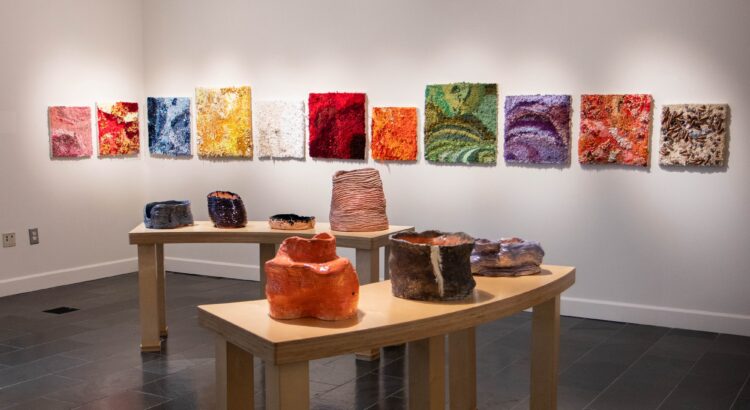
Ericka Lopez is a blind artist who works primarily through touch, and uses her memories of color from before she completely lost her vision to inform her color choices. Her exhibition consists of a mix of textile, ceramic and assemblage works, all of which viewers are “invited to gently touch.” Across the multitude of media, there are many textures to explore.

The punch-rug textile squares, in a rainbow of marbled colors, are shaggy and soft—but sometimes punctuated by beads and buttons, or a particularly scratchy type of yarn. The coil-built ceramic vessels are warped and bent into organic forms, appearing so flexible that I was almost surprised by how solid they felt under my fingers. And the assemblage works, sewn together out of everything from keys to spools of thread to fuzzy balls of yarn, were a surprising mix of textures. Sometimes, running my hand across a collection of beads would create delightful moments of sound as well, contributing to the truly multi-sensory experience.

Details of pieces from Ericka Lopez’s “touch.” Photos by reviewer.

Closing my eyes and exploring the works with only my hands was a lesson in just how nuanced my sense of touch could be. I learned from the textiles that there were many more different kinds of “soft” than I knew how to describe, and from the ceramics that a glossy glaze feels completely different from a matte one.

In her exhibition statement, curator Amanda Krugliak writes that “As visitors to the gallery become active participants, there is the opportunity for deeper human connection beyond surfaces.” It is one thing to be merely a viewer of an artwork, and another to touch it, to rub your fingers through loops of yarn or dangling beads. When my touch shifted an arrangement of keys on one of the assemblage works, I realized that it would be ever-so-slightly different for the next person to enter the gallery. The opportunity to participate in an exhibition in this way, and to be connected to the artwork in the same way that the artist was as she created it, is a rare and precious one.

The exhibition contains multiple features to make Lopez’s artwork accessible to blind and low vision visitors, including braille labels on the walls beside the pieces and QR codes leading to visual descriptions of the artwork. (There are no labels printed in plain text—sighted viewers will have to pick up a paper exhibition catalog just outside the gallery in order to read information about the pieces.) All exhibition materials are also available in both Spanish and English.

While the colors and textures may be visually stunning, pictures don’t do this exhibition justice. Ericka Lopez’s diverse and captivating body of work is best seen—and felt—in person.

“touch” is on view at the Institute for the Humanities Gallery until December 13th. Detailed information about accessibility can be found here.

REVIEW: Plano

November 16 | 7:00 pm | Newman Studio


It seems director Natalie Tell found the question of time most interesting in her multilayered senior thesis, Plano. What really is now? What is later?  Earlier? Suddenly? And where do our lives fit into a structured system of a concept that refuses to be contained? These questions were presented in her attuned director’s note in the program, but I found that more prominent themes of identity and male-induced panic rose to the surface onstage.

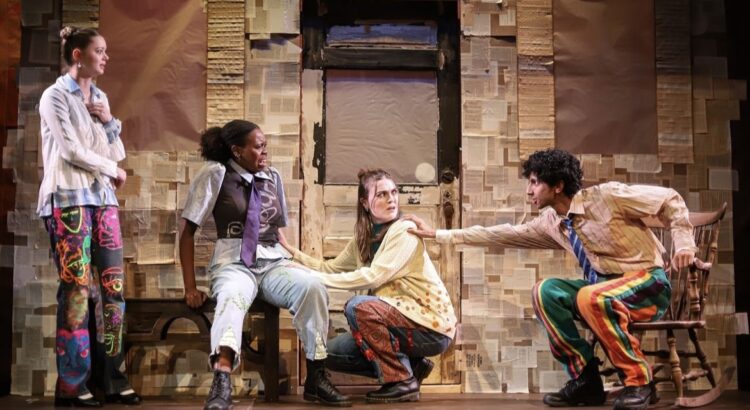
Plano lets us loose in a semi-mythical Texas in the home (or rather, on the porch) of three sisters, Anne (Maya McEntrye), Genevieve (Hannah Long), and Isabel (Audrey Andrews). They are haunted by strange physical things (like slugs, ribbons, ghosts) that all seem to tie back to the patriarchal influences of their unexplored past. Each sister has a different quandary with the primary man in her life: Anne quickly marries John (Joaquin Consuelos) after finding out she is pregnant, but he seems to be with her for the green card; Anne, is married to her less-than-superb husband, Steve (the hilariously erratic Rohan Maletira); and young Isabel finds herself in a relationship with God, but grapples with the presence of looming spirits.

The play establishes a fantastic “handshake” with the audience right out of the gate. The lights come up, and the sisters are having a fiery sharp conversation, darting through time when a character decides, “It’s later.” We discover John (whose real name is Juan) is gay and gallivants off to Plano (a seemingly mystical, metaphorical place) leaving Anne alone with her thoughts. Isabel is afflicted by two Faceless Ghosts who dwell uncomfortably near when she’s alone. When Genevieve and Steve ultimately divorce due to his infidelity, he splits in two (and eventually three) haunting Genevieve’s home and mind.

“A third Steve is making music in the garage. He won’t leave. And the other two Steves are really proud of him.” says Genevieve.


The eclectic universe Ms. Tell crafted was completely alive: props emerged seamlessly, Faceless Ghosts wandered around pre-show, and a bowl of hummus came out of the wall! The curse manifested itself in ways other than through the character’s words, it surrounded them. Ms. Tell’s creative design choices made the script’s (by the poignant Will Arbery) insistent metaphors in the script all the more playful.


The Faceless Ghosts pre-show.

Arbery’s book contains rich ramblings, which develop deep and relatable characters, blending humor with the uncanny. The play between reality and surrealism is intricate but such charming performances kept me fully engaged in attempting to unravel the timeline. The three sisters are distinct characters to me, each carrying a strange sense of familiarity. The clarity could stem from Arbery’s vocal inspiration from his seven sisters whom he grew up with in Dallas, Texas (a short distance from Plano, Texas).


Ms. McEntrye, Long, and Andrews are filled with endurance and are constantly thrilling. They relentlessly search for their identities while navigating life and facing the challenges of hegemonic authority from previously trusted men. Ms. Long’s performance was a personal favorite of mine, showcasing her quick wit and unveiled compassion. While their male counterparts can be mundanely loathsome in the world of Plano, the performances by Mr. Consuelos and Mr. Maletira were quirky and deliberate.

Though Ms. Tell’s director’s note emphasized her exploration of time in Plano, I found the most moving aspects of it were its relationship with the women fighting it. It’s difficult to truly grasp the metaphysical concept of time in this piece, as it (seemingly) is not linear, but it was effortless to feel for the strong women’s journey of discovery. To Ms. Tell’s point, time is something we’re always aware of, and these characters certainly are too.

“We’re a tiny part of a tiny thing that never ends…” Anne says.


Plano runs November 15-16 in the Newman Studio. Images thanks to @umichdesignandproduction on Instagram.

REVIEW: Hänsel und Gretel

November 14th | 8:00 pm |Power Center For The Performing Arts


Is everyone on drugs in SMTD’s Hänsel und Gretel? That is a question I don’t know the answer to.

Director Gregory Keller brought an eccentric new take on the classic fairytale last weekend, one that was unanticipated by opera’s more familiar audiences. Traditionally, this story is pretty straightforward: young mischievous kids, absent parents, the candy house, the witch and the oven, the whole sha-bang. But Keller took everything up a notch—and academia seems like the right place to do that, right?

Mr. Keller has spent twenty-six seasons at a little place called The Metropolitan Opera in New York City, where he’s staged vibrant and thought-provoking revivals of some of opera’s most notable works. He’s eager to try new things, but is opera itself ready?

This charming opera was written by German composer Englebert Humperdinck with libretto by his sister, Adelheid Wette. His Wagnerian influence is clear in his richly textured orchestration and memorable, complex, and emotional melodies. His magical, atmospheric score lives in a lighthearted fairytale world, but make no mistake—it’s not an easy sing. This production showcased some of the Department of Voice & Opera’s finest talent.

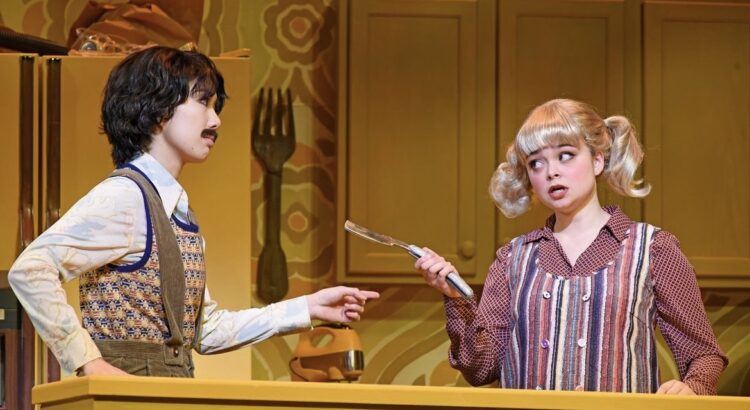
The production took us back to the 1970s: trading in brooms for vacuums and the witch’s oven for an oversized microwave. The dramaturgy note mentioned their intention to mirror the political landscape of the 1970s to today, providing clearer context to the artistic choices made. Hänsel (Daiyao Zhong) and Gretel (Ingrid Kuribayashi) start the opera deprived of food in their home, parentless, and bored. When Mother and Father (a stunning Christina Parson & commanding Andrew Smith) return, they bring battles of their own: a quaaludes addiction and rampant alcoholism.

Hänsel & Gretel’s house, Scene I, Act I.

Ms. Kuribayashi and Ms. Zhong make a playful pair onstage, displaying vocal mastery over Humperdinck’s lush, folk-inspired melodies. They both portrayed a commitment to the fanciful youth of the music and had enjoyable presences onstage (along with stellar vocals). They both seemed to be pushed up an age bracket from the original story: Hänsel is sporting a mustache and smoking cigarettes while Gretel’s lively physicality makes me think she is within the realm of a frisky preteen. Perhaps the age shift brings accessibility to college-age audiences?


Ingrid Kuribayashi (left) and Spencer Vandellen.

Mother and Father’s chaos sends them into the woods, where they meet The Sandman (Madeline Surroweic), an Alice In Wonderland adjacent Caterpillar-like ghost who sends the children to sleep with a backpack of hotboxed smoke. The angels (who are supposed to protect the children while they sleep) are replaced with an entourage of leather jacket-wearing goons who send them up mysterious white stairs into the sky, ending Act I. I couldn’t exactly read what was going on— Were they ascending to heaven? Drugged by the Sandman? Part of some master plan orchestrated by The Witch?

They are awakened by the Dew Fairy (Anne-Marie Attanga, who sparkles vocally) in a brief and shimmering aria, right before the children realize they are outside the cottage of The Witch (Spencer Vandellen) decorated in colorful drag. This role was written for a mezzo voice but is also standard to be performed by tenors. Vandellen has a stellar upper range and navigates vocal passages with ease, without sacrificing an ounce of drama from the exuberant Witch.

Perhaps Keller’s unusual choices support deeper messaging regarding Hänsel and Gretel’s need to escape the demons of their own home: addiction-ridden parents, food deprivation, and an understated need to explore layered with teenage angst. All ambiguity aside, the eccentricity of the production kept me intrigued from start to finish.

I’m sure Keller’s nuanced take on this Brothers Grimm tale startled traditionalist opera-goers, but it seems academia is hungry to shake up this 400+-year-old art form, and I appreciate that. With or without drugs, I think it’s time for opera to embrace its hot takes from ambitious directors. Better sooner than later before opera is the next thing in the Witch’s oven.


Hänsel und Gretel runs November 14-17 at the Power Center for Performing Arts. Images thanks to @umichsmtd on Instagram.