
Review: Frozen 2

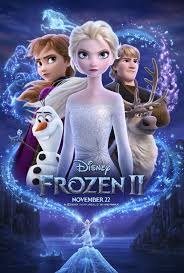
Those of us Disney fans have waited six long years for the sequel to the epic cinematic experience that was Frozen….After all that time Disney creators spent working, you’d think they would have come up with a better title than Frozen 2. However, that’s a moot point (and somewhat of a Disney tradition).

I was finally able to see Frozen 2 in theaters over Thanksgiving break. Perhaps I over hyped the film for myself, thinking that somehow Disney would surpass Frozen. I was expecting a extraordinary soundtrack, relationship development between Anna and Kristoff, and hilarious antics and humor from the much adored Olaf. Unfortunately, Frozen 2 only delivered on one of those expectations.

Unlike the music in Frozen, which flows seamlessly in and out of dialogue, Frozen 2 seems to stop and start in abrupt fits as if the musical sequences are plugged into the film in a haphazard fashion. As for as the music itself, it’s mediocre at best, at least for the most part. From my experience, the best film music, whether it be an instrumental piece or a musical number are the songs that you can’t help but have stuck in your head for weeks after seeing the film. They are the songs that are constantly on repeat on your playlists and the ones that you belt out at the top of your lungs. The only song that had that effect on me was “Into the Unknown”. I can honestly say that as soon as my family left the theater, I was trying to see if I could hit those high notes, much to my brother’s dismay.

Here’s what it sounded like (try to imagine a dying seagull): “Into the unknoooooooown! Into the unknooooooooown! Into the unKNOOOOOOOOWWWAAAWOOOOOOOOOOOOON!!!!!!!!!!!

As far as my expectations for Anna and Kristoff’s relationship development, I was sorely disappointed. For as little time as Kristoff had on screen, I have to wonder why Disney put him in the movie at all. I understand that Disney wanted to continue to make the film with Elsa and Anna’s relationship at the forefront of the Frozen world and I wholeheartedly approve. However, I don’t approve of Kristoff disappearing halfway through the film because he’s lost in the woods. Lost in the woods? For half the film? So Disney can focus on Elsa and Anna? As Deadpool (A.K.A Ryan Reynolds) would say: “That’s just lazy writing.”

There IS a silver lining to Frozen 2 however, and that is Olaf. I didn’t think it was possible, but Olaf’s wit and humor rose exponentially throughout the film. The entire audience was in fits of laughter almost every time he spoke. If nothing else, see the film for Olaf’s sake. It’s worth it.

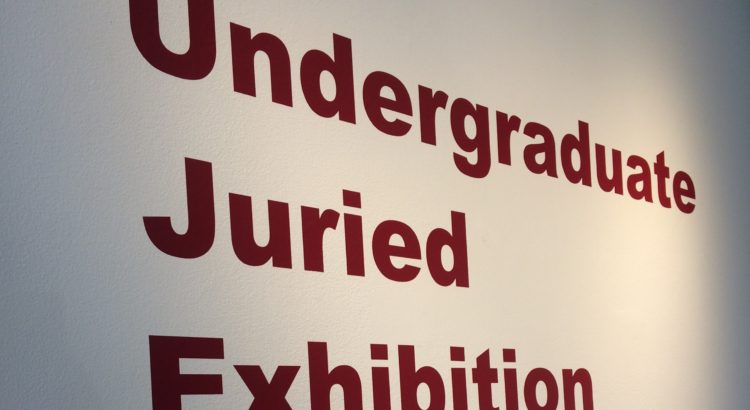
REVIEW: Stamps Undergraduate Juried Exhibition

The Stamps Gallery is a severely underrated gallery. Each time I visit the space, the work present engages me and shows innovation in the art world. This exhibition is no exception. Truly showing the range of the University of Michigan’s art and design students, this exhibition showcased work ranging from video to functional design to fashion and more. Leaving the exhibition, I felt excited for the direction of art and design in Michigan and globally.


It made me really happy to see works and artists my student group, Helicon, has included in its past exhibitions and publications. The dual visibility in both student-run and institutional contexts I find important to not only succeeding in the visual arts, but also being relevant and contributing to the student arts community. One example of such an individual is Brooks Eisenbise and their work Carrying All of This, a piece that was really intriguing to see in person after working with its image in our publication this past spring. The tactility of the work and the way it hovers between mediums and artistic forms is enough to draw viewers in. From there, though, one finds the work itself to be intimate and challenging, ultimately creating a highly contemplative personal and aesthetic experience.


Student work is important. Viewing student work is important. Putting student work in a gallery is important. It’s easy to look back at old masters and funky modernists and feel that art ends at Van Gogh and Kahlo, but art is a key part of the never ending process of culture-making. To disregard the current state of visual arts practice is to disregard what will come to play a part in defining our cultural moment. It is a great disservice to oneself, too, to miss out on placing oneself in the presented realities of others. Not to say an undergraduate exhibition at the University of Michigan offers the complete range of perspectives necessary to build the contemporary world of art, but going and looking and taking in the

student perspective and its subset of forms is a small step forward to contextualizing the world through the powerful and (in this and most cases) un-contrived form of visual arts. It’s also just plain exciting to examine the trajectories of these skilled artists and what their early work means for the direction of art and design. The exhibition is open until December 15th– go play the individual’s part in the arts and look.


(pictured at left: Obsession39 by Sophie Linden)


REVIEW: Dave Landau

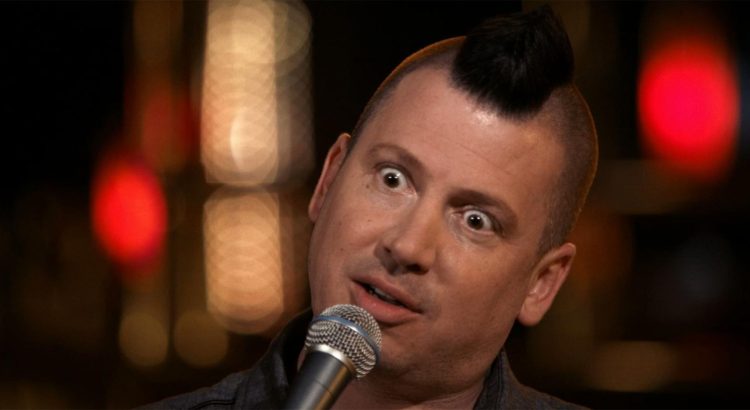
To say I was severely unimpressed would be a vast understatement, yet to call the experience uncomfortable would be an even greater one. The show began innocuously enough, with opening sets from local comedians Jeff Ford, Reese Leonard, and Bret Hayden. Though the openers contained a healthy mix of self-deprecation and poking fun at everyday frustrations, the headliner himself fell short in both departments and managed to present himself as misogynistic, transphobic, Islamophobic, racially ignorant, and generally worthy-of-cringe – all within a one hour time span. In hindsight, Landau’s initial shoulders-back-beer-belly-out swagger onto stage should have primed me for the untamable discomfort that was to follow,  a discomfort amplified with each distasteful joke about marginalized communities that was somehow ‘validated’ by waves of  tipsy, white laughter.

I’ll admit it; Landau is not an unfunny comic. During his set’s rare, unproblematic moments, his lackadaisical demeanor actually contributed to the joke’s delivery and drew out some genuine laughs. His fast-paced opening line and commentary about his colorful drug history were humorously original, but beyond those candid pockets, the premises of most of his jokes were rooted in the systematic objectification and demeaning of women and mocking the advancement of societal acceptance for communities like the LGBTQ+. Within minutes of taking the stage, Landau took an inappropriate jab at the Dearborn Muslim community and had the audacity to then improvise with two audience members with South Asian features by insinuating that they were Muslim, and later labelling them Indian. To add even more icing on the cake, Landau scanned the front row for more people of color to continue his racially ignorant bit with, before targeting my East Asian-looking friend. After that extended punchline, Landau’s attempts accelerated downhill: the white male comic found it in his place to objectify Transgender people as hybrid cars, continuously refer to women only in demeaning sexual contexts, all while under the cookie-cutter guise of lauding women for “being so strong” in undergoing menstruation and pregnancy. Oh, and shaming his wife’s post-childbirth vagina in reference to a wigged squirrel.

However it would be fruitless to paint Landau as the only perpetrator of such “comedic” tastelessness – he is but one of many contributors to America’s rampant ‘comedy man’ problem – which plagues the industry from Louis C.K to Richard Pryor and now, Dave Chappelle, with his Netflix special Sticks & Stones. Whilst sitting in the darkened room at the Ann Arbor Comedy Showcase, enshrouded in raucous and affirmative white laughter, I finally realized the twisted nature of today’s American, male-dominated stand-up scene. Comedians such as Landau escape true scrutiny and are enabled to ascend to platforms like Comedy Central, using their privilege and defensive powers of “just wanting to make people laugh” to justify gross jokes all the while eschewing all political correctness as antithesis to ‘free speech’, or the art of stand-up itself.

REVIEW: Stew & The Negro Problem

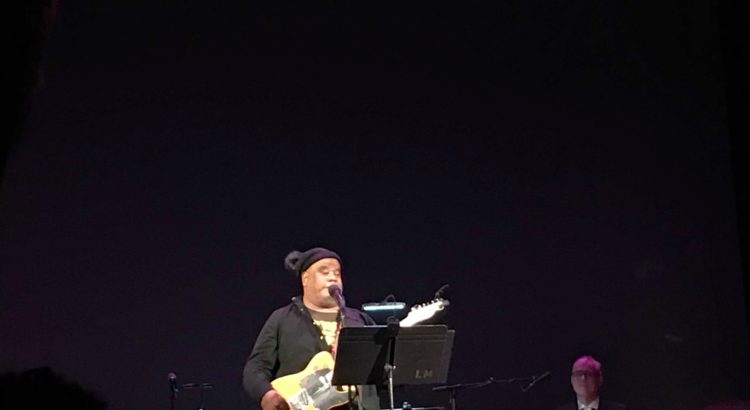
Stew’s poignant prose accompanied by Heidi’s soulful melodies create songs that encourage and make you think all at the same time. It’s not until after many listens do you fully grasp all the references within the lyrics. Notes of a Native Song is an album meant to train its listeners to analyze every situation. Songs within the album are a clarion call for activism. Stew and The Negro Problem’s performance was an illustration of how songs can shine light on social injustice and inspire a generation to take action.

Stew, feeling under the weather, started by lowering our expectations, stating that the current performance could not nearly be as good as the previous night. However, halfway through the opening song, we knew that his disclaimer was not true. Stew and The Negro Problem kicked off the performance just as their studio album does with a song titled Baldwin CountryBaldwin Country gave the audience background information about James Baldwin. Stew used the song as an appetizer to sate the audience’s initial inquiries as to what the album is about and what kind of music they were about to hear for the ensuing hour.

Stew and The Negro Problem artfully lulled the audience during Istanbul. The song acted like a palate cleanser for the ears. Istanbul was followed by the thought-provoking lyrics of Amen Corner and Proof. “Jesus ain’t no match for jazz and these police.” “When the restlessness of Jesus meets the patience of Job.” “Power is so powerful it can’t afford to pay people to speak truth to it.” “Power looking ugly, Power looking mean, but never painting power so that Power’s ever seen.” These two songs have driving melodies and powerful lyrics.

Florida, Stew jested was the only political song on the album. A song in which the band plays a laid-back Californian beat while Stew compares Florida to other states in the Union. Stew suggests that no state is better than another; each state has pros and cons. But quickly follows up with “It doesn’t matter if the weather is great if I gotta wear a bulletproof vest.” The amusing comparisons and harsh criticism of Florida, made Florida my favorite song in the performance.

I was introduced to Stew last year when SMTD performed Passing Strange. The first act is a feast full of political statements and nuggets of truth not often heard aloud. It opened my eyes to musicals that have a motive other than to entertain.

Without force feeding the audience, Stew and The Negro Problem served up a well-balanced performance—one that left me full all the while leaving me to beg for more. The insightful songs and sounds of Stew and The Negro Problem inspired me, and I am thankful they returned to the University of Michigan to once again share their mighty message of a movement.

Preview: Frozen 2

If you haven’t had the time  to see Frozen 2, now’s your chance! With  Thanksgiving  just barely over, it’s the perfect time to grab some friends and family and enjoy the next adventure of the frozen cast as they plunge into a magical forest on a quest to find the source of a mysterious voice that has been calling Elsa towards the northern reaches of the land. Filled with magic, reindeer, and frozen fun, it’s the perfect movie to celebrate the coming winter.

I’m sure you’ve all seen the trailer by now, but just in case you haven’t, check it out below and purchase tickets at a theater near you.

REVIEW: Artist Spotlight: Nadim Azzam

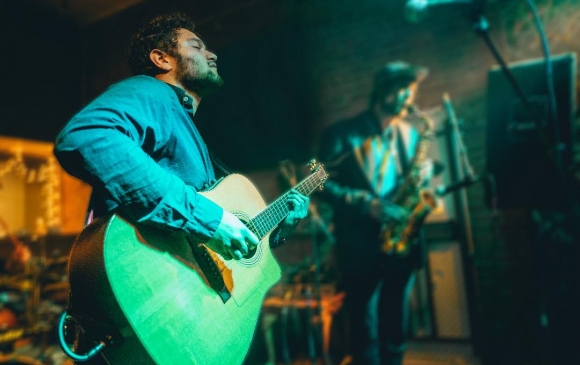
Nadim Azzam and his crew put on quite a performance at the Ark’s Artist Spotlight last night. Compared to my other experiences at the Ark, I found that this genre of music fell into a more distant category from the general body of work that has been presented before. Althea Grace’s bluesy indie opening set very much felt at home amidst the audience and atmosphere that represents the most beloved elements of the Ark.

What I greatly enjoy about Nadim Azzam is a unique charisma that can be consistently felt throughout his set in the rhymes and rhythms of his music. The personality of his sound comes from the self-evaluated rebelliousness of his teen years, as Azzam says, “Most of my songs are written to myself, a lot of them are about expressing struggle and pain while still trying to be hopeful. They can be about feeling lost while trying to find a way, wanting to become a better person and living up to potential.”

A personal highlight included the presence of a tight-sounding jazzy saxophone in the mix of acoustic qualities and 1950s’-sounding ballad-like presentation. I credit Nadim Azzam for the ambition that is required for such a bold merging of hip-hop, acoustic, and jazz, but I often found the seamed mashing of genres together rather disjointed. While the melodies and striking timbre of the group produced heartfelt sounds, I was generally less than impressed in the level of sophistication present in the group’s sung lyrics. However, the flow that Nadim put forth in his rap lyrics was impressive and seemingly well-rehearsed.

While Althea Grace played the part of a successful opener for Nadim Azzam, I am hoping that she finds herself returning to the Ark as a headliner one day. Her music is light and subtle with an element of mystery that she weaves into a captivating musical narrative.

From humble beginnings, Nadim Azzam began his musical journey upon the discovery of his love for music and vocalization on a wilderness exploration trip. His smooth tone sincerely gels with the music that he aspires to make widespread, as we are seeing his rise to greater appreciation in the ears of listeners, local or otherwise. From playing at the Ann Arbor Summer Festival in 2019 to the upcoming release of his full-length album in 2020, Nadim Azzam does not show any sign of slowing down.