REVIEW: Miles Davis: Birth of the Cool

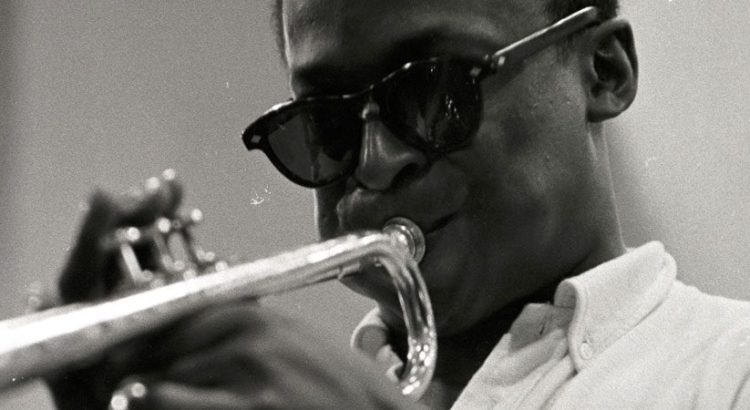
Before seeing the documentary Miles Davis: Birth of the Cool, I was familiar with some of Miles Davis’s most iconic music (like his album Kind of Blue), but I didn’t know very much about him outside of these recordings. That said, this film, which shares its name with Davis’s 1957 compilation album and is directed by Stanley Nelson, offers a deeper look into the many years of his career, as well into him as a person.

The film went through his life in chronological order, and since he was born in 1926, there is not a lot in the way of video of the early years of his career. However, the documentary deftly handled this, and still managed to be quite engaging. As black-and-white archival images panned across the screen (a classic move from a PBS documentary), Miles Davis’s own words (many of which were from his autobiography, Miles: The Autobiography) were read by actor Carl Lumbly. The film additionally features interviews with scholars and some of Davis’s closest colleagues.

While Miles Davis is certainly one of the giants of jazz, the documentary also does a remarkable job of showing the complexity and flaws behinds the star. He was not a warm personality. Despite his capacity for beautiful music, he was an abusive husband, which is revealed in the film during interviews with his late first wife, Francis Davis (who is featured on the cover of Miles’s album Someday My Prince Will Come). In one perhaps telling (and mildly humorous) anecdote, a colleague recalls asking Miles how he was going to drive his family in his Ferrari. Reportedly, he responded that his kids could call a taxi. He struggled for years with alcohol and cocaine, and the film does not sugarcoat this.

In fact, it was in part due to his struggles with addiction that Miles did not pick up the trumpet for over five years. Between 1975 and 1980, his career was virtually on hold, and many doubted that he would ever return to music. However, he made an incredible comeback, and in my opinion, this was one of the most compelling storylines of the documentary. Not only did he return to the stage, but rather than pushing back on the changing tastes in music, Miles embraced it and adapted, pushing the conventional boundaries of genre.

Miles Davis: Birth of the Cool is now showing at the Michigan Theater. If you are interested in learning more about the jazz legend, I strongly recommend it!



PREVIEW: International Studies Horror Film Fest


Halloween, though it has already been upon us for months, is now extremely upon us. Somehow the most important holiday in the universe does not warrant a day off of school (meanwhile, some still legitimately celebrate Columbus Day), so we must do all we can to work around our schedules to properly honor this spiritual time.

Thank the Unholy Lord of the Dead that the International Studies program is continuing horror film fest. In its seventh year, the free program will include three foreign films (subtitled in English) for all to be terrified by. Come by the Hatcher Graduate Library Gallery (first floor) between classes, or if you’re especially dedicated, skip them all and stay for the whole time. And I better see you all in costume, or else.

The movie schedule is as follows:

10:00–11:30 a.m. — Face (2004, Korean)
11:30 a.m.–1:00 p.m. — The Lure (2005, Polish)
1:15–3:00 p.m. — Dogtooth (2000, Greek)

https://events.umich.edu/event/68410

PREVIEW: Artist Spotlight: Ordinary Elephant

This upcoming Tuesday, October 29th, you can catch me at The Ark as they hold an Artist Spotlight for Ordinary Elephant, winner of the Artist of the Year Award at the International Folk Music Awards in 2017. I have only recently discovered this folk duo, yet I’m very excited to enter into this musical space with them. From my listening on Spotify I found their music to be thoughtful and charming with the swells of an autumn chill.

The doors of The Ark open at 7:30, and the show starts at 8:00; while this event is free to the public, it will accept non-perishable food items to go towards Food Gatherers!

REVIEW: Cappella Pratensis – Missa Maria zart

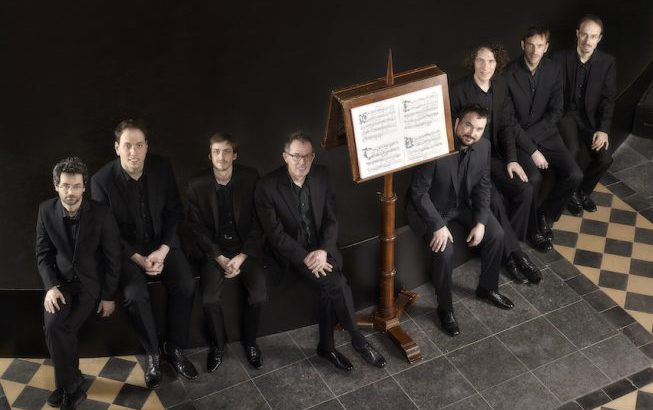
Cappella Pratensis’s performance of Missa Maria zart was an excellent opportunity to experience Renaissance-style polyphony – which may sound foreign to our ears – live. Despite its significant differences from the music of today, the Dutch-based ensemble deftly showed that such music can be both accessible and enjoyable.

At over an hour long, Missa Maria zart is one of the longest, most complex Mass settings (compositions putting the text of the Catholic Mass to music) known. Running throughout the entire mass is the same underlying melody, known as a cantus firmus, and the entire piece is consequently known as a cantus firmus Mass. In the case of Missa Maria Zart, the cantus firmus is a German melody called Maria zart, or “Sweet Mary.” The performer’s comments during the pre-concert lecture, as well as the program notes, helped audience members to gain a greater understanding of the music and its complexities. Additionally, the text of the entire mass, as well as the English translations, were printed in the program, which allowed listeners to follow along. The Mass’s music was an experience in itself: in the echoey acoustics of St. Andrew’s Episcopal Church, the resonant harmonies and interplay of the voices rung throughout the space. Despite the piece’s extraordinary length, I found myself engaged throughout its entirety.

Outside of the music, I was impressed by several other aspects of Cappella Pratensis’s performance. For one thing, it is a physical feat to sing almost continuously, without water or an intermission, for over an hour. Secondly, it was fascinating how other (non-musical) types of art were incorporated into early music making, including Cappella Pratensis’s historically informed performance. I enjoyed the opportunity to look at their partbooks, both their modern reproduction of Missa Maria zart, and their facsimiles of original chant melodies, up close. It’s crazy that the musicians of Cappella Pratensis can read four parts from the markings on the page. Called mensural notation, it looks vaguely like modern musical notation, but it’s not obvious how to read it. Also, I enjoy doing calligraphy when I have spare time, and aesthetically, the partbooks were works of art. The beauty of the lettering and flourishes around the notation are very different from modern musical notation, in which the parts exist with the primary utilitarian purpose of readability. Even their sturdy music stand, which was constructed of solid wood, featured intricate carvings on its sides.

In conclusion, I am glad to have had the opportunity to experience Jacob Obrecht’s expansive Mass setting, Missa Maria zart, in live performance.


REVIEW: Sankai Juku, Meguri: Teeming Sea, Tranquil Land

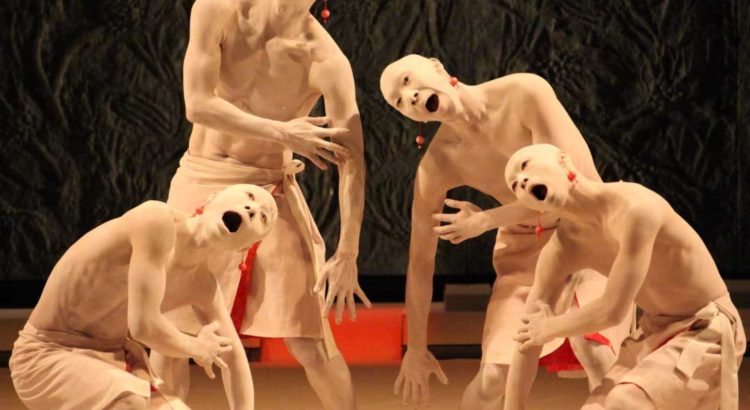
After experiencing the Japanese dance form of butoh through Sankai Juku’s meditative performance, I felt both emotionally disturbed yet liberated. The continuous 90-minute ‘dance’ performance, composed of seven distinct acts, is supposedly choreographed to emanate the circularity within processes and systems such as the earth’s transformation and its movement through the four seasons. The eight performers are powdered a stark white from head to toe, donning bald heads, asymmetrical earrings, and mostly white, sarong-like costumes on their lower halves. They move in correspondence to emotionally dynamic music and express a “dialogue with gravity” through both graceful and grotesque movements marked by spinning, jumping, and eerie bodily gesturing. It is personally difficult for me to describe Sankai Juku through a traditional ‘dance’ perspective; I fail to see it confined to any form of dance theatre that I have experienced before. Sankai Juku as a whole feels more akin to a poetically disturbing expression of the human experience, while their interpretation of meguri translates as a storytelling experience that is facilitated by the mostly monochrome stage lighting that changed with each act.

I thought Ushio Amagatsu’s portrayal of the grotesque within the context of meguri communicated to the audience particularly well; Act V, titled Forest of Fossils, left me especially disturbed with my thoughts asunder. It was during this section that I finally reached some sort of understanding of the performers’ wide, gaping, mouths and permanently perturbed eyes – to me, they communicated agony in discovery and marked the climax of the program. During Act V, only three performers are present on a stage set aglow with greenish light; the music is both tensely trembling and pulsating with the sounds of rocks grinding, which calls to mind the natural shifting of the earth’s tectonic plates. Paralleling the earth’s provocations are the performers, who appear the most agitated that they have been, with one performer gesturing the most frantically and in the most ‘agony’ – at one point, that performer drags his limbs across the powdery ground in a tight spiral to form two symmetrical circles, then subsequently emotes in pure tension and agony around the formation of those two circles. The remaining two performers respond in an unsettling symmetry, and their generally upwards arm movements seem to be grasping at some unattainable substance or idea. The desperation and agony contained within this grotesque imagery, combined with the increasingly jarring music, left me feeling deeply unsettled and in rumination of Amagutsu’s artistic intent behind that section.

As much as I enjoyed the dichotomy between the grotesqueness of Amagutsu’s work and the beauty in the circularity and meguri it conveyed, I think the most uniquely beautiful aspect of Sankai Juku is how the performance manages to maintain universality in evoking the most visceral of emotions from its audience. My disturbed reaction to and interpretation of agony from Act V, Forest of Fossils, differs from the next audience member, yet the emotional impact of this does not seem to suffer in the face of Sankai Juku’s widely interpretable themes derived from the human experience.


REVIEW: Sankai Juku’s Meguri: Teeming Sea, Tranquil Land

Sankai Juku’s Meguri: Teeming Sea, Tranquil Land is a unique show to say the least. If you’ve never heard of the Japanese dance form of butoh, this is a good introduction. 

Butoh began in post-WWII Japan as a response to both traditional and Westernized forms of dance that were popular at the time. The dancers typically perform in all white body makeup and the style is characterized by controlled, slow gestures as well as grotesque and somewhat disturbing movements. 

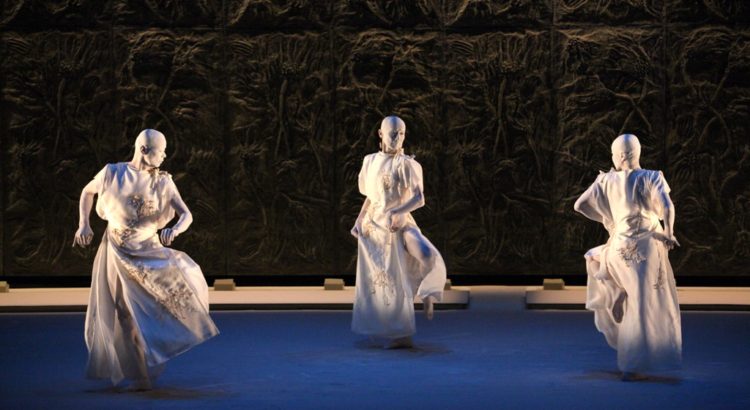
All of this and more is present in Sankai Juku’s performance. Directed by Ushio Amagatsu, Meguri consists of seven sections, delineated by color scheme and number of dancers. As the name of the show implies, imagery of the sea plays against imagery of the land with the use of blue, aqua, and warm amber lighting by technician Genta Iwamura.

The dancers, painted white from head to toe and wearing bald caps, are clad in light, off-white simple garments, with the color of the linings usually changing to match the lighting of a certain section. This simple realization of costume by Masayo Iizuka does well at avoiding being overly theatrical while still fitting into the world of Meguri. 

Although Amagatsu does not present any concrete narrative within Meguri, these motifs create the overall impression (at least for me) of the primordial Earth and life’s emergence from the sea onto dry land. The beautiful backdrop of sea lily fossils, credited to Roshi, contribute to this sense of history. 

As I said, Amagatsu’s choreography does not tell a story, but rather sets a mood. The music and sound design by Takashi Kako, YAS-KAZ, and Yoichiro Yoshikawa is my favorite element of the show. With a healthy mix of orchestral strings and winds as well as some layers of synth, the music provides a cinematic sense to the choreography. Without it the performance would seem much less interesting and important. 

Overall I’m glad the University Musical Society brought this world-class performance to our campus. While not for everyone, Meguri: Teeming Sea, Tranquil Land transports and transfixes the viewer, and there’s something to be said for watching something that is so magically disturbing.