PREVIEW: Cappella Pratensis – Missa Maria zart

If you would like to try something new in terms of music listening, join Cappella Pratensis, a Dutch-based early music ensemble, this Friday, October 25 at St. Andrew’s Episcopal Church. The performance will begin at 8 pm, with a pre-concert lecture starting at 7:15.

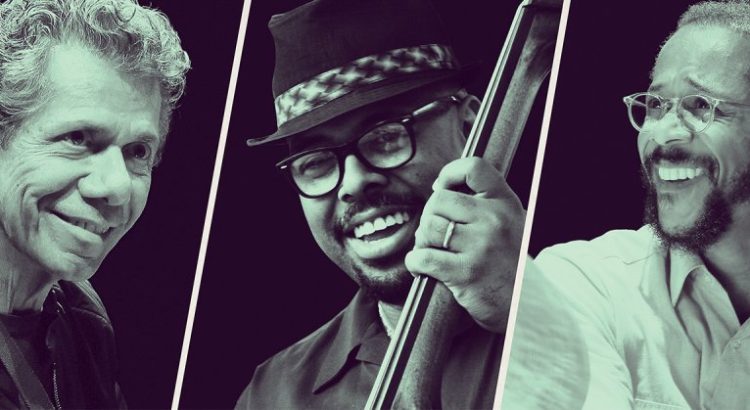
Missa Maria zart (Mass for Gentle Mary) is a 15th-century polyphonic, or multi-part, work composed by Jacob Obrecht. At the time it was written, the piece pushed boundaries – at 69 minutes, it is the longest known Mass ever composed. Centuries later, the piece is still beautiful to modern ears, albeit very different in sound from the “mainstream” music of today. That said, it is pieces like these that were the origins of the music we listen to today.

Tickets, which are $15 with student ID, may be purchased online at https://academyofearlymusic.org/portfolio/cappella-pratensis/ or at the door on the night of the performance.

PREVIEW: Miles Davis: Birth of the Cool

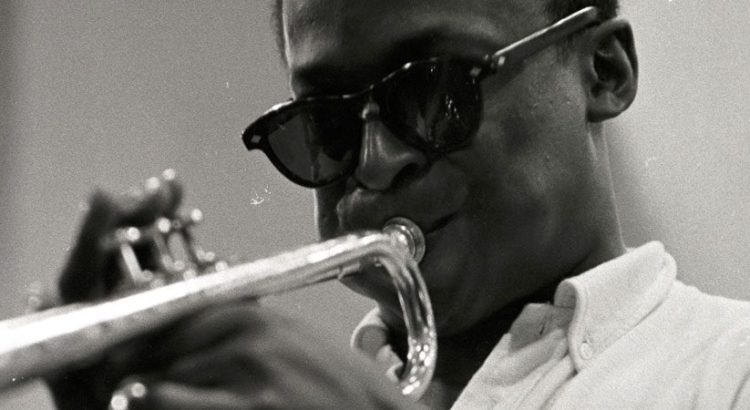
Are you interested in learning more about Miles Davis, one of the most iconic and influential musicians in all of jazz? Miles Davis: Birth of the Cool is a documentary currently showing at the Michigan Theater that gives audiences a glimpse of the “man behind the music.” Featuring interviews with Jimmy Cobb, Lee Konitz, Herbie Hancock, Wayne Shorter, Ron Carter, Carlos Santana, The Roots, and Flea of the Red Hot Chili Peppers, the film also includes archival photos, manuscripts, and some of Miles Davis’s original paintings.

For showtimes and ticketing information, visit the Michigan Theater’s website. Even better, screenings on October 18 through October 24 are on the Passport to the Arts, meaning that you can redeem one of the vouchers, found at locations across campus, for a free ticket to the film!

REVIEW: Alli McPhail NCRC Exhibition

This show was the first time that I had ever visited the North Campus Research Complex. The complex where the exhibition was housed was a wildly different aesthetic from the rest of the university. When one reaches NCRC Building 18, the first visual you are greeted with is the artistic sculptures on the exterior courtyard of the building. One sculpture is of a set of walls with a hole in one, the other sculpture is of a large ring, and the third sculpture is of a gigantic egg. Upon entering the building, it is a bit of a hunt to reach the McPhail Exhibition. One must take the elevator or walk down the stairs to the lower floor. As soon as you reach that lower floor, you must again take a second elevator to another lower floor, as the escalator tunnel is out of service at the time of this review. Upon coming down this elevator, one finally reaches the Alli McPhail Exhibition in the corridor. 


The corridor is a small, but cozy space, with tan marbled floors and yellow lighting. This gives the exhibition space a warm and desert-like aesthetic. Also, one can see a garden-like area outside of the corridor through large glass windows that display an atrium surrounded by concrete walls.  This desert-like aesthetic ties into McPhail’s artworks, as her work has much to do with the natural world. 


My favorite paintings included the following: Sedona, AZ; Emerald Lake, Canada; and East Grand Traverse Bay. In the Sedona, AZ painting, I enjoyed the usage of the hilltop perspective. I think that it gave a dynamic viewpoint from which the surrounding landscape could be viewed. The contrasting colors of the orange and brown cliff face, to the green forest in the valley, paired with the green and brown of the hill give an earthy, but majestic feeling. 

In the Emerald Lake painting, I was intrigued by the way in which the lake in the foreground and the hill in the background seemed to frame and display the mountain. I also enjoy the usage of cool colors in this painting. The careful conventions surrounding her usage of deep blues and greys for the lake gives an emotion of calm and stillness. The green colors in the painting add a fresh feeling that also serves to draw your eyes towards the stark white and grey of the President Range mountains. In the East Grand Traverse Bay painting, a feeling of warmth and summer was captured by the usage of bright blue, white, and tan acrylic paints. The dark color of the forests in the background surrounding the bay in the foreground breaks the monotony of the water while preparing your eyes to rest on the pale blue sky. 


In conclusion, I believe that this exhibition is the encapsulation of Alli’s intimate memories throughout her travels in North America. When viewing these works, you cannot help but to regain a sense of the grandiose views one might have when going on vacation as a child. There is a certain youthfulness here that leaves me refreshed and wanting to see more of Alli’s takes on nature. I would say that this exhibition is worth your time. If you find yourself within the North Campus Research Complex wanting a glimpse of the summer in these colder fall months, why not take a break and regain some of that warmth and wonder with Alli McPhail’s exhibition.

REVIEW: Sense & Sensibility

As a tried and true fan of Jane Austen, I was thrilled to find out SMTD’s first theatre production of the year would be the famous Sense & Sensibility. I resonate with Austen’s work because there’s realness and rawness to her characters beneath layers of social conventions and eighteenth century polity. Beneath the postured spines seated on cushioned dinner chairs, beneath the kind and ordinary curtsy of a bonnet-clad woman, beneath the pleasant laughter, the polite greetings, the performative manners, there is a precisely calculated diplomacy. Austen knows how to make a domestic novel scintillate with political and social meaning– she knows how to write a powerful and flawed woman grapple with a society entrenched in performativity. 

My roommate, who is currently taking a class on Jane Austen, accompanied me to the play (or I accompanied them– it was an assignment on their part). I wasn’t familiar with the book, though I’ve heard it’s slightly less compelling than Pride & Prejudice, which I believe is difficult to surpass in mastery and drama as it is. Thus, there was an innocent blankness to my viewing the performance, which I sometimes prefer to an oversatured understanding of context and previous adaptations (re: my review on The Goldfinch here can explain how my loving a book too much ruined the movie). 

The performance opened a few minutes before the lights officially went down; the characters started dressing on stage, men and women together, chitchatting, gossipping, fixing each other’s hair, playing cards, tossing a birdie around. It felt extraordinarily Brechtian, the show before the show, the actors initially as equals to the audience. Then– the lights went low and a Black-Eyed Peas started playing! Our characters, clad fully in regency-era attire, began a coordinated hip-hip-ish dance routine, danced while they brought the dead Mr. Dashwood in his shroud to the stage. Lights down; the gossips starts speaking heatedly about the Dashwoods’ newfound poverty, and thus begins the play. 

The story follows reserved Eleanor Dashwood and her emotionally eccentric sister, Marianne Dashwood, through a marriage plot. The Dashwood family are now poor and trying to stay reputable after the death of Mr. Dashwood. Their marriages must be well-calculated. Initially, both girls have men of interest, but as the plot goes on, these relationships slowly reveal prior commitments, betrayal, and heartbreak. Though the story finally ends on a happy note, we are taken through an emotional ride between two sisters: one who is unnaturally stoic, and another who has unrestrained melodrama, pitching us between the highs and lows of love and romance in a constrained and classist society. 

I truly loved this play. Some of the creative liberties they took were marvellous as well as comical: the gossips impersonating animals (one had acting like a horse down to a T!), some of the lines stressed just perfectly, and a few of the most mundane moments were the ones I remember most: the surreal moment were music started playing when the dashing Willoughby walks into the room in classic rom-com style, when Eleanor and Marianne’s beds were propped up standing up to face the audience– all of these essentially get at the whimsy and wit in Austen’s world. Set against a beautiful pastel stage that immersed me in the blush-toned hues of rolling countrysides and polished China, pink berets and umpire waistlines, I felt transported and enchanted. SMTD has never failed me in one of their performances, but this was a treat to watch. As an avid Austen fan, this was perhaps one of my favorite renditions of her work.

REVIEW: Chick Corea Trilogy

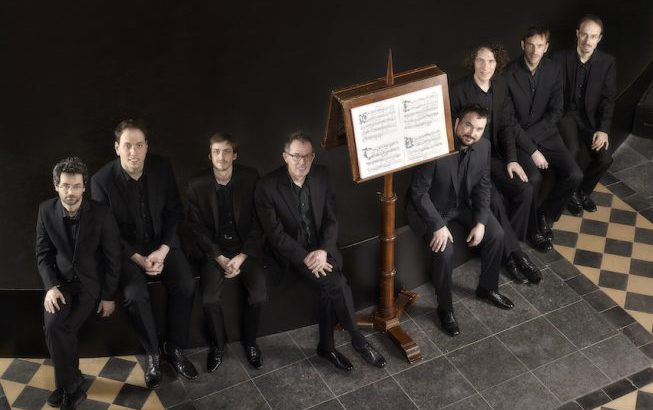
The Saturday evening performance by Chick Corea Trilogy at Hill Auditorium featured jazz legend Chick Corea (the fourth most nominated artist in GRAMMY history) on piano, Brian Blade on drums, and Christian McBride on bass, and it left no doubts that all three musicians have more than earned their place among jazz greats.

Christian McBride shone on the bass, garnering fervent applause from the audience every time he had a solo. In fact, he appeared to steal the show; as his hands flew across the instrument’s fingerboard, audience members shook their heads in disbelief that what they were witnessing was, in fact, real. When he pulled out his bow – which wasn’t until the third piece of the evening, Duke Ellington’s “In a Sentimental Mood” – the sound that rung from the stage was rich and warm, before he deftly slipped it back into its pocket and returned to playing pizzicato (plucking the strings). I, too, found myself smiling in awe each time McBride demonstrated his versatility and virtuosic skill.

While the trio performed several timeless works by the likes of Duke Ellington and Thelonious Monk, much of the set list comprised of arrangements by Chick Corea himself, including “La Fiesta,” “Windows,” “Spanish Song,” and what I found to be the evening’s most fascinating piece, “Scarlatti Intro Improvisation.” Performed as a lead-in to a keyboard sonata by 18th-century baroque composer Domenico Scarlatti, it pushed the boundaries of what was expected (in introducing the pieces, Mr. Corea remarked that he “tried to invite Scarlatti out for coffee, but it didn’t work out,” much to the audience’s amusement). In the first place, a keyboard sonata from the 1700s isn’t what one usually expects to hear in a jazz concert. However, Chick Corea’s ingenious lead-in capitalized further on this challenging of norms and included him playing the piano in unconventional ways. He plucked the strings of the open grand piano, and then ran his hand across the strings, creating new and creative sounds, and the audience loved it.

After several returns to the stage at the conclusion of the show, the trio performed “Blue Monk” by Thelonious Monk as an encore, and Chick Corea engaged the audience in the music. He would play a one of the piece’s short motifs on the piano, and then point at the audience to sing it back during the piece. The brief licks increased in complexity until by the end, all we could do was laugh when Mr. Corea pointed for us to sing. It was a memorable end to an evening of unforgettable jazz – when I walked down the sidewalk from Hill Auditorium a short while later, I was still humming those little tunes from “Blue Monk” to myself.

REVIEW: Rocky Horror Picture Show

This year marked my fourth year witnessing the Rocky Horror Picture show and my second time seeing the shadowcast at the Michigan Theater. The Leather Medusas, the group responsible for Ann Arbor’s contribution to the tradition of this cult classic, have again put on a great (sold out!) show that has gotten even louder and more rambunctious than before.


Beginning with an introduction from Penny Weiss (Janet’s cousin dressed in full Pennywise-chic drag, naturally), the show had energy through the roof. Doling out the rules, calling out the audience, and initiating the Rocky Horror Virgins in the most hilarious way, Penny Weiss was an undeniable icon that evening. She will be missed as it’s her last year performing, but she did go out with a wonderful performance as The Criminologist with a remarkable ensemble cast to match.


As soon as the curtains opened and the famous red lips appeared, people were not holding back with the call outs. At times there were so many people contributing to the cacophony that nothing was really heard but noise. It was amazing. Of course, where one sits determines the course of one’s night, and I had a pretty good spot. I was definitely getting a lot of noise, but every now and then a seasoned professional Rocky fan behind me would come out with some unexpected lines that caused the whole mezzanine to lose it. Central high points coming from the audience were the classics: an animated go at The Time Warp, a beautifully lit theater in There’s a Light (pictured), and plenty of playful oohs and cheers when the shadowcast got especially rowdy on stage.


Speaking of the actual stage work, the cast was fantastic. Sometimes I find it hard to not be mesmerized by Tim Curry’s amazing performance in the original, but throughout the movie I found myself watching and laughing at the little touches that made this student shadowcast special. Things like Eddie and Columbia’s impressive dance routine (complete with amazing, almost-gymnastic elements), Frankenfurter chasing Rocky up and down the theater aisles, and rampant, unabashed flossing brought something to the movie you just can’t get watching it on your laptop.


I highly encourage students to make Rocky a part of their Octobers next year (or next week– catch a showing that never fails to be hilarious at the Main Art Theater in Royal Oak if you missed this one)!!!