REVIEW: Brittany Runs a Marathon

Sometimes, you look up from your phone, from your laptop, from your life and realize that you are in exactly the right place. Or at least, you convince yourself that you are in the right place. For if you admitted to yourself that everything felt utterly wrong and your life was actually a directionless path with the only certainty being its end, well that, that would be simply devastating. So, you question yourself for two seconds, ten seconds at the most, before devoting your attention back to that phone, that laptop, that life. It is, thus, very easy to justify and even become enamored with a lifestyle that makes you miserable. True change, after all, requires a fundamental reevaluation of one’s motivations as well as a complete shifting of one’s perspective. It’s easier to be miserable. It’s easier to walk the same path, on and on without deviation. Brittany decides to run a marathon.

Image result for brittany runs a marathon

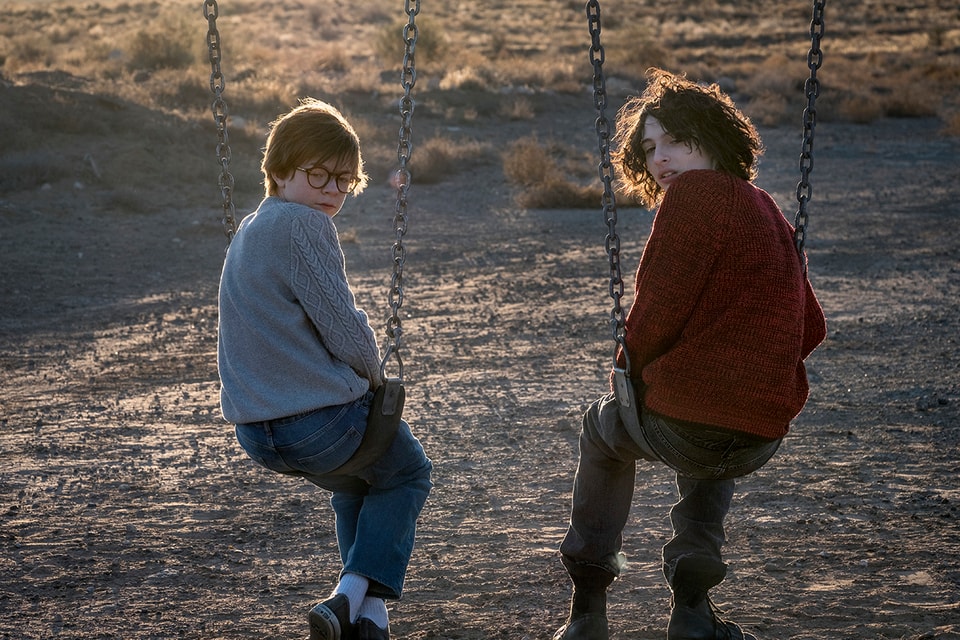
Before that decision though, Brittany Forgler (Jillian Bell) is simply existing in New York City. She floats from late-night party to late arrivals at work. She takes situations and makes people laugh, mostly at her, but why should that matter? She is used to being diminished and so she diminishes herself. It is seemingly the only way to survive in a world that is intent on reducing her to her body type. Thus, when Brittany visits a doctor to scam a prescription of Adderall and his instruction is, instead, to lead a healthier lifestyle, it seems just another indictment from a hostile society. It is the same refrain that she seems to hear from every closing subway door, from every condescending smile: “Brittany is not skinny enough to be worthwhile of respect, much less love.” Making matters worse is the constant reminders that others have achieved the level of esteem that is denied to her. Her roommate, Gretchen (Alice Lee) brags about her life for a living as a social media influencer, and her landlord, Catherine (Michaela Watkins) has several apartments and a successful marriage. It is all enough to make Brittany suspect any act of kindness as an act of pity instead, for everything and everyone is seemingly against her. It is this combative viewpoint that the film stops to examine most closely, prodding at both society’s unfair weight standards and Brittany’s internal obstacles.

It is also here that Jillian Bell shines the most. She brings a brightness that never becomes too saccharine. She has an energy and an enthusiasm that lifts instead of oppresses. Tempering the sweetness is an incredulous cynicism that lives on her upraised eyebrows, constantly questioning the ridiculous situations that she finds herself in. She is world weary without becoming apathetic. She is light-hearted without becoming resorting to empty banter. In her performance, Jillian Bell connects the pathos with the humor, understanding that much of Brittany’s pain informs her playfulness and vice versa. It is this balance that keeps the film from drifting into the all-too familiar territory of the motivational movie. Brittany Runs a Marathon, as its title might indicate, is much too specifically focused on one person to prescribe solutions for everyone else.

Image result for brittany runs a marathon jern

This solution, of course, has its own drawbacks, resulting in many of the side characters becoming conventional foils for Brittany to react against. Characters like Catherine, Gretchen, and even potential love interest, Jern (the delightful Utkarsh Ambudkar), have minimal inner lives of their own. Instead, they appear when Brittany needs someone to alternatively, grow closer to or push away. It is a shame, too, that the movie writes and casts a diverse set of characters only to let them languish. Side characters remain primary colors, easily getting lost in the film’s brightly vibrant sets.

Sometimes, you look up and realize that you are in exactly the right place. Or at least you realize that you are, at least, heading in the right direction. Brittany Runs a Marathon is an entertaining movie that never gets too self-important. Though the film certainly stumbles at points (especially with some poorly conceived visual flourishes towards the end), it finishes its runtime, arms raised up in triumph.
REVIEW: The Goldfinch.

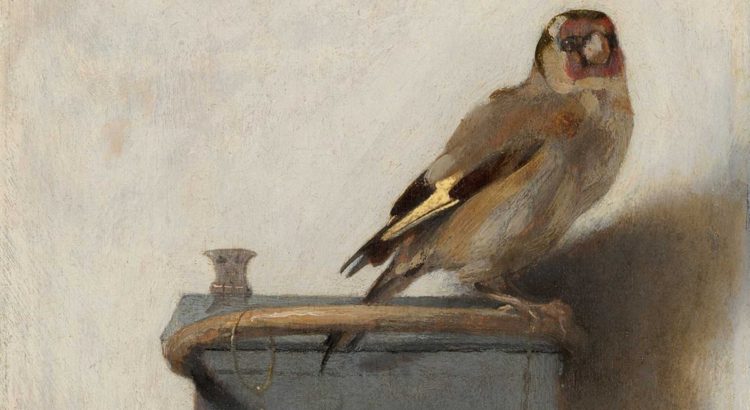
There’s a layer of abstraction to any film that uses source material from a book, but The Goldfinch pulls the casing off the bullet. There is an idea of a great, inflicted pain, evidence that something significant has happened. And there is a tender wound, somewhere, because we’re holding the shell casing of that hurt. But none of it is palpable.

The film develops as a succession of events after Theodore Decker’s mother is killed in an explosion at the Metropolitan Museum of Art, dividing its narrative between his childhood and adulthood. We come back in iterations of clarity to significant scenes as the narrative expands, watching the dust settle in the aftermath of the bombing again and again. Some parts of the film are slow like this, dwelling on memory as Theo does over the course of his life. Other times, the movie plays out like a supercut, in a series of incidents that seem to be only tied together by voiceover and poor symbolism.

There are a few moments in The Goldfinch that seem purposely paced, slow, and beautiful. The sequence of Theo’s life idling in the deserted outskirts of Las Vegas feels more personal than the rest of the film. Here, his character is developing and growing, as static as his grief might be. And with little distraction from outside forces, we become more intimately attuned to the feelings of the young Theo. His unhappiness is apparent, his boredom is tangible, and the friendship he develops with Boris has a natural, fresh progression with a soft sincerity.

Aside from the plot, the cinematography is beautiful all around — detailed with a strangely opulent look to it, even when the are scenes removed from anything glamourous. The Goldfinch frames shots with elegance; it is pretty, but lacks substantial depth in Theo’s adulthood narrative. The characters present in his later life are underused and underdeveloped.

Towards the end of the movie, the more the plot unfolds with lofty revelations and supposed emotional intensity, the more absurd it begins to feel. And the more it tries to reach for catharsis in the last stretch of the film, the more it becomes another incomprehensible event. The significance is lost somewhere in the disconnect between what is happening and what we should be feeling. The Goldfinch is clean, pretty, but a letdown as it feels like a continuous waiting for something to finally work.

Just as the character Hobie had taught Theo to recognize fake antiques by running his hands along the wood, we can touch this film, feel it, and know what it lacks to make it genuine.

REVIEW: Amadeus

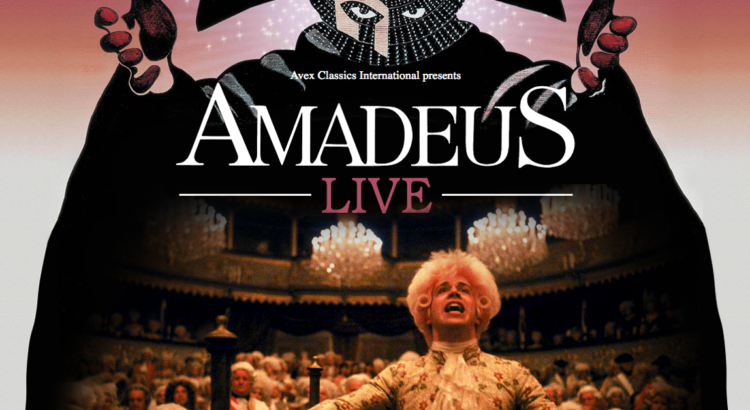
Having never seen the 1984 film Amadeus, I must admit that, despite its reputation for historical inaccuracies, it is certainly a gripping drama that portrays Mozart (played by Tom Hulce) as intensely human. That said, during the Sunday afternoon screening of the movie at Hill Auditorium with the Detroit Symphony Orchestra performing the soundtrack live, I had to keep reminding myself to watch the movie, not the orchestra.

In addition to being musically impressive, the DSO’s performance of the soundtrack live was fascinating because of the logistics involved with playing alongside a film. Conductor Jeffrey Schindler had a small screen in front of him, in addition to the scores, showing the film with overlays of the beat and musical cues. The precision necessary for such an undertaking is serious, when one stops to think about it. In certain parts of the movie, the live orchestra was accompanying soloists whose voices were recorded and part of the original movie – almost like reverse karaoke!

In terms of plot, the movie tells the story of the relationship between Wolfgang Amadeus Mozart, great composer but vulgar person, and mediocre court composer Antonio Salieri (portrayed by F. Murray Abraham, who won an Oscar for his role), whose jealousy of Mozart’s genius consumes him. To be honest, I never really figured out who I thought was the “good guy,” and who I thought was the “bad guy,” which is perhaps part of the movie’s point. Salieri had malicious intentions, while Mozart was just plain obnoxious. He behaved inappropriately, had an absurd laugh, a dirty sense of humor, and neglected to care for his family. His every action makes the audience cringe, but his music – oh, his music will soothe your soul. The juxtaposition of Mozart’s persona and his music is a stark one, and that is what irks Salieri. Despite his hatred of Mozart, the man, he cannot help but be drawn to Mozart’s music. One of my favorite scenes of the movie was when Salieri, as a mentally ill old man, describes hearing Mozart’s Gran Partita for the first time (If you’re not familiar with the piece, listen to the movement in question here). As the third movement plays in the background (which was performed live by the DSO winds), he gives voice to his recollections as if in a nostalgic trance:

“On the page it looked nothing, the beginning simple, almost comic. Just a pulse. Bassoons, basset horns, like a rusty squeezebox. And then, suddenly, high above it, an oboe. A single note hanging there unwavering, until, a clarinet took it over, sweetened it into a phrase of such delight. This was no composition by a performing monkey. This was a music I had never heard. Filled with such longing, such unfulfillable longing, it seemed as if I was hearing the voice of God.”

This scene, in my opinion, captures the underlying nuances of the movie’s plot.

While Amadeus may not be the film to watch if you’re seeking an accurate account of music history, it is a story that appeals to timeless themes and the complexities of the human condition, and the DSO’s live performance of the soundtrack only made it better!


REVIEW: Urinetown

I never thought I’d watch a musical called “Urinetown”, but there I found myself, sitting in the Lydia Mendelssohn Theater on a Sunday afternoon with a playbill on my lap entitled “Urinetown.” However absurd the title is, and however absurd the characters and play is, the underlying message of it all makes you leave, thinking about what Urinetown really means.

In a town suffering from a water drought, the poor must pay Urine Good Company in order to urinate in public toilets. While such a society may seem ridiculous, the grim reality of the show proves that it’s not so crazy. Caldwell B. Cladwell and Penelope Pennywise keep the poor in order by demanding the fees with zero exceptions. Cladwell and Senator Fipp’s agreement also reflects the grim truth about how corporations influence politics.

Cladwell’s daughter, Hope, enters the company and sings an anthem about hope. While it may seem cheesy, the number was performed beautifully by Zoe Van Slooten and offered a naive optimism that was necessary. The numerous dance numbers throughout kept the musical light, which Little Sally noted should make it a happy musical. Bobby Strong’s hero persona was appealing, leading the revolution until he was forced to visit Urinetown. Even though Office Lockstock spoils what Urinetown is in a flippant manner since that’s not something he can casually mention in Act 1, Bobby’s death came as a surprise, and his drawn-out fall offers a stark reflection of the dramatic reality of possibility.

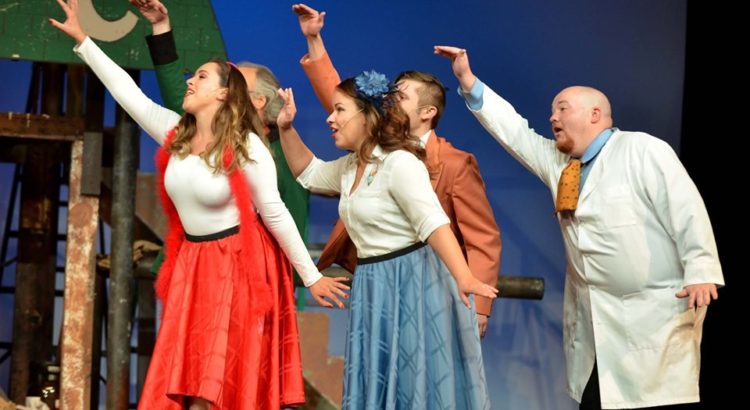
The dialogue between Little Sally and Officer Lockstock satirizes musicals in a wonderfully meta way, and Lily Gechter’s portrayal as an innocent and curious Little Sally was convincing. Kevin McDanglebunny was probably the real star of the show though. While the over-the-top “gasp”s and “whaaaat?!”s could’ve been cringey to watch, the cast pulled it off, fully buying into the absurdity of their lines and actions. You could tell the audience loved this show with the constant laughter and never-ending clapping. Robby the Stockfish, played by Rachel Francisco, was an absolute favorite on the stage, her stilted walking and movements eliciting much joy.

However, despite the laughter that the cast brings, the drastic ending is certainly not happy at all, emphasizing the balance between draconian rules and freedom. As the world is changing and affected by climate change, a future filled with drought that forces people to pay a megacorporation to pee—as absurd as it may sound—doesn’t seem too far away anymore.


REVIEW: Ax Plays Brahms – The Ann Arbor Symphony

It’s always a treat to witness virtuosity, and Emanuel Ax’s performance with the Ann Arbor Symphony last Friday night was certainly no exception.

Mr. Ax’s performance of Johannes Brahms’s Piano Concerto No. 2 in B-flat Major, Op. 83 was, in addition to being both bold and musically sensitive, was technically pristine. The piece opens with a serene conversation between solo horn and the piano, with woodwinds and then strings joining. Soon, however, the placid part in the piano transitions into a churning display of technical skill – and there couldn’t be a better vehicle to display Mr. Ax’s skill. In my opinion, the truest measure of his piano-playing prowess was his ability to play the most arduous technical passages without sacrificing even the slightest bit of musicality or sense of ease. I can assure you that last Friday, no notes were pounded out of the piano in Hill Auditorium – each note was given its due and the treatment it deserved, no matter how many notes were surrounding it.

The solo cello at the start of the slow third movement, Andante was also one of the piece’s most beautiful movements. The audience, as it turned out, agreed with this point, and Mr. Ax, along with principal cellist Caroline Kim, were called back for an encore duet together after several standing ovations at the piece’s conclusion.

Besides the Brahms concerto, the Ann Arbor Symphony also performed Appalachian Spring by Aaron Copland and Dances of Galánta by Zoltán Kodály. I was particularly excited for the performance of Appalachian Spring. While the piece was originally written in 1944 for chamber orchestra for a ballet for Martha Graham, Copland wrote an eight-sectioned suite one year later for orchestra based on the original version. It isn’t hard to imagine a world waking up from the icy frost of winter in the piece’s sparsely orchestrated introduction (in the ballet, the introduction introduces each of the characters). Starting with just solo clarinet, more wind instruments gradually join in, until the audience is left with, once again, only the clarinet. Then, suddenly, the piece bursts forth. Later in the piece, if you are familiar with the song “Simple Gifts,” you’ll recognize this theme in the piece’s seventh section.

Despite my love for the piece Appalachian Spring, however, I still would have to say that Emanuel Ax’s performance of Brahms’s Piano Concerto No. 2 in the second half of the program was unequivocally the highlight of the evening.

PREVIEW: Amadeus

On September 15 at 2 pm, UMS will be screening the classic 1984 movie Amadeus in Hill Auditorium, with the Detroit Symphony Orchestra performing the soundtrack live! The movie, which was originally a play, tells the story of Mozart (Tom Hulce), and the jealous fascination of Vienna court composer Antonio Salieri (F. Murray Abraham, who won Best Actor for role) regarding Mozart’s musical gifts.

Best of all, the score contains some of Mozart’s greatest compositions, including excerpts from The Magic Flute, the Symphony No. 25, Don Giovanni, The Marriage of Figaro, and his Requiem – all live with the DSO!

For ticketing information, visit the Michigan League ticket office or go to https://ums.org/performance/amadeus/. As always, UMS student tickets are $12 or $20, depending on seat location.