PREVIEW: Philharmonia Orchestra – Two Different Programs (Night Two)

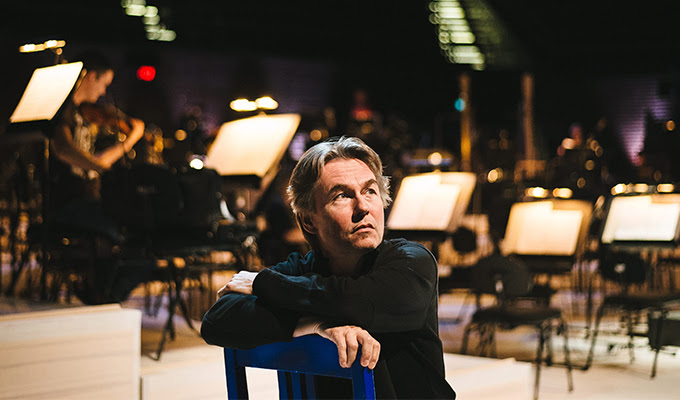
At 7:30 pm on Wednesday, March 13, the London-based Philharmonia Orchestra, with Esa-Pekka Salonen at its helm, will take the stage at Hill Auditorium for the second concert of its two night residency. Composer and conductor Esa-Pekka Salonen is currently the Principal Conductor and Artistic Advisor for the Philharmonia Orchestra, and he was formerly the music director of the Los Angeles Philharmonic. In 2020 he will take the role of Music Director of the San Francisco Symphony.

The evening’s program will consist of Arnold Schoenberg’s Verklärte Nacht, Op. 4 (Transfigured Night), originally a string sextet in one movement that the composer later arranged for string orchestra, followed by Anton Bruckner’s Symphony No. 7 in E Major.

Don’t miss the opportunity to enjoy a performance by the last major orchestra of the University Musical Society’s 2018-19 season! Tickets may be purchased online or at the Michigan League Ticket Office, and they are $12 or $20 for students, depending on seat location.

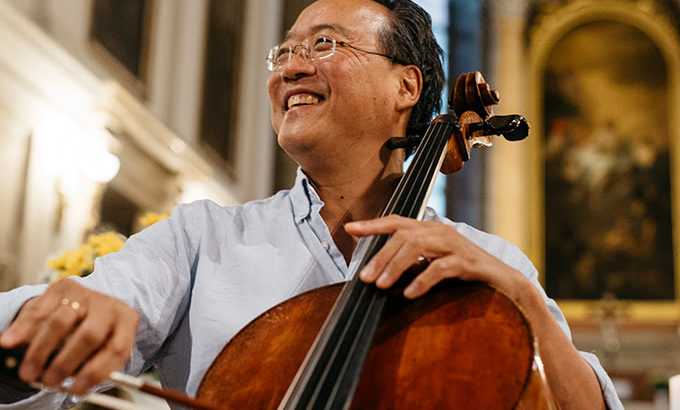
REVIEW: Yo-Yo Ma: Culture, Understanding, and Survival

In all seriousness, I left Yo-Yo Ma’s special talk on “Culture, Understanding, and Survival” thoroughly convinced that he might be one of the coolest people on the planet.

After running onto the stage in a fashion more akin to a rock star, and a far cry from the stiff persona one might stereotypically expect of a virtuoso classical musician, Mr. Ma suggested that the evening begin with a bit of music. Then, to the audience’s confusion, he walked over to the grand piano onstage (“I think I left my cello in the taxi,” he joked, even though it was laying on the stage in plain view right behind him) and played the theme from Bach’s Goldberg Variations. It was a simple, nontechnical melody, but placid and contemplative at the same time, and it was evident that Mr. Ma’s musical skill is not confined to the cello (Did you know that he holds a degree from Harvard…in Anthropology?).

Mr. Ma covered a lot of ground over the course of his lecture, ranging from classical music history, to the scoliosis that affected him as a young adult, to great American composers like Duke Ellington and Aaron Copland, to the bushmen of the Kalahari, Charles Darwin, and the finches of the Galapagos islands. However, one of the evening’s unifying themes was “experimentation and experience.”  These two things, Mr. Ma pointed out, are what drive both the evolution of life and the evolution of culture, and what transformed him from a “cellist to a musician.”

Mr. Ma’s wisdom and humility was evident, even from the back of Hill Auditorium’s upper balcony. As he wove together his own experiences and wisdom, but his focus was never really on himself, but on the shared human experience. He spoke with admiration of cultural citizen exemplars Michelin-starred chef José Andrés, French artist JR, and Mr. Rogers. He made it clear that he’s not any different from the rest of us in the audience (albeit much, much better at the cello!).

Hands down, the highlight of the evening for me was when Mr. Ma played the Prelude to J.S. Bach’s Cello Suite No. 3. The piece consists of repetitive and conflicting “scales and arpeggios,” he told us, telling “a story in sound,” and with its final flourish, “we are celebrating the best of what can be.” In delving into the piece, he quoted T.S. Eliot:

“We shall not cease from exploration

And the end of all our exploring

Will be to arrive where we started

And know the place for the first time.”

At the end of his talk, he recalled this quote, “to arrive where we started / And know the place for the first time,” as he again sat down at the piano and played, for the second time, the theme to Bach’s Goldberg Variations. And he was right. The music, when heard a second time with Mr. Ma’s imparted wisdom swirling around my head, sounded hopeful and forward-looking, which is perhaps a reflection of the way I felt at the talk’s conclusion.



PREVIEW: She Kills Monsters

This show is in the Newman Studio at the Walgreen Drama Center on North Campus.  Just go to the North Campus Building next to Pierpont Commons and it will be super easy to find the show, there will be signs. You can see it this Friday (3/15)at 7 pm or 11 pm or on Saturday at 7 pm (3/16), so three opportunities to see the show and all shows are completely FREE!

The description of the show (taken from BA FB page):  Agnes, a high school teacher, has found a D&D module (campaign guide) written by her teenage sister, Tilly, who has recently died in a car crash. She finds Chuck, a high schooler working at an RPG game store, and asks him to help her understand the module and play out the campaign. Initially taken aback by the complexity and “nerdiness” of the game, she uses it as a way of understanding her sister. As the play progresses, each character within the game is revealed to have a real-world counterpart, all of whom Agnes gets to meet. The play takes place both in the real world and within the D&D campaign.


Last time I saw a BA show, Crowns a Gospel Musical, I was blown out of my seat. These producitons are completely run and acted by students here at Michigan but are on a professional level. If you’ve never been to a BA show it something you need to do before you graduate.

I attached some  promo videos of the show:

She Kills Monsters written by Qui Nguyen, directed by David Forsee opens Friday! Unleash your inner nerd and join us…

Posted by Basement Arts on Thursday, March 14, 2019

She Kills Monsters- Behind the Scenes

Most people may be on Spring Break, but we're hard at work building the creatures for SHE KILLS MONSTERS! Check out this behind the scenes footage, and come see the show March 15-16. Admission, as always, is free.

Posted by Basement Arts on Wednesday, March 6, 2019


PREVIEW: Art in the Age of the Internet

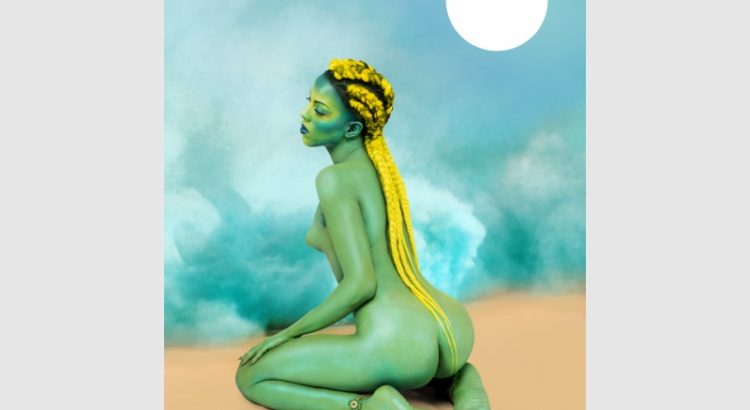
Wednesday I will be going to the University of Michigan Museum of Art to see the Art in the Age of the Internet exhibit. This exhibit centers on the way the internet has changed visual art from 1989 to today. The exhibit features a range of some of contemporary art’s greatest artists in a variety of mediums. The exhibit was first organized by the Institute of Contemporary Art in Boston. The UMMA first welcomed this exhibit in December of 2018 and it will be closing on April 7th, so now is your time to see it before the exhibit closes! I was given a small preview of the exhibit before Spring Break when my African American History course took me to the museum for a special viewing of pieces related to our course. Before ending our class at the UMMA our guide took us up to the Art in the Age of the Internet exhibit to highlight a few pieces related to Black representation and activism today. We viewed a digital piece with a very literal representation of the internet featuring a grid of screens that utilized an algorithm to pull clips from the internet focusing on Black activism and police brutality. The piece changes daily, so I’m curious to see what this piece looks like Wednesday.

PREVIEW: Philharmonia Orchestra – Esa-Pekka Salonen

Tomorrow night the Ann Arbor Philharmonia Orchestra will be performing Stravinsky’s Firebird and Esa-Pekka Salonen’s Cello Concerto under the direction of Salonen’s own baton. Salonen is a Finnish conductor and composer who is the current principal conductor for London’s Philharmonia Orchestra. His performances Tuesday and Wednesday nights mark his debut with the University Musical Society and both shows will feature different pieces. The Wednesday night performance will be featuring Schoenberg’s Verklärte Nacht and Bruckner’s Symphony No. 7. I chose the Tuesday night performance due to my own musical history. I played cello for 5 years in middle and high school with my local youth orchestra with one of our many performances featuring an excerpt from the Firebird ballet. I am eager to see this piece performed live for the first time and hear Salonen’s take on the piece. However, I am even more curious to hear Salonen’s cello concerto which is being performed by Truls Mork, a Norwegian cellist. Salonen wrote this piece under commission by the Chicago Symphony Orchestra with its premiere being performed by world-renowned cellist, Yo-Yo Ma. I’m excited to see what Mork and the Ann Arbor Philharmonia Orchestra bring to this piece!

REVIEW: Greta.

Greta begins like an upscaled lifetime movie, with bouncy music played to the streets of New York, montages of beautiful temperate days in the park, homey cooking scenes, a cute dog – the sweet introduction to the film is a bit undermined, however, by its reputation.

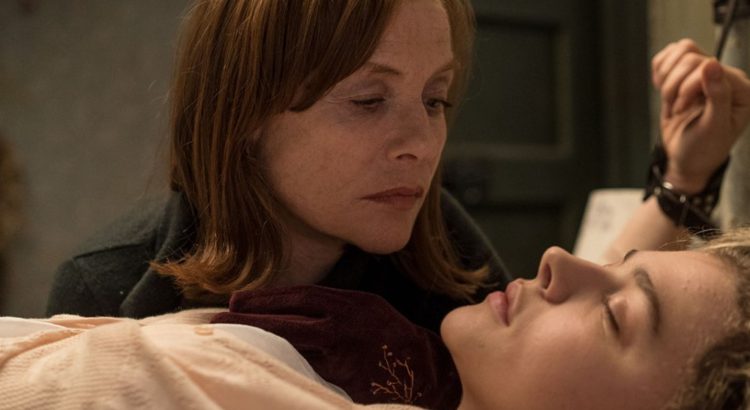
Frances, an ingenuous Bostonian, finds a handbag on the subway and resolves to return it to its owner – her roommate, Erica, notably reminding her in Manhattan they usually call the bomb squad for an unattended bag. Nevertheless, the well-intentioned Frances follows the address found on an ID card to a quaint, scenic house and meets Greta, who is seemingly sophisticated and French, mother-like, charming, and isolated. They bond over their individual loneliness as a friendship is built upon the understanding of loss.

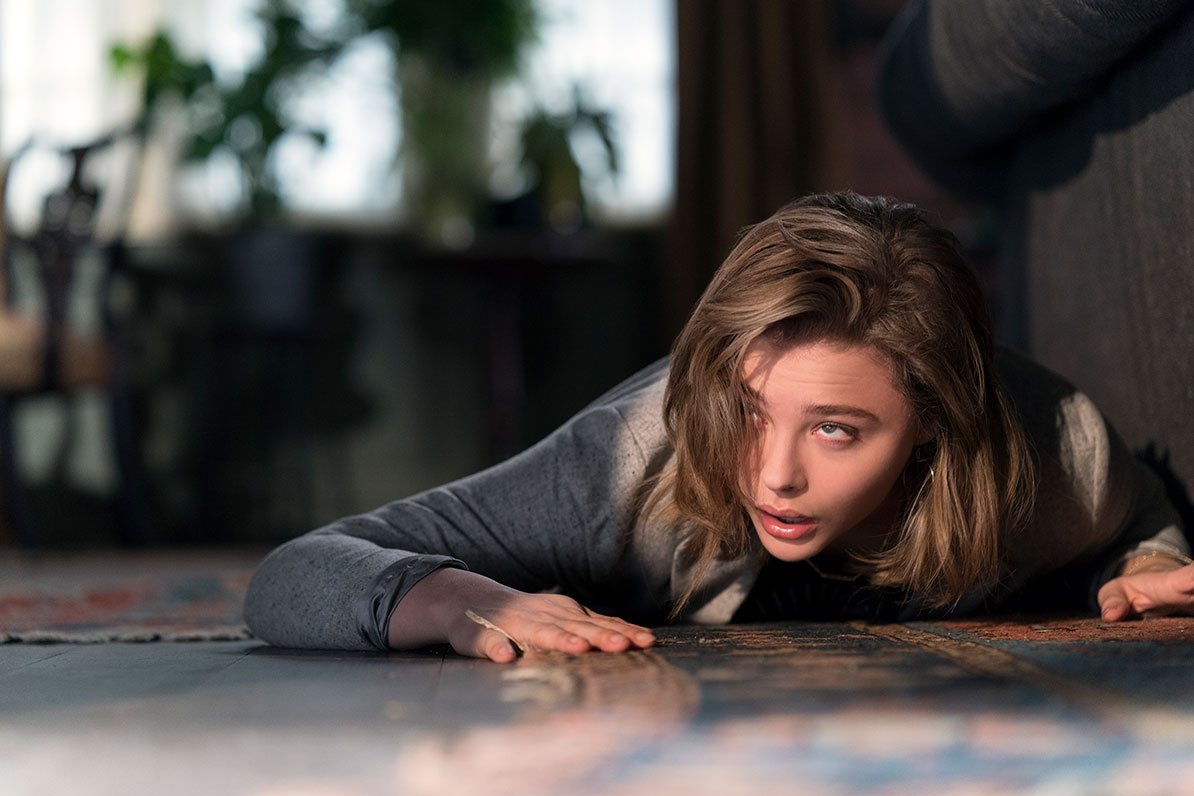
However, about twenty minutes into the film, the movie drops all its horror elements with an inelegant slap of screechy violin music and Chloë Grace Moretz gasping as if she were in a B-movie. Surprise is lost to the speed in which the film rushes into the thick of the story, barreling through its hour and a half runtime with poor pacing.

Underneath its artful glaze of cinematic appeal, Greta is brimming with the clichés of frantic music and jumpy cuts. It’s applied heavy-handed at times, less like a varnish of ingenuity and more like space to fill the shallowness of the characters, the plot.

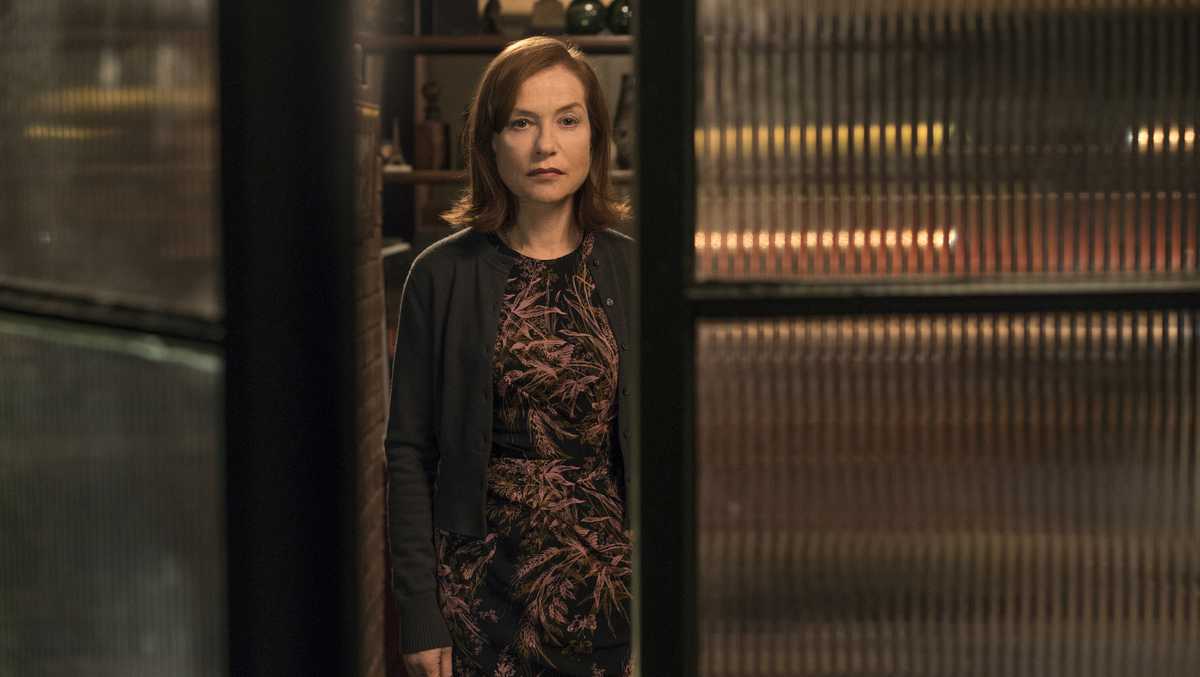
Isabelle Huppert carries most of the film, almost all of Greta’s horror imbued into one sinister person, and it’s impressive that outside of soundtracks and camera angles, she is the sole source of terror. Greta is largely devoid of any fantasy elements, any secondary antagonists, any other fear that is not Greta herself – near comically deranged and frighteningly pervasive in Frances’ life. The suspense is from her honed act of psychopathy, the delivery of her lines. The tension is from the deliberateness of her obsession.

There are moments not quite explained, disposable characters tossed aside, overly theatrical scenes executed wildly, and the film suffers from the lack of subtlety or wit and a directorial grasp outside of just its visuals. While not bad enough to be entirely campy and not good enough to be spectacular in its genre, Greta is still strangely palatable.

Despite all of its flaws, the style in which Greta combines delicate cinematography with a hammer of horror elements banged into anywhere that fits is, surprisingly, enjoyable and interesting. Without reading too much into the plot or picking at the seams where the film unravels, Greta can still be satisfying in an uncomplicated, indulgent, slightly satirical way. Like a McDonalds milkshake – not necessarily good but whatever.