PREVIEW: CatVideoFest 2019

Are you tired of manually scouring the internet for feline entertainment? Do you have an insatiable thirst for the more beloved, graceful, and heavily worshipped four-legged domesticated companions that don’t bark or beg to be walked on the daily?

The annual CatVideoFest, playing this Sunday at the Michigan Theater, may be the purr-fect solution to your cat-video-shortage woes! Be prepared for 70 minutes of an adorable audiovisual experience of a lifetime- back by popular demand, the CatVideoFest is an artistic curation of the world’s most prized, individualistic cat videos- ranging from music videos to animations. Not only is this a beautiful communal experience with fellow cat-lovers, but also a fantastic way to support local shelters and animal organizations, joining them in their battle to mitigate the suffering of cats all around the world. Join us in this gleeful celebration of the beauty and hilarity of our feline friends Sunday, March 10, at 4 pm in the Michigan Theater!

Tickets may be obtained here:  https://secure.michtheater.org/websales/pages/info.aspx?evtinfo=431337~c76be4f4-22b5-4bed-a89c-7def863b8c53&_ga=2.34390305.1264812886.1552026665-1233648933.1551894674 


REVIEW: The Lightning Thief musical

Based off everyone’s favorite series that replaced the Greek mythology section of your sixth-grade history class, The Lightning Thief is a charming musical that dutifully adapts the themes and action-packed plot of the book in a way that is emotionally engaging for a devoted fanbase. (Cue: “It’s better than the movie”. Ah, poor Logan Lerman.)

The Percy Jackson and the Olympians series was incredible popular when it debuted in 2005, with its first installment, The Lightning Thief. It is about the twelve-year-old titular character, the son of a struggling single-mother in New York. Percy, played endearingly by Chris McCarrell, is diagnosed with ADHD and dyslexia, has a unhygienic and cruel stepfather, and is constantly kicked out of schools due to freak accidents that seem to follow him everywhere. Percy often struggles to get second chances, which turns out to be kind of the point. He’s a demigod: half mortal from his mother, half Greek God from his absent father.

And, well, all Greek heroes face tragedies.

Percy is blamed for stealing the lightning bolt of Zeus and is set to find the true thief to prevent a war among the Olympians, along with his new friends and new-found identity.

The five-part series was definitely one of my personal favorites, especially since I was in the bracket of “too old for Roald Dahl” and “too young to approach the later Harry Potter books”. But Percy Jackson’s appeal lied in its modernization of (pretty risque) myths as well as its more colloquial, urban fantasy approach to the young adult genre.

The musical is more kid-oriented, of course, with dialogue snappy and plot heavy for an older audience (the crowd was a pretty good mix of adults and families). To be transparent, the production was relatively low-tech with a pretty small cast but that should not deter anyone with its light work, stage movement, dance sequences, and dedicated cast/crew.

The standout sequence was the trip to the Underworld (“D.O.A.”)– it was the most visually appealing and exciting song of the bunch. “Good Kid” and most of the second-act songs were incredibly strong too. The way the musical packs together most of the later elements of the book into a montage of fast-pace numbers and stage movements was especially impressive as they still found time to respect the heartfelt character development of Annabeth and Grover (Kristin Strokes and Jorrel Javier respectively). (They even managed to add Thalia and the diAngelos! Come on, Chris Columbus.)

Not everything is a winner— some of the songs, especially “Prologue” and “The Campfire Song”, are a little hard to listen to with how precocious they come off. The gods— especially two of the Big Three featured in the second-half— were also a little hard to take seriously. Not to spoil anything, but I think they were meant to be caricatures, but I am not sure of what exactly. This characterization took away a lot of the weight behind the gods and their place in the world. Maybe that was musical’s point, but it felt disappointing all the same to get such a quick and shallow look at the beings that run these kids’ lives.

But despite this, parental abandonment were still tackled head-on, keeping the demigods in the center of the story. Most children’s series are pretty inherently grim, often masked with some kind of whimsy, but the Percy Jackson franchise was its own kind of fridge horror filled with all-powerful parents who happily ditch their kids and teenagers who are tracked by monsters. Of course, this too was wrapped in a sharp and fun narrative, but the musical does embrace the underlying theme of found family, duty, heroism, and abandonment (sometimes very well and sometimes not so well— but always respecting its complexity).

The contrast between the trio and the villain along with their dark backstories were especially handled very well. I could go on and on how about the subtle moments they incorporated and adaptation choices but I’m already over word count.  

The final song, “Bring On The Monsters”, was my favorite because of how the musical portrayed the characters and their desire to be their own people in the face of personal tragedy— it felt like a ringing summary of the series it self: rousing, bright, hopeful despite the darkness of its world.

The Lightning Thief is touring until mid-summer, with the Detroit show in Fisher Theater from February 26th to March 9th. You can check out the musical official soundtrack on Youtube.


REVIEW: Isn’t It Romantic

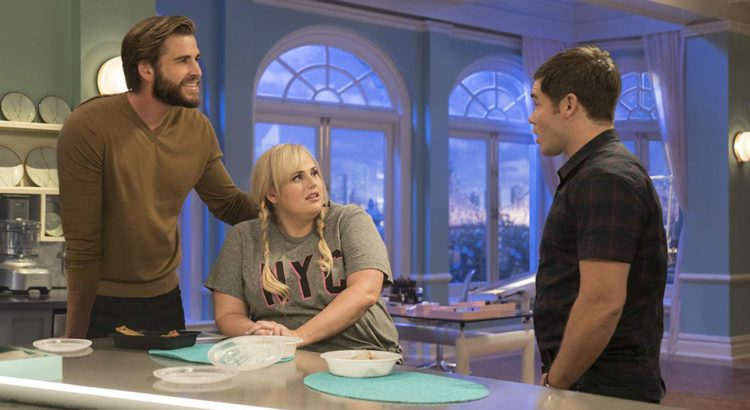
Isn’t It Romantic was a charming movie that incorporated satire and witty quotes. It made fun of a lot of motifs in the genre of romantic comedy, like the gay best friend, the attractive guy who turns out to be a jerk, being blind to your ‘true love’ being right in front of you, etc.

Here’s a more specific recurring scene in the genre: have you ever noticed in rom-coms when the characters set up a date but never mention the date or location? One of my favorite scenes in the movie made fun of this: Blake (played by Liam Hemsworth) wrote each digit of his phone number on a different rose petal, and gave the jumbled petals to Natalie (played by Rebel Wilson). I got a good laugh from the ridiculous scene.

Was Isn’t It Romantic the best movie ever? No. Was it a good rom-com? I would say so. I don’t know if I would ever consider a rom-com a film classic bearing in mind the genre’s reputation. People like romantic comedies because they are feel-good movies—albeit sodden with logical fallacies and tiresome cliches. Of course, Isn’t It Romantic had the obligatory storyline of the budding couple having to overcome an obstacle to be together. Originality is not generally the goal of the genre (although nor is it for most genres, like action movies for example, there’s a bad guy and a good guy, the bad guy is defeated and the good guy gets the woman, with exceptions of course. But still, cringe.)

Since the 90s or early 00’s, there has been a decline of rom-coms. With the drop in rom-com production in major film studios, there’s been a rise of budget sources like Netflix originals, Hallmark movies, ABC Family originals, etc. The five rom-coms with the highest lifetime gross were produced from 1990-2005. Number six on the list is Crazy Rich Asians, released in 2018.

Rom-coms aren’t ‘dead’ necessarily, although they are less successful and have had to change over the decades to reflect evolving gender norms and views on premarital sex and matrimony. There’s a scene in the movie where Natalie bursts into a wedding uninvited (another common rom-com trope). But, originally planning on stopping it an professing her love to the groom, she ultimately realizes that she loves herself and doesn’t need anyone else to complete her. This new twist on crashing a wedding crashing is consistent with fourth-wave feminism in regard to promoting self-love and self-sufficiency.

But reflecting new gender norms supposedly isn’t enough for a rom-com to do well, that’s why the movie also has a satirical twist. Similarly, Crazy Rich Asians is not just a rom-com about Singaporean billionaires, it is the first Hollywood movie in 25 years to have an all Asian cast. If new rom-coms want to break the record for highest profit, they need to think of new ways to spice up stale formulas.


REVIEW: Sexual and Gender-Based Misconduct Awareness and Prevention in the Performing Arts

Immediately following a panel discussion on sexual and gender-based misconduct awareness and prevention in the performing arts, Strength & Sensitivity and Carla Dirlikov Canales of The Canales Project presented a truly fascinating performance.


Strength and Sensitivity is “a multimedia concert experience that blends contemporary music, poetry readings, and audience interaction to catalyze dialogue on themes of gender Dynamics, intersectional feminism, and empathy,” and their performance expounded on the themes discussed during the panel. One of the most thought-provoking works was Improvisation by Colleen Bernstein on piano. As she relayed to the audience, in the aftermath of one of the Michigan Daily articles concerning sexual misconduct and people associated with the School of Music, Theatre & Dance, Colleen Bernstein sat down at the piano, opened a voice memo on her phone, and improvised at the piano to try to make sense of what she was feeling. This recording was played through the sound system in Hankinson Rehearsal Hall on Tuesday night. For the duration of Improvisation, interactive questions appeared on a screen behind the stage, and audience members could text responses to a given number. Question included “What does this community need to do to make progress towards gender equality?” and “Describe how you feel right now in one word.” As I sat and watched the responses fill the screen, changing in size according to how many people had submitted that same word, I could hear hope, grief, and a sense of tranquility permeating the music. I especially appreciated that even the performance was continuing the dialogue that had been started.


The second part of the performance was presented by Carla Dirlikov Canales of The Canales Project. An SMTD graduate and acclaimed opera singer, Ms. Canales started Hear Her Song as an initiative that honors “distinguished women leaders through new songs inspired by their words, written by leading female songwriters and composers.” The project has commissioned over 40 songs to date. Ms. Canales’s performance was, without question, my favorite of the evening. My only disappointment was that due to time constraints, she was able to perform only three of the five programmed songs (how I would have loved to hear “This is What” in honor of Supreme Court Justice Sonia Sotomayor, or “What Greatness is Possible” for Jennie Boelkens!). She sang “Foster Love,” a song honoring Lynn Price, who has dedicated her life to reuniting siblings separated by foster care, and “Mercy,” honoring Sister Marilyn Lacey, founder of Mercy Beyond Borders. She then closed with the organization’s theme song, “Hear Our Song” by Katie Pfaffl. Although the audience at that point had dwindled to only about 30 people, the energy was palpable as Ms. Canales’s voice soared to the hummable, empowering anthem. In fact, she will perform that song later this month at the United Nations in celebration of International Women’s Day, which is March 8. It was an uplifting conclusion to an evening of hard conversation.


Tuesday’s performance on the theme “Sexual and Gender-Based Misconduct Awareness and Prevention in the Performing Arts” has given me hope that together, we can address the issues that need to be addressed.

REVIEW: 2019 Oscar® Shorts: Animation

With the exception of Bao, the Oscar-winning Pixar short that was released with Incredibles 2 this past year, chances are you may not have heard of any of the other nominees for best animated short. However, despite the fact that most of the shorts were relatively unknown until their Oscar nomination, they are still well worth the 75 minutes it takes to watch them!


Interestingly, three of the four shorts explored similar themes of parent-child relationships (with the exception of Animal Behavior, a hilarious, if not mildly crude, film about a group of animals in a therapy session). However, what I appreciated was the aesthetic differences of the animation style. While Bao, which follows a mother’s dream about taking care of a baozi (steamed bun) that comes to life as a boy, is in the sleek animation style typical of Disney shorts, the other films differed in texture and style. Late Afternoon, which explores the mind and memories of a parent with Alzheimer’s disease, invokes the illustrations of a children’s picture book. Weekends depicts the story of a child of divorced parents, and the back-and-forth between houses, and the film is both confusing and disturbing at times. Its animation was probably my favorite in terms if its style; it was sketchy and rich in color and shading. I felt as if I was watching a film come to life off of an artist’s pad of paper. The last of the nominees, One Small Step, followed a young girl, the child of a single parent father, with the dream of becoming an astronaut. The animation was two-dimensional, but with clean lines and elaborate detail. With its dream-big plotline, and also emotional complexity, One Small Step ranked among my favorites of the collection of shorts.


My most favorite of the films was, ironically, not actually a nominee for the Oscar. Tweet Tweet, which featured a small bird leading a girl (whose feet is all we ever see) across a tightrope symbolizing life, was Highly Commended by the Academy, but I think that it deserved more. The concept of the bird on a rope is mildly reminiscent of Pixar’s 2000 short For the Birds, but the story in Tweet Tweet is much more complex. The girl’s feet progress to those of a woman, are joined by another pair of feet, and then by a pair of child’s feet, and then her feet age to those of an old woman. The entire time, the small bird is a guide, and it is up to viewers to decide the meaning of this. Furthermore, there are clear references to Russian history, including, most clearly, World War II (the film was directed by Russian animator Zhanna Bekmambetova). The film was artistic, visually pleasing, and rich with symbolism.


If you haven’t yet had the chance to see the film collection 2019 Oscar® Shorts: Animation, it is still showing at the Michigan Theatre!

REVIEW: Merrily We Roll Along

Everyone wants success, but at what costs? The storyline of Merrily We Roll Along isn’t anything revolutionary or extraordinary, and the conflicts of the musical are pretty predictable, but the deeper meaning behind the storyline is still profound. Frank Shepard’s desire for money and success ruins the relationships that mean the most to him, and as we see the moments in his life that acted as either subtle pathways or dramatic turning points, we reflect on our youth and hope for a brighter future.

Runyonland Productions took an in-concert approach to this Sondheim musical. Providing a vibrant blast of music onstage, the 12-member orchestra music directed by Brian Rose and conducted by Tyler Driskill brought Sondheim’s score to life. The company’s transition in between the years, the title song “Merrily We Roll Along,” was a catchy melody that conveys the theme of the musical. The entire cast’s performance was pretty spectacular, but if I had to pick just one outstanding number, it would be Emilie Kouatchou’s strong and heartbreaking performance of “Not a Day Goes By,” one of Sondheim’s greatest songs about lost love.

However, all the songs were performed brilliantly, such as Charley’s breakdown on air with “Franklin Shepard, Inc.,” a frantic song with dire consequences. Due to illness, Thomas Laub provided the voice of Charley while Wilson Plonk acted onstage. This unexpected change didn’t deter from the production much, and the performances of both Plonk and Laub are to be applauded. Erica Ito, who played Mary, also sang powerfully and captivated the audience with every note sung and drunken word slurred as she desperately tries to keep her closest friends together.

Liam Allen captured Frank Shepard’s confusion and regret in his later years in a somber way, as well as his selfish vanity and ego in his youth with a relatable aspirational mindset. As he continues to make poor choices that ruin his relationships with his wives and friends, you can see the toll it takes on Frank, who carries less weight on his shoulders with each retrospecting scene.

The very last scenes of the musical captures Frank in his early 20s, an age that many college students can relate to. With a bright-eyed optimism and naive hope, they sing about conquering each day and crafting their lives the way they want. Though the stories of Frank, Charley, and Mary end poorly, “Our Time” is still an anthem of hope for the future. By watching this musical, it is important to recognize that hopes and dreams don’t necessarily evolve in a positively linear path to success. It can be messy, and there may be pain and regrets along the way, but as we can learn from Frank’s life, it’s never too late to take responsibility for your actions and choices, and it’s possible to reach success both professionally and personally without sacrificing one for the other. If there’s one thing to take away from this musical, it’s to never lose sight of what’s important.