
REVIEW: Art Outta Town – Evita

This past Saturday, Arts at Michigan sponsored a trip to the Stranahan Theater in Toledo, Ohio to see the musical Evita, which tells the life story of beloved Argentinian First Lady Eva Perón.

The music, which was composed by Andrew Lloyd Webber (of The Phantom of the Opera and The Wizard of Oz fame), is a blend of rock and traditional musical theater-type styles, with Latin American influences. I had never seen the musical before, but I knew the musical’s most famous song, “Don’t Cry for Me Argentina.” However, I also recognized some of the other songs!

Oddly enough, the musical begins with death – the first scene is Eva Perón’s death being announced over the radio, followed by her funeral, and the first song is “Requiem.” From there, the plot flashes back to her girlhood, and then moves through her life, to when she met her husband, Juan Perón, to his election as president of Argentina, to her time as first lady, and then back to her death. In other words, the plot is ultimately a circle. Separately, it is impossible to capture an entire (albeit short) life in a two-hour musical, and at times it felt like the “Spark Notes” version of a much more nuanced story, which left me wanting more.

Furthermore, the musical’s ending was probably the most abrupt conclusion to any musical I have ever seen. Eva Perón’s death was essentially the end, and there were no bows or loud applause, as is the usual for the end of a performance. Rather, a single spotlight illuminated the main characters one by one, in complete silence, and the audience applauded lightly. It was surprising, and I didn’t expect it to be the end of the musical, but in some ways, it made sense. It would not have made sense for the musical to end with exuberant bows music, right after its main character died. Additionally, the show’s abrupt ending mirrors the abrupt ending to Eva Perón’s life – she died of cervical cancer at age thirty-three.

One disappointment of the show was that the theater was suffering technical difficulties. The show did not start on time because of these issues, and it was extremely difficult, particularly during the first act, to understand the dialogue. Because of this, I had trouble following the storyline at times. Also, the set incorporated a large screen that displayed images of the actual Eva Perón throughout the musical, which provided a constant reminder that the events depicted occurred in real life. However, due to poor set design, from my seat in the upper part of the balcony, the top half of the screen was obscured by the top of the stage, and so I was unable to see Eva Perón’s face in most of the projected images.

Aside from some technical issues, though, Evita was a fascinating show that left me wanting to learn more about the complex woman whose life it illustrates.


REVIEW: CSSA’s Lunar New Year Gala

Michigan’s Chinese Students and Scholars Association held their annual Lunar New Year Gala this past Saturday at the Michigan Theatre. It was an over three hour event, complete with skits, acapella, dances, and other arts performances, reminiscent of the television show that is aired in China the eve of the Lunar New Year. Although most of it took place in Chinese, there were subtitles up above the stage for those who were only familiar with English. With the break in the cold weather we had last week, it wasn’t long after the doors open just before 7 pm that theatre was close to being filled.

One of the best aspects of the entire night was the variety of performances which occurred. We were not limited to just college groups on campus, although of course groups like Revolution and Photonix were huge favorites. The audience was treated also to the Michigan Senior Chinese Choir and the Ann-Hua Chinese Music Ensemble and Taichi Club, groups which were made up of individuals older than college age. To me, these more traditional performances, of dance and music respectively, were a great contrast to some of the more modern acts which took up the majority of the show. My favorite was the Music Ensemble as it is rare that I get to see instruments like the Chinese zither—a plucked string instrument— or a Chinese lute— similar to a guitar— live. Other performances included a traditional lion dance and dances performed by a younger teenage aged group from the Yixuan Dance and Performance Center. The traditional dance groups were also very interesting to me due to my own background as a dancer and because of the garments they were wearing, brightly colored red and blue dresses and other costumes, with props like fans. Interspersed between the performances, videos, and dialogues were two lotteries featuring items donated by the nights sponsors.

The effect of this was not only a diverse group of performances and performers but of audience members as well. It was great to see almost the entirety of the big screening room in Michigan Theatre full of cheering and supportive people. I noticed not only college students, but families who had brought their younger children as well. CSSA made a communal WeChat account that people could scan into, and my phone was full of notifications by the end of the night.

For me, this experience was unlike anything I had ever been to before. I was really appreciative of the opportunity to see such a breadth of arts performances showcasing and celebrating Chinese culture. I am looking forward to next year!

REVIEW: Spirited Away

Image result for spirited away

Michigan Theatre’s screening of Spirited Away was met with a delightfully long line outside the theatre, people willingingly shivering in the cold, anticipating the much-loved Ghibli classic. I have to admit before I go any deeper into this review that this was my first time watching Spirited Away– or any Ghibli movie, for that matter. It was such a treat to witness the spectacle of animation and the immersive fantasia of Chihiro’s journey into the spirit world. I walked out of the theatre with my head filled and spinning with colors, the trembling of leaves, the delicate swaddling of stars in the sky, the ordinary magic of life. I want to watch every Ghibli movie now and be muse to the enchantments it casts on the viewer– and, honestly, I want to watch it on the big screen. I’m so glad that the Center for Japanese Studies is extending their screening series called the “Icons of Anime” to show even more animated Japanese classics in the Michigan Theatre.

Spirited Away tells the story of ten-year-old Chihiro’s journey into a terrifying and fantastical adventure into some kind of spirit world. Her father stops in front of a derelict amusement park, and, despite Chihiro’s insistent disapproval, her parents enter the park and begin eating the food at the vending station. As nighttime descends, spirits emerge in the world around Chihiro. She desperately tries to go back to her parents only to find out, in one truly terrifying moment, that they’ve been turned into pigs. Chihiro must befriend the spirits in the theme park and work there in order to buy her and her parents their freedom from being trapped. Chihiro meets little spider-like coal-carrying creatures, an eight-legged man who mans the production of the resort, some friendly guiders, and a scary woman with a large, wrinkly face who owns the resort by night and stalks its grounds as a hawk by day. Chihiro also meets Hero who helps her– and whose fate it ultimately entangled with her own.

The plot of the movie is gripping in the beginning of the movie. It hits a bit of a dip in the middle and meanders a bit before picking back up by the conclusion. In the end, however, I’m not sure that the plot of the movie itself as engaging as the cinematic experience of it. There were plot points that seemed lazily patched-up at the end of the movie and the protagonist didn’t develop a great deal throughout the movie (perhaps she gained strength and bravery, but this wasn’t of real importance). The beauty and immersive animated experience of the movie overcomes its narrative weaknesses– but still, I can’t help but believe that the movie as a whole could have been strengthened by a better focus on plot structure and character development. Ultimately, however, Spirited Away was a truly enjoyable movie experience– magical, unique, and transportive, with the same power and childlike wonder as a Disney movie, but its magic works differently. I look forward to watching many more Ghibli movies.

(Image from Google Images)

PREVIEW: Frances Luke Accord and The Western Den

On Wednesday, February 6, 2019, The Ark in Ann Arbor will be hosting Frances Luke Accord and The Western Den, two duo groups whose legacies have been established and are continuing to flourish in the indie folk genre. These duos will be performing music from their newest and older releases, all the while combining unique, progressive sounds in a timeless and precedent art form.

Hailing from South Bend, IN, Frances Luke Accord members Nicholas Gunty and Brian Powers have known each other since attending the University of Notre Dame and have collaborated on nonprofit projects, full-length albums, and exploratory compositions. Hailing from Virginia and the island of Bermuda, Deni Hlavinka and Chris West met over experimental music compositions and have collaborated on several EPs in addition to establishing an inseparable relationship between themselves.

As these duos take the stage this week, I am ecstatic to experience the music and the emotion that they have to offer. As a note, this event is available to all students for no cost through the Passport to the Arts offered by the Arts at Michigan program from the University of Michigan.

PREVIEW: On the Basis of Sex

25 years after Supreme Court Justice Ruth Bader Ginsburg’s appointment to the nation’s highest Court, the biopic On the Basis of Sex tells the story of the first gender discrimination case that she argued as a lawyer, and what ultimately became the first step in her rise to become one of the nation’s leading advocates for women’s rights.

Directed by Mimi Leder, the film features Felicity Jones as Ruth Bader Ginsburg. On the Basis of Sex is currently showing at the Michigan Theater, and tickets are $7.50. If you are interested in learning more about the life of an American icon, don’t miss it!

REVIEW: Your Name

Despite the snow day-provoking frigid air last Wednesday, upwards of 100-150 moviegoers came to the Michigan theater to see Your Name. Directed by Makoto Shinkai (known for films like The Garden of Words and Voices of a Distant Star), it is the highest-grossing anime movie of all time. This fact comes as no surprise if you’ve had the privilege to see it, as its unique storyline and beautiful, shining animation style makes it stand out from other animes.

As the movie began, the entire theater let out a collective groan at the English dub that had been mistakenly played (even the movie’s theme was sung in English, unfortunately in a fashion unbelievably similar to a song by The All-American Rejects). The presenter switched the settings to English subtitles and, beyond a slight hiccup where the subtitles were half cut-off, the day was saved, and we all applauded.

Mitsuha and Taki are two high school students living in the Japanese countryside and Tokyo, respectively. One day, each inexplicably wakes up in the other’s body, and grow to be quite good friends. It somehow smoothly combines the cute, carefree humor of a rom-com with the deeper emotions of a tragic drama, along with elements of wondrous fantasy.

Related image

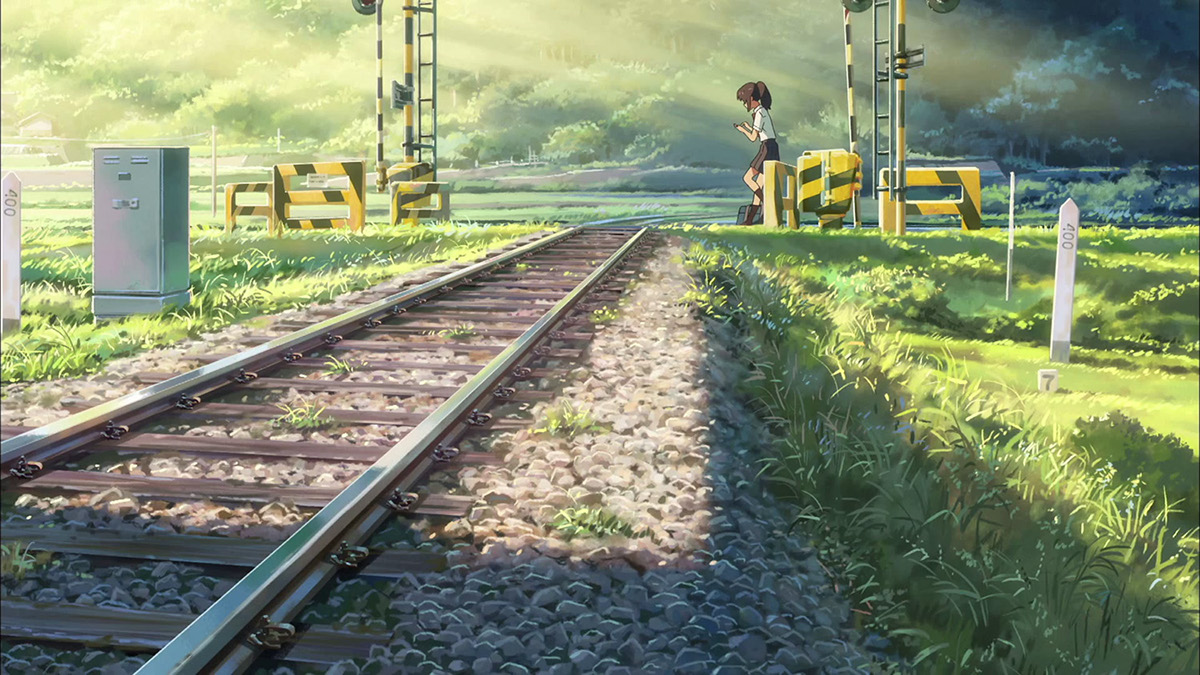
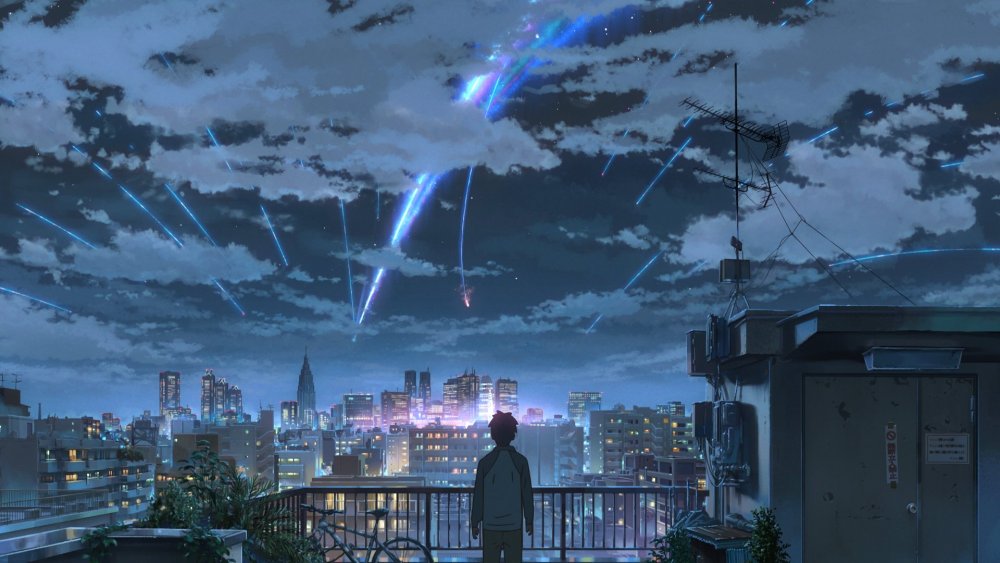
The variety of landscapes in the film is a big part of what makes Your Name such a great success. We’re taken from Mitsuha’s house, surrounded by ancient forest and bathed in golden sunlight, to Taki’s homey apartment in the heart of Tokyo, skyscrapers glittering and city lights glowing warmly. The sky is always amazing, painted with the colors of a sunset, a bright fall day, the steely twilight. The artists never neglect to include the way the sun skips along the clouds or sinks beneath them to the horizon, trailing light.

Image result for your name stills

It is the beauty of Mitsuha and Taki’s bond, as well as of their surroundings that makes the reality of their situation so much more tragic. We learn that the two exist in different times; in Taki’s timeline, Mitsuha’s town was destroyed by a divergent meteorite three years prior, while Mitsuha lives in the time right before the strike. They’re star-crossed in an incomprehensibly sad way, yet captured in a dramatic irony that allows for the sweetest, impermanent happiness. This sharp contrast in emotion makes the film especially powerful, beyond that of many other films. Though there is a sense of innocence present, it is expertly corrupted by circumstances so unfortunate and uncontrollable that purity can still remain.
Image result for your name stills
As I exited the theater, shuffling my still-frozen feet back toward the cruelly icy outdoors, I was struck by the glow of the end credits on the audiences’ faces, illuminating tears and bubbling conversations between friends as they discussed the movie. How beautiful it was we’d all gathered in this small haven of warmth and light in the middle of a bitingly cold night to watch a good movie together.