
REVIEW: Alpine Yodeling in Chinese

Shoutout to the Confucius Institute for hosting this awesome lecture/performance.

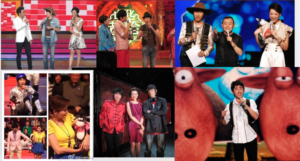
I’m a huge fan of Chinese music. I listen to traditional pipa, modern groups like SodaGreen, and all time greats like Leslie Cheung. However, I have never heard of yodeling in China because yodeling doesn’t have a presence or history in China. The speaker, Lu Tong, only started promoting yodeling to China in 2010, and yodeling had its first feature performance as a song in the recent hit movie Hello Mr.Billionaire. I think yodeling will become more popular as Chinese movie music, because if you aren’t familiar with Chinese comedy, it is very ridiculous, care-free, and boisterous–perfect for yodeling.

Something I never realized about yodeling is that it is a music technique not a music style. For instance yodeling is in the same category as operatic singing not jazz. Yodeling began in the alps as a way of communication and was an imitation of the sound of wolves. So in yodeling different repetitions, tones and words had different meanings. For example if something is yodeled three times, something urgent is being communicated. Jimmy Fallon and Brad Pitt did a skit where they communicated to each other across New York City yodeling. The skit is humorous but not so far fetched.

Different regions have different yodeling styles. Every country has their own unique style, but most styles can be categorized in two particular styles, Alpine and Country yodeling. Alpine yodeling uses more chest voice and can be described as more operatic. It has a lower tone, stronger resonance and longer notes. Country yodeling is more light hearted, free-flowing, and softer. Many say that Country yodeling sounds like a donkey.

What Lu Tong was demonstrating today was his journey of trying to create a unique yodel that was domestic to China. He wants to create a Chinese way to yodel. First he imitated how Northern Chinese farmers call their pigs. The sound these farmers make is a “lue” sound. When he performed a song using this sound I noticed he yodeled extremely fast and with a relatively stable pitch compared to most yodeling. He also performed a yodel that used the sound Chinese farmers use to call their chickens, which as you can probably guess sounds very similar to a chickens cluck. Yodeling originated from imitating animal sounds, so using a chickens clucking is an accurate way to yodel. However you can also base yodeling off non-animal sounds. Lu said yodeling reminds him of the sound of Chinese ambulances.

Something else very interesting about yodeling in China, is that the classic yodel sounds, like  “you-wu-di” and “you-de-lai” are words in Chinese. When he performs he often likes to incorporate a story with the yodeling, or give some context of a discussion happening when he is yodeling.

I wish there was more yodeling and less lecturing. It was nice hearing him yodel as examples throughout his talk, but we only got the chance to hear one full song.

One thing that was nice about this being a lecture-performance, is that I was able to ask a question afterwards. I asked if he has ever thought about combining buddhist chanting with yodeling. He actually said he has done it and performed part of a buddhist sutra in a yodel style. However, he said this wouldn’t be popular in most places as it is seen as disrespectful to the sutra.

PREVIEW: Spirited Away

I’m thrilled to be attending my first Studio Ghibli movie on the big screen! Spirited Away will be screened on Wednesday, Jan 23 at 7 p.m. in the Michigan Theatre. It is part of a larger film series, Icons of Anime, curated by the Center for Japanese Studies. Directed by the acclaimed Japanese director Hayao Miyazaki, the movie follows ten-year-old Chihiro as her family stumbles upon a supernatural theme park. The movie has gorgeous, magical animations and is a captivating fantasy.

REVIEW: If Beale Street Could Talk

The Oscar nominations came out today, and as always, such an occurrence is bound to spark a fire of controversy about such-and-such films being snubbed while other films enjoyed perhaps more than their due of appreciation. Yet it does not feel like a reaching statement to say that If Beale Street Could Talk was indeed snubbed. The romantic drama, directed by Moonlight‘s Barry Jenkins and based on the 1974 novel of the same name by James Baldwin, received only three nominations: Best Supporting Actress (for Regina King), Best Adapted Screenplay, and Best Original Score. Three is a startling dearth of recognition for a film that succeeds in terms of acting, visual efficacy, and overall emotional impact.

If Beale Street Could Talk tells the love story of Tish Rivers (KiKi Layne, Chicago Med) and Fonny Hunt (Stephan James, Race), a young couple in New York City who are falling in love while also dealing with racism and racial tension. This culminates in Fonny’s wrongful arrest for rape, which coincides with Tish’s learning that she is pregnant. Much of the movie is concerned with the ripple effect that Fonny’s arrest produces throughout both their lives, as individuals and as a couple, and the lives of their families and friends. Tish and her mother, Sharon (King, Seven Seconds), fight for Fonny’s freedom, while Fonny struggles through the experience of incarceration and tries to retain both his sense of self and his relationship with Tish. The storytelling is accomplished in part through alternating timelines, which switch between the development of Tish and Fonny’s relationship prior to Fonny’s arrest and the fallout that occurs afterward.

One of the film’s most masterful accomplishments lies in its very careful attention to each character as an individual. A particularly telling scene occurs when Tish first visits Fonny in jail and they get into an argument; it is clear that the argument is borne not from anything lacking in their relationship itself, but from their own individual frustrations and respective inabilities to completely understand the other’s situation. Tish feels helpless and scared because she cannot help Fonny and is facing the prospect of pregnancy while he is in jail; Fonny is frustrated because he has been wrongfully imprisoned and is unable to be there for Tish. The fact that even in this scene, they come around from their respective frustrations and reaffirm their love and support for each other, only strengthens the sense of the gravity and wholeness of their love. Another standout is of course Regina King’s performance as Sharon, whose visit to Puerto Rico in order to plead with the rape survivor Victoria (Emily Rios, Breaking Bad) to admit Fonny’s innocence is perhaps the most finely crafted and emotionally resonant scene of the entire film.

If Beale Street Could Talk is a masterpiece on a visual and tonal level, echoing much of the slow-burn pacing and colorful cohesion that Jenkins trademarked two years ago with Moonlight. From the brief and bemusing appearance of Dave Franco as a Jewish realtor to the haunting, wholly incredible monologue of Fonny’s friend Daniel (Brian Tyree Henry, Widows), it is a film packed with rich feeling and timeliness. It speaks to the careful attentiveness and thought of everyone involved in creating it, and one can only hope that audiences respond to it with similar attention.

PREVIEW: VSA’s Annual Đêm Việt Nam Culture Show 2019

On Saturday, the Vietnamese Student Association (VSA) is hosting their annual Vietnamese Culture Show. The event is called Đêm Việt Nam (A Night in Vietnam) and is entirely student run. The show features guest performances, as well as 120 students performing eight different dances. This year’s theme is “Write Your Story.” The show will tell a story about an aspiring, young Vietnamese-American writer as Tết, the Vietnamese New Year, approaches. Along the way, he learns that a person’s story is alive in their culture, themselves, and those who are willing to listen.

All the proceeds from the show will be donated to Children of Vietnam, an organization that assists children, families, and communities in breaking the cycle of poverty, disease, and homelessness. The organization also provides immediate aid to children and families in crisis.

Tickets are selling out fast. Come support VSA!

Location: Lydia Mendelssohn Theater

Date, Time: Saturday, 7-9pm

Tickets: $5 presale, $8 at the door for UM students, and $10 for general admission. Tickets will be on sale at the Posting Wall in Mason Hall from Tuesday, January 22nd to Friday, January 25th from 10AM – 4PM.

Facebook Event: https://www.facebook.com/events/1033862943468313/

PREVIEW: Transformation, Aesthetics, & Beauty: Translating Chinese Poetry

Did you know that Literati has “Local Learning” workshops? I did not. Last week they had a drawing workshop on the human form. This week they have one on Nonviolent-Compassionate-Communication skill building.

Next week, on the 28th, they have one on translating Chinese Poetry. I am curious how the instructors plan to demonstrate the art of translation, as well as teach non-Mandarin speakers to translate a complex poem. I take Chinese, so I understand the succinct nature of Chinese characters and how each of them are saturated with history and meaning…

There will be two instructors at the event: Sarah Messer and Kidder Smith. Sarah Messer is the author of four books. She teaches Creative Writing at UM. Plus, (fun fact) she is a cheesemaker at White Lotus Farms; so you can expect to enjoy some cheese tasting at the translation event. Kidder Smith, on the other hand, taught Chinese history at Bowdoin College in Maine, where he also chaired the Asian Studies Program. He is currently leading translations on many Chinese texts, such as Sun Tzu—the Art of War, and Having Once Paused: Poems of Zen Master Ikkyu.

At the event, Messer and Smith will introduce Zen Master Ikkyu, an unconventional 14th century enlightened Zen Master who wrote poems in Classical Chinese, upended gender roles, and transformed the aesthetics of medieval Japan. They will also discuss how writing poetry and translating involves transformation, aesthetics, mindfulness, and beauty.

Event date: Monday, 1/28/19, 7pm

Location: Literati, 124 E. Washington St. Ann Arbor, MI 48104

Register Ahead of Time: https://www.literatibookstore.com/event/local-learning-transformation-aesthetics-and-beauty

Cost: $25

PREVIEW: Poetry Reading by Hannah Ensor

Hey poetry enthusiasts, Crazy Wisdom is putting on a poetry reading event tomorrow evening featuring Hannah Ensor. A little about Ensor: she’s a poet living in Ypsilanti, a UM Residential College alum, and the assistant director of the Hopwood Program (which hosts a variety of highly competitive contests and prizes for students at UM). She has a lot of experience with publishing, especially on topics such as pop culture, sports, and mass media. She co-wrote the chapbook, at the intersection of 3, and was associate editor of Bodies Built for Game, an anthology of contemporary sports literature. Love Dream With Television is her first book of poems.

This event is part of Crazy Wisdom’s poetry series. The second Wednesday of the month are poetry workshop nights. On the fourth Wednesday there is a featured reader for 50 minutes and then open mic for an hour. The events are free and open to the public. Everyone is encouraged to participate in the open mic.

Come out and support one of our alums!


Location: Crazy Wisdom Tea Room

Date, Time: 1/23/19, 7-9pm

Price: Free

Crazy Wisdom Events: https://www.crazywisdom.net/events.html