PREVIEW: The Great Tamer

In the spring of 2017, Dimitris Papaioannou and his ten performers premiered their first display of the breathtaking visual production, The Great Tamer, at the Onassis Cultural Centre in Athens, Greece. Since then, this production has travelled to a multitude of countries in Central Europe and Asia, leaving its viewers in tremendous awe and feeling gravely inspired to exhaust our lives and to give everything we can before leaving this world.

The production encompasses the human condition, revealing the small tragedies and great absurdities of our modern lives through classic theatrical conventions. Papaioannou has chosen to use unique techniques to manipulate simple props, ultimately creating illusions that engage with the material and the metaphysical of life on our current world.

With Ann Arbor, Michigan being one of only two locations that this production is being performed at in the United States, I am anticipating this event highly. I am excited to feel the tragedy and the frivolity that other reviews have promised and to feel enlightened by an orchestrated presentation of the universal emotions common among all of us.


REVIEW: Carrie Newcomer

Carrie Newcomer’s music has long been a favorite of mine, but her Sunday evening concert at the Ark only deepened my appreciation of her artistry. At times quiet and contemplative, and at other times toe-tapping, the night’s program took the audience on quite a journey. It included several new songs from her upcoming album, as well as old classics for those familiar with Newcomer’s music, a poem from one of her two books of poetry and essays, and more than one occasion in which the audience was invited to join in song. She was joined by pianist Gary Walters.

Carrie Newcomer is at once wise, humble, humorous, and down-to-earth, all of which was evident as soon as the concert began. Rather than a far-off stage with the audience below, the atmosphere was one of a room filled with friends. Between each song, Newcomer shared musings and anecdotes, some which left the audience laughing, and others which left the audience silent in thought, but it is her music that I think communicates most deeply. It is clear to me that one woman and her acoustic guitar can communicate truth and wisdom more intensely than most of us could ever imagine.

In introducing her song If Not Now, Newcomer discussed hope. Hope, she said, is taking all that is, and all that could be, and working every day to narrow the distance between the two. The song’s refrain reflects often unnoticed work of those with this kind of hope: “If not now, tell me when / If not now, tell me when / We may never see this moment / Or place in time again / If not now, if not now, tell me when.”

Betty’s Diner, another song that Newcomer performed, celebrates the range of humanity that passes through the restaurant Betty’s Diner (“I’m an artist, so I’ve waitressed,” she remarked, to laughter).

On a separate note, if you’ve never been to the Ark, I would highly recommend it! The performance space, or listening room as it is called, is an intimate space that seats 400 people or so. It isn’t every day that one gets to sit in the front row at a concert of one of their favorite artists, but that is what I was lucky enough to experience at Carrie Newcomer’s performance! Most performances are general admission, and there are also tables in front of the stage that audience members can choose to sit at.

Carrie Newcomer manages to celebrate and affirm life, while challenging the audience to live each moment more intentionally, all within the space of musical notes. I don’t think that I could get tired of listening to her music!

 

PREVIEW: Roma

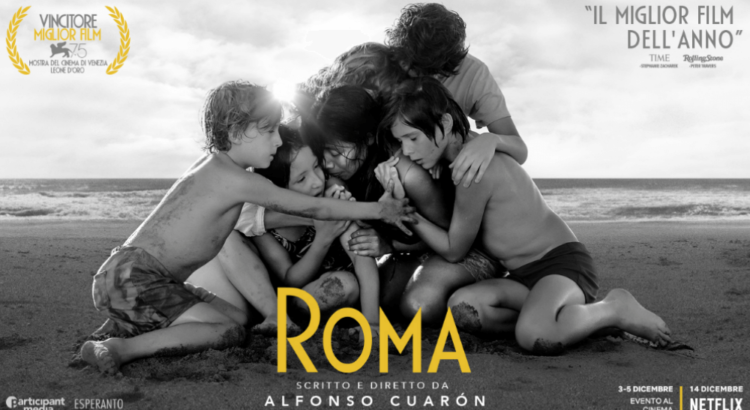
On January 16 and 17, the Michigan Theater will be screening Roma, a 2018 film directed, produced, co-edited and shot by Alfonso Cuarón. A semi-autobiographical film, Roma details the life of a maid to a middle-class family in Mexico City. The film has received favorable attention from critics, as evidenced by its two Golden Globes and four Critic’s Choice Awards. Be sure to catch a screening of this film on January 16 at 4:00 or 9:25 PM, or January 17 at 7:45 PM. Tickets are $8.50 for students.

PREVIEW: The Favourite

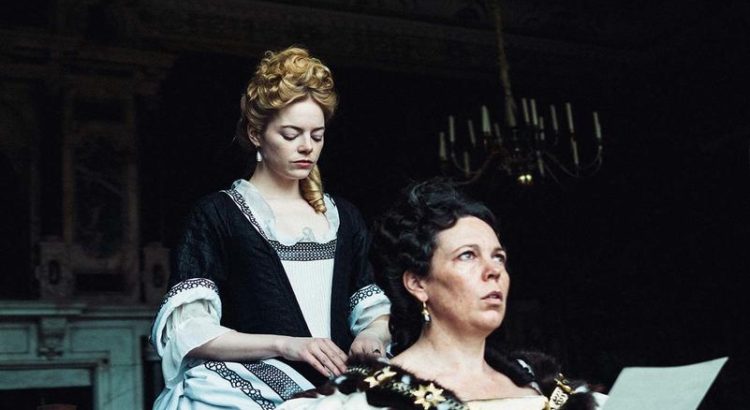
The Favourite has become one of the most talked-about films of late 2018 and early 2019, receiving no less than five nominations at the Golden Globes (including a win for Olivia Colman as Best Actress — Motion Picture Comedy or Musical). Directed by Yorgos Lanthimos, the film stars Emma Stone (Maniac) and Rachel Weisz (My Cousin Rachel) as two cousins competing to be the “favourite” of Queen Anne (Colman) in 18th century Britain. The Favourite is showing this week at the State Theatre as well as at Ann Arbor’s Quality 16.

PREVIEW: If Beale Street Could Talk

If Beale Street Could Talk only hit local theaters recently, but it is already garnering an impressive reputation. An adaptation of the 1974 novel of the same name by James Baldwin, the film has accrued several award nominations, including three at the Golden Globes for Best Motion Picture — Drama, Best Supporting Actress, and Best Screenplay. Directed by Barry Jenkins of Moonlight fame, the film stars KiKi Layne and Stephan James as Tish and Fonny, a young couple whose romance is derailed and tested when Fonny is falsely accused of rape and Tish discovers that she is pregnant. If Beale Street Could Talk is currently playing at the State Theatre, as well as other local Ann Arbor theaters such as the Ann Arbor 20 IMAX and the Quality 16.

REVIEW: Mozarts Birthday Bash

The Concert began on an informative note as the pianist stood in front of the audience and explained the importance of piano concertos.  He compared Mozart’s Piano Concerto No.9 to Beethoven’s third symphony “the Eroica symphony”, in that it changed the way piano concertos are composed like how Beethoven’s Eroica symphony changed the way symphonies are composed. As he explained, the heart of the concerto is the interplay of orchestra and piano, which Mozart brought to new heights. However, Mozart’s concertos go much further because he explored the interplay of all the instruments: the oboe with the horns, the horns with the cello, and even the pianist’s right hand with the pianist’s left hand.

Piano Concerto No.9 is considered by many to be his first masterpiece, which Mozart wrote at the age of 21. This really struck me because I am 21 years old and uhhh nothing needs to be said.

For the Piano Concerto there was a guest conductor because Arie Lipinsky had a pinched nerve. Interestingly, the conductor did not face the pianist, which means he was not conducting the pianist, only the rest of the orchestra. I have never seen this at a classical performance before.  After the piano concerto, the pianist surprised the audience with an encore. The encore was a transcription the pianist made of Leonard Bernstein’s second symphony. It was  a lively piece with the pianinsts hands flying left and right.

For Mozart’s requiem, Arie returned to conduct.  The Ann Arbor symphony orchestra was joined by four professional soloist and five choirs. This made for both a musical and visual feast. Musically, there were over 100 voices on stage, which added to the grandness of the requiem. Visually the different outfits of every singer put together side by side made for a nice picture. I saw tuxedos with red vests,  purple gowns, etc..

My only complaint is regarding the subtitles they had for the requiem.  The requiem is in Latin, but they showed English subtitles on the screen. This is not a good choice because latin words would help the audience follow the singing. Seeing the English translation doesn’t matter because we aren’t following a story or plot where the meaning of the words has any significance.

There is no musical encore for Mozart’s requiem which is so grand and the last piece Mozart wrote on his deathbed. As a substitute encore, they gave every audience member a delicious chocolate truffle at the end.