REVIEW: The Hate U Give

Image result for the hate u give movie

The Hate U Give is a stunning film. I felt like I was at the edge of my seat throughout almost the entire movie, my heart ready to lurch forward and join the characters in their fight against injustice, tears welling in my eyes despite myself. In the aftermath of her friend Khalil’s being shot by a police officer, protagonist Starr Carter finds herself in a crucial position to help his case as a direct eye witness; the movie is her navigating her choices to speak up, to fight, and to help her friend and community after his death. The movie seamlessly juggles multiple plot points and themes simultaneously– from large-scale institutional racism, to microaggressions from her close white friends who sympathize with the police officer who shot Khalil; from Starr going to a private school and having a white boyfriend, to loving the black neighborhood in which she grew up; from Starr’s obsession with Jordans, to calling her parents her OTP. The movie shows us so many parts of the black experience in America– political, social, personal, cultural– it seems to maturely accomplish the exposition of so many issues while staying true to underlying the institutional injustice against black people in America. The Hate U Give is a beautiful, mature, and important movie, and I urge everyone to go see it.

The scene that still won’t leave my mind is the one in which Starr’s friend, Khalil, is killed. Starr and him are childhood friends and spent most of their days as kids together, playing Harry Potter, goofing around in the streets of their neighborhood, but they drifted apart as they got older. In the beginning of the movie, Starr and Khalil meet again at a party. They recount their childhood together. Khalil tells her what Tupac meant by THUG LIFE: “The Hate U Give Little Infants Fucks Everybody”– meaning that the unjust systems propagated through our institutions, politics, and social norms eventually repeats itself when it is manifested as hatred and anger in the youth. In the car, Khalil and Starr share a kiss, and for one blissful moment, everything feels good.

Then the police officer pulls Khalil over for what seems like no reason. The film does an incredible job of capturing the small, minute details that culminate to his shooting: the way Khalil refuses to turn down his music, the way the officer ungracefully attempts to regain control of the conversation, Starr silently pleading Khalil to do as the officer says, the officer’s nervousness around both Starr and Khalil, Khalil’s reaching into the car after being patted down to grab his hairbrush… The scene is so carefully constructed and all the moments lead up to another. I’m still running it over in my head, trying to find something that could have prevented it from happening. But that’s the thing– this is a tragedy that has not only happened once, it is not an isolated event– it is the tangible and repeated reality of African Americans in America today. This movie makes you realize that what conspired with Starr and Khalil is the culmination of years of institutional racism, and begs for action from its audience members.

The beautiful thing about this movie is that it engages with these sprawling problems of racism and police brutality while not losing sight of the humanity and individuality of its characters. It freely explores the nuances of Starr’s code-switching between her using slang in the “hood” that she lives in, but speaking “proper” when she’s at her private school. It shows a hilarious scene of Starr introducing her white boyfriend to her dad (he said, “Chris? What kind of plain-ass name is that?” I nearly spit out my drink). It shows a joyful party of young black people having a good time together. It shows how much Starr’s parents love each other. This movie is so full of joy and sorrow and, ultimately, hope that it resonates and hits a deep chord of exigency with its audience members.

The movie was based on the book of the same name by Angie Thomas, which I read in the summer before watching the movie. There were a few characters and events left out of the movie adaption for the sake of brevity, and some events added or slightly altered in the end to thematically tie the film together, but overall, it stayed true to the heart and humanity of the book. I urge everyone to go watch this film as a powerful and engaging social commentary.

PREVIEW: The Other Side of the Wind


Art usually outlasts the artist. So, we meet the long-gone artist through the works that they left behind. But it is not often that an artist can create art from beyond the grave, especially not one as revered as Orson Welles. Welles, of course, is most well-known for his directorial debut, Citizen Kane. It is a universal praise that he never quite surpassed in his lifetime. The expectations were simply too high. Perhaps that is why it is so exciting, now, to watch an entirely new Welles creation. There is no more pressure for the film to achieve the meteoritic heights of Citizen Kane. Audiences can be content to judge The Other Side of the Wind on its own merits. Styled as a mockumentary and completed by many of Welles’ collaborators, the film centers on a director, returning from exile in Europe, to finish his movie. The film is being shown at the Michigan Theater on a limited basis from November 2nd to November 8th. Student tickets are $8 with ID. If you miss it in theaters, it will be released for streaming on Netflix on November 9th.

PREVIEW: Keith Alberstadt

As the absolute joy of midterms finally passes us by, I think we’re all in need of a good laugh.

We’re in luck: the Ann Arbor Comedy Showcase is presenting renowned comic Keith Alberstadt this week! The man has been around, appearing on television shows like Last Comic Standing and Late Night with Seth Meyers. He’s also worked for Saturday Night Live as a freelance writer, and has performed for US troops in the Middle East.

Coffee and Red Bull can only dig you so far out of your grave. Come to the Ann Arbor Comedy Showcase and come back to life.

Showtimes are:

Thursday, November 8, 8 PM

Friday, November 9, 8 PM and 10:30 PM

Saturday, November 10, 8 PM and 10:30 PM

Tickets are $11-13 in advance, or $13-16 at the door.

Visit aacomedy.com to purchase your tickets today!

Related image

REVIEW: King Lear

I have heard of live screenings at the Michigan Theater before but had never attended one before King Lear. There were live screenings of Julie and Frankenstein just recently. The Madness of King George (starring Mark Gatiss) and The Nutcracker will be playing December 9th and December 23rd respectively.

King Lear, often considered as the greatest tragedy ever written, was broadcast live in HD from the National Theatre in London. I am really glad I experienced the live screening. I liked how the camera showed the audience before and after the show, as well as during the intermission. It added to the illusion of being there in person.

Before the show, there was a video interview of the actors. It was informative to hear how the stage was designed to promote an intimate experience for the audience. A center stage and walkway (which divided the audience into two sections) was set up. Audience members were so close to production that they could hear the actors’ inhalation and exhalations.

I loved the setup and props used in the show. During the storm that happened in the play, real water poured down the actors’ faces. I could see water splashing as they walked onto stage during the rainstorm. I also really liked their use of a mirror to extend (or at least give the illusion of extending) the stage.

All the actors were fully realized. I appreciated the skill and artistry of each actor. During emotional scenes, I saw real tears run down their faces. My appreciation for Ian McKellen as an actor also grew when I saw him in King Lear. Prior to the show, I only knew him from the X-Men film series. I was surprised to find that he has been involved in more theater productions than movies, and I was blown away by his physical and mental capacity at the age of 79. Memorizing a complex script and performing in physically intensive scenes (kneeling, engaging in fight scenes, carrying other characters, etc), I imagine, are difficult on the body.

It was an emotional play. The fight scenes were entertaining and choreographed very well. There were also scenes that were quite disturbing (i.e. the eye gouging scene) and incredibly well done. No wonder the Chichester Festival Theatre’s production of King Lear received five-star reviews.

There were definitely differences (disadvantages?) between seeing a live screening of the play and being there in person. There were some issues with the microphone during the show which were generally minor but distracting. Additionally, the camera dictated which character’s expressions or part of the stage the audience focused on in a particular moment. In movies, blocking is done specifically for the camera. But in a play, blocking is designed for live audience. The audience gets to absorb what’s happening on the entire stage at all times and can choose what to pay particular attention to. A camera changes these dynamics. But to me, these sacrifices demanded by a live screening are well worth it to see a fantastic production of King Lear.

REVIEW: Chinese Stories: A Pipa Recital by Gao Hong

This performance was very unique because Gao Hong didn’t just play the Pipa, she interacted with the audience throughout the performance to teach us as much about the Pipa as possible. I learned that although the Pipa looks like a guitar it is played very differently. With a guitar, you strum the strings, brushing a finger against a string upwards or downwards to get it to vibrate. A Pipa the strings are plucked outwards away from the instrument, this makes it harder to play because it requires more work to play.

Gao Hong explained that the Pipa is about storytelling. The Pipa is able to mimic sounds, and she began by demonstrating different sounds of the Pipa. The sounds she made was that of blowing wind, clam and bubbling water, Chinese gongs, horses, and people talking and laughing. The diverse sounds of the Pipa especially came out in the songs, During the song “King Xiang Yu Takes off His Armour” her Pipa was not even making musical notes, simply mimicking the sound of clashing metal and bringing the audience to the playing field. Every song that was played had a story behind it for the Pipa would tell. My favorite song was “Chen Xingyuan Placates the Tribesmen”. This song was full of sorrow and I could hear her Pipa moaning as it played. During the song “Mother-in-Law Arguing with Daughter-in-Law” I closed my eyes and could picture slamming pots and a father trying to play a peacemaker amongst his wife and daughter.

Gao Hong also played an original piece that she had written about her life. She has been travelling playing music since the age of 12 and mentioned that she has experienced many lonely moments in her life. Seldom are single notes plucked on the Pipa, notes are usually played together in a stream of plucking. However, when single notes are played they are particularly powerful. Her composition “Flying Dragon” was powerful because of how many single notes she emphasized in the song.

After playing traditional Pipa songs, Gao Hong did something different by showing us a project she worked on, a video that she narrates and plays the Pipa for about her experience of driving in the US. At first, I was not a huge fan because of all the other sounds and music she was playing in the video. I only wanted to hear her Pipa and found the other sounds in the video distracting. My feelings soon changed as the video became my favorite part. Not only was it hilarious, authentic, and relatable especially for immigrants, but I realized that she was doing something different by combining her Pipa playing with everyday sounds and American music. I got to hear country rock songs played on the Pipa.

The Pipa is an extremely delicate instrument and is not meant for everyone to play. I am glad I was able to hear it played by an expert.

REVIEW: Let The Right One In

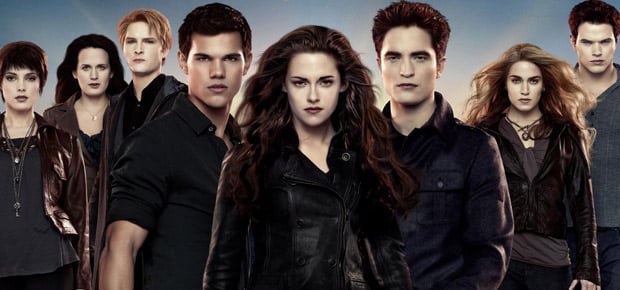
The concept of this story is oddly unique for a vampire narrative. Just in the last decade, we’ve endured an explosion of often awful, needlessly obnoxious tales of those immortal blood suckers. Of course, there’s the Twilight saga, which infested the hearts and minds of middle schoolers everywhere (and of which came an entire parody film aptly named Vampires Suck), but we must also remember other spoofy concoctions like Abraham Lincoln: Vampire Hunter and What We Do In the Shadows. Thus, when presented with yet another vampire-related tale, it’s hard not to shudder before stepping forward to accept it.

Image result for twilight

I think I know what it is that makes Let The Right One In different from the rest of the recent slew of trashy vampire stories: its innocence. The main characters Oskar and Eli are children (or at least, Eli looks like a child), which restricts the themes of lust present in every other depiction of vampires in popular culture. While there is action in Eli’s killing, these scenes are distorted by the fact of her childish appearance–she cannot be taken for a fearsome murderer when we see her as a little girl. The film industry, however, loves to draw heavily on action, relying on it while allowing the actual storyline to suffer.

The Rude Mechanicals put on a great production, despite a few flaws that served as mild distractions from the play. The lighting worked wonders on the mood of the set, a ghostly blue that made the trees glow eerily, and made the playground structure dully shine. Although the soundtrack sometimes seemed like a Stranger Things ripoff, the music was still beautifully emotional, and was able to enhance the feeling of a scene. There were a few minor issues with the timing of some sound effects, as well as parts where the music overpowers dialogue or is simply distracting next to the action of the characters.

Image result for stranger things

In terms of acting, I was impressed by most of the cast. Oskar (played by Chan Yu Hin Bryan) made a quite believable 12 year old, though he could easily switch on and off a more serious tone. The bullies (Ethan Haberfield and Nathan Correll) were deliciously evil, contorting their faces into bloodthirsty smirks as they tortured little Oskar, even managing to make their voices crack in true prepubescent form.

I was disappointed to find myself feeling something lacking in Eli’s (Emma Steiner) performance. In emotional scenes with her “father,” she was amazing; the stage lights seemed to give more light to her eyes than those of anyone else in the cast. Playing a character who is a 200 year old playing a 12 year old is no easy feat, I can imagine. I could see she was taking an understandable angle: Eli was stiffly attempting to act the same age as Oskar, but did not have the social intelligence to do so properly. This angle should have worked, but at some points it only sounded false and robotic. The same goes for Oskar’s mother (Juliana Tassos). She seemed to have some trouble with acting as a character decades her senior–she simply did not have experience to draw off of, and instead came off as a caricature of a stressed, aging alcoholic. Beyond this, though, she was quite skilled at knowing how to place herself on the set, from the positioning of her limbs on the couch to a somber lean on a tree, she did a good job of becoming a sad skeleton of a woman.

I would recommend that anyone looking to delve into the wonderful world of theatre attends an upcoming performance by the Rude Mechanicals. You can access their calendar of events at their website: umrudemechanicals.com.