

For the 50th anniversary of the release of Stanley Kubrick’s classic movie “2001: A Space Odyssey”, the University Music Society along with Michigan Engineering are co-presenting the groundbreaking film in a special viewing. This free event will feature live orchestral and choral accompaniment by the Detroit Symphony Orchestra for a one-of-a-kind experience at Hill Auditorium on Friday, September 21 st 8pm. Registration for the event is currently full, but general admission will open at 7:40pm to people without a ticket on a first come, first serve basis, so it’s not too late to attend this out-of-this-world showing of one of the greatest sci-fi movies of all time.
PREVIEW: Zell Visiting Writers Series: Esmé Wang & Danielle Lazarin

Kicking off the first installment of the Zell Visiting Writer’s Series for fall 2018 is novelist and essayist Esme Wang and short-story writer Danielle Lazarin. The Zell Visiting Writers Series invites one or two distinguished writers for a reading of their literary work. These authors have critically acclaimed reception for their fiction, and engaging in their work and this event is a great way to be involved in the literary scene on campus and beyond.
Born in the Midwest to Taiwanese parents, Esme Wang is the author of the Border of Paradise, which is her debut novel. It is set in a post-war America and centers around the secrets and the haunting mental illness of family members affecting generations to come. A graduate of the University of Michigan’s MFA program, Danielle Lazarin has recently published her debut collection of short stories which has been called a brilliant look into the inner lives of middle-class women. Both these writers have much to say about womanhood, complex mental lives, and the truth of being human. Attend the reading Thursday September 20th, 2018 from 5:30-6:30 at UMMA’s Helmut Stern auditorium.
PREVIEW: Staging Unrest: Performance in times of crisis
Staging impactful and politically provocative theatre in times of social unease is the focus of this brilliantly crafted and much-needed presentation hosted by The School of Music, Theatre, and Dance. “Staging Unrest” is a panel, presentation, and discussion centered around the topic of how to stage and interpret art in a politically decisive climate, as well as the role of art in such a climate. The panel includes directors Malcolm Tulip and Dominika Knapik, designers Vince Mountain and Wolfgang Macher, and some of the members from the American and Polish cast. With a robust panel of many perspectives on performance on the stage including academic experts on theatre, this event is sure to be both moving and extremely important.
“Staging Unrest” will take place in the Walgreen Drama Center in the Newman Studio from 5-6:30 pm on Wednesday, September 19th 2018. The event is free; no ticket required.
REVIEW: Searching.
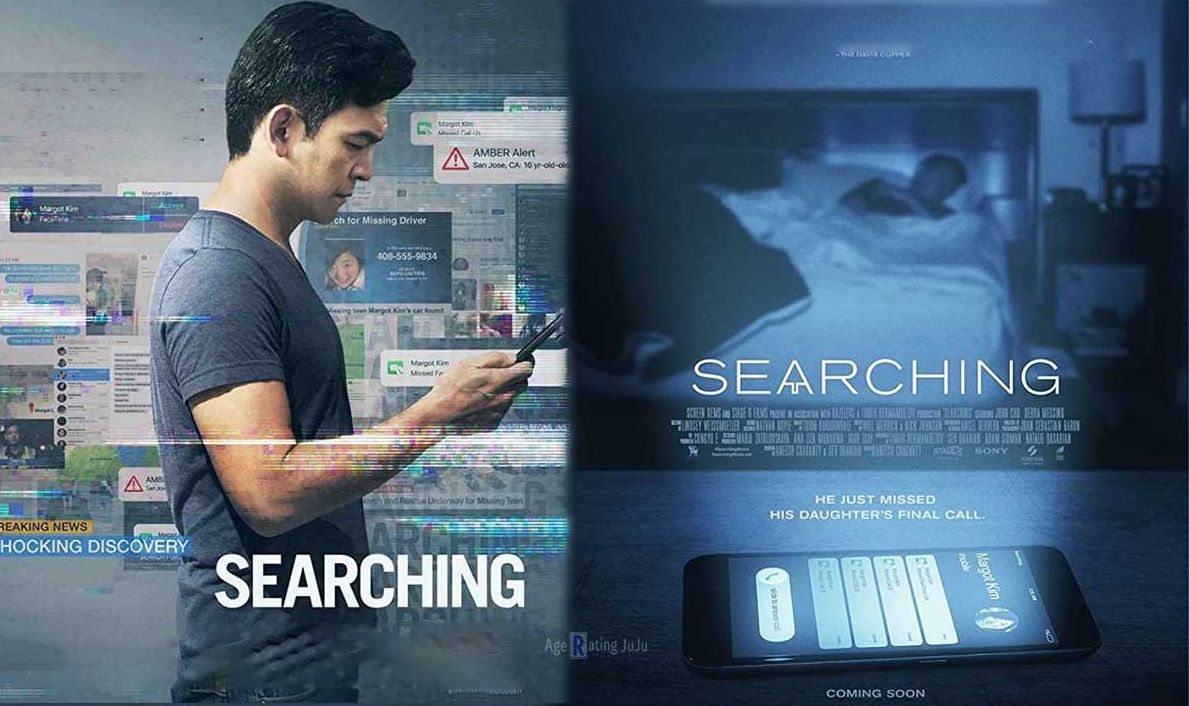
So much of our lives takes place in the realm of screens and the digital abundance, and these days, the web is vast and alive, leading to a kind of fascination with an almost Kantian sublime. Thus, technology has this great potential for horror – as seen in television shows like Black Mirror and in movies like Unfriended, laying out a perfect foundation for a thriller set in this medium.But what separates Searching from other films using the same laptop cinema format is the intrinsic understanding of the internet and technology. The director of the film, Aneesh Chaganty – who has worked at Google and was born to computer engineering parents – has a clear sense of the behaviours of online individuals and the way the web works, and the presence of technology is elevated beyond a singular screen.

The film is detailed and realistic; each application, like Reddit, like Tumblr or Instagram is used in a way that is subtle in its familiarity, perfect in the part it plays in leaving clues and unfolding this story. Details like the timeline montage in the beginning add to the pull and immersion into the online world, and the indications of what is to come, scattered throughout places like Pam’s text document, a school homepage, or a video call, invite us for a second, third, and fourth viewing.
The use of media is carefully considered. Everything is elegant in that any use of the screens feels natural, doesn’t feel clunky, or have the need to be explained away. So the technology is comfortable in the script of the movie, only enhancing the central plot points and themes. It is not the whole movie; it does not constitute the entirety of the plot. Instead, it helps frame a well-paced thriller and the continuing theme of family.
The plot itself is well thought out with all ends neatly tied. With a brutal precision, the film reveals revelations that change the course of the story, a single, exact moment that often uproots the entirety of the direction John Cho’s character, David Kim, had been gunning towards. These twists are framed with things as simple as just a shot of an interior of a car or a mouse hover over an image. It’s this rhythm and pacing of the film that builds the tremendous momentum towards the ending.
We feel for these characters from the very beginning; pictures and clips that David looks at from time to time remind us of the depth of the characters and their motivations, and what makes them act the way they do. As David discovers more about his daughter through her digital footprints, the words she had no place to express but on camera – so do we. The relationships established between the characters through the medium and the universality of these sentiments make it easy to care.

While like the way Crazy Rich Asians is lauded for showcasing an east Asian cast in vivid colour, Searching is much subtler in the way it introduces us to our Asian leads, and perhaps is even more important in the place it has in an industry that struggles with diversity. filmmakers often had to find a “reason” for including diverse characters, relegating them to certain roles and archetypes, and Searching does away with any such requirement or “explanation” as to why the family is Korean. It simply is, giving us common experiences we can share and relate to. Ground-breaking yet understated, the film poses itself to be the classic prototype for many more movies to come.
PREVIEW: The Wanted 18: Contemporary Cinema from the Islamic World
If you’re interested in the intersection between art and politics, this film screening is just right for you. With tasteful and clever genius, the creators of “Wanted 18” tell the true story of a group of Palestinian civilians that subtly resist Israeli forces who label Palestinian farms “a threat to the national security of the state of Israel.” The Palestinian farmers privately buy 18 cows and produce their own milk; in little time, the cows become local celebrities and a symbol of resistance. This film combines stop motion animation and in-person interview for an intriguing artistic documentary film about the power of grassroots activism. “Wanted 18” premiered in 2014 at the Toronto International Film Festival. You can watch the screening on Tuesday, September 18th at 7 p.m. in East Quadrangle’s Benzinger Library. Entrance is free and the viewing is open to all students!
This screening is also part of a series of movies on contemporary Islamic films: 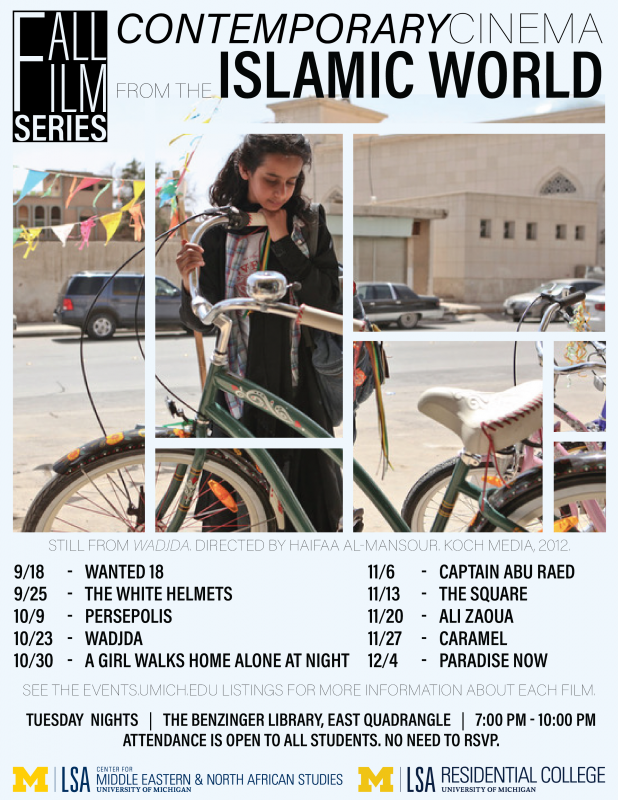
REVIEW: Lecture: Race, War, and Refugees with Viet Thanh Nguyen

Viet Thanh Nguyen received critical acclaim for his book The Sympathizer, earning a Pulitzer Prize in 2016 and a string of other awards and recognitions. It was to the utmost excitement of the University to host him with the collaboration of over a dozen student organizations and departments on campus. The reading and lecture was introduced by the well-loved and exuberant Emily Lawsin, Professor of Women’s Studies and American Culture, who declared his novel as a major work of representation for Vietnamese Americans, and the Vietnamese Student Association; both welcomed Nguyen to the stage with raucous applause. There is much to be said about both the reading and lecture, though I will focus on the reading in this review.
Nguyen’s reading was moving in an unexpected, visceral kind of way. Framed by the lecture’s air of social justice and interwoven with his own personal accounts of being a refugee in America after the Vietnam war, the reading was elevated in its state of importance in the packed theatre. The book follows the circumstances of a nameless narrator moving from the final days of Vietnam to his shift to Southern California. The narrator is a double-agent, spying on Southern Vietnamese forces until he is forced to the US.
Nguyen’s writing is witty, funny, takes the often mundane or silly and complexifies it into something rich and important. There was a passage that he read on the stench of Vietnamese fish sauce, which could not have been more eloquent and hilarious: “This pungent liquid condiment of the darkest sepia hue was much denigrated by foreigners for its supposedly horrendous reek, lending new meaning to the phrase ‘there’s something fishy around here,’ for we were the fishy ones.” He tackles Vietnamese identity with the depth of someone who is acutely aware of all facets of his American experience– from the microaggressive comments from white people to the guilt of being a half-refugee, half-American and having to choose one to the strange, wacky clashes in culture and tradition.
One of the students asked a question about how one can make their story readable and engaging, especially if it focuses on issues that its audience won’t know much about. Nguyen explained that the whole point of writing a story is to elucidate experiences that its audience doesn’t know about. He knows that Vietnamese fish sauce may be an experience limited to a few, but it simply has to be included if one is to tell an honest story– how it’s included is the question. And how Nguyen does it is brilliant: with rich language, an exuberant narrator; unafraid to grapple with unsettling topics; sensitive yet risky; bold enough to say, in the end, this: “We used fish sauce the way Transylvanian villagers were cloves of garlic to ward off vampires, in our case to establish a perimeter with those Westerners who could never understand that was truly fishy was the nauseating stench of cheese. What was fermented fish compared to curdled milk?”
More than anything, what moved me about this event is how important it was. It was a space for the APIA community to be represented and heard. Nguyen made a point that stays with me still: he said that he was disappointed that a New York Times review of The Sympathizer described Nguyen as “giving a voice to the voiceless”. His objection: “We already have a voice. Do you know how loud Vietnamese people are? We have a voice, but the problem is, we’re not heard.”
Most critically acclaimed stories on the Vietnam War are often from the American perspective, like The Things They Carried or Matterhorn. They all focus on how the war affected America and wounded its soldiers– it’s the same sentiment of how Americans start wars and then make a movie thirty years later on its damaging consequences on its poor citizens. And I don’t mean to diminish the trauma of the war on Americans– it’s just that when you think about it from a bigger perspective, it’s a bit selfish to see only that. We’d left a country with hundreds of thousands of orphaned children, over a million refugees, and a simmering hatred between North and South Vietnam that still lasts today. At least our stories must reflect both sides. At least our stories, if anything, must do the invisible job of reconstructing our wars so we remember them through a lens of truth, justice, and of honesty that couldn’t be served before those stories were made. The Sympathizer ranks among those stories, and Viet Thanh Nguyen among its brilliant tellers.
