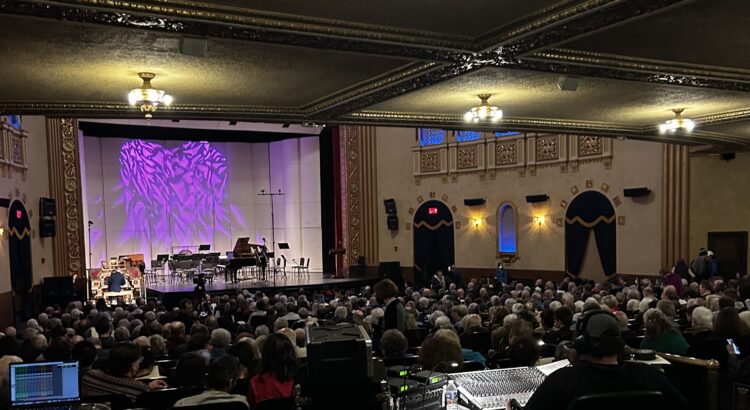
The University of Michigan’s School of Music is the world’s leading institution for the study of the work of the Gershwin brothers. SMTD partnered with the Gershwin family in 2013, and since then the team behind the Initiative has continued to educate and deliver George and Ira Gershwin’s iconic music to Ann Arbor community and beyond. Gershwin’s most beloved piece, Rhapsody in Blue, is enjoying it’s centennial this year, and the Initiative hosted a concert at the iconic Michigan Theater last Sunday to honor it’s legacy.
The concert featured SMTD’s Contemporary Directions Ensemble (dir. Jayce Ogren), along with a quartet of singers and pianist Kevin Cole, a member of the Initiative and a Gershwin brothers superfan. There were several speakers interjecting throughout the performance with information on The Gershwins including Editor-in-Cheif Mark Clauge, PHD stuent AJ Banta, Dean of SMTD David Gier and other presenters who work with the Initiative.
Four singers from the SMTD Musical Theater program performed songs from musicals the Gershwin’s wrote: Aquila Sol (BFA 25′), Keyon Pickett (BFA 25′), Alex Humphreys (BFA 24′), and Sam O’Neill (BFA 25′). The four were outstanding individual singers who nailed the pieces stylistically and dramatically while ensembling beautifully during their group numbers. Many of the musicals they were singing were not from the mainstream, including Of Thee I Sing, Sweet Little Devil, George White’s Scandals of 1924, and Lady Be Good.
The concert closed with the iconic 1924 Rhapsody inBlue, a classic piano and jazz band piece that is always a hit with audiences. Kevin Cole was a fabulous soloist with the Contemporary Directions Ensemble and played with humble virtuosity and conviction. It was a thrill to see the piece performed in person. The concert was a hit, deeply appreciated by the Ann Arbor community.
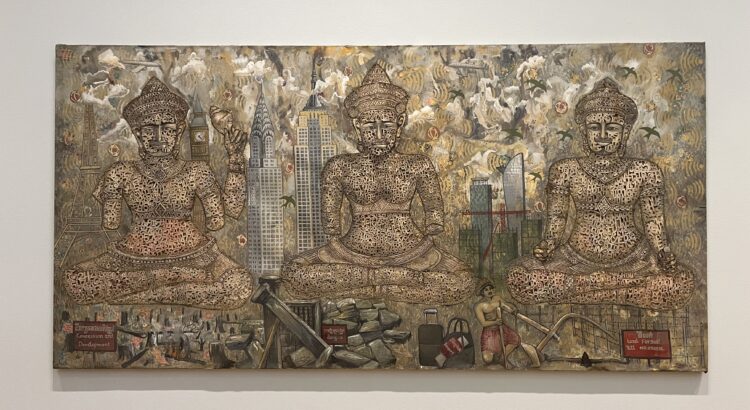
(In Thumbnail: JourneyCrossing the Border, 2016 – Leang Seckon)
In the UMMA from Feb 3 to July 28, the Angkor Complex is a profound exhibit that displays the tragedies of lost cultural heritage, colonialism, genocide, and the rebuilding of the memories lost from the shards that remained from post-genocide Cambodia. Through a mix of cultural artifacts and contemporary pieces, the Angkor Complex dutifully shows the emotions inlaid in the terrible death, suffering, and fleeing that resulted from the Killing Fields and the Khmer Rouge.
Bomb Ponds, 2009 – Vandy Rattana Photographs of ponds in craters made from US bombing during the Vietnam War
Gaining independence from French colonial rule in 1953, Cambodia has had a tumultuous history with the oppressive Khmer Rouge regime from 1975-1979. Under the leadership of Pol Pot, millions of people were displaced, forced to work in labor camps, or outright executed in the Killing Fields in the name of the Communist Party of Kampuchea. In these labor camps, Cambodian citizens were subject to unending abuse from the soldiers: many died from disease, starvation, overwork, being forced to work through their infections, pregnancies, and sicknesses. The Killing Fields were where many were tortured, executed, and stuffed into mass graves; by any violent means men, women, and their children were slaughtered for their crimes against the regime. The regime also came with the destruction of traditional art, religion, and ways of life. By the end of the genocide most of the artists, buddhist monks, apsara dancers (traditionally female dancers that depicted classical/religious stories) and a quarter of the whole Cambodian population were killed. Due to the nature of these histories, it is absolutely imperative to understand the inseparable, lasting effects that the Khmer Rouge had on the Cambodian people to understand the sorrows and coping on full display throughout the exhibit.
Apsara Warrior, 2004 – Ouk Chim Vichet Displays an Apsara figure built of guns and metal tearing apart a rifle with its hands
While a few of the pieces on display date back to the Khmer Empire (802-1431) or during the time of the French Protectorate of Cambodia (1887-1953), most of the pieces in the exhibit are from contemporary Cambodian artists, many of which are members of the Cambodian diaspora—the dispersal of people from their homeland. These pieces provide the deepest insights into how post-genocide Cambodia copes with the loss of its culture with all of that they regain from the repatriation of colonially seized artifacts and the re-education of Cambodian traditions. My personal favorites are the pieces made artists that lived through the Khmer Rouge’s regime. They tell their stories of which their pains sorrowfully resonated with the histories I was familiar with in my own Filipino identity. Though most of them regained hope of survival with their immigrations, it came with the loss of their newfound diasporic identities. Such complications become inevitable in the full extent of these tragedies, which shine through in their pieces that depict cultural and religious iconography juxtaposed with modern cityscapes (such as in the thumbnail of this post).
Full Circle, Unbounded Arc, 2015 – Amy Lee Samford A series of terracotta pots that have been broken and attempted to be reassembled with glue and string. It represents the difficulty in rebuilding what has been lost.
Overall, each and every piece of this exhibit carries unmistakeable weight in their messages, and I truly believe the best way to experience this exhibit is to read every piece’s plaque. Each of the experiences from the artists are on full display: their pain, their loss, their coping, their rebuilding. I hope that with this review, you are implored to see the exhibit for yourself and feel the emotions of each piece, for they should be grieved with just as they should be hoped with.
[TW: This review contains information and descriptions of film content surrounding the Holocaust.]
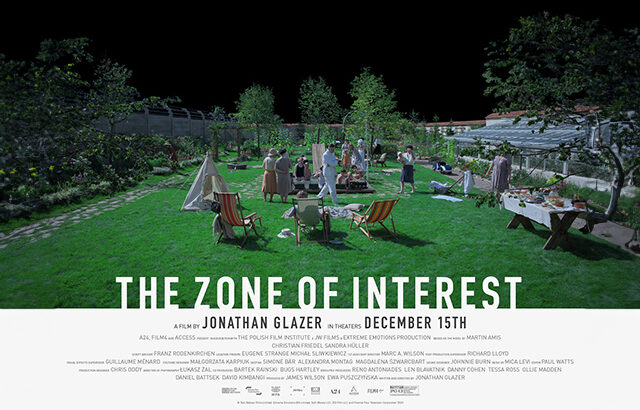
Inspired by the 2014 book with the same title, The Zone of Interest takes us into the political landscape of 1943 Poland. The film follows the journey of Rudolf Höss (Christian Friedel), and his family of six living a seemingly ordinary life inside the walls of the most horrific area on the planet. Framing the film through Höss’ character is an adaptive choice by director Jonathan Glazer and is based on a real person: a high-ranking S.S. Commandant whose contributions to the Nazi regime propelled significant advancements at the concentration camp Auschwitz I. He was the longest-serving commander at Auschwitz, and the film primarily revolves around his family’s life in a villa within the camp.
The movie first depicts the Höss family living a blissful life filled with trips to the nearby lake, picnics in the sun, and small gatherings in their beguiling backyard. His wife, Hedwig (Sandra Hüller), and five children reside in their idyllic house only a 10-foot, barbed wire-lined wall away from unimaginable horrors. Their pristine home is lined with a blossoming garden and filled with a herd of anxious servants attending to their every need. While the family lives in comfort, sounds of screams, trains, and gunshots are consistently murmuring in the background. Hedwig remains dismissive of the disruptions, choosing to ignore the truth behind her privilege, but her guests often question the blazing fires surrounding the sky at night and the smoky cough-prone air. The title, “Zone of Interest”, comes from the German word “Interessengebiet”, which was a term used to depict the restricted zone around Auschwitz. (Much like the family’s eerily cultivated lifestyle.)
The shots in the film are very matter-of-fact. We see moments in their life as they happen naturally, without a direct opinion from Glazer. The audience is fitted as bystanders, set up to observe the observers. We were left to parse through the morally uncomfortable life of the family individually, making the content even more unsettling. Glazer gracefully dances around the known violence that is occurring within the camp, but there is an implication that the audience is aware of the nightmares beyond, limiting the voices of the victims to sounds from outside and alarming innuendos. This choice haunts us and leaves us waiting for the terror that the audience never directly faces. Almost like the remaining five members of the Höss family.
The film briefly features music from the University of Michigan’s own Dr. Patricia Hall’s research, who founded the project “Music From Auschwitz”. Dr. Hall brings to life lost music written and performed by Auschwitz prisoners. The music is accompanied by a deeply painful context, but a firm reminder of history and a memorial to millions of lost lives. Her group has toured Holocaust memorial centers throughout Michigan and New York, and this summer will be traveling to Vienna to perform a concert of her manuscripts.
The film stands as a reminder of the horrors behind violent perpetrators and ignorant familial bystanders, along with all the art-deco bells and whistles. Zone of Interest is playing in theaters now in Ann Arbor.
Basement Arts presents their first show of the season: For Colored Girls Who’ve Considered Suicide / When The Rainbow’s Enuf by Ntozake Shange. The 1976 piece is presented as a choreopoem, a unique collection of spoken poems that intertwines staging and fluid movement. Director Sarah Oguntomilade works alongside choreographer Gilayah McIntosh to navigate Ntozake’s lyrical prose to create a piece illuminating the complexities of Black womanhood, friendship, and identity with unwavering grace and power.
In the show, each character is depicted as a color of the rainbow with the addition of brown. They perform some poems alone, but in other moments come together to deliver a unified story, creating a mural of emotions. Characters were acutely aware of one another, offering solidarity when some were delivering heavy-hearted monologues and experiencing saturated joy together for others. The performers breathe life into the individuality of their roles, showcasing a kaleidoscope of personalities that are both vivid and distinct, yet reminiscent of Ntozake’s personal experiences and emotions. Oguntomilade clearly holds a deep understanding of theater and poetry, as her direction was fluid and honest, capturing the essence of each moment poetically and dramatically. Accompanied by McIntosh’s seamlessly exciting choreography, the piece was aesthetically magnificent.
The authenticity of the choreopoem form shines through Ntozake’s meticulously crafted words, breathing life into the performance while speaking radiant visions of her experiences to the audience. The ensemble expertly navigated exhilarating highs and heartbreaking lows with unwavering conviction, leaving the audience both beaming with love and holding back a rush of tears. The poems fearlessly take on topics such as abuse, sex, and emotional trauma—it is a show to be emotionally prepared for while inviting audiences to confront the complexities of the African-American experience with unflinching honesty and empathy. The show humbly forms a mosaic of poetic brilliance that lingers long after exiting the theater.
For Colored Girls Who’ve Considered Suicide / When The Rainbow’s Enuf is a deeply touching piece about the resilience, bravery, friendship, strength, and beauty of African-American women, and went out last week with roaring success. Basement Arts will perform two more shows during the Winter season: Collective Rage: A Play in 5 Betties directed by Brynn Aaronson and Falsettos directed by Naomi Parr. Auditions and performance dates are posted on @basement_arts on Instagram.
The Duderstadt Center presents a gallery showcasing the talent of select BFA Design and Production students. Within this immersive exhibition, visitors encounter an array of displays from students from many disciplines in the D&P major. This multifaceted degree program includes stage management, lighting design, set design, prop masters, and costume design, and while many specialize, some students take on multiple facets of theater production.
There are many essential assets to creating theater beyond actors and directors. The D&P students take on an immeasurable amount of creative liberty and manual labor work for theatrical productions and oftentimes will go unnoticed.
Each student brings their own flare to the gallery, creating individualized and quite elaborate portfolio presentations. They feature work from all sorts of productions around campus, including directing student’s senior thesis, University Productions, and work from student theater organizations. If you tend to frequent SMTD performances much of their work has been featured here in real life.
To the left, we have Esther Hwang‘s meticulously curated stage management portfolio. The collection is complete with binders of her stage management work (schedules, daily calls, cues.. and more!) her resume, business cards, and performance photos, all beautifully organized for your viewing convenience. It is clear Hwang’s attention to detail is extraordinary—the exhibit is brilliantly organized and thoughtful while revealing many aspects of stage management I was unaware of!
To the right are Ethan Hoffman’s lighting portfolio and Kayti Sanchez’s costume design and construction portfolios. Hoffman presents a comprehensive variety of the many positions he has held at Michigan. In addition to lighting design, he has experience in associate producing and electrician positions. His portfolio presents a keen eye for captivating lighting schemes. With a blend of precision and creativity, Sanchez shares her costuming work along with set designs and a thematic object presentation. Her portfolio was a testament to her original artistic vision and professionalism.
It was inspiring to see the innovative artistry and dedication of those ‘behind the stage’. Each portfolio is truly unique—you must see them for yourself! The gallery will be available to view until February 10th in the Duderstadt Center. More information here.
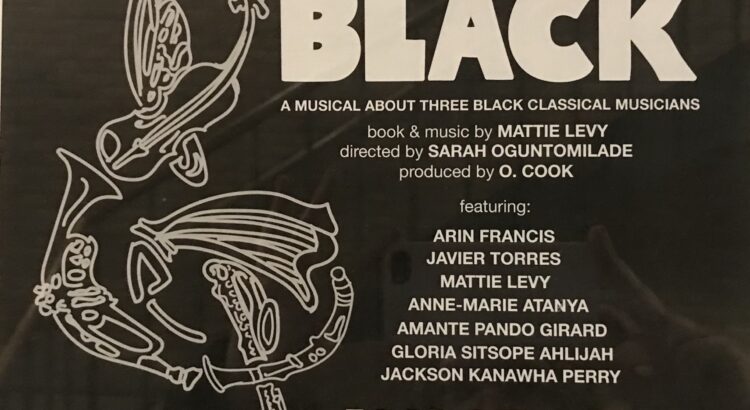
On Saturday I had the chance to go see a live reading of the first act of Concert Black, a musical written by SMTD student Mattie Levy. It was held at the Newman Studio on north campus. The musical itself represented the lives of three music school students, an oboe player (Played by Levy herself), a violinist, and an opera singer. The play was split three ways between them, so the audience had the chance to see the differences and similarities between each characters life and experience in music school.
The musical talked about a lot of different things including the everyday stress of being a college student, the added stress of being in music school, and the discrimination faced by many African American music students. It was also told in short pieces rather than one continuous storyline, which really gave the audience a full glimpse into the life of each character. I really admire her ability to showcase each perspective, while also telling a continuous narrative.
As someone in music school myself, I really enjoyed and appreciated the chance to see Concert Black. Some of the experiences the characters talked about were ones that I could also relate to. Especially one scene where the character who plays violin is stuck in the practice room, debating whether or not to go out with friends instead, and the inevitable feeling of guilt sets in. It’s something I’ve done so many times but never seen represented before. It’s also just a very weird and isolating feeling that not many people understand. There were so many moments like this in Concert Black, things about being in music school that tend to go unacknowledged, and it was very satisfying to see it described like that on stage.
The scene changes, crew, and instrumentalists were also a part of the show. Members of the crew and orchestra wore white, rather than black, which made everyone stand out against the backdrop. I thought this was so cool, and like nothing I’ve ever seen before. It made me think about how everyone in a production like this is equally apart of it, not just the people on stage.
Overall I really enjoyed Concert Black and I can’t wait to see act two!