After an amazing week full of mental health awareness, it all led up to the Who Can Relate concert featuring not just Logic but many many more, as Hill Auditorium filled with people committed to destigmatizing and fighting mental illness.
With a surprising video greeting from Bill Clinton as the opener, the UM Men’s Glee Club took the stage with powerful vocalists to perform “Glory.” Then Glenn Close came out, talking about her work with her organization, Bring Change 2 Mind, changing the narrative around mental health after her sister was diagnosed with bipolar disorder (fittingly, yesterday, March 30, was national bipolar day) and her own struggles with depression. And as the stage worked on some server technical difficulties, we got treated to an impromptu performance by Glenn Close, which was amazing in itself.
Kevin Hines, a Golden Gate Bridge suicide survivor, led everyone in shouting “Be here tomorrow.” A phrase so simple, yet so powerful. As the auditorium rang with these three words, I felt the reassuring tension as they echoed into silence. Hakeem Rahim performed spoken word pieces that struck a chord about rising up again. As the founder of I Am Acceptance, his work is also changing the world, and having his presence onstage was truly special. Finally, NFL star Brandon Marshall and his wife Michi talked some more about the importance of support groups and getting help, as Marshall himself lives with borderline personality disorder. Seeing these prominent successful figures united around a common cause that affects all their lives personally is a reminder that, though it is a hard journey, the future is bright and worth fighting for.
By the time Logic took the stage (wearing a Zingerman’s shirt no less), everyone was on their feet and ready for a night of great music. This was the very first time he was performing his newest Bobby Tarantino II mixtape, and though it was only released earlier this month, everyone was singing every word. At the end, he performed his hit “1-800-273-8255.” Seeing everyone sing this song with their phone lights waving in the air was truly touching.
Logic’s story is also one of great admiration. He started on food stamps, and now he has a Netflix documentary and is about to start his summer tour. The first time he performed in Ann Arbor, it was at the Blind Pig as an opener for a small crowd, and yesterday he performed in front of a crowded Hill Auditorium where everyone was singing along. His journey is an emblem of hope for many others that started from nothing that the future will allow them to make something of themselves.
However, the concert did not end there. After Logic left the stage after his last song, Harris Schwartzberg, the man who put this all together, called Logic back to the stage as “You Will Be Found” from the amazing musical Dear Evan Hansen was performed as a thank you for Logic. This breathtakingly important song about mental health was a perfect ending to a night filled with inspirational people and songs.
The night was just amazing. Full of uniting strength and infinite support, it was a beautiful reminder that you truly are not alone. If you or someone you know is fighting with mental illness, there is hope and love. Stay strong <3
There’s something dangerous about the boredom of teenage girls – a trope that gives us the finest of our idle, black-comedy scream queens, informing the suburban gothic genre and other branching archetypes. There is a certain curiosity to the sexuality of adolescent girls in our media, the romanticism of the chaos of growing up, and the often surreal consequences of the two clashing.
Flower is no different from its precursors in that sense; it’s a film that follows the promiscuous, flighty Erica Vandross (Zoey Deutch) as she meets her new step-brother, Luke (Joey Morgan), and wastes no time in entangling them both in a series of dangerous escapades involving a man Erica and her friends have been ogling at a bowling alley.The script was previously featured on The Black List 2012 for unproduced screenplays.
But with generally mixed reviews and an off-beat sense of humour, Flower seems to be proving itself maybe as an acquired taste.
Opening March 30th at State Theatre, student tickets are $8.
During a gallery visit on a cool Friday, the exhibit was quiet, uninterrupted as a projected screen on the wall played the construction and deconstruction of bread against fragile grid paper. As a common theme, EMBODY is a refinement of material in each of the exhibiting works, a process of transformation that embodies a larger significance.
From the opening entrance into Stephanie Brown’s Am I Enough, the power of material is palpable. There’s a tactile installation in a palette of skin tones, like suits someone could wear on and off in a closet. Following this idea and framed by the poem typed on the wall, is a shirt display with no bleach symbols and an exhibition of different people of colour dressed in them. The meaning is clear: no whitewashing; please wash gently with unlike colours.
The idea of an identity is juxtaposed with clothes and fabrics, the same way we wear biases. But colourism, racism, and the weight of an identity – these are things that are less easily taken off than the way someone might take off a coat.
To a more abstract kind of expressionism with material, How to draw a line by the clenching of a fist by Brynn Higgins-Stirrup explores both the geometric and fluid, with images and sculptures that are inherently tactile, a history of molding folded into their form. It is work that is engaging and dynamic to look at, something that captures attention into the process like a manual of how to create.
There are some interesting, beautiful and abstract shapes, touchable and twisted, such as the grid upon paper like a map, a pathway of how things are created. It’s an exhibit that almost elicits a need to touch and explore the pieces from their nuanced, delicate complexity.
Crossing by Brenna K. Murphy utilizes the same kind of complexity. But it’s a labour of love, painstakingly slow and focused. Within the work, there’s an idea of reverence for the length of lace that looks so breakable and easily tangled. It’s solemn, the motions of deconstructing a sweater for the threads to create something new; deconstructing the old clothes in a process of grief.
It is there, coiled but unexpressed, and the creation of this lace over a long period of time, as if looking for all the time that heals, and creating a sadness that is now tangible – it is an art piece that spans long and delicate across an entire room.
Finally, the closet of the bedroom of / offscreen / by Robert J. Fitzgerald is located near the entrance of the gallery, while the rest is situated near the back, as if a teaser to the private life of a teenage boy. The exhibition uses personal materials, creating a sense of nostalgia as projections of old films play in the intimate corners of an adolescent’s bedroom – between the window shutters, underneath bed sheets, in a sock drawer.
There is definitely something secluded about a bedroom, now opening it up for a glimpse of someone’s individual life. It’s comfortable, excluded from the outside world save for the projections of films that have influence on this privacy.
Each work exploring material to embody a particular narrative, the MFA Thesis Exhibition is worth a trip to the Stamps Gallery.
There’s an extraordinary amount of talent on this campus, from singers to actors and dancers to speakers. Now, get ready for the best Chinese Yo-yo-ing and glowsticking you’ve ever seen! Photonix and Revolution present Lost in Wonderland, featuring many talented guests from around campus, including Groove, G-Men, Flowdom, and Funktion.
The Mendelssohn Theater at the Michigan League is about to be filled with wonder. If you want in on the action, get your tickets at the door for $7 on April 1. The performance starts at 7pm, so arrive early to get your tickets before they sell out!
“When the prison gates slam behind an inmate, he does not lose his human quality; his mind does not become closed to ideas; his intellect does not cease to feed on a free and open interchange of opinions; his yearning for self-respect does not end; nor his quest for self-realization concluded…” ~ U. S Supreme Court Justice Thurgood Marshall, Procunier v. Martinez (1974).
Walking into Duderstadt Gallery is like walking into the classroom of a long-time art teacher who has never been able to find it in his or her heart to remove the works of past loved and brilliant students from the space. Bathed in afternoon light, every inch of wall is dripping in acrylic and pen. Central tables and podiums are covered with beads and wire, metal work and weaving. Bins on the floor hold spill-over canvases.
“The Artistic Drive Personified” Bryan Picken, Cardboard.
It’s five o’clock on a Monday and I am not alone. In fact, I am surprised by the number of people milling about here on North Campus beside me and my trusty photographer —a woman explains to her three-year-old the concept of a collage, an elderly couple consider purchasing a chessboard layered with embroidery thread, two gallery attendants buzz around answering questions about story and price.
“Imaginary Cello” Oliger Merko, Oil, $215
A sign on the wall offers the above quote from Justice Marshall and explains that the sensory overload I am experiencing is the result of 658 works by 582 different artists from Michigan’s 28 prisons. The quote in conjunction with the surreal nature of these numbers inform how I move about the space. There’s no rhyme or reason to the physical layout of the works. Works by the same artist are not grouped together and medium is a consistent surprise.
I am excited to recognize the style of one of the artists in two places. A Millet like attention to paint application and a somber blurring of form attracts me to Oliger Merko’s painting “Imaginary Celo.” Merko’s work captures the lilting sounds of the instrument in image. Caroline, a lovely and knowledgeable gallery assistant who’s been involved in PCAP since her sophomore year, explains that Merko is the student of Martin Vargas, another artist in the exhibition, who was just recently released. His work “Painting His Way Home” hangs on an opposite wall.
“Kings:” T. Norris-Bey, Acrylic, $125
Many of the artists in the exhibition are interconnected in similar, informal mentor apprentice relationships. Some have attended facilitated workshops, but more have consistently pursued their craft on their own. (Read more about PCAP’s mission, programs, and workshops here). Many of the works have an air of technical realism, prioritizing linear form. Merko’s work reveals a detail image of his real home. Some artists generate revenue by giving their talent over to portraiture. Scattered throughout the space you can find studies of Michael Jackson, Obama, Tupac, Albert Einstein, and family photographs.
“Erasures” Yurself Quavo, Pastel & Pencil, $135.
There are themes of tattooing and reunion, whimsy and religion. Many works double as political commentary. A heart-retching number of clocks pounds an inescapable theme of ticking time into the exhibit.
“Tiger Time” Dwan Chatman, Mixed, $425
The materials are just as intriguing and important as the works themselves—a Detroit novelty clock made with floor sealant, a strange little sculpture made of bread, coffee, floor sealer and modge podge.
“Ostean Glasses” Kevin A. Craig, Coffee Brown $665.“Everybody Has A Time” Clay Chapman, bread, coffee, floor sealer, modge podge, $40.
“East Meets West” RIK, Pen & Watercolor, $365.
The exhibit is as interactive as it is expansive. A guest book on a podium by the door offers the chance to respond directly to the artists and their work. After the exhibit’s close in April, every artist will get a hard copy of the full book. Three days after opening, the book is already half full. A young girl takes up half a page with a simple message in big block letters: JOSHUA FOONCE I LOVE YOUR HORSE. Caroline points out the artist RIK’s stand out watercolor “East Meets West” on a nearby wall. She explains that during last years exhibit a visitor discovered and cracked the code embedded in the work. The visitor addressed the artist in the guest book in the artist’s own code. This year RIK hopes the visitor will be back to crack it again.
Keldrick Brown’s artist statement.“Et in Arcadia Ego” Keldrick Brown.
On another table by the entrance is a binder of artists’ statements. The statement numbers correspond to the number beside the work on the wall. I tried working backwards: finding a statement and then searching for the painting. I flipped to Keldrick Brown’s statement, an image of a skull and bones surrounded by the words “no future die alone.” I was taken with the corresponding image: “Et in Arcadia Ego,” a new-age like scene of an androgynous body erupting into flame surrounded by poetry—words that seem to expand on the artist’s statement itself.
Other statements attach titles to stories: Paul Kendrickson writes about his work “Meg and Kids:” “Meg and Kids” working in the garden here at LRF. I caught and raised Meg a (field mouse) she was around three months old when I got her and I didn’t want to see her hurt. I trained her to run on a wheel while I built and even potty trained her. I kept her in a big tub with sod. I built a house a potty box and the wheel just like in my painting. I had her for three years and all the inmates and staff loved Meg. My fellow inmates would call me Meg’s dad.”
“Paradise” Curtis Dawkins, Acrylic, $125.
The art, of course, breathes in its own space. However, for a full exhibit experience, it seems an obligation to also pair each work with the stories of the artists themselves. Caroline directs my attention to a painting she bought herself: a delicate acrylic by Curtis Dawkins. She explains that Dawkins, one of the more high profile artists of the exhibit, is currently engaged in a lawsuit with the State of Michigan. Serving a life sentence without parole, Dawkins made money off a book deal with Scribner, an associate print house of Simon & Schuster, while behind bars. While Dawkins seeks to use the money to help fund the education of his three children, the State wants to claim 90% to offset the cost of Dawkins’ imprisonment. Find more information here: NYTimes
This exhibit is tactile and hard-hitting, tangible evidence of the persistence and infallible presence of the artistic mind and body. It’s more like stepping into an echo chamber than a gallery (though many works would fit in seamlessly at UMMA). If you’re anything like me, you’ll have to visit three more times or sit down on the bench by the window for a while in order to let all the visuals and sounds mix and flow through you: the explosive use of color and medium, the words, the names, the profiles, the loud individual voices that spill out from the cardboard canvases.
Feature image: “Time to Bloom” Susan Brown, Beads & Chipboard, $20.
Location: Duderstadt Center (Media Union)
Gallery Dates/Hours:
Exhibition open March 21 through April 4.
Sunday-Monday, 12pm-6pm
Tuesday-Saturday, 10am-7pm
Closed Sunday, April 1.
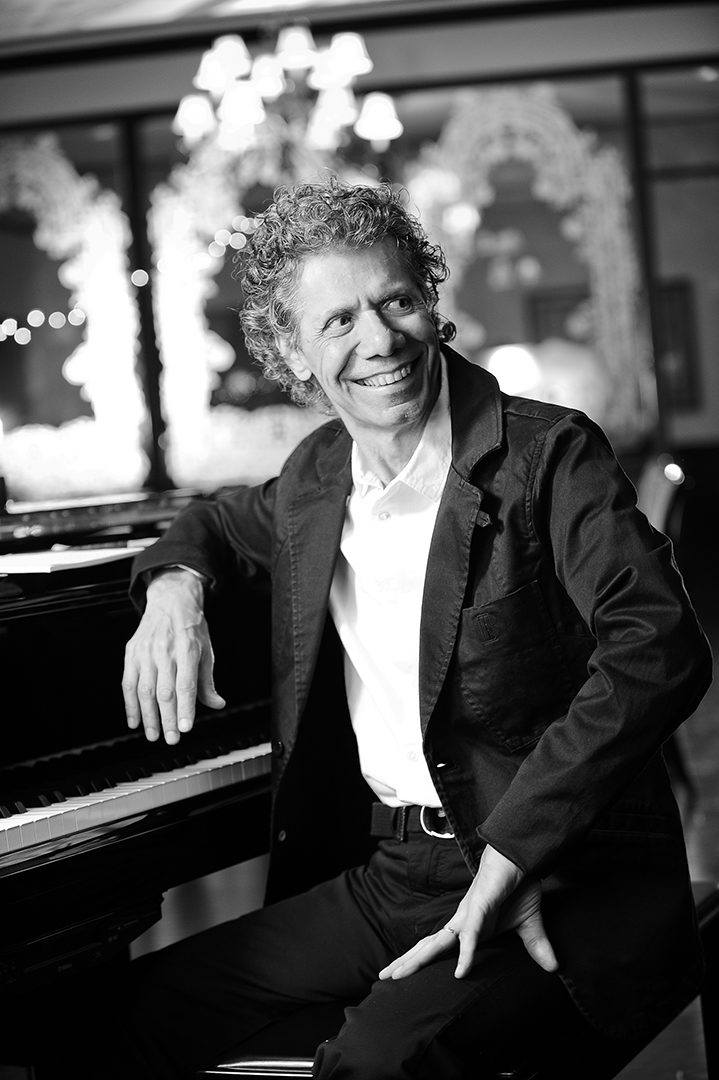
On Saturday March 31st, Hill Auditorium will host the world renowned Jazz at Lincoln Center Orchestra with Chick Corea, a master of jazz piano. Chick is known for winning 22 Grammys amongst many other awards and titles during his illustrious career. In addition to his world class piano playing, Chick has composed many tunes that have become modern day standards, including “Spain”, “500 Miles High, and “La Fiesta”. The concert program is set to feature original music written by Chick. The Jazz at Lincoln Center Orchestra is not the type of orchestra that most people think of when they hear the word. It is a big band that features about 15 wind and brass musicians and a drummer. The JLCO operates under the direction of music director Wynton Marsalis, but Chick will be leading the ensemble this performance at Michigan. As the resident touring big band for Jazz at Lincoln Center, this ensemble is one of the best big bands in the United States. Overall the concert looks like it will be an incredible performance of some of the best jazz musicians in this country. The best part is that the concert now starts at 8:30 to allot extra time for the audience members to see the Michigan Men’s Basketball team play in the Final Four. Tickets start at $12 for students and can be bought on the UMS website.