
REVIEW: PIVOT

At SMTD, every senior is encouraged to craft a thesis project, serving as a culmination of their artistic endeavors throughout their university studies. Rileigh Goldsmith (BFA Dance 24’) chose to create a unique experience to observe dance. Goldsmith presented an immersive sensory journey through the layers of creative consciousness through the lens of virtual reality. This was certainly one of the most unique presentations of dance I have ever seen.

The setup was at the Duderstadt Center, in a room nestled in the hallway leading to Pierpont Commons. It was set up like a black box with an unassuming maze. Each “room” contained a VR headset that the viewer would put on to briefly exist in the little world of Goldsmith’s creation.

The experience commenced in three parts. The first: “Question”, offered a thought about how often we notice our often concealed inner tranquility. It presented beautiful 360-degree landscapes with a gentle voice reciting a poem by Goldsmith herself. Act II was entitled “Untether”. Her program note mentioned: “PIVOT is a movement narrative which explores human resilience amidst comforting constraints, choice paralysis and fear of the unknown.”  This act featured Goldsmith’s reposeful frolics in a bright and grassy field while performing choreography of her own. It was ethereal and cherubic, exemplifying freedom and bliss. Act III was called “Pivot”. This act featured a collection of dancers fading between a 1930s-themed number and a stark contemporary piece.  She left the note: “In some realities, you were meant tethered, apathetic, and stagnant. In others, you are unbound, confident, and empowered.” 

A corresponding hanging door matched each act, labeled I, II, and III. Subtle decor lined the outskirts of each room, calling back to motifs of each act—tea candles, dainty white ribbons, and blue lamps.  The design was visually impressive and satisfying. It submerged the viewer into the creative realm of Goldsmith’s consciousness.


Goldsmith challenges the viewer to find freedom within their creative mind. She epitomizes power, maturity, and poignance in her choreography and design. The exhibit is open Tues – Fri, 12 to 6 pm, and Sundays, 12 to 6 pm. (from Jan. 10 through Jan. 21.) 


Order of Acts:

I. QUESTION

II. UNTETHER

III. PIVOT
REVIEW: Saltburn

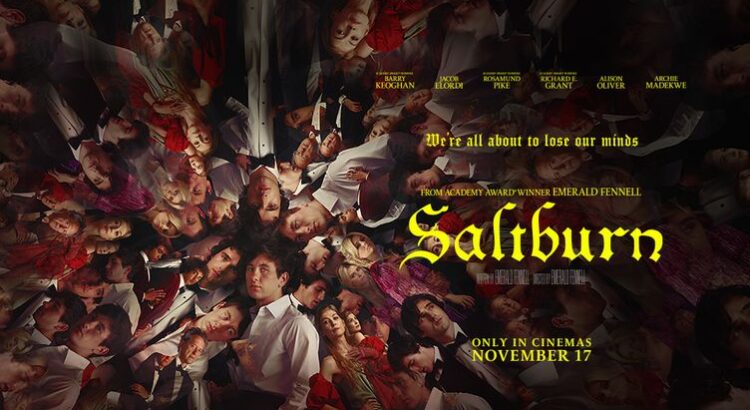
The psychological thriller Saltburn seems to be social media’s new indie-film hyperfixation. The movie was brought to theaters in November of 2023, but the commotion surrounding the movie remains rampant. It was written and directed by Emerald Fennell, a skillful curator of dark comedy and playfully uncomfortable eroticism. The film’s controversial critical acclaim and its obsession with TikTok seemed enough of a reason to tune in. 

We are introduced to Oliver Quick (Barry Keoghan), an awkward and lonely young man attending Oxford College in 2006. He meets the luxurious Felix Catton (Jacob Elordi) and they hit it off as an unbalanced pair of friends in vastly separate social worlds. When Oliver mentions his father has passed, Felix empathetically invites him to spend the summer in his lavish family estate at Saltburn-by-the-Sea. 

Felix casually introduces his sumptuous summer home to Oliver, and an uncomfortable aura begins to sweep through the air. The story unfolds as Oliver is introduced to Felix’s highly affluent family: the lustrous Venetia (Alison Oliver), the disarmingly charming mother Elspeth (Rosamond Pike), cousin Farleigh (Archie Madekwe), and patriarch Sir James (Richard E. Grant).

Saltburn tackles obsession, excess, and the extremes of human desire. Some moments force you to recoil in the embarrassment and repulsion of the scene. Although, the true uneasiness that plagued the film was rather from its lack of self-definition. There were moments where it felt like three different movies: a queer young adult romance, an erotic horror flick, or a gripping family drama. Somehow it dabbled in all three universes, but never quite decided on one.  

The plot may have been less original than the articulately manufactured design, but the details will not leave you uninspired. Fennell nearly fetishizes these aspects of the house in interviews—and for good reason! There are dozens of minute features within the set, lighting, and architecture of the house that drag you alongside the cynical plot. 

Keoghan and Pike’s praised performances offered up two Golden Globe nominations. The family ensembled well against Oliver’s perceived naivety, but I felt these characters existed to embody an emotion or a “vibe” from Fennell—often their intentions seemed indirect and underdeveloped.

This movie was a visually stunning (magnificent cinematography by Linus Sandgren) reminder of the early 2000s with a deeply unsettling undertone of the evil within us all. It’s now up to you to decide if Fennell hit the mark by conveying erotic class warfare in a beautifully constructed mansion. Saltburn is available for a limited time in select theaters, and on Amazon Prime streaming. 

Jacob Elordi (left) and Barry Keoghan.


131 minutes. Rated R for intense themes, language, and drug use. 

Photos thanks to Charlotte Sometimes and The Seasonless.

REVIEW: Maestro

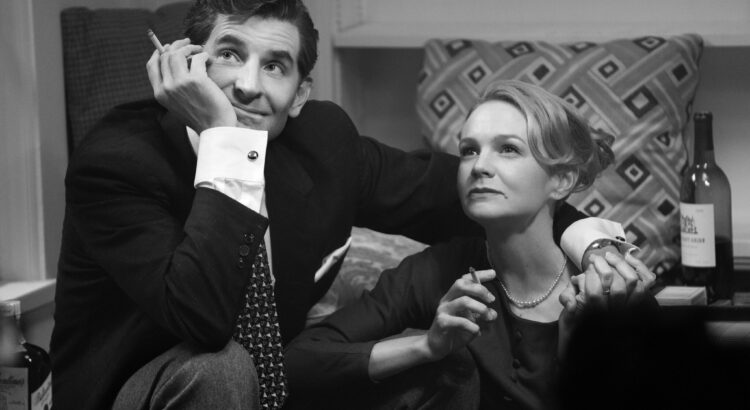
The long-awaited Leonard Bernstein biopic came to theaters on November 22nd. With an unmatched legacy in the classical music-sphere, Maestro offers us a unique look into the personal life of the first American-born composer to receive international acclaim. 

Director and lead Bradley Cooper led a gripping performance as the conductor extraordinaire, providing a rare glimpse into the world of the beloved American conductor. I was interested to see what parts of Bernstein’s life would be highlighted in the film, as he lived quite a vehement life, filled with passionate successes and seething controversy. With so many notable musical moments that Bernstein boasts, the movie is rather centered around his tumultuous marriage with actress Felicia Montealegre (Carey Mulligan) rather than much of his career work.

The film begins with a spritely 25-year-old “Lenny” (as he was often referred to) and progresses with early career successes until he meets Felicia at a house party in 1946. They marry in 1951 and the story uncovers the beauty and bitterness behind their marriage, alongside Lenny’s confusing journey with his sexuality. The story feels complete marriage-wise, but lots of questions about his queerness remain.

The movie presents Bernstein’s life as a constant performance. His inherent presentational-based occupation and obsession with the media seep their way into Lenny’s marriage. This is shown in the way he falls in love: with choreographed dance numbers and flirtatious rehearsals on stage with Felicia. As well as the lavish parties he throws later in life with famous patrons who are watching his every move. His romance with Felicia always remained public in this sense, while his relationships with men were consistently private. Additionally, this was an interesting way to highlight the oppressive culture surrounding queerness in the 20th century. One of my favorite aspects of the film was the contrast between the unmarried and married Lenny. This shift is shown in the cinematography, with a black and white filter over his life while he is falling in love with Felicia, and a shift to bright color into the later years of their marriage, when more problems come to life. 

The film did not necessarily showcase all the music he created or the specific legacy he desired, but it was a brilliantly crafted story that explored deeply into the musician’s marriage and sexuality. This movie is thoughtful and heartbreaking with overwhelming passion—much like the music Leonard Bernstein created himself. Maestro is in theaters for a limited time and is now available on Netflix. 


Bradley Cooper (left) and Carey Mulligan.


129 minutes. Rated R  for discreet nudity and a ton of cigarettes.

Image thanks to Movie Insider and Netflix.

REVIEW: The Encore Theater’s White Christmas

The Encore Theater in Dexter, MI is one of the premier professional musical theater companies in the Southeast Michigan area. Their 2023 season ended with Irving Berlin’s classic holiday musical, White Christmas. The show had a three-week run beginning November 30th and wrapped up shows the weekend of Dec 17th. The Encore Theater brings in regional actors to perform in a selection of musicals. University of Michigan SMTD alums were featured across the cast including Allison Bell (Judy), Michael de Souza (Bob), Marlene Inman (Martha), and Jack Randal (Ensemble). These performers beautifully represented the standard at which SMTD is held.  It’s inspiring to see brilliant performers from the University working in our community! 

The musical version of White Christmas holds onto many classic aspects of the 1954 Paramount Pictures film. This performance had a firm grasp on the tradition of the story. I admired the cast’s dedication to the midcentury holiday feel. The experience felt like a vintage film set in 4K color right in front of my eyes.

The direction often felt a bit pedestrian. Some characters held different levels of emotional grounding, and sometimes romantic choices between the two pairs were uninspired. Performances ran over three weeks with many shows, and after so many performances dialogue can often get stuck. Perhaps an earlier performance offered a more believable approach to intimacy.

Although, a standout performance was given by Kailyn Leilani (Betty). Her dedicated choices with an overpowering voice left me anxious for her next entrance. The audience adored her 11 o’clock number “Love, You Didn’t Do Right By Me”, a moment filled with anticipation and passion. I hope to see her again at The Encore Theater, thoroughly inspired musically.

The Encore houses a thrust stage with lots of audience seating: over 20 rows of seats on the floor and a decently sized balcony. This is a great theatrical space with most of the seats offering an an acceptable view. For many character entrances, the cast would promenade right past my seat on house left, which is a fun enhancement to the theatrical experience. From a seat on the left side of the thrust, there were certain staging pictures that I missed due to the centered staging. At times I wished some interactions were set on a diagonal to allow for enhanced viewing, but with the majority of their seating in the center/balcony, the choice remains necessary. An exception to this was the choreography behind the dance numbers. Each routine was buzzing with energy and charisma. I was entranced by the articulate attention to detail of each routine! The director, Anna Dreslinski was also the choreographer, and this may have been the reason for a bit of a lopsided performance with thrilling, eye-catching dance numbers and some rather bland staging.

This show dazzled with sweeping dance routines and personal artistry with a warm and familiar holiday feeling. The Encore Theater maintains an intensely high level of theater in the greater Southeast Michigan area. I am anxious to see performances in The Encore’s 2024 season, including Into the Woods, I’m Not Rappaport and Oklahoma. Tickets are available on their website theencoretheater.org. 


Image thanks to @theencoretheater on Instagram.

REVIEW: Clown Show

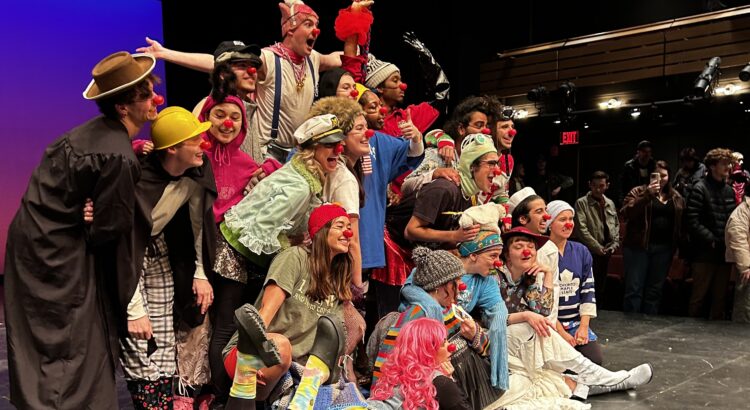
Each year a class through the SMTD Department of Theater teaches clown, a form of theatrical physical comedy. This course is taught by Professor Malcolm Tulip and comprises of many senior theater majors. Their final performance of the semester was performed in the Arthur Miller Theater on December 11th in a room of rambunctious peers and overlooked members of the community. My expectations for a clown show were previously unclear, but I have found a newfound respect for the art form from this fanciful, erratic performance.

Our modern perception of clowns is strongly associated with “circus clowns”, but the jesters have taken many forms throughout history. Clowns can be dated as far back as 2400 BC in Egypt. The art form has modified itself over centuries and existed uniquely in many cultures such as Early Roman and Greek jesters, Chinese jesters (most notably in the Han dynasty), Europe in the early 1800s (with the famous Joseph Grimaldi), and the 19th Century North American circus clowns. More about clowns is linked below.

At the top of the clown show, each clown introduced themselves with a small routine. Then,` they paired up to offer small vignettes starring their established characters. The vignettes included themes like, “Grocery Store”, “Treasure Hunt”, or “How We First Met”. Each routine was situationally unique, yet maintained the clown’s persona introduced at the beginning. They performed while pantomiming most “props and set pieces”, sometimes speaking to each other, sometimes silent.

These actors were effortlessly hysterical, and the audience remained responsive. They were fearless and remained intensely committed to their choices. Each student cultivated a genuine extension of themselves through a whimsical and highly physicalized filter. The clowns wore costumes reflective of their character with, of course, the beaming red nose. No two were alike in the slightest, each offering selective mannerisms. The troupe created a fanciful and utterly unique theatrical space within Arthur Miller, destigmatizing the often misunderstood art of clowns. 


More on Clowns Here: 

Clown and Theater 

Clowns: History and Mythology


Image taken during the 12/11/23 Clown Show.

REVIEW: Dr. Seuss’ The Grinch

I loved Dr. Seuss’s books growing up but never watched the movies, so to celebrate the end of the semester and the coming of Christmas, I watched The Grinch at the Michigan Theater on Sunday, December 10th. I haven’t watched any of the previous adaptations, but they seem pretty different. The first version, How the Grinch Stole Christmas!, came out in 1966 as a cartoon that’s 30 minutes long. The second version, also titled How the Grinch Stole Christmas, came out in 2000 as a live-action that’s 1 hour and 55 minutes long. The most recent one is what played at the theater: the 2018 animation that’s 1 hour and 30 minutes long, which is simply titled The Grinch.

This version is essentially the Grinch’s origin story and the audience gets to learn who the Grinch is as a person rather than a thief. The best part is we get to see his relationship with his dog Max, who is youthful and energetic in the film but old and weary in the book. Another character they redesigned was Cindy-Lou Who, the little girl who catches the Grinch in the middle of his act. In the book, she was less than two and only on a page or so; in the movie, she’s much older and one of the main characters.

The animation was fun and very fitting for a children’s Christmas movie. The palette was bright and the characters were cute, even the Grinch. I enjoyed hearing the narrator’s lines and rhymes because they added more of the book elements too. His voice surprised me though because he sounded relatively young when I was expecting an old man reminiscent of Santa, which I wish they went with instead. Because I knew the plot beforehand, it felt like a very long movie and some parts were dragging on, but I enjoyed it overall and would rewatch it again once it’s closer to Christmas.