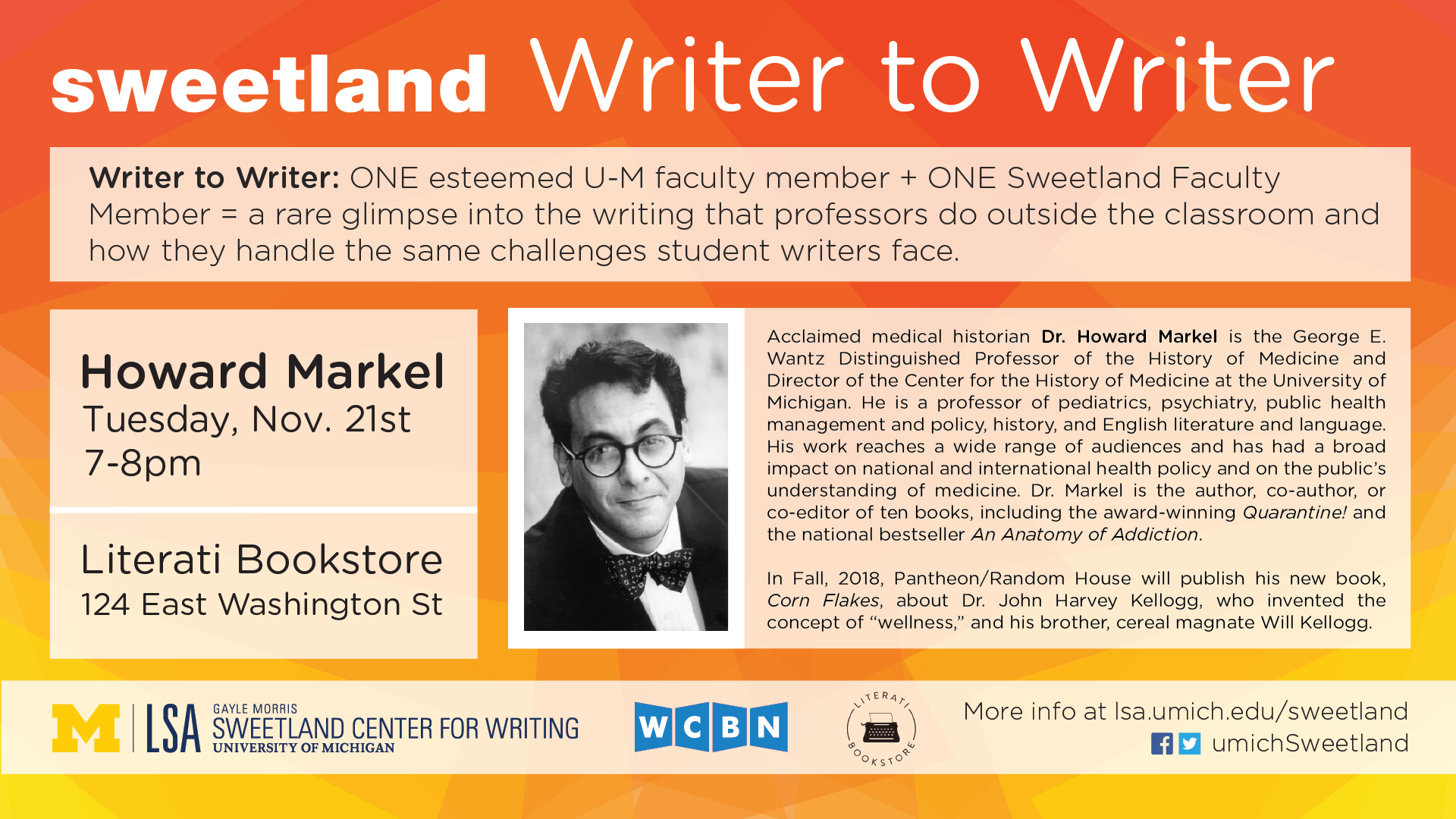
PREVIEW: Writer to Writer

What: A conversation between one Sweetland faculty member and Dr. Howard Markel, UM professor of History of Medicine on the writing process outside of the classroom.

Time and Venue: 21 Nov 7-8pm, Literati Bookstore (wooh!)

Who is this for: Aspiring writers, fans of Dr. Markel, writers-trudging-through-first-year-writing-courses (aka yours truly)– anyone really.

Why watch: Writing is mysterious because it’s so personal. We’re getting a glimpse into this process.


REVIEW: New York Philharmonic – Young People’s Concert

Word was out: The New York Philharmonic was set to make its debut to the University for their second major residency in honor of Leonard Bernstein. Upon their arrival, the NY Philharmonic had more than twenty various educational and community engagement activities planned for both students on campus and those of the larger community as well. Before attending the Young People’s Concert, I had the opportunity of attending the lecture held by the University Musical Society’s current president, Matthew VanBesien and Deborah Borda, President and CEO of NY Philharmonic. This discussion was driven by the topic of Leadership, Innovation, and the Business of Running an Orchestra. It was a packed room full of faculty, students, and UMS affiliates. With the energy and excitement elicited from those in the room, I could not wait to finally attend one of their mainstage performances!

Come the big day (Saturday), the weather was dreary and raining vigorously…not an ideal day for attending a world-renowned concert, as one may imagine. Though, my enthusiasm was not shot down a single bit! Upon arriving, I was thoroughly pleased with the sight of so many young faces and people of color. This was something that I could truly appreciate, as it is of mutual understanding (and a prominent goal mentioned by Ms. Borda) to shift the majority orchestra concert goers from older individuals to a more diverse audience.

Moving along, the concert’s primary purpose was to celebrate Leonard Bernstein. In a roundabout way, the show itself was a rendition of episodes performed by Bernstein himself. It was set up like an interactive lesson, rather, somewhat like a game show with a host and commentary/history of selected pieces in between each performance. We were even presented with a special guest: one of Leonard Bernstein’s daughters! In conjunction with testaments to her own stories of childhood, there were also members of the orchestra that accounted for early memories of Leonard Bernstein’s Young People’s Concerts.

We are told that Bernstein was a man of many roles: a father, conductor, composer, and so forth. The program was composed of excerpts from Bernstein’s Candide, Three Dance Episodes from On the Town, “The Age of Anxiety,” Symphony No. 2, “Jeremiah,” Symphony No. 1, and West Side Story. The most audience participation came from the very last piece, Mambo. Throughout the performances, the host and conductor, Leonard Slatkin, took various efforts to involve the audience. During Mambo, we were given the exclusive role of synchronously shouting “Mambo!” when given our cue.

I found the excerpts from West Side Story to be a special treat. In addition to hearing more upbeat tunes and jazzy compositions, we were given pieces from the Broadway musical! With two special guests, U-M alumni were welcomed to the stage to aide in performing “Maria,” “I Feel Pretty,” and the “Balcony Scene.” Surprisingly enough, it felt as though I was watching the musical itself while simultaneously viewing what would be the orchestra pit during the show. All in all, the New York Philharmonic’s residency this year was an unforgettable experience, with much recognition given to the University Musical Society for hosting them.

REVIEW: Intergalactic Pops

This concert was not your typical concert. With hilariously-poorly-designed videos, a planet diss showdown, a lightsaber fight, and a game show, Michigan Pops definitely brought the pops to Michigan.

Before the main event, the early-arriving audience was entertained by Dicks and Janes, an a cappella group on campus.


Their singing was lovely, and I enjoyed listening to them as I relaxed and took in the beautiful venue, waiting for the Michigan Pops Orchestra to take the stage. I will definitely be on the lookout for acapella concerts after this!

After over 100 students and Music Director Rotem Weinberg filled the stage, there was lift off.

Opening with Also Sprach Zarathustra: Sonnenaufgang (which you may not recognize the name of, but you will definitely recognize the tune when you hear it) was iconic and set the stage perfectly for the rest of the concert. Some songs were very familiar, while some I never heard before. The program consisted of classical music, movie soundtracks, and video game theme songs, all centered around the theme of “space”. It featured soloists Benjamin Walker and Megumi Nakamura from SMTD, and their voices complemented the orchestra perfectly. “Sun and Moon” was captivating, and the bit from Pinocchio was such a childhood throwback — I wasn’t prepared for all the feels that night. But, the orchestra and voices were so powerful and beautiful that all I felt was the feels throughout the entire evening.

Music was not all there was in store, however. Before Jupiter, there was a battle for the title of best planet, ending with Assistant Music Director Tal Benatar claiming that “every planet is special in their own way.” Awwww.

Videos for Star Wars, E.T., and Mario were created and played.

Sometimes, I felt the videos were too entertaining that it was a bit too distracting from the music. I was too busy laughing at the pasted E.T. face that I forgot the orchestra was playing. However, during the Super Mario Galaxy 2 song, the music brought the video to life. So, I think the presence of the videos depended on the listener and whether that took away from the orchestra or added to it. It was enjoyable nonetheless. Additionally, there was a lightsaber duel that took place between two Pops alumni in a video that found its way into a live-action finale.

In the second half, there was a game show with audience participation called Planet or No Planet.

It was so ridiculous, it was amazing.

Ending with Reflections of Earth, which is from the IllumiNations show at Epcot, the night’s music really caused me to reflect on everything, known and unknown. At certain times, the orchestra was so intense and grand that I couldn’t handle it, and it caused me to realize once again how small and finite we are in the end. The power of their music was literally transcendent.

Finally, Michigan Pops brought it back home with a rendition of Hail to the Victors as an encore, ending with the Michigan pride that makes the stars shine maize and blue.

The time and energy the Pops orchestra put into preparing for this concert, in terms of music and all the entertainment, was as clear as the moon, and it paid off for an amusing night filled with laughter and emotions. As we journeyed through space on this night of wonder, I realized I’m really happy to live on this earth where I had the opportunity to experience all the talent produced by the lovely humans that graced the stage of the Michigan Theater that night. With their music, they filled our minds with universes beyond life. What I listened to was more transformative than a solar eclipse, more brilliant than a shooting star, more powerful than a black hole, more grounding than gravity; I listened to the Michigan Pops Orchestra. And it was certainly out of this world.

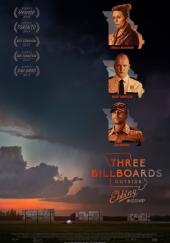
PREVIEW: Three Billboards Outside Ebbing, Missouri

An unsolved murder case. A grieving, demanding, unapologetic, bold mother. Controversial billboards. “Dim-bulb” police officers. Violence in the name of love, hatred, hope, rage, and forgiveness. Comedy. Crime. Drama. What more do you want in a movie? Three Billboards Outside Ebbing, Missouri features all these elements and more. Starring Academy Award winners Frances McDormand as Mildred Hayes and Woody Harrelson as William Willoughby, with Sam Rockwell as Officer Dixon, this dark comedic drama captures “something truthfully human.” The film opens at the Michigan Theater on Tuesday, November 21. Student tickets are $8, and it is also free with a Passport to the Arts voucher from November 22-29!

REVIEW: Matisse Drawings

Walking into the UMMA exhibit, you are greeted by a sky blue wall detailing a small biography of Matisse.  On the other side is Kelly’s biography, with Kelly’s collection of sketches in that section.

I looked at Kelly’s side first, since it seemed to be the smaller collection.  I noticed a lot of experimentation with differentiation of line thickness.  While all the sketches were simple in nature, they had a subtle artistic quality to them.  For example, in “Catalpa Leaf,” there were two lines.  They started off thick at the top, and only crossed each other at the bottom of the leaf.  The lines faded out there as well, adding a sense of fragility to the leaf that likely was meant to represent the leaf’s qualities in reality.  This theme was present in most of Matisse’s sketches, so I see where the dialogue comes in between the two artists.

Regrettably, photography was not allowed in the exhibit. Here is an image of “Catalpa Leaf” I found from the internet!

After viewing Kelly’s sketches, I went over to the Matisse side of the room.  I noticed a lot of exploration of the fluidity of form, as a lot of the objects in Matisse’s sketches seemed to blend into one another while still retaining their own shape.

One of my favorite Matisse sketches was called “Dance movement, Christiane.”  It detailed the legs and lower torso of a ballerina.  The lines, like in most of Matisse’s sketches, were shaky.  I thought maybe the unsteadiness of the lines was a representation of the dancer’s movement.  The woman I was with argued that maybe Matisse was inebriated while drawing it.  Both opinions are reasonable, I think.

A lot of Matisse’s other drawings demonstrated the progression of his creative mind.  For instance, “Acrobat, study” depicted a woman in the bridge position, with her torso facing the sky.  Matisse’s use of lines reminded me a little of the Kelly drawings – the only steady stroke represented the woman’s stomach.  If you’ve ever done the bridge stretch, you’ll notice the stretch in your core.  Matisse seemed to represent this in his ink strokes.  The rest of her form was loose and not accurate in any means.  Even from an expressionist viewpoint, it was not beautiful.

The sketch next to it, however, was interesting.  Entitled “Four studies of acrobats,” the figures were more well-defined and biologically accurate.  To me, this made them more aestethically appealing.  It definitely showed a progression in Matisse’s line of thought regarding how he wanted to portray the acrobats.

Other aspects of the Matisse collection that I found interesting were the drawings that reminded me of Picasso’s technique.  “Veiled woman” had many cubist qualities, such as the characteristics in her face and the way her arm melted into the veil around her head.  Beside “Veiled woman” was “Themes and variations VI.”The subject’s veil is unfinished, but should cover her face.  Her face, however, is obviously still visible and exposed to the viewer.  The same goes for her breast.  This suggests that Matisse saw her face and torso as the most captivating parts of her, and used expressionist technique to portray that.
Lastly, Matisse used lines to represent light.  In “Study, boat” the lines around the plant in the window are squiggly.  I saw this as the movement of light as it’s dappled by the world outside.  Of course, in a sketch, it’s impossible to make your subjects move.  Matisse accomplished a sense of movement by using different stroke techniques.

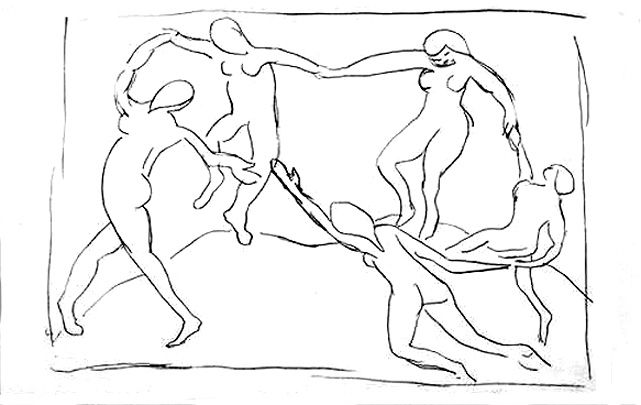
In conclusion, I was impressed by the collection at the UMMA.  It was fun to see “The Dance” in sketch form – it was actually really underwhelming compared to its meaning in expressionist history.  The progression of Matisse in his drawings and the (albeit somewhat minimal) dialogue between him and Kelly added a lot to my interpretations of the exhibit.

REVIEW: Bloody Bloody Andrew Jackson

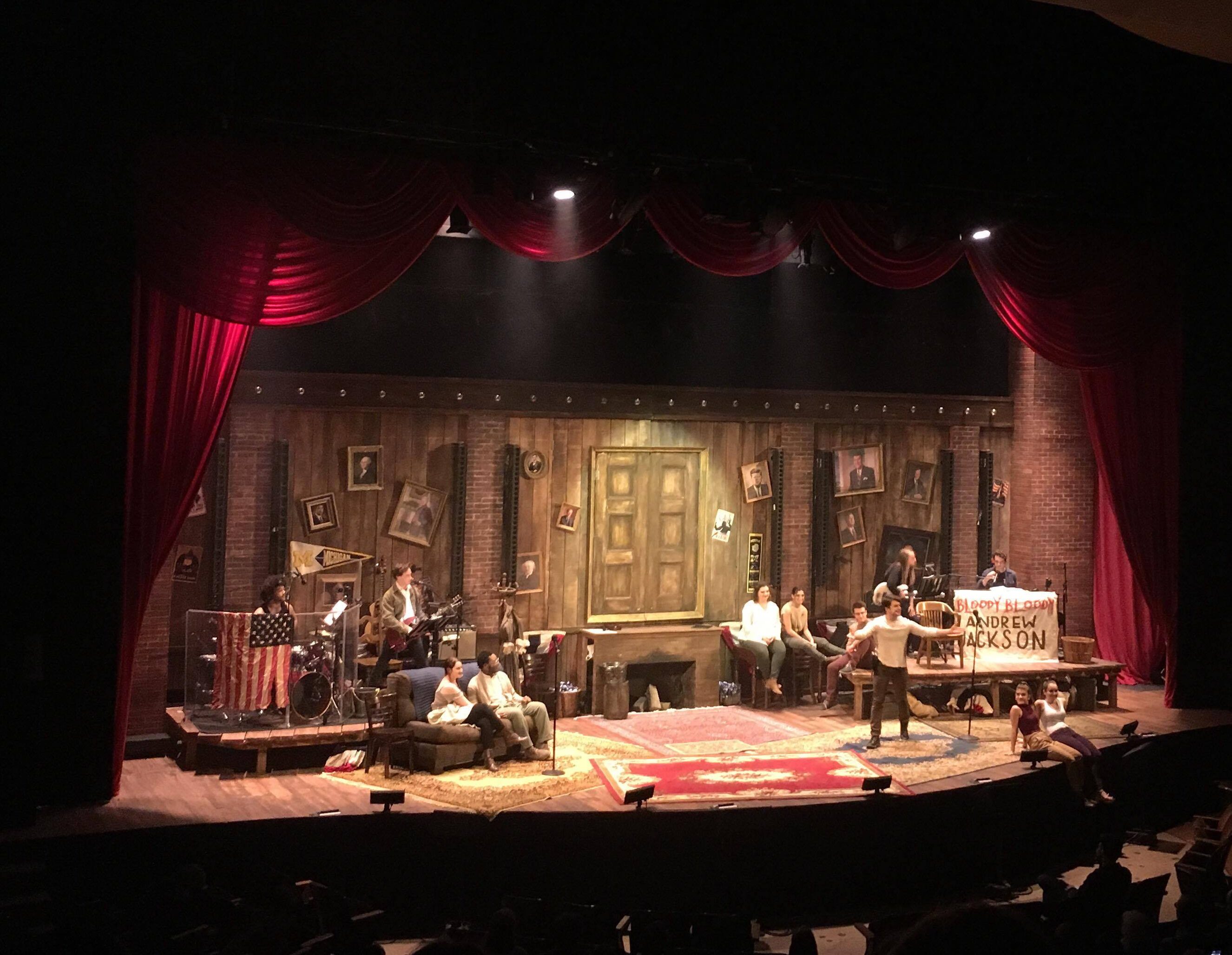
There was blood indeed, and it was unmistakably about Andrew Jackson.

In this musical, Jackson was really developed as a character, showing just how nuanced he was as a president and as a person. Through glimpses of his personal history, we see how his past would shape his beliefs and his behaviors. The songs and scenes summarized his life and his decisions in a way that no documentary or textbook could ever do. Full of rock and unsuspected one-liners, it definitely kept the audience engaged, and the constant laughter, heavy hushed silences, and standing ovation at the end proved that.

One of my favorite songs was “Ten Little Indians.” The female soloist and ensemble were fantastically chilling, to say the least, and its grim reality resonated deeply and intensely. “The Corrupt Bargain” was also a personal favorite.  As a nice contrast to “Ten Little Indians”, this silly, upbeat number was the epitome of satire, exaggerating how politicians were mere puppets that could not be taken seriously. I thought this was brilliantly executed and while that song could have ran on the verge of ridiculous and cringe-worthy, the directorial choice in choreography made this an entertaining little history lesson with a larger societal commentary behind it that still rings true in modern politics.

The talented cast was absolutely amazing. The pacing was perfect, their chemistry with each other made me forget they were acting, and their personas and voices filled the room. Jake Smith brought the power into the entire Power Center as Andrew Jackson. The grief, the rage, the anguish, the passion for America were all so evident in his energetic performance as our great yet pained president. Garrett Forrestal provided comedic relief from this harrowing journey through history as the Storyteller who refuses to be silenced. As he shrewdly said in his resurrection at the end, “You can’t shoot history in the neck.” Maddison Rotner’s rendition of “The Great Compromise” beautifully captured the suffering of Rachel Jackson. Finally, the penultimate number, “Second Nature”, performed by Josh Strobl (Black Fox) was a stunning summary of what Jackson’s legacy would be, and Strobl’s soulful singing brought as much justice to the sorrows of the past as possible.

I was a huge fan of the rock and roll energy, even though it was nicely balanced throughout by the sensitive emotional scenes. The edgy attitude modernized this otherwise archaic story. I also really liked the backdrop and the vibe it set for the stage, as well as all the other props, including fabrics dictating all the different chapters of his life and the table that continued to stand despite losing a leg to Smith’s fiercely-flaring temper. The music was everything American rock, and the occasional breaking of the fourth wall between the four-member band and the cast was a nice change of pace as well. Particularly commendable was Erez Levin’s ability to rock out on the guitar while also channeling his inner fool as the laughable Martin Van Buren. Some directorial choices and parts of the musical were questionable, but overall, this production was really nicely performed and enjoyable to watch.

In the end, Andrew Jackson was a human being who wanted what he thought was best for the American people and the nation. His accomplishments remain extraordinary and controversial. Will there always be a debate around his presidency? Of course. And this musical does not serve as a commentary about what side you should take nor does it try to influence your opinion about him. Rather, it simply provides a look at the life of a complicated, flawed man with a great, tarnished legacy through comedy and rock and roll to help us understand American history and this complicated president on a whole new level.

If you didn’t attend on opening night, I highly recommend going to the Power Center to see MUSKET’s excellent production on November 18 at 8pm and November 19 at 2pm as they bring history alive onstage.