REVIEW: Hourglass Showers: A Senior Dance BFA Thesis

It is my favorite time of the year: Dance BFA Show Season! The pinnacle of the dance degree and the one thing every undergraduate student looks forward to is their Senior Thesis. This is made up of a solo and group piece (mostly made up of other undergraduate dance students, dance team members, or even theater students) choreographed and directed by each graduating senior. It is the one time students get the freedom and opportunity to create their own works with the mentorship of any of the dance professors. Needless to say, it is a very exciting three nights of shows that will make you want to come all three nights if you can get the tickets…they sell out usually an hour before the show. 

This was the first show of the year, with the four culminating seniors, Anabelle Chalmers, Katherine Kiessling, Lauren Roebuck, and Mia Rubenstein, presenting a wildly diverse show. Chalmers’ works were heavily focused on the interpersonal relationships between the dancers on stage. A highlight of her group work, I Hope We Can Resurface, was the duet with Rachel Dunklee and Kate Mitchell (both third years). Up until their duet, the piece utilized large groups of people on stage, both existing in parallel with each other and in congruence; it isn’t until this duet that we (the audience) catch a breath while strictly paying attention to the two communicate corporally–not to mention the brilliant lighting switch when the two come to focus. The dynamics both of the girls bring were drastically different but worked so well in congruence with one another. Kate was fluid and focused on her upper body, while Rachel found moments of sharpness and dedicated much focus to her lower body. 

Photography by: Kirk Donaldson

Kiessling’s works flowed into one another, unlike any of the other dances. It started with her group work, which was reminiscent of a nightclub, with moments before, during, and after; there was even a section that focused on the time one spends in the bathroom at the club. Lighting was essential for this piece, big shoutout to Robert Farr-Jones for lighting this piece and making it come to life. Kiessling also used a projector with engaging geometric visuals that faded in and out during the piece, working exceptionally well with the lighting on the screen and stage. At one point, Katherine joins the dancers on stage and grabs all of the attention, so much so that at one point, she dances in the center of the stage as the rest of her large cast surrounds the edges of the stage, staring at her. It was extraordinarily voyeuristic and meta. The audience watched the dancers as the dancers watched Katherine. 

Photography by: Kirk Donaldson

Roebuck’s works were some of the most entertaining of the night and definitely used more theater skills than the other pieces. Her group work, She Cooks as Good as She Looks, was based on the film The Stepford Wives and comprised of four “couples” representing the stereotypical 50s working man and the corresponding stay-at-home housewife. The dancing was heavily influenced by Roebuck’s training and love for Hip Hop (she is in the on-campus Hip Hop club 2XS along with many of the dancers in the piece). Throughout the piece, the “women” slowly started to revolt against their counterparts, until the morbid ending of them killing the men…Whether this is the solution to sexism or not (I kid), it made for a dramatic and polarizing ending. 

Photography by: Kirk Donaldson

Lastly, Rubenstein’s works were very ethereal and really played with the juxtaposition of the beauty and ugliness of human nature. Her solo and group work costumes were all white, and two large white sheets were accompanying her group. I thought the sheets were exciting ways of concealing bodies as well as giving bodies a new shape that molded to the sheet. My favorite part of the group work was when the lights went from yellow/white to a drastic switch to red. During this section, the dancers moved together synchronously through intensive and athletic movement, a motif of all of Rubenstein’s work. Mia may be smaller in stature, but she knows how to take up space on a large, empty stage. I thought her solo was beautifully crafted and utilized the stage in its entirety, which is not only exhausting but very challenging to do. Overall a very captivating dancer. 

Photography by: Kirk Donaldson

I will be back to write again about the next BFA show, Tales From Our Roots, which I am also very excited about. I recommend coming to one of the nights: November 30 through December 2 at 8:00 PM at the dance building. I will never stop advocating for dance, so trust me when I tell you: You do not want to miss these shows!
REVIEW: Ann Arbor Symphony Orchestra’s Music from Video Games

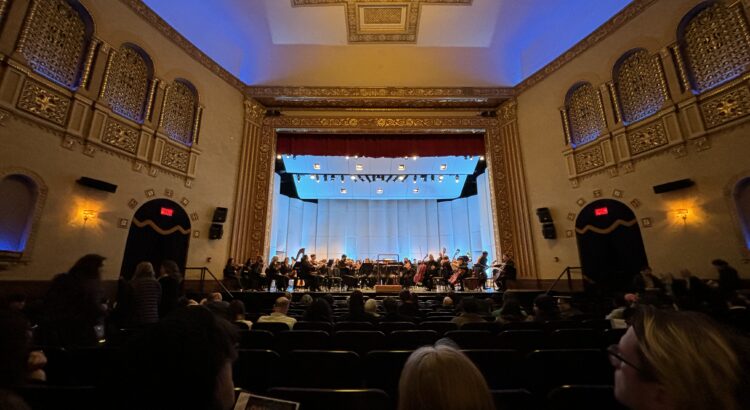
On Saturday, November 17th at the Michigan Theater, the Ann Arbor Symphony Orchestra held a concert called Music from Video Games, which was the opening night of their 2023-2024 Pops season of performances. They played various arrangements and medleys of the original soundtracks of Super Mario Bros., Final Fantasy, The Legend of Zelda, Halo: Reach, and more. I love playing video games and I’ve always enjoyed concerts more when I was familiar with the music, but even for the music from games I haven’t played before like Metroid or Mega Man, I still had a good time. 

In addition to having music unique to each specific game, video game franchises such as Pokémon, Mario, Zelda, etc. all have iconic tunes for various occasions: healing, leveling up, losing a life, opening a chest, and many more. It’s similar to how McDonald’s has their famous jingle “I’m Lovin’ It”. The music is a core part of the game; listening to it is enough to embody the experience of playing it. The arrangements and medleys created a fun blend of familiarity and anticipation that made it super exciting whenever my favorite melodies came up.

The best part of the night for me was the concertmaster’s solo which was a bittersweet rendition of The Legend of Zelda’s main theme. The entire medley included OSTs from some throwback games like Spirit Tracks (2009) to the more recent Breath of the Wild (2017). It took me a bit to even realize the music was from Spirit Tracks until I heard the percussion using instruments to replicate the sounds of a train traveling on railroad tracks. My only wish is that there was a bigger feature of Zelda’s theme, perhaps with another violin solo or even better, a harp solo.

Music truly has such a big impact on the gaming experience and is actually something I listen to in my free time. For people who don’t have much experience with video games, it may seem bizarre, but I highly recommend listening to some tunes from Zelda as a start. It was genuinely a great event and I’d love to come back again next year.


REVIEW: All About the Trio

Kerrytown Concert House hosts various events including bluegrass, klezmer, string or wind quintets, and various jazz groups. “All About The Trio” is a concert residency hosted by some jazz greats from the Midwest: pianist Ellen Rowe, drummer Sean Dobbins, and bassist Paul Keller. These three are highly respected players in the Detroit jazz scene and beyond. It was a treat to see their trio perform last Sunday. The concert featured the music and legacy of Duke Ellington and proved equally enjoyable and educational. 

The concert featured 7 unique Ellington tunes including Take the A Train, In A Mellotone, In A Sentimental Mood, and Rockin’ in Rhythm to name a few. I enjoyed the set and the choice of tunes. A few I knew and a few I didn’t. I had never been inside this venue before, and I was surprised by the small space. The audience was essentially divided into two groups based on where you were seated in the room. This offered an intimate atmosphere, good for a lively and conversational concert like this one.  The sound was very hot in the room—I heard everyone very well.  

Ethan Moleski from the University of Michigan’s School of Music (BFA Jazz 24’) joined the trio on tenor sax during the middle of the set. Ethan served as a guest artist, playing In A Sentimental Mood in the style of Coltrane and Duke’s 1963 album. Ethan has a lovely sound and is very sensitive to the style of the recording he was working from. A senior in college, Ethan is ahead of his time in improvisational technique, sound, style, and passion. 

As a thoughtful pianist and composer herself, Ms. Rowe interjected with interesting information about Duke Ellington and his specific compositional choices throughout the concert. She informed the audience why Duke made the choices he did compositionally, with extra insight into his improvisational tendencies. I appreciated Rowe’s thoughtful piano playing behind all this information—each aspect she explained was apparent in her playing. She played sensitively to the style of Duke, and each transcription of his improvisational solos was spot on. I enjoyed having many of these tunes backed up with facts beforehand—it offered an informed aspect to the concert experience. I am reminded of these concepts when listening to Duke myself!

There are a plethora of diverse events to see at Kerrytown Concert House. Ellen Rowe’s trio will be back—playing a concert full of holiday fun on December 17th at 2 pm. Student tickets are available at Kerrytownconcerthouse.com. 


Image thanks to Kerrytown Concert House.

REVIEW: Accidental Death of an Anarchist

November 16-18 was the showing of Mirit Skeen’s Accidental Death of an Anarchist. Each directing major is tasked with directing a full-length show during their senior year, and this play was chosen and directed by Mirit Skeen in fulfillment of the requirement. ADOAA is a political farce written by Dario Fo and translated into English by Ed Emory. First performed in 1970 in Italy, it’s a timely tale of the 1969 Piazza Fontana bombing and the death of Giuseppe Pinelli while being interrogated by the police. 

As an admirer of Mirit Skeen’s directing work, this was no disappointment. This piece is not for the faint of heart, and a huge work to tackle in just a few weeks. There are moments when I come across performances at SMTD that remind me of the incredibly high level of art we are surrounded by. This was one of those moments. Hailing from one of the best music and theater schools in the country, it is a gift to see peers and colleagues at work creating inventive works of art. 

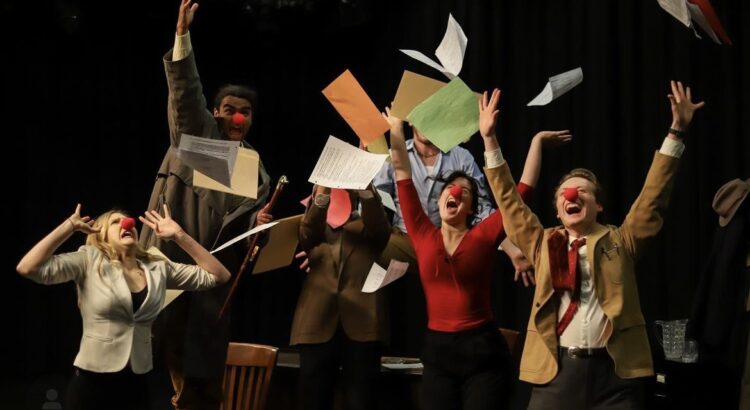
The cast consisted of 6 actors including Nathan Goldberg (BFA 24′), Lenin Izquierdo (BFA 24′), Jalen Steudle (BFA 24′), Jack Weaver (BFA 24′), Hannah Gansert (BFA 25′), Casey Wilcox (BFA 24′). With a seasoned troupe of actors, each character was thoughtfully produced and executed. Some moments indulged absolute clownery—and those were the audience favorites. The energy brought by the actors was reciprocated by the 11 pm audience. 

Historically, it was unknown if Pinelli’s death was a suicide or a framed murder. The police claimed the death was a result of suicide or an unconscious fall. The judge ruled it as an “accidental death”. However, evidence later supported the event to be a cover-up aimed to avoid investigation and obscure complacency with the guilty neofascist groups. These groups were working to impede the spread of communism, labor, rights, and political decent. Four of the characters in the play are police officers aiming to close and cover up the case (all with unique personalities and intentions). The character of the Maniac (Weaver) infiltrates the inner workings of the corrupt system, using an archetypal clown-like persona to critique the flawed investigation. This included the Maniac breaking the fourth wall, revealing the innate relevance of the piece to the audience.

There was a note from the dramaturgy team (Naomi Parr and Ty Amsterdam) that particularly spoke to me moments after seeing the show: “Perhaps there’s a comfort to be found in 2023 that we are not alone in grappling with staggering polarization, rampant disinformation, and the complexities of responding to terror. Even while democracy dies in darkness and the truth is more important now than ever, perhaps we can turn back to the court jesters to speak truth to power. Or if nothing else, at least we can revel in a Maniac in public office whose term limits start at lights up and end at curtain call.” I appreciated this brilliant inscription from the team, and it encapsulates precisely the message transmitted through Mirit’s direction. 

Next from the SMTD Department of Theater is Imogen Says Nothing, a hilarious feminist hijacking of Shakespeare. This Aditi Kapil play will be performed at the Power Center from November 30th-December 3rd.


Image thanks to Mirit Skeen on Instagram.

REVIEW: Philippine Culture Night

My friend (left) and I (right) in the PCN Centennial jeepney cutout.

On November 18th, the Filipino American Student Association put on its annual culture night: Philippine Culture Night Centennial. This year’s PCN commemorates the hundredth year of having a filipino club at the University of Michigan, so suffice to say it was a particularly important celebration. It also dealt with a larger context for filipino and filipino american identity with the theme of “who are you?”, seeking to ask the audience what their culture means to them. As a half-filipino american myself, I found that this theme of identity connected greatly to my own personal experience of trying to understand and discover what being filipino means to me.

Wayne State’s Fil-Soc band performance

After speeches from FASA’s co-presidents and cultural executive board chairs and a dinner filled with filipino dishes supplied by M-dining (which surprisingly wasn’t bad), the night’s performances gave way. Beginning with amazing covers of OPM music—original pinoy music—I enjoyed UofM’s own Greenwood Sessions’ renditon of “Raining in Manila” by Lola Amour and Wayne State’s Fil-Soc Band’s rendition of “Hanggang Kailan” by Orange and Lemons (shoutout to my friend Jordan with the super awesome guitar and vocal skillz 😎). OPM is a genre of music that I love; even when I don’t understand the filipino languages that they sing in, connecting to the raw music and culture of filipino karaoke makes the genre invaluable. Besides the music can just be a good vibe, y’know?

Tinikling performers wearing barong right before their performance

Under dimmed lights did Pandanggo sa ilaw come to kick off the dance performances. Pandanggo sa ilaw is a traditional filipino dance where dances balance lit candles on top of their hands and heads to simulate the flight of fireflies. I especially enjoyed their teal and orange costumes—flawlessly unwrinkled thanks to the iron the choreographers took from me (joke lang).

Perhaps one of the most recognizable dances of the night, traditional Tinikling performed with a live Rondalla performance (an ensemble of various stringed lutes). If you’ve ever walked by Mason Posting Wall from 5-10 on Mondays and Wednesdays in the past few months, then you’ve definitely seen these bamboo sticks being clapped while people dodged bruising their ankles. Additionally, Purdue’s own filipino organization performed Maglalatik (a dance performed shirtless while clapping coconut shells strung up on one’s body) while throwing a lot of their ‘behinds’ on stage. For the first time I also saw a live Kulintang gong ensemble performed by PACE-MI (Philippine Arts & Culture Ensemble of Michigan) with their renditions of pre-colonial traditional dances as well.

Now, I also was a performer in this PCN as a part of the Modern Tinikling showcase. Displaying traditions with modern sensibilities, Modern Tinikling performed to the songs “Humble” by Kendrick Lamar, “America has a Problem” by Beyonce, and “Barbie World” by Nicki Minaj (with Aqua). Not to be biased but we were pretty hype. The two modern dances that followed were pretty cool too I guess >_>. In all seriousness, I was impressed with the choreography and fun both modern dance groups showed, for I will be humming “Asan Ka Na Ba” by Zach Tabudlo for months now.

One last note on the performances as well, I was glad to see Hawai’i Club perform their traditional hula dance to celebrate their culture as well. While the night was mostly comprising filipino cultural performances, the point of the night was to celebrate identities and cultures which it was great to see them given a platform to do so.

My FASA Lineage photo in-front of the pagapir fan wall

I would say that my first PCN experience set a high bar for next year. So, I’d especially like to give a big thank you to FASA’s cultural chairs for organizing the event, Philip Churchley and Isabelle Lamug (my ate, pictured above in the middle of the photo). I look forward to my involvement in FASA and their respective events moving forward, and I’m super glad to be a part of this amazing community!

REVIEW: Things Hidden Since the Foundation of the World

7:30pm • Wednesday, Nov. 15, 2023 • Arthur Miller Theater

Things Hidden Since the Foundation of the World, a multimedia, experimental theater performance which I experienced last Wednesday, told the true story of iconic Iranian pop star Fereydoun Farrokhzad’s unsolved murder. At the same time, many stories collided to provide context for and complicate the idea of “solving” a murder mystery. The performance challenged the idea of “knowing” itself, contending with the maxim: “The more you know, the more you understand.” 

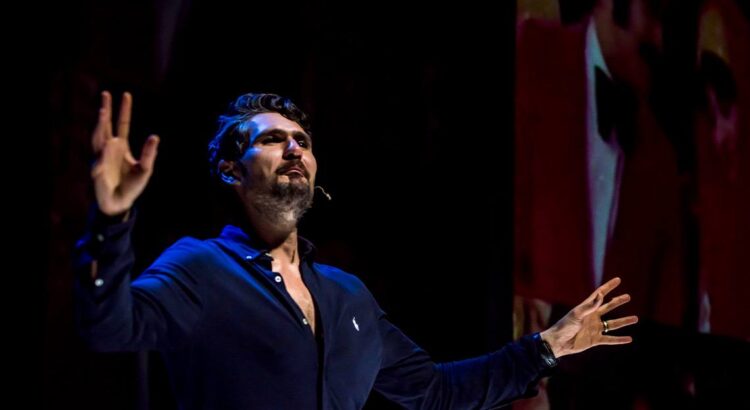
This performance was the third in a trilogy written by the Javaad Alipoor Company, named for the show’s co-writer and artistic director (as well as performer), Javaad Alipoor, a British-Iranian artist. At the beginning of the performance, Alipoor spoke to the audience and described himself as a bridge between the audience and the reality of the Iranian diaspora, one which would help us better “understand” a reality potentially foreign to ourselves. Alipoor wove his story and his heritage into the fabric of the performance, winding it around that of Farrokhzad. He also brought in another thread through his collaboration with Raam Emami, better known as King Raam, an Iranian/Canadian musician whose podcast, Masty o Rasty, has a cult following among Persian-speakers and has been streamed more than 20 million times. The show used a combination of media, including spoken word, video, and true-crime podcast to bring the three men’s stories together. 

As I referenced earlier, Alipoor prefaced the show by speaking on our constant desire to know things, in order to understand the world better, and how modern technologies like Wikipedia can serve that desire. For a moment of audience participation, Alipoor asked us all to get out our phones and use Wikipedia to look up a word shouted out by the audience: “cuscus,” a kind of Australian possum. He had us skim the page and click on the first link that looked interesting, and continue doing so, for a minute. He then used this activity to challenge the idea that reading anything on the Internet, or gaining any kind of knowledge, will necessarily allow us to understand another reality. By framing the performance in this way, Alipoor challenged the proposition that by watching a multimedia performance about the murder of Fereydoun Farrokhzad, we would somehow “understand” his murder, or the broader set of stories which form the Iranian diaspora. 

I found this performance completely fascinating, and it made me think more deeply about how I consume and use information in my daily life. For me, it highlighted the importance of cultural humility: a balance between awareness and appreciation of other ways of being, and the knowledge that we can never truly understand another’s experiences. In the absence of understanding, empathy is essential. Things Hidden Since the Foundation of the World pointed out that even in our highly digital, information-saturated lives, there are some who have been made invisible to us, and it is our obligation to be aware of (and assist in) their struggles.