UMS is fortunate to present Meredith Monk and her ensemble this weekend for the performance of her work, “On Behalf of Nature.”
Experimental vocalist, composer, filmmaker, dancer, choreographer, and inter-disciplinary artist Meredith Monk has succeeded in changing the landscape of what is possible in the art world today. She is most well-known for pioneering unique vocal techniques and creating immersive concert experiences that consist of live music, dance, and vocalizing. She has garnered numerous accolades for her powerful work, including a MacArthur fellowship and a National Medal of Arts from President Obama.
Monk said this about working on “On Behalf of Nature:”
“I asked myself the question: ‘How would one make an ecological art work, one that didn’t make more waste in the world?’ What came to mind was the French anthropologist Claude Levi-Strauss and his notion of bricolage: the process of assembling or making something from what is already at hand. In pre-industrial societies, one object could function in many different ways by an act of imagination.”
You can find more of Ms. Monk’s words about the project in this interview.
To give you a sense of the other-worldly nature of Monk’s creative work, here is a compilation of excerpts from the piece:
The performance will take place on Friday, January 20th, at 8pm in the Power Center. Tickets are available here or at The League Ticket Office. Do not pass up the opportunity to see such an influential artistic pioneer perform live!
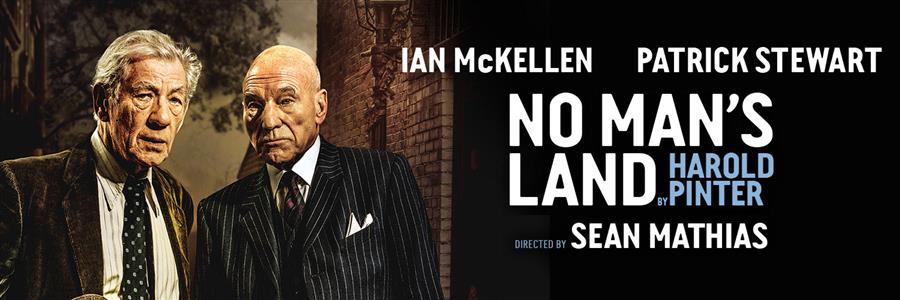
Harold Pinter’s No Man’s Land, is one of those plays so dense, I can’t hope to comprehend, let alone fully discuss, it after just one viewing. So instead, I will discuss impressions and musing brought on by seeing National Theatre Live’s production of No Man’s Land at Michigan Theater this weekend.
Any performance is enhanced by being under Michigan Theater’s gold gilded ceiling with the organ music playing as you take your seat; the setting creates a perfect mood for musing about the serious, but often simultaneously hilarious, questions about life, death, power, and vulnerability that Pinter’s play brings up. I went and saw the show with my parents, who had driven up for the day and wanted to spend some time in Ann Arbor. So as we sat in the audience, we were a remarkable reflection of the diversity of age in the cast.
Patrick Stewart and Ian McKellen starred in the show as elder men, who eventually became contrasted with the two younger men who appear on the scene. Stewart and McKellen in a Q&A that was part of the taped broadcast, reminisced about seeing the original production as young men. Both have seen it multiple times and commented on the lasting impression it made. The other two actors in the cast either hadn’t even been born yet or were very very young at the time. The narrative explores themes of aging and in the cast they face large generation gaps; my parents and I watched, each coming to the show with different generational experiences. And we all got something out of it but I believe I could identify with the younger characters on a more personal level, while my parents identified with the stars. Independent of age, I think there is only so much I can identify with in a play about four men, contemplating manhood for two hours.
This was not for lack of familiarization or stunning performances by the actors. I greatly admire both Stewart and McKellen, both of whom were amazing in No Man’sLand, pivoting from hilarious to serious on the turn of a dime. They earned their reputations and then some in this language heavy, dialogue driven piece. If I were to sit and listen to it again, I’m sure there would be many moments or understandings I’ve missed, which ensures this play probably isn’t going to disappear from the stage anytime soon. The friendship that Patrick Stewart and Ian McKellen present on stage (and in the below video) is wonderful to watch.
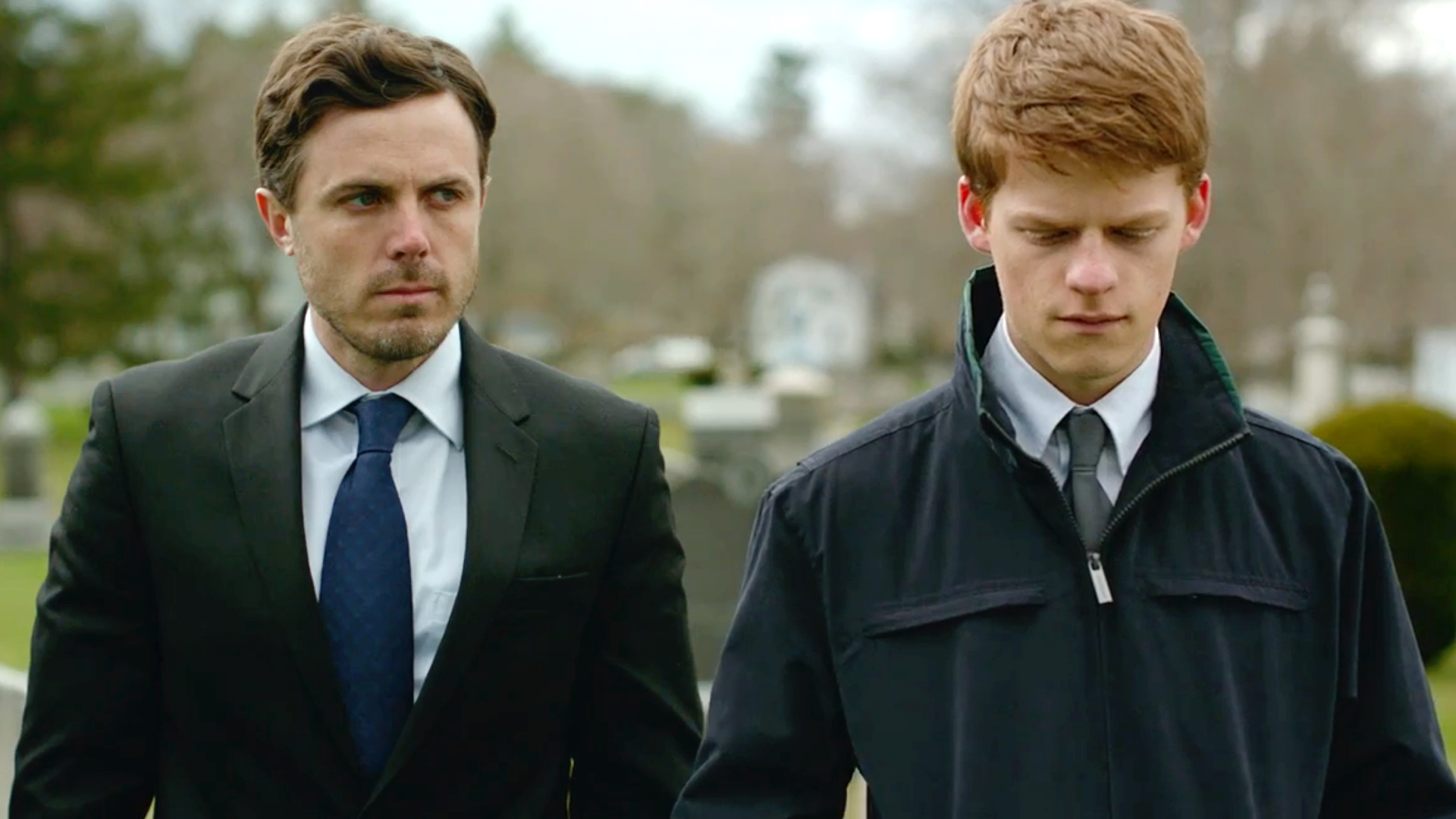
If you’ve made it this far in life without ever losing somebody, then consider yourself lucky. But if you, like most people, have lost someone, expect to see that grief portrayed with eerie and acute detail in Manchester by the Sea. The movie begins with the death of Lee Chandler’s brother who has left Lee in charge of his teenage son. From there, the movie follows the two as they navigate their grief, both shared and individual, and Lee works out their living arrangements. There is a reality to the plot of the movie–you could see it happening to someone you know for it is easy to see how the complications of death extend beyond the moment, beyond the dying and into the living, the very real and physical aspects of the struggle to relearn normal.
But besides just the situation being realistic, the way the film handles it is also real. When Lee goes to the hockey rink, where his brother’s son, Patrick, has practice to tell him that his father is dead, the camera’s focus is not on Patrick’s face. Rather, viewers experience two views: one, where Patrick is viewed speaking to Lee from the perspective of the remaining hockey players; and two, the hockey team watching the two speak, knowing it has something to do with his father, knowing that it is serious, but not certain quite how serious, if this is it. Then, when one of the players informs the coach that the man speaking to Patrick is his uncle and that the only reason his uncle ever comes to Manchester is when Patrick’s father is in the hospital, we see the coach, who only moments before was yelling at Patrick, skate over there and give a Patrick an awkward side-hug. The scene is not sentimental. It is not sweet. It is not hard-hitting tragedy. It is uncomfortable. Movies tend to portray these moments as dramatic and profound and huge–but, finding out your father, who was known to be suffering from a fatal heart condition, has finally died is not surprising or shocking, but rather the end of a long struggle, and you are horrifically sad, but you are also tired and relieved. And your entire team watching as you find out, your coach hugging you in a rare instance of physical intimacy, is not a supportive environment. It’s draining, it’s another mask you have to wear, another group of people you have to pretend to.
The film is full of moments like these. Scenes where the emphasis of the grief is not placed on the sadness, but the reality, the awkwardness of grieving. Still, this doesn’t take anything from the sadness of the film. Those moments hit just as hard, if not harder than they would otherwise. Besides, there are other scenes where all sound drops out, where we watch the characters interact with only the extremely intense, classical soundtrack playing in the background. Everyone in the movie is such an excellent actor (see Casey Affleck winning the Golden Globe for his role as Lee) that these scenes manage to be emotionally rich despite the lack of dialogue. In fact, its absence might even make them better.
Don’t be totally deceived however, for this movie is not all gloom and darkness. There is humor. Characters joke with each other and teenagers are sassy in a genuine way. Sometimes the awkwardness is funny, even if tinged with sadness. Like life, characters experience ups and downs, wins and losses. Like life, it hurts sometimes.
Go watch this film. It’s really, really, really sad, but also, really, really, really good. It should be playing at the Michigan Theater for the rest of the week and student tickets are $8.
U of M’s School of Music, Theatre, and Dance celebrated their 40th anniversary at the annual Collage Concert. Not only that, but they also celebrated the University of Michigan’s Bicentennial and the legacy of Professor Emeritus of Conducting Gustav Meier, who founded Collage in 1977.
The concert started with welcome speeches by Dean and Paul Boylan Collegiate Professor of Music, Aaron P. Dworkin, and Director of University Orchestras, Kenneth Kiesler. Then tribute was paid to the Bicentennial by performing multiple pieces from the year 1817.
Following the celebration of the Bicentennial, the showcases of the different ensembles, theatre groups, dances, etc. began. I finally understood why multiple people told me that I had to see this concert. The talent was phenomenal and it was interesting to see the many different groups within SMTD. Following the intermission, former Dean & Professor Emeritus, Paul Boylan, honored the legacy of Gustav Meier. The second half was just as thrilling, if not more, than the first! Recognizable tunes were played/sung such as “Also Sprach Zarathustra”, “Defying Gravity, and “Let it Go”.
If you ever want to find out what the School of Music, Theatre, and Dance does and what it is made up of, this is the concert to be at! Definitely one of the best concerts that I’ve been to at the University of Michigan.
There is something undeniably electrifying about being in the same room as someone who is completely herself. It is the common denominator of every world-changer throughout history, such as the Reverend Dr. Martin Luther King, Jr., whom pianist and speaker Jade Simmons honored this weekend with her tribute concert titled “The Art of Impact.”
A classical pianist since the ripe old age of 8 years old, Jade has since additionally become a highly sought-after speaker, activist, author, and performance artist, as she gradually realized that her God-given purpose was not just to play the piano.
Through storytelling and music, Jade Simmons illustrated how she came to understand her purpose of empowering others by coming back to the the things that came most naturally to her. She established her classical chops as she performed Rachmaninov, Beethoven, and Chopin, but also demonstrated her affinity for rhythm and rap through her own unique arrangements for piano and electronics.
In the middle of the show, Mrs. Simmons started talking about the responsibility all artists and educators (both amateur and professional) have to share the spotlight with others. She made some excellent points, but honestly, I don’t remember much of what she said on this matter, because before I knew it she had called the name of my classmate, jazz piano major Brendon Davis, to join her onstage, followed by my name…
Brendon and I had met Jade Simmons after a career talk she gave to SMTD students a few days before this performance, but she managed to remember our names, instruments, and promise to attend her concert. We had no idea she would call us out during the performance, but soon we were improvising at the piano altogether. She played an atmospheric, chromatic figure in the middle register, while Brendon took the bass and I took the treble range. I couldn’t tell you what we played. All I remember is feeling my heart pounding with excitement, feeling slightly concerned that I might fall off the crowded bench, and loving every note that cascaded from the three of us working selflessly together––not trying to impress anyone, only making the music that we loved together. It was powerful. I will remember that moment for a very, very long time.
The sole unifying factor behind the classical repertoire, improvisation, electronic music, and rap that made up this concert adventure was Jade Simmons. She was, at all times, her complete self. Certain types of music might not have appealed to everyone in the room, but no one could deny the excellence and authenticity behind every aspect of her performance. That’s what was so inspiring. People left Stamps Auditorium feeling like they, too, could accomplish their dreams by being their complete selves.
The evening ended with a Q&A session between Jade Simmons and Dean Dworkin, in which she shared her philosophies of the artist’s role in society and opened up about the failures she experienced in her life which propelled her to the place she is today. Now, she says, whenever she experiences failure, she becomes excited about what better opportunity will rise to take its place.
SMTD Composition and Violin Performance double major Stuart Carlson joined Jade Simmons for the final piece, which was his own arrangement of “Amazing Grace” for violin and piano. Stuart’s stunning, gentle tone sparkled alongside Jade’s improvised embellishments to the arrangement, which Stuart had encouraged her to add. The result was the sound of two people collaborating selflessly, sharing themselves with a touched audience. “How sweet the sound,” indeed!
Surprise collaborators! From left to right: Karalyn Schubring, Jade Simmons, and Brendon Davis.Jade Simmons and Stuart Carlson.
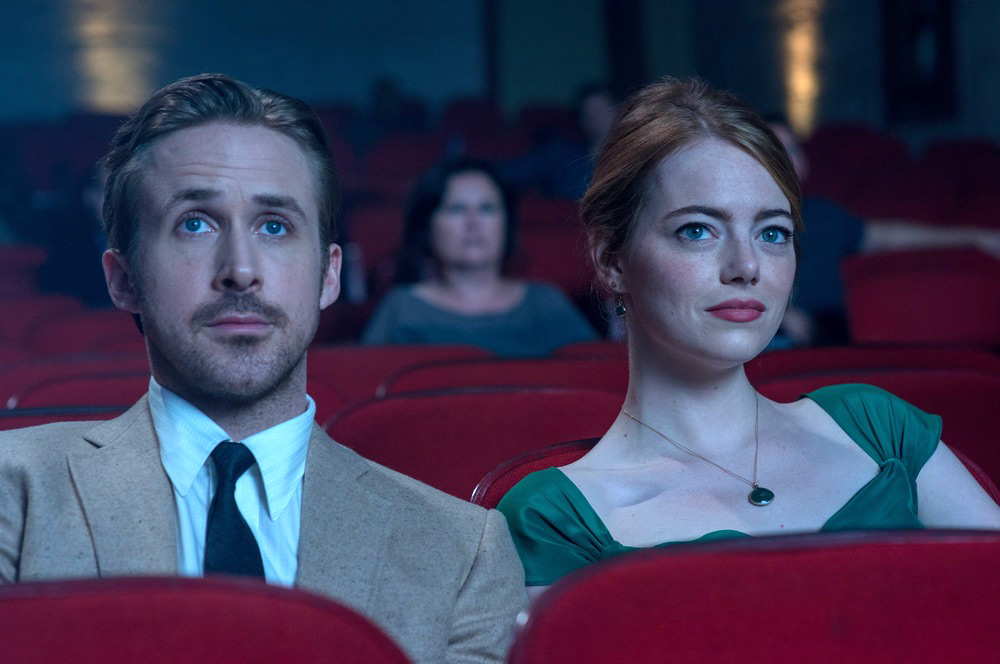
La La Land is triumph of creativity that successfully breaks the script of what we have come to expect from a movie. You can go into this movie with any preconceived notions of these actors or on musicals, but at the end I am confident that you will be wanting to skip your way right out the theater with jazz music playing in your head.
La La Land follows Sebastian and Mia, both ambitious young dreamers living in Los Angeles. The duo meets and are immediately drawn together; falling in love, not only with each other, but with each other’s passions. The chemistry between the two lovers engulfs you, and for two hours you are in the heart of LA experiencing the clash of love and aspiration.
The beauty of this movie is in this. It has the ability to draw you in and make you feel like you are dreaming rather than watching a film. As the scenes flow together with callbacks to old Hollywood you feel like you are in a daze. The cinematography is soft and brilliant; perfectly following the pace of the story. The long continuous shots add to the effect that you are drifting through this movie with the characters. The movie feels like a precise rambling of beauty.
It starts with a song and dance that might make you question what you got yourself into, but is soon followed with pure romance, comedy, and grace that will suck you in. La La Land will make you tap your feet, smile, and reevaluate your dislike of musicals. It will restore your faith that a high-quality, romantic movie does not need to be filled with R-rated sex scenes. And, if in the first two hours you haven’t already mentally drifted into the magic of this movie, then the last 5 minutes will definitely do the trick.