PREVIEW: The Literary History of Layla and Majnun

Azerbaijani folk art based on Nizami’s novel. Photo courtesy of Wikipedia

The Hatcher Graduate library is currently featuring manuscripts from their Islamic Manuscripts collection, which pertains to a Persian love story written by Nizami Ganjavi. These manuscripts, written in the 9th century, focus on a woman named Layla and a man named Qays Ibn al-Mulawwah (who later was nicknamed Majnun) and their virgin love. This ancient tale has been adopted, rewritten, and altered many times, from Sufi writers to Indians to European writers. Visit this exhibit before it ends, in order to view original manuscripts of a beloved story in the world of literature.

Details 
When: Now until February 22nd
Time: 10:00AM – 6:00PM
Location: Hatcher Graduate Library, 7th Floor Exhibit Space

REVIEW: David Zinn Workshop

Photo courtesy of Viral Forest

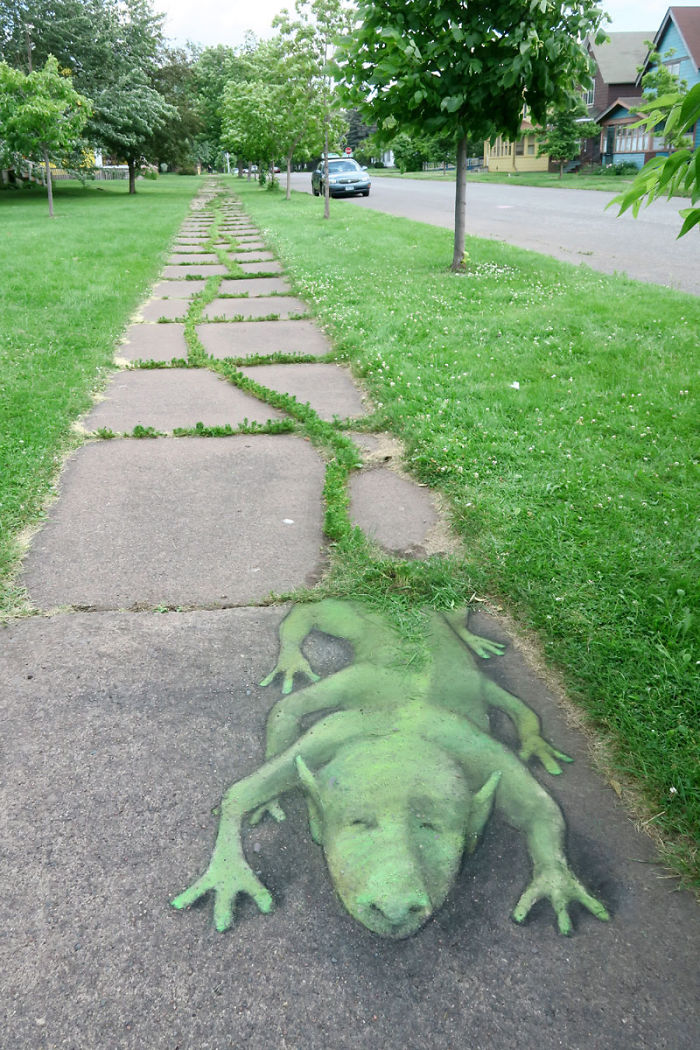
The Ann Arbor District Library hosted local artist and University of Michigan alum David Zinn for his workshop—Drawing from Your Imagination with David Zinn—on January 5th in order to share his artistic techniques with those who attended. Although Zinn is well-known for his chalk and charcoal works on city streets and buildings, this artist used the Thursday afternoon to delve into the creative thought process of his artwork.

The workshop took place in the library’s multi-purpose room, located in the basement. I arrived five minutes past one and found myself in a room bustling with locals both young and old, all enthusiastic to hear from the artist. After they found their seats and chatter hummed down to faint whispers, Zinn introduced himself to us through light jokes and references. His words were accompanied by a slideshow of his latest street art pieces, which were certainly entertaining to look at.

One of the works that Zinn featured in his slideshow. Photo courtesy of Demilked

Zinn’s introduction eventually transitioned to demonstrations of his creative thought process. The artist first explained to his audience how blank canvases were intimidating to him, as ideas for art were limitless and therefore overwhelming. Having a canvas with a mark, however, gave Zinn a starting point for his ideas, even if that canvas happened to be a sidewalk with a line of grass. Zinn then elaborated this point by having attendees engage in drawing exercises where everyone would make a scribble, swap papers with someone else, and see what they could draw from that scribble. After everyone saw the products of this exercise, Zinn facilitated another drawing exercise where one person would draw on a folded sheet of paper and another person would complete the drawing on the other side. By viewing art that was created from canvases with a mark, everyone, including me, had a better understanding of where Zinn was coming from.

One of the drawings made from the second exercise of the workshop. The top half was drawn by me, while the bottom half was drawn by another attendee

The workshop ended ten minutes after two, with applause from attendees. I was content with what I learned from the workshop, and am considering on attending future workshops by Zinn in the Ann Arbor District Library.
If you happened to miss out on this opportunity with a local artist, be sure to check the AADL website to see when the next David Zinn workshop will be!

PREVIEW: David Zinn Workshop

Image result for david zinn

A local to Ann Arbor and University of Michigan alum, David Zinn will be holding a workshop at the Ann Arbor District Library this Thursday, the 5th of January. Zinn has been making his mark on the city with artwork through  murals, business logos, posters, and cartoons, but he is well known for the chalk art he makes on the streets and sidewalks of Ann Arbor, Manhattan, and other locations. In recent years, Zinn has recieved global attention from outlets such as Facebook and the Huffington Post. This local artist is now sharing some of his artistic experience through the workshop, Drawing from Your Imagination with David Zinn, where he will be demonstrating illustration techniques with color pencils. Take the opportunity to meet and learn from David Zinn this week, one of Ann Arbor’s local artists!

Details
When: Thursday, January 5th
Time: 1:00 -2:00PM
Location: Ann Arbor District Library, Multi-Purpose Room

Workshop is intended for kids grade six to adults, free admission.

REVIEW: Tibetan Book Covers from the MacLean Collection

A Tibetan book cover featuring carvings of three divine figures and intricate decal, coated in gold-colored paint. Photo courtesy of the Crow Collection website

I had never thought of book covers as anything besides dusty, worn out blankets that hugged pages of a story together, but the special exhibit at the UMMA proved me wrong. Being the first ever exhibit in the United States to showcase Tibetan book covers, Protecting Wisdom: Tibetan Book Covers from the MacLean Collection, this collection is currently on display until April 2 of 2017, and so I took the opportunity to visit.

Expecting to see 8 x 11 cardboard covers encased in cloth or leather, I was greeted by wooden covers that measured two feet wide and about a foot tall; 33 or so of these were either situated on the gallery walls or in showcases. As I made my way through the gallery, I took in the intricacies of these Tibetan treasures: multiple gods were carved into these covers along with dragons, peacocks, floral decals, and so on. Paint in hues of gold, red, and green embellished the slabs of wood. Some of the detailing was so intricate that the cover was designed by several people.

Tibetan book cover
Photo courtesy of the Crow Collection website
Tibetan book cover
Photo courtesy of the Crow Collection website

The elaborate nature of these book covers is understood through its purpose. For Tibetan Buddhists, books are a divine presence where the Buddha lives and reveals himself, and so to honor him, detailed book covers were frequently commissioned. Tibetan book cover design has a history of more than a thousand years, and so these covers date back from anywhere in the 11th century to the 18th century. A gem of the exhibit is a wonderfully carved and painted book cover from the early 1290s.

I left the exhibit with a newfound respect for the art of designing book covers, especially the Tibetan book covers created by Buddhists. This exhibit is currently on display until the 2nd of April from 8:00am to 5:00pm from Tuesdays through Sundays, so please come out to view this gallery!

REVIEW: Peter and the Starcatcher

I don’t think a show can go wrong when there’s pirates in it, I found myself telling my friend before the opening of Peter and the Starcatcher this past weekend. There are many examples to back up this claim: Pirates of Penzance, Pirates of the Caribbean (I’m still waiting for a stage version of this), and of course, Peter Pan. Let’s be honest, it’s all very cool when the children fly across the stage for the first time in Peter Pan, but the pirates first entrance can just about steal the show.  

UofM’s Department of Theatre and Drama’s production of Peter and the Starcatcher lived up to my pirate filled expectations. Jeffrey James Fox as Black Stache and Jack Alberts as Slank battled it out for my favorite- literally, as they have a captain’s “boxing” match near the end of the first act. Each was an energetic and attention-grabbing seafarer. Eventually, we learn that Black Stache, who will go on to become the legendary Captain Hook, really just wants a hero to fight against; a true partnership, if you will. He searches the whole show for such an adversary and finally finds it in the boy he dubs Peter, an orphan.

20161210_194224

But the show wouldn’t move along without Molly; a character strikingly similar to her daughter Wendy, but with more gumption than her overtly feminine successor that the audience knows from Peter Pan. Played by Kourtney Bell, who played a spritely and eager apprentice starcatcher, Molly marches about declaring herself the leader. Through her many adventures with Peter and the boys, she ultimately fulfills her mission and is made a full starcatcher. But the adventures are not without their price, as Molly and Peter must part ways. The next time she catches a glimpse of him as he’s flying off to Neverland with her daughter.

Peter and the Starcatcher is a lovely little prequel and the Department of Theatre and Drama put on an enjoyable production. One of my favorite parts was how physical the show is; actors became different parts of the ship. One moment they’re crawling along the floor with a toy boat to show the ship’s course and the next they are lifting and tumbling Peter up and around as he’s thrown overboard- the ensemble becomes the sea itself. It made the transitions seamless and fascinating to watch. The first act takes place on a boat and the second act on an island, the soon to be Neverland, but regardless of where the show is, it was full of anachronisms- which were hilarious instead of disappointing. The intentional way in which they were placed throughout the show- an eggbeater as a microphone, foam noodles for swords- were delivered and incorporated nicely by the actors with an air of “we know you know that this doesn’t belong in a play during Queen Victoria’s reign but…we’re using it anyway”. I laughed often as Peter and the Starcatcher flew to success at the Power Center this past weekend!

REVIEW: Artists of the Photo-Secession Gallery Tour at UMMA

When did photography become an art form? At some point, the technology for capturing images of people, places, and things developed enough that people could start adding artistic flair.

At the turn of the 20th century, a young Alfred Stieglitz had a radical idea that photography could be art, which clashed with ideas of older, more established members such as Charles Buadelaire, who considered photography nothing more than a “servant of the sciences and arts.”

Luckily for us, Mr. Stieglitz would have none of that. He formed the Camera Club of New York and started an avant-garde photography journal that changed how people saw photography.

photo-secession-2

These new artists, rather than simply pointing and shooting, used more artistic methods for their photographs. They took pictures with a soft focus to try and emulate the “look” of paintings. They used more expensive materials to get better contrast of lights and darks. They printed on Japanese paper, because nothing says classy quite like Japanese paper.

Seeing the pictures was enough to see the transition to photography as an art form, but going on a tour of the exhibit helped place the photos in a social context.

Our photo-secession-3stupendous tour guide compared two images of the Brooklyn bridge and pointed out how one was a standard picture of a bridge, while the other focused on the shapes and form of the structures of the bridge.

At the end, we learned about Stieglitz’s most famous work, The Steerage. He considered The Steerage to be his most important work because, while I only saw an interesting photograph with a lot going on, we learned that there was a deeper meaning.

The Steerage was one of the first photographs to make a social statement. Before the photograph of the protester in Tienanmen Square, or anything from Vietnam, there was a photo showing two separate classes in one photograph: the immigrants both literally and figuratively below the rich on the same ship.

The exhibit made it easy to see why opinions changed from viewing the camera as merely a gadget, to viewing it as a tool of the artist.

All the hard work put in by the photographers to distinguish their work as art, however, made me stop and think. In the era of iPhones and Instagram, where anyone can take a decent photo, are we regressing to a time where the photography is becoming a lesser art form?