REVIEW: The Rocky Horror Picture Show

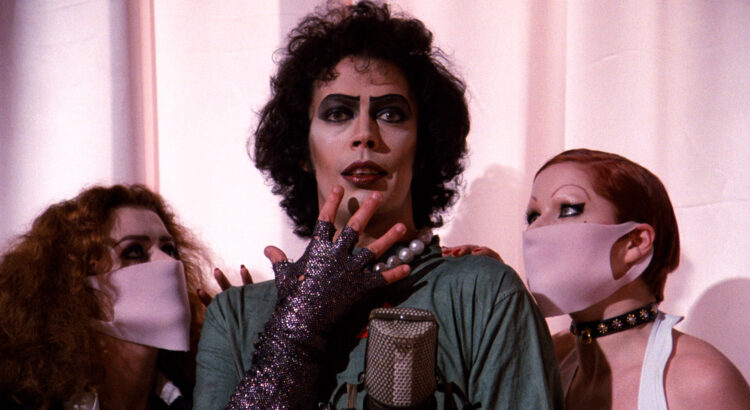
The Rocky Horror Picture Show is an internationally appreciated cult classic musical film, often performed around Halloween. The hit movie (and musical) held two performances this past weekend at our very own Michigan Theater. I was lucky enough to catch their annual performance on Saturday at 9:30, and it lived up to every expectation as an absolute riot from start to finish. It’s a lively and goofy movie with notable characters like the innocent Brad and Janet, thoughtless yet sincere Rocky, and the tremendously memorable transvestite, Frank-N-Furter. This performance is absolutely an 18+ experience, with many sexual innuendos, violence, intense language, and adult themes (which is no surprise if you know the show). The film has the longest-running release in film history and was even adapted again into a more modern TV film in 2016 on Fox. Forty-eight years later, the film still plays in theaters all around the country, often with a live amateur ‘shadow cast’ that mimes the actors on the big screen. There were shouts and roars from the costumed audience of classic lines to be accurately called out at certain points in the film. It is not your average ‘night at the movies’ at all…

The film was released in the fall of 1975 in the UK and USA. It was directed by the Australian director Jim Sharman, who was widely known for producing many kinds of experimental theater. He has a decorated list of theatrical directing credentials from across the world, with a few major films that hit the theaters through the 70s. The screenplay was adapted by Sharman and the UK’s own Richard O’Brien based on O’Brien’s original 1973 musical. The musical premiered that year in the UK, including the iconic Tim Curry, who reprised his role as Frank-N-Furter in the 1975 original movie. The first West End cast performance was dubbed a ‘creative and commercial success’. Initial reception to the film, however, was extremely negative, but it later became a hit as a ‘midnight movie’ that aired late into the evenings on television stations, and from there, a quintessential cult classic. 

The Rocky Horror Picture Show is understood to have been a great influence on countercultural and sexual liberation in the 1960s and even today. It was one of the first popular musicals that depicted fluid sexuality during a time of generational divisiveness and growing advocacy for LGBTQ+ rights. Today, this continues to be true as queer folks work to create more LGBTQ+ friendly space in the arts, and annual productions of Rocky Horror reinforce the necessary space yearly through this vessel. This precedent is set by the characters in the show: they are not confined by gender, and many different identities of performers take on the ‘shadow cast’ roles, keeping the show undoubtedly fresh. The “look” of each character does stay consistent, their costuming/hair and such, but many things can and have been adapted in various performances. Historically, the costuming of the show affected the development of many punk rock fashion trends, with colored hair, fishnet stockings, and colorfully flamboyant make-up. 

The ‘shadow cast’ of this production did a fantastic job of depicting the drama on screen. A ‘shadow cast’ is not something that is often seen in movie theater settings, so it was a lot of fun to experience. It was difficult to light the actors because the movie playing right behind the stage, so often it was hard to see. However, the energy of the acts was understood from the back of the house, and their exuberant costumes filled the space left by a lack of set. I commend these folks for their accurate and entertaining work as the ‘shadow cast’ of the film, and their commitment to the tradition of Rocky Horror! 

The Rocky Horror Picture Show is a must-see musical film and a hilariously memorable experience. I sincerely enjoyed the performances from the ‘shadow cast’ and seeing this movie for the first time in theaters. The actors and the crowd were absolute pandemonium, and I enjoyed my time from start to finish. The experience in theaters is a unique one, and I would urge folks interested to make an evening of it and enjoy the show. Rocky Horror is an annual occurrence at the Michigan Theater and sells out nearly every time, so be sure to get your tickets early. It’s a Halloween festivity not to be missed! 


Image from the film, thanks to IMDb.
REVIEW: Jay Peng Zhang and Terry Tsang

As part of the U-M Fall 2023 Festival of Asian Music, Terry Tsang and Jay Peng Zhang came to the Keene Theater in East Quad on Tuesday, October 24.

Terry Tsang is a choreographer primarily working in Hong Kong. I was expecting him to perform, but instead, he gave a presentation because his work centers around exploring the human body through nudity and human desires, a concept that was inspired by simply walking down the street. Tsang wanted to know if we could truly understand someone through their body alone and if the body speaks the truth, as verbal communication leaves room for dishonesty. He showed us a couple of videos of his choreographies that expressed his interpretation of what love means, incorporating the gestures of making love that gradually transformed into an animalistic representation of sex since animals are designed to survive through reproduction. The dancers were completely nude but wore strange and purposefully unsettling masks that completely hid their faces; in fact, during the Q&A session at the end, an audience member described the dancing as creepy.

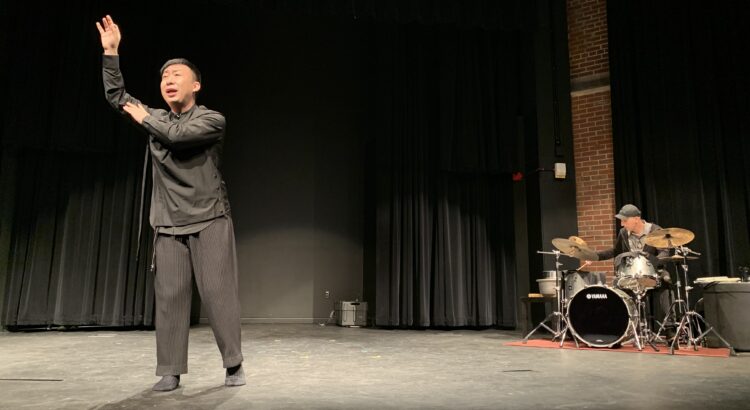
Jay Peng Zhang on the other hand did give a live performance and sang the folk songs of various ethnic groups in China, such as the Tujia ethnic group from the Western Hunan Province. His singing was accompanied by only one person, who played a drum set muted by cloth and other percussive items, like large pots; but rather than an accompaniment, the percussion sounded like a response to his singing and movements because of its continuous resonance instead of emphasized beats. Zhang sang with a powerful voice, and his breath control and crescendoes were incredible; however, he moved his fingers very daintily, creating a beautiful and interesting contrast.

Zhang explained how he didn’t want to give the audience a flashy performance but rather a meaningful and interactive experience to renew and rebuild old rituals, as over time they’ve lost their meaning “like artifacts in a museum,” performed only as a tourist attraction. To him, folk songs and their intended rituals don’t signify religion, but instead are a way to release stress and help keep our hearts peaceful and balanced.

The most memorable song Zhang sang was one traditionally sung by women left behind at home by their lovers who left to earn money. The girls would sing the song to a river because they believed the water would carry their emotions to another place, and when their lover saw the water, he could feel her love. Zhang asked the audience to accompany his singing by collectively becoming “a group of water” by enunciating syllables that represented flowing waves. The amazing part is how the audience naturally added dynamics to the space created through Zhang’s gentle dance.

REVIEW: Impulse 02 – MEMCO’S INFERNO

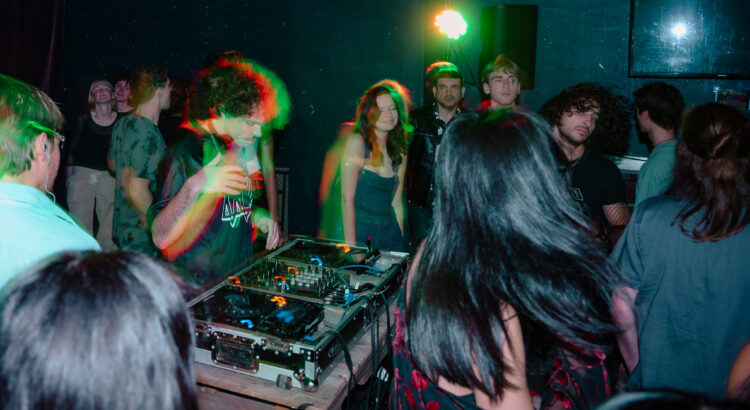
Last Saturday, October 21, the Michigan Electronic Music Collective (MEMCO) held a spooky Halloween-themed techno event at Club Above from 10 p.m. to around 2 a.m. This was my second MEMCO event of the semester at Club Above, and it has to be one of my favorite clubs on campus. If you are like me, being in cramped, tight spaces with loud music and bright lights can be extremely overwhelming. Luckily, Club Above has a huge dance floor with enough room in the back for seating, a pool table, and bar. When you walk in, a wide variety of people come together to dance and listen to music. Compared to other club cultures on campus, MEMCO events are a safe space for people of all identities and orientations, the neurodivergent community, and people with attention-deficit/hyperactivity disorder. Needless to say, when me and my friends go out, we go to MEMCO events.

Photography By: Noah Jackson

On the dance floor, I was surrounded by people dancing either in their own worlds or creating one with their friends. I came as the second DJ, BUBU, played their set, highlighting fracturing sounds and haunting melodies. The crowd was bouncing, grooving, and shaking their bodies with the fast-paced rhythm of the speakers. My favorite way to enjoy the music is to close my eyes and see how my body inherently responds to the music. Sometimes, I like to sway my hips and throw my arms in the air; other times, I find myself jumping on my heels with a smile because of my intense euphoria. A disclaimer: I am a dancer and study dance at the University. I firmly believe in implementing dance into more public spaces with a safe and judgment-free culture, and MEMCO’s events perfectly fulfill this. Dance should be celebrated by everyone, and Techno spaces like MEMCO’s really highlight the beauty of community building through dance.

Photography by: Noah Jackson

The third DJ, ZAGG, was my favorite. You could feel and hear his improvisational experimentation with the music in the best way possible. He created music that I reacted to by dancing, and in response, he would alter the sound just slightly, then drastically–it was highly unpredictable. Which I believe made it all the more fun. The songs were not recognizable until DJs switched, which offered a beautiful precedent for creating, receiving, and celebrating raw and spontaneous music. The music left me and the audience constantly wanting more. Mainly because the rhythm of Techno music is usually quick; it makes the body react by moving at that same speed. The fast-moving environment is compelling because of the combined energy that lifts you up and out of the dance floor and into a realm of solely music and movement.

Photography by: Noah Jackson

Although the event wasn’t entirely scary, which is honestly for the best, the unsettling Halloween Techno music was a perfect way to get into the spooky holiday season. If you can attend a MEMCO event, I highly suggest going with an open heart and mind. Also, be prepared to dance until you are exhausted, which may sound daunting but can be the most liberating feeling. For me, all of my stress and anxiety from my personal life disappeared, and all I could focus on was the music and dancing!

REVIEW: The Shadow of a Gunman

4:00pm • Saturday, Oct. 21, 2023 • Power Center

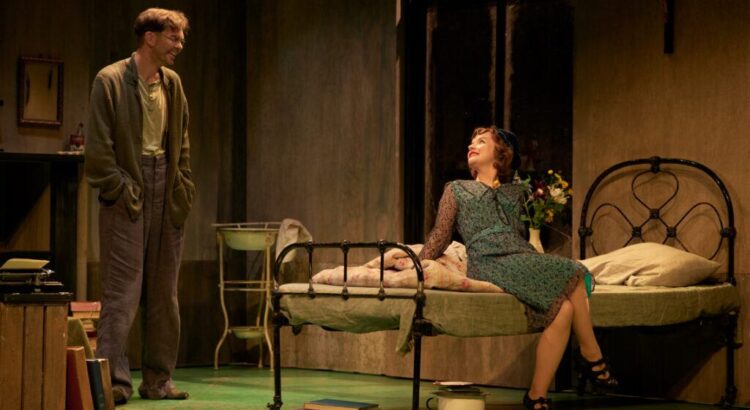
The Druid Theatre Company’s production of The Shadow of a Gunman, from Sean O’Casey’s Dublin Trilogy, explored themes of cowardice and courage, and of action and inaction. The story takes place in a tenement during the Irish War of Independence, following Donal Davoren, a poet, and Seamus Shields, a traveling salesman. The tenement’s residents believe Davoren is an IRA gunman on the run, a tale which he does not refute because of the aura of mystery and importance it grants him. The plot reaches a climax near the end of the play, when the tenement is raided by Black and Tans (a violent British police force), eventually revealing which characters are the true cowards. 

I appreciate the way O’Casey uses pointed moments of comedy in this play to make a statement about individuals’ feigned and real courage. Davoren and Shields both make a show of their ideological commitments and their willingness to act, but when their lives or values are actually threatened, they collapse into trembling heaps. Davoren gives a great monologue about the moral superiority of “the poet,” and that archetype’s commitment to higher philosophical strivings than the majority of laborers, but we see throughout the play that Davoren has little real commitment to anything. 

My favorite character in the play is Minnie Powell, one of the tenement’s residents and Davoren’s love interest. For most of the play, Minnie is treated almost as a prop. She is the object of Davoren’s interests, and her name is used as an invocation by the other residents, warning Davoren against “degrading” attachments. However, at the end of the play, Minnie is the one who assumes the responsibility of hiding incriminating evidence from the Black and Tans, believing it belongs to Davoren. Minnie is the one who is dragged down the stairs shouting “Up the Republic,” while Davoren and Shields cower in their room hoping she doesn’t reveal their involvement. Minnie’s death brings Davoren and Shields’ puff-chested braggadocio into tragic relief, completing O’Casey’s statement about the value of action over words. 

I think there is another interesting conversation to be had about whether O’Casey himself lives up to this statement in his legacy as a poet and playwright. I don’t necessarily have the background knowledge to answer that question, but I am fascinated by the dialogue between O’Casey’s works and his stated beliefs about the role of artists in conveying messages about society, politics, and human nature. O’Casey’s work focuses on the common people of Ireland, rather than the heroes and martyrs of the nation’s conflicts. Is there a sense of elitism inherent in using one’s position as an artist to criticize the common people for their lack of heroism? I’m not sure.


REVIEW: The Plough and the Stars

The Druid Theatre Company’s production of The Plough and the Stars, from Sean O’Casey’s Dublin Trilogy, raises salient questions about the nuances and cost of violence in the name of nationalism. The play captures the months preceding and during Ireland’s Easter Rising of 1916, focusing not on the “heroes” who participated in the Rising but on the common people living through the conflict, a major theme in O’Casey’s work. O’Casey eloquently portrays the tension between normalcy and wartime through the everyday lives of and relationships among his characters.

I thought O’Casey’s treatment of gender in the plays I saw was interesting. While I disliked the way Nora’s character in The Plough and the Stars was used to convey the tragedy of war by playing into stereotypes of the “hysterical” or “unstable” woman, I appreciated the way all of the female characters were endowed with strong personalities and ideologies. Even though O’Casey occasionally used these strong personalities as the punchline to jokes based on binary expectations of masculinity and femininity, they meant that each character in the minimal cast was given weight and their perspectives meaning.

While I recognize that the conflicts portrayed in the Druid Trilogy are still salient in Ireland and the Irish diaspora, for me, O’Casey’s critique of Irish nationalism and religion were a little too far out of context to feel particularly compelling. That said, the relation of the play with conflicts occurring right now elsewhere in the world left much for me to consider. The program for this production explains that after The Plough and the Stars debuted in Dublin, demonstrations against O’Casey’s depiction of the conflict interrupted subsequent stagings. I think it’s interesting how the history of the production is one of collective reckoning with the value and cost of violent conflict.

I wouldn’t argue that Ireland’s wars in the early 20th century are contextually similar to modern wars such as those in Ukraine and Palestine, but I feel that there are certain overarching themes which apply to the way we conceptualize these conflicts. For me, watching O’Casey raised the idea that one can hold and examine many ideas at once. Pointing out the costs of violent conflict needn’t be synonymous with delegitimizing a cause. Even in the heat of the moment, it is essential to create space for critical thinking about ideological causes, especially when the choices we make invoke life-and-death consequences for innocent people.

REVIEW: Taylor Swift | The Eras Tour

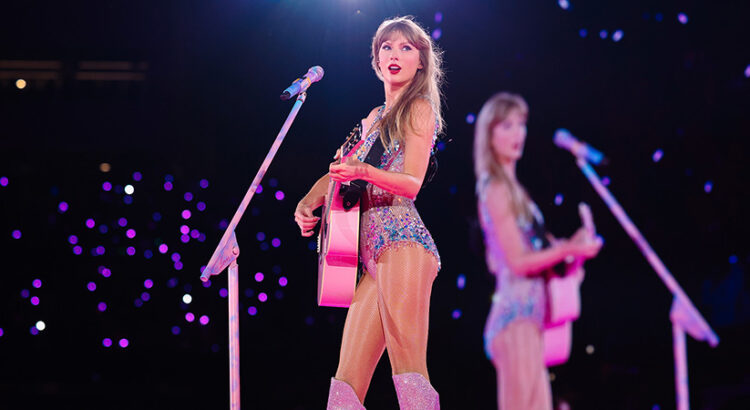
Taylor Swift | The Eras Tour was a crazy 2-hour and 45-minute-long film, and I enjoyed every second of it. I highly recommend experiencing it in theaters instead of at home; unlike regular movies, people sang, danced, cheered, and clapped in their seats (some even stood)! Although nothing could ever compare to seeing her perform live, the energy of the crowd was great and I felt like I got a glimpse of the ecstatic atmosphere at the SoFi Stadium in Los Angeles: the last stop of Taylor’s tour in North America and where the movie was shot. Not only was her tour sold out, but the movie the night I watched it was too!

Like most people, if you weren’t lucky enough to see her live, then the film is the next best thing. I’m not a Swifite, though I was in my elementary days. That’s why I especially enjoyed the discography in The Eras Tour, which covered all the music she’s released in the past 17 years of her career, including the three albums she never got to tour with. As the title of the tour suggests, it was truly a journey through all of her musical eras, and she ended the night with her most recent album Midnights (2022). My favorites were the classic You Belong With Me and Love Story.

The cinematography was absolutely amazing and truly captured Taylor’s stage presence and control over the crowd. The camera work showcased everything so well, such as the great chemistry between her and the backup dancers and singers, the stage set-up, and the graphics. The most breathtaking transition was right after she finished performing Our Song; as she walked towards the back of the stage she suddenly jumped down and became one with the ground, swimming with her striking red dress. She had several wardrobe changes throughout the night, ranging from black cloaks and white flowy dresses to glittery skin-tight bodysuits. They helped express the emotion of each era and she pulled off each one. In addition to being a phenomenal singer, Taylor also proved that she was a great dancer, guitarist, and pianist throughout her performances.

Though it was the longest movie I’ve ever seen it never felt like it dragged on. I highly recommend watching it, even as a casual fan or listener. It simply won’t be the same as watching it at home, so get a ticket soon! There will be multiple showings up until October 26th at the Michigan Theatre.