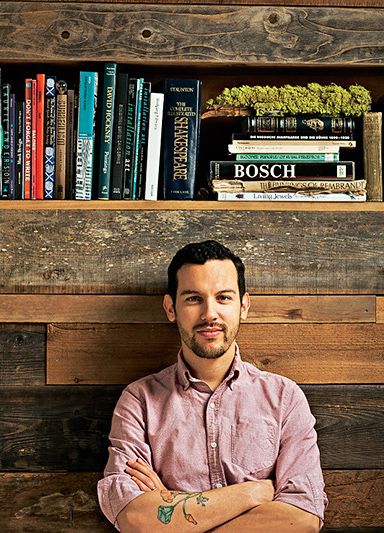
Tomorrow (11/12) at UMMA, Justin Torres will be reading and signing books. Justin Torres is the author of We the Animals and has published short fiction in numerous literary magazines (including The New Yorker, Harper’s, Granta, Tin House, and many more). He currently teaches English at UCLA, but in 2016 will be the Picador Guest Professor for Literature at the University of Leipzig. His visit is a part of the Zell Visiting Writers Series.
On Saturday November 14th at 8 pm Shoshana Bean and Whitney Bashor will present a special one night concert at the Lydia Mendelssohn Theatre in Ann Arbor, Michigan made possible through their collaboration with Ann Arbor in Concert.
Bean and Bashor, who are most well known for portraying Elphaba in Wicked and Marian in The Bridges of Madison County respectively, take the stage under direction of Mike Mosallam as they take a brief break from pre-Broadway tryouts of the new musical Beaches based on the 1988 Bette Midler film of the same name.
David Mitchell is the kind of guy who can get a church-load of people to hear him speak in spite of $30 ticket. He’s the kind of a guy for whom this audience will sit in awe of, leaning forward to catch every syllable, laughing at jokes that were clever not funny. He’s the kind of author for whom this audience will wait more than an hour to have their books signed by him. He’s the kind of author fans go fanatic about, consuming his every written word (of the three audience members who asked him questions, two prefaced it by saying “I’ve read all of your books”). He’s the kind of writer who is always nominated for the Man Booker.
But he never wins. And for every fan he has that has read every single word, there’s a person who put down Cloud Atlas in disgust, halfway through. Not everyone loves him. Not everyone agrees that he’s great. There are many who think he’s a gimmick, a fraud almost, another popular fad. There are many who would not consider him or the works he write to be “literary.” While he might be popular, he’s not beloved–at least, not by all.
I’ll admit, I’ve never read any of his books (although, as a now proud owner of Slade House, I will), so I cannot attest one way or another about the merits (or lack thereof) of his writing. I did not find his reading particularly engaging, but in his defense, there are certain types of writing I find better-suited for the page, not the ear. And I did find the question and answer part of this event, intensely interesting–in fact, I think many of his answers help explain his position in the literary world.
Photo Credit: Literati
First, I must give some credit to Peter Ho Davies for being excellent at leading this conversation. As a writer himself, Peter knows the kind of questions to ask that will create an engaging and unique discussion. I’ve yet to be disappointed when Peter is involved in these question and answer sections.
Since David Mitchell’s latest novel, Slade House, and some of his previous work have dealt with ghosts or other fantastical elements, these were brought up in the discussion. In today’s modern literary world, such elements of “genre” writing are typically not well-received when written by a literary figure (or by a non-literary figure, but the literary world doesn’t tend to comment on those works)–they do not fit the current mold of literary and they will be treated as such. This is in spite of the fact, that as David pointed out, these were elements used by previous “greats” such as Dickens and Shakespeare. Instead of acting like he bestowed literariness on these ghosts and other supernatural things because he was the one writing them and not some “genre” peasant (as other literary writers have done in the past), David Mitchell called out the literary world’s attitudes on the subject matter by saying, “I don’t like the idea that mainstream literary writers are not allowed to go here and if they do, they are not taken seriously.” He did not treat “genre” or “genre”-writers as if they were beneath “literary.” He did not acknowledge “literary” fiction as anything other than another kind of “genre.” As someone who is often frustrated by the holier-than-thou attitudes of the literary realm, hearing an author like David Mitchell also express frustration was a great relief. Of course, this attitude of David might also help explain why the literary world has not fully embraced him.
Another important idea brought up in the conversation was the idea of world-building and how David uses it in his novels. None of his books are direct sequels of each other, but certain characters that appear in one occasionally appear in another. This is another decisive characteristic of Mitchell’s novels. Some people love how he is creating his own universe; others think it is a gimmick. When asked about creating his own universe, David described this as happening in three different stages–and to me, at least the first stage, seems like this did spiral out of gimmick. He stated that he did it at first “because [he] thought it was cool.” Now, admitting that you did something because you thought it was cool, at least in the serious world of literature, strikes me as very un-writerly. His second stage is not much better. This second stage was born out of a need for a fully-developed character without putting in the effort to create a character with a backstory and motivations and interests and independence and all that other junk that makes a character seem real. He explained this by saying that “writers are some of the laziest people on Earth.” As a writer myself, I would really like to disagree, but at the same time, there’s some truth there.
The final stage of David Mitchell’s world-building was born out of a desire to create his own Middle Earth. There’s something glorious and beautiful when it comes to building your own universe that operates by your own rules and full of your own creations and your own history that you can just keep adding to and adding to and nurturing for as long as you live and breathe and write. Both Peter and David talked about making maps of worlds unknown, undefined as children, worlds that were theirs and no one else’s–I’ll throw in that somewhere in the drawer of my childhood dresser is probably a dozen maps of worlds that I drew, named, crafted, and abandoned. Writers have this desire to create and that is why they write, why they are writers, but sometimes this creative desire is so potent that a single story or novel is not enough to get it out and there mustn’t just be sequels, there must be dozens of histories and characters and lands just off the page, so that for every page written, there are three pages unwritten. In his own words, David described his conflicting desires: “part of me wants to spend every creative voltage on something enormous, something cathedral size, something galactic–and I want to write stand-alone stories.”
I’ll say once again that I have not read any of David Mitchell’s books, but after the conversation between him and Peter Ho Davies, I can say that I have become absolutely fascinated by him and his ideas about writing and cannot wait to begin Slade House.
The Avett Brothers had an incredibly uplifting performance at Hill Auditorium yesterday evening. The two lead singers and brothers, Scott Avett on the banjo and Seth Avett on the guitar, make up the core of the larger band. The group exhibits a hybrid of genres, considered anywhere between folk rock and bluegrass.
The repertoire of the Avett Brothers includes a refreshing combination of songs which entail the whole band, as well as folkier pieces that highlight just the two brothers and their own acoustic accompaniment. In Hill Auditorium, the band filled the stage in its entirety, with extensive choreographed lighting, which danced upon the performers and the audience alike. This concert seemed to market the band in a more poppy sense, with high volume projection, and great jumping energy from every performer, dancing their way through each successive song. I realized that I associate the Avett Brothers with calm guitar and friendly lyrics; a certain settledness inherent with simple folky arrangements. However, it was exciting instead to experience the band with such overflowing energy, equivalent to that of a rock concert, yet with an arrangement of jiving string instrument players instead of electronics.
It was nice to realize how excellent each musician is live, void of intonation issues, and with voices that retain such pure, full quality. These aspects were especially heightened in the perfectly resonate hall that is Hill Auditorium. On some of the slower tunes, which really focused on the vocal harmonies between the two brothers, I found myself in awe of the rawly honest texture of each of their voices. Though brothers, Seth and Scott have perfectly complimentary voices, different in their tones and ranges, but similar in their casual friendliness. It is rare to find popular musicians who can bring even more to their live singing performances, especially when dancing is incorporated, than exists in their already ideal recordings.
But what pulled at my heart most was the overwhelming humbleness of the group. Though often with sad and contemplative lyrics, each song never fails to instill hope in the listener with upbeat acoustics and interesting harmonies. When the band performed Through My Prayers, but first introducing it as a song about goodbyes, the sweetness of the group and audience really connected as the lyrics, “If you have love in your heart let it show while you can,” were delivered. Presented as the song’s moral, the audience immediately started clapping in the middle of the piece, in kind agreement with the statement. This is the epitome of the atmosphere at the concert – really serving as a celebration of love and life.
The Avett Brothers closed a packed concert of 22 songs modestly with Hand Me Down Tune, a relaxed song about songs. The audience stood clapping ecstatically, for what seemed like minutes, as the final piece came to a close. Yet the encore was worth the wait, as they performed three additional songs. I walked away from a night with the Avett Brothers feeling mightily revitalized with a fresh spark of energy, as only such fantastic, relatable, and upbeat live performers can do.
* * *
Eva Roos is a senior at the University of Michigan, receiving a Major in Art & Design with Minors in Environment and Music.
Arthur Miller’s tragedy A View From the Bridge is a play that centers on the underlying discordances within a family. Set in New York City, Eddie Carbone lives with his wife Beatrice and their niece Catherine. Eddie has always been protective about Catherine, but when their Italian cousins come to live with them, these feelings manifest as a romantic attachment towards her. In the words of the actress portraying Catherine, the play is about “having too much love in the wrong place…It also really digs into hidden impulses in people and how those burst to the surface when tensions run high.”
It is being performed by the Residential College Players on November 13th and 14th at 8pm and November 15th at 2pm. Admission is free, and it will be an awesome show!
I attended the opening reception for A Northern Refuge: Cherish, Protect at the Work Gallery this past Friday evening. Stamps lecturer Cathy VanVoorhis curated the exhibition and also contributed several paintings to the exhibition. Other contributing artists included the painter, Nora Venturelli, and the photographer, Lisa Steichmann.
A moderate amount of people attended the opening reception. A Northern Refuge: Cherish, Protect spotlights the natural environment. The natural environment has been a source of inspiration for artists for centuries and the exhibition highlights its ongoing utility to contemporary artists. Several of the pieces were old-school and impressionistic paintings rather than more contemporary installation or mixed-media pieces.
The following is an excerpt from Venturelli’s artist statement: “I find an overwhelming, therapeutic tranquility while painting outdoors, and a spontaneity that does not happen in the studio. The rush of the breeze, the heat of the sun, the sounds of the fields. It all adds freshness and vivacity to my work. I am usually drawn to long vistas, wide-open spaces. I’m attracted to subtle changes in textures and color, the overlapping and layering of planes.” The piece included in the exhibition was a sepia-toned and slightly melancholic landscape painting. Click here to visit Venturelli’s website.
Steichmann’s photographs were scattered between the paintings. The photographs were also shadowy and slightly melancholic. The photographs were the most contemporary and visually-surprising pieces of the selection. Click here to visit Steichmann’s website.
Here is an excerpt from VanVoorhis’s artist statement: “For me, a landscape painting is a portrait of a specific place with the plants and terrain of that location. All of the species together create a community of interdependence, with a life of its own.” She continues with the following couple of sentences: “There is great satisfaction for me in using the time-honored materials and craft of oil painting. I’m glad to get away from electricity and technology for a while, to simpler processes that feel very direct and immediate.” VanVoorhis’s pieces exhibited artistic talent yet were visually-predictable. The piece, Tamarack Lake, is displayed prominently. Click here to visit VanVoorhis’s website.